Anadol Models That Never Entered Series Production and the Contemporary Experiment
Share This Page
Anadol's models that never entered series production are the design and engineering experiments the brand could not bring to the showroom: The FW11 prototypes drawn by Marcello Gandini for Bertone in 1977, the Çağdaş designed by Jan Nahum and combined with Claude Nahum's Wankel engine, and the A9 sedan from the early 1980s belong to this group. Due to high costs, the 1980 crisis, and the industrial conditions of the era, none of them made it to the production line; but their stories are still worth telling today.
Highlights
- The FW11 was designed by Marcello Gandini for Anadol and Reliant in 1977
- 4 prototypes of the FW11 were produced; the blue one, at Rahmi M. Koç Museum since 2004 Koç Museum since 2004
- The Çağdaş was developed with a Wankel engine producing about 100 HP
- The Çağdaş received an Industrial Design award from the State Academy of Fine Arts
- Anadol's total production was 87,000 units and it ended in 1984
Which Anadol Models Never Entered Series Production?
Let's list them briefly: FW11 (1977), Çağdaş (around 1980), and A9 (early 1980s). These were Anadol's three great attempts that never reached the showroom. While the FW11 was a design from England, the Çağdaş was a car designed from scratch in Türkiye. The A9 was the brand's final prototype attempt. What all three have in common is the same: good ideas, strong designs, and insufficient resources. So why did none of them ever make it to the roads? Well, the rest of this page is exactly the answer to that.
Before we begin, let's draw a framework: Anadol is the first automobile brand to be produced in series in Türkiye. Production began on December 19, 1966, the first exhibition took place on January 1, 1967, and sales began on February 28, 1967 after a Certificate of Qualification was obtained from the Chamber of Mechanical Engineers. Until production stopped in 1984, a total of 87,000 Anadols were sold. So, independent of its prototypes, the brand has a quite successful series production story. But engineers and designers were always thinking one step ahead. This is the story of those ideas that were one step ahead.
FW11: The Hatchback Drawn by Gandini and Forgotten in a Warehouse
Just think: Imagine the story of Türkiye's first series production car involving the name of one of the world's most famous automobile designers. That is exactly what happened. In 1977, Bertone's chief designer Marcello Gandini designed a model called the FW11 for Anadol and the British Reliant. The hand that drew the Lamborghini Countach touched an Anadol prototype. Needless to say, I was utterly stunned when I first read it.
The FW11 was designed as a five-door hatchback; its wheelbase was 2629 mm. Reliant produced 4 prototypes of the FW11 with the Anadol logo. Two of these four vehicles came to Türkiye - one white, one blue. The other two remained in England. So at one time, four modern hatchbacks bearing the Anadol logo were driving around in Türkiye; nobody even saw them on the street.
Equipment Far Ahead of Its Time
It wasn't only its design that made the FW11 special. The vehicle carried luxurious equipment for its era; for example, it had electric windows, which no production car featured at the time. That a feature which is standard in every car today was already being considered in a 1977 Anadol prototype is an incredible detail. But this is exactly where the painful part of the story comes in: all this equipment raised production costs, and the project was shelved for economic reasons. The limits of what was possible in automobile manufacturing in Türkiye in the 70s were not enough to bring dreams to the showroom.
Interestingly, the project's fate developed in two directions. Otosan shelved the project; Reliant, on the other hand, tried to produce the model under the name Scimitar SE7, then gave up. Moreover, it is said that there is a connection between the FW11 and the legendary Citroën BX: according to this account, the project was purchased by Citroën, the BX was developed using sheet metal and aluminum instead of fiberglass, and the BX sold exactly 2,315,739 units over 12 years between 1983 and 1995. Let's add this honestly: this BX connection is not definitively verified information, and different accounts tell the FW11's fate a little differently. But if it's true, millions of cars based on Gandini's design were sold around the world while the original waited in a warehouse in Türkiye. Let that line sink in.
Where Are the Prototypes Today?
- Koç Holding kept the prototypes in warehouses for many years; the blue prototype has been at Rahmi M. Koç Museum since 2004 It is on display at the Koc Museum
- Prototype number 003 was found in a junkyard in England, purchased to be restored by Jens Meiners, a German car enthusiast, and taken to Germany
- According to a news story reported in the papers in 2006, two of the four vehicles coded FW11 were at Otosan, and the production of body types such as hatchback, station wagon, and pick-up was being considered
An Anadol prototype rescued from a junkyard and restored... My skin crawls as I write this sentence; I'm sure you feel the same as you read it. A car being almost forgotten for 30 years and then coming to light is, in my opinion, the most beautiful proof of how powerful the passion for automobiles is.
The Wankel Engine: A Small But Ambitious Attempt at Revolution
Now let's get into the more technical side of things. The Wankel engine does not have pistons like classical engines; it has a triangular rotor; in other words, instead of shaky parts moving back and forth, it works by rotating. Let me make a simple comparison: while a classical engine goes back and forth like a bicycle pedal, a Wankel rotates perfectly smoothly like a propeller. Its ability to deliver high power despite its small size made it very attractive to the engineers of the era.
In Otosan's Design and Development Department, a group of engineers led by Claude Nahum developed a Wankel engine that produced 100 HP despite its small size. Moreover, some accounts state that this engine produced 107 HP; the difference probably stems from the measurement method, but let's underline it - this is serious power. In other words, in Türkiye, one of the most advanced technologies of the era was being worked on for an Anadol. Even imagining it is exciting.
Unfortunately, the ending was just like the FW11: due to high R&D costs and the then-unsolvable known problems of the Wankel engine (such as sealing and apex seal wear, but especially durability issues), the engine could never be used in any Anadol model. One of the developed engines is on display today at the Rahmi M. Koç Museum. So as an engineering attempt it exists, sitting in a display case, but it never made it onto the road.
Çağdaş: The Anadol Prototype Designed Entirely in Türkiye
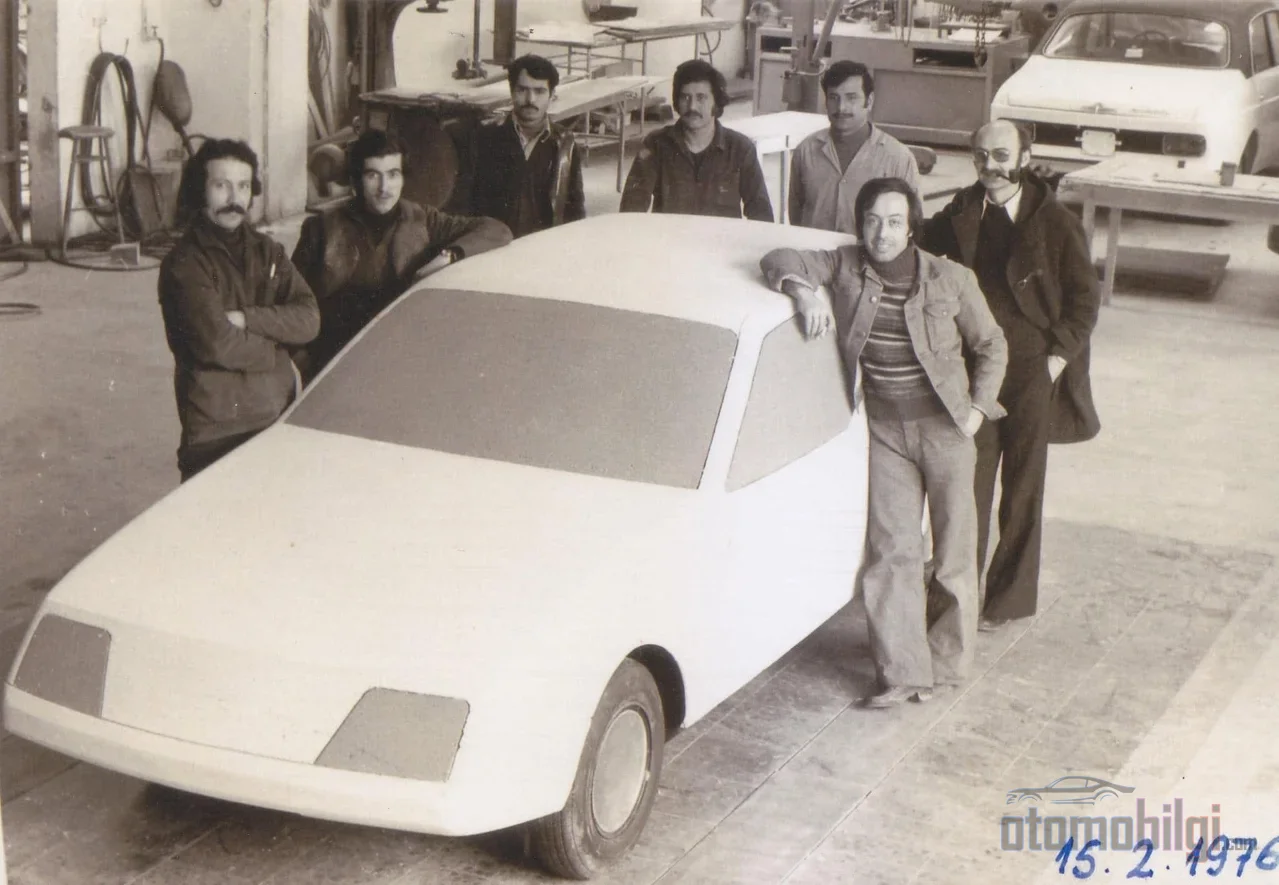
And now we come to what I consider the most emotional part of this story: Çağdaş. This project was a prototype that, unlike the FW11, was designed entirely in Türkiye. The design belongs to Jan Nahum; the body was made of fiber material mounted on a steel skeleton, and it housed a 100 HP Wankel engine developed by Claude Nahum. In other words, an engine developed at the same company and a design from the same family came together in a single automobile. Such synergy is rare.
Çağdaş and Jan Nahum were deemed worthy of the Industrial Design award by the State Academy of Fine Arts. There were positive news reports in the media, and it was said that production would begin in 1980 or 1981. Everything seemed ready. But right around that time, Türkiye entered the political, social, and economic turmoil of the 1980s, and the project, unfortunately, never materialized. The production of an automobile requires not only engineering but also a stable economy; Çağdaş is the clearest proof of that.
The only prototype built is on display today at the Rahmi M. Koç Museum. So Çağdaş, remembered as an automobile venture made entirely domestically and by private enterprise after Devrim, waits for its visitors behind the museum glass. I think if your path ever leads to Istanbul, you should definitely stop by; the blue prototype of the FW11 and a Wankel engine are in the same museum, in almost the same display case. Three dreams gathered in one place... I get excited just thinking about this tour.
A9 and Other Half-Finished Anadol Attempts
The story does not end with the FW11 and Çağdaş. In the early 1980s, a Bertone-designed four-door sedan prototype called the A9 emerged. This vehicle is considered Anadol's last prototype. Its rear view was likened to the Peugeot 405 of the era, and its overall stance to Volvo sedans. A new logo had even been developed for the brand. Like the FW11 and Çağdaş, the A9 could not be put into production, and the prototype that was built was disposed of. Being disposed of does not mean being moved to a museum; in other words, not even a single example of the A9 exists today. That always makes me sad.
And it does not stop there: In the late 1970s, Jan Nahum carried out many prototype studies for a new Anadol design, and most of them never made it to production. Otosan's goal was a modern model that would gradually reduce the use of fiber. In other words, within the company there was a vision of a contemporary Anadol gradually moving away from a fiber body, but this dream never turned into a tangible production model.
| Prototype | Period | Design / Engine | Fate |
|---|---|---|---|
| FW11 | 1977 | Marcello Gandini (Bertone), five-door hatchback | Shelved due to costs; prototypes are in the museum and were restored from a junkyard |
| Çağdaş | around 1980 | Design by Jan Nahum, with Claude Nahum's 100 HP Wankel engine | Could not be produced due to the turmoil of the 1980s; the single prototype is in the museum |
| A9 | early 1980s | Bertone design, four-door sedan | Never produced; the prototype was disposed of |
Why Did None of These Projects Make It to Mass Production?
Now let's look at the big picture. We can safely say that all three prototypes sharing the same fate was no coincidence. The reason FW11 was shelved is clear: features ahead of their time, such as electric windows, made production costs unbearable. The reason the Wankel engine could not be used is also clear: high R&D costs and the engine's problems that could not be solved at the time. The reason Çağdaş did not proceed was entirely the environment Türkiye was in: the political, social, and economic turmoil of the 1980s.
In other words, the common denominator is three words: means, cost, and timing. The Turkish automotive industry had moved to mass production in 1966 with the Anadol, and behind this success was the cheapness of the fiberglass body. But taking a step further - new bodies, new engine technologies, fully domestic designs - required much larger investment and a stable economy. The conditions of the time did not allow it. Just as Devrim, despite being the first Turkish car in terms of design and engineering in 1961, failed to reach mass production, Anadol's prototypes faced the same wall.
Let us also remember this: Anadol itself eventually succumbed to the same winds. The brand's production was halted in 1984 as a result of new agreements made with Ford, and Ford Taunus production took its place. Changing market conditions, increasing competition, and the disadvantages of the fiberglass body are also cited as contributors to this end. The last model, A8-16, that is, the Anadol 16, was released to the market on June 15, 1981, and only 1,013 units were produced between 1981 and 1984; it was known among the public by the nickname "Baltaburun" (Axe-nose). In other words, while the brand grew with prototype dreams, even its late-period production was quite low.
The Value Today of Dreams That Never Made It to the Showroom
So why does all this story matter today? In my view, for this reason: FW11, Çağdaş, and A9 are examples that proved Türkiye could design and produce cars even in the 70s and 80s. Only money, planning, and stability were lacking. Even the recognition of a fully domestic design like Çağdaş is a sign of how talented the engineers and designers were. When talking about domestic car projects today, one needs to know these roots. Anadol's prototypes are forgotten but extremely valuable stops on this journey.
Moreover, this story was not forgotten. In recent documentaries retelling Anadol's journey, a special section is dedicated to Çağdaş, calling it the dream with a Wankel engine. I think this naming is quite fitting: Çağdaş ("Contemporary") really was a dream, but a dream that was practicable, with genuine engineering substance behind it. Only the timing and the means didn't align.
Let me leave you with a question: If the FW11's costs had been lower and the 1980 crisis hadn't happened, would we be seeing Gandini-styled Anadols with power windows, or Wankel-engined Çağdaş models, on Türkiye's roads today? I think the answer is yes. But history isn't a game like that; all we can do is remember these dreams and thank those who preserve them in museums. See you in our next Anadol article - leave the steering wheel to me!
Sources
- FW 11 - Anadol Fan Club
- Anadol - Wikipedia
- Reliant FW11 - Wikipedia
- It emerged 25 years later - Milliyet
- Anadol Çağdaş - The First 100% Domestic Car After Devrim - DonanımHaber Forum
- Wankel Engine - Anadol Fan Club
- Anadol's 55-year story - Ajans Bizim
- Anadol Models: Technical Specifications and Chronic Problems - Otokiyas
- The Cows Didn't Eat the Anadol, We Did - YouTube (TRT)