From Devrim to Togg: The Broken Line of Türkiye's Automobile Industry
Share This Page
Türkiye's automotive journey is defined by two major milestones: 1961, the Devrim produced in 129 days, and 1966, when the Anadol began rolling off the assembly line. The former was the first car designed and built in Türkiye, the latter the first mass-produced model. The 65-year line between them is not a straight success story; it is a thread that occasionally breaks, stretching from prototype to assembly economy, from assembly to the parts industry, and finally to Togg.
Highlights
- The Devrim was produced at the Eskişehir Railway Factory in 129 days ; 2070 cm³ engine, top speed 135 km/h.
- Anadol's mass production began on December 19, 1966, and lasted until 1991.
- Hyundai Assan's İzmit factory opened in 1997; in the 2000s Türkiye became a production base.
- Togg is on sale in 2026 with two models (T10X and T10F) and holds the leading position in the electric market.
How was the Devrim built, and why did it stop?
It all begins with an instruction from President Cemal Gürsel. Opening the Automotive Industry Congress on May 15, 1961, Gürsel said: a modern country must produce its own means of transportation; first certain parts should be made, and localization should gradually be raised to 70-80%. The task was assigned by the Ministry of Transport to TCDD on June 16, 1961, and work began at the Eskişehir Railway Factory (the facility later became TÜLOMSAŞ).
The result was impressive: four prototypes were completed in 129 days. The 10 engines produced (4 A4L, 3 A4T, 3 B3T), 2070 cm³ displacement, 50-70 HP power and 135 km/h top speed... For a vehicle with a curb weight of 1250 kg, these were not figures to be dismissed under the conditions of the day.
October 29, 1961: the 100-meter legend
At the Republic Day ceremony, Gürsel traveled about a hundred meters in the black Devrim, and then the car stopped. The next day the newspapers blasted the headlines: "The Devrim went 100 meters and stopped." The car became the subject of ridicule for years. But what actually happened?
The explanation is quite simple and technical. For safety reasons - during the train journey from Eskişehir to Ankara, locomotive sparks posed a fire risk - only enough gasoline for maneuvering had been put in the vehicles. Moreover, the high-compression engine required high-octane gasoline, and that fuel was available only in Ankara at the time. For the ceremony, Gürsel traveled to Anıtkabir in the cream-colored car, which had been refueled in advance. So the "we forgot to put in gasoline" story is a narrative exaggerated later on; Gürsel boarded the car in Ankara, not Eskişehir, and the team in charge of the car was not, as supposed, Necmettin Erbakan.
Erbakan's role was merely one of leadership; he is referred to as the project's "sponsor," but he took no part in the manufacturing. In his February 1961 lecture at ITU, he argued that in Türkiye there was one car per 725 people (compared to one per two in the USA), and that foreign currency savings could start at 50% and rise to 82%. A newspaper headline dated October 30, 1961 summed up what he meant: "The claim that cars cannot be made in Türkiye was refuted by the Devrim."
Why did mass production never begin?
- All four vehicles were prototypes ti; the production process was not sufficiently documented, and only a few technical drawings remained.
- In 1961, domestic market demand was limited; making series production, distribution, dealership network, and spare parts network economically viable was difficult.
In short, the Devrim was a proof of concept: it refuted the claim that it "couldn't be done," but it lacked the backbone to become an industry. In 1985, a debate even arose among engineers over "success or failure?" - and the fact that this question is still being debated shows just how symbolic an entity the Devrim is.
Anadol: the first step from assembly line to series production
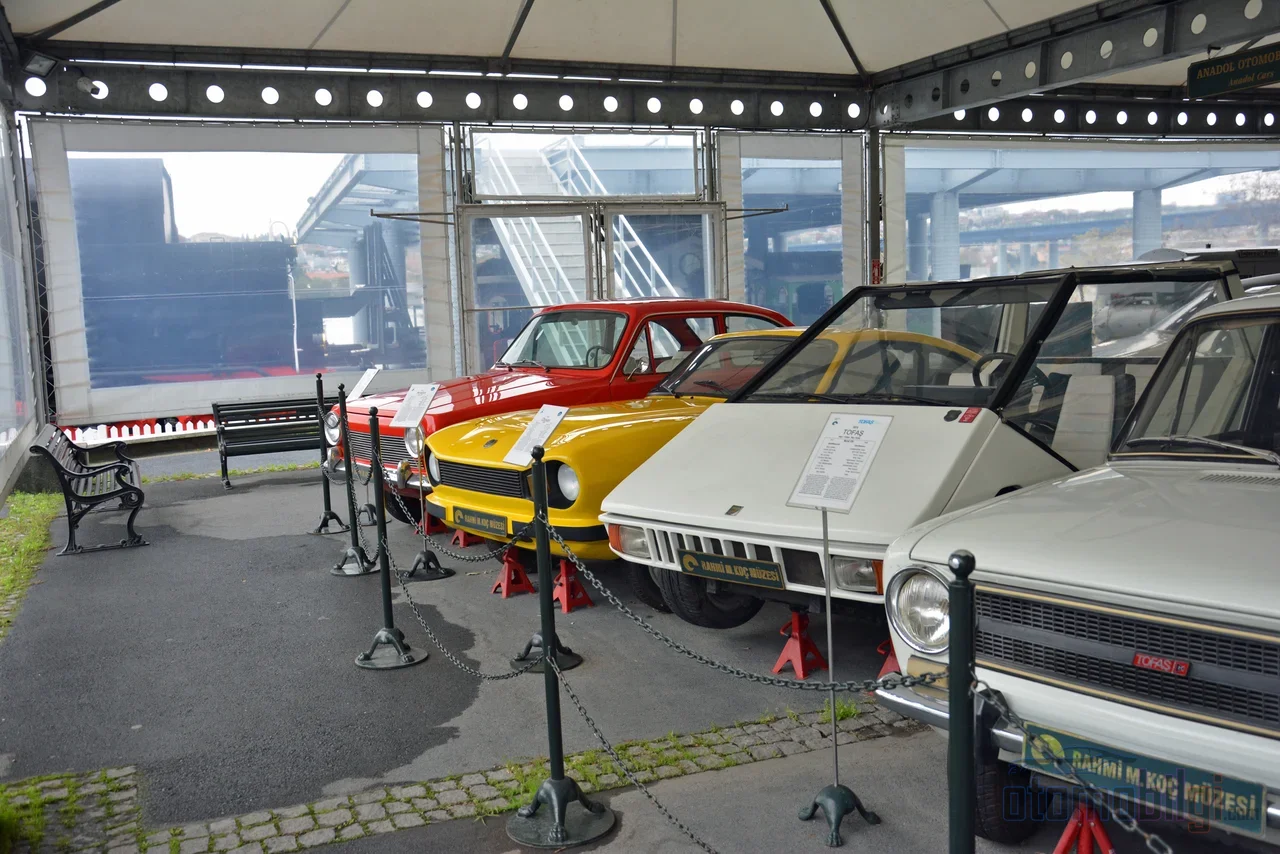
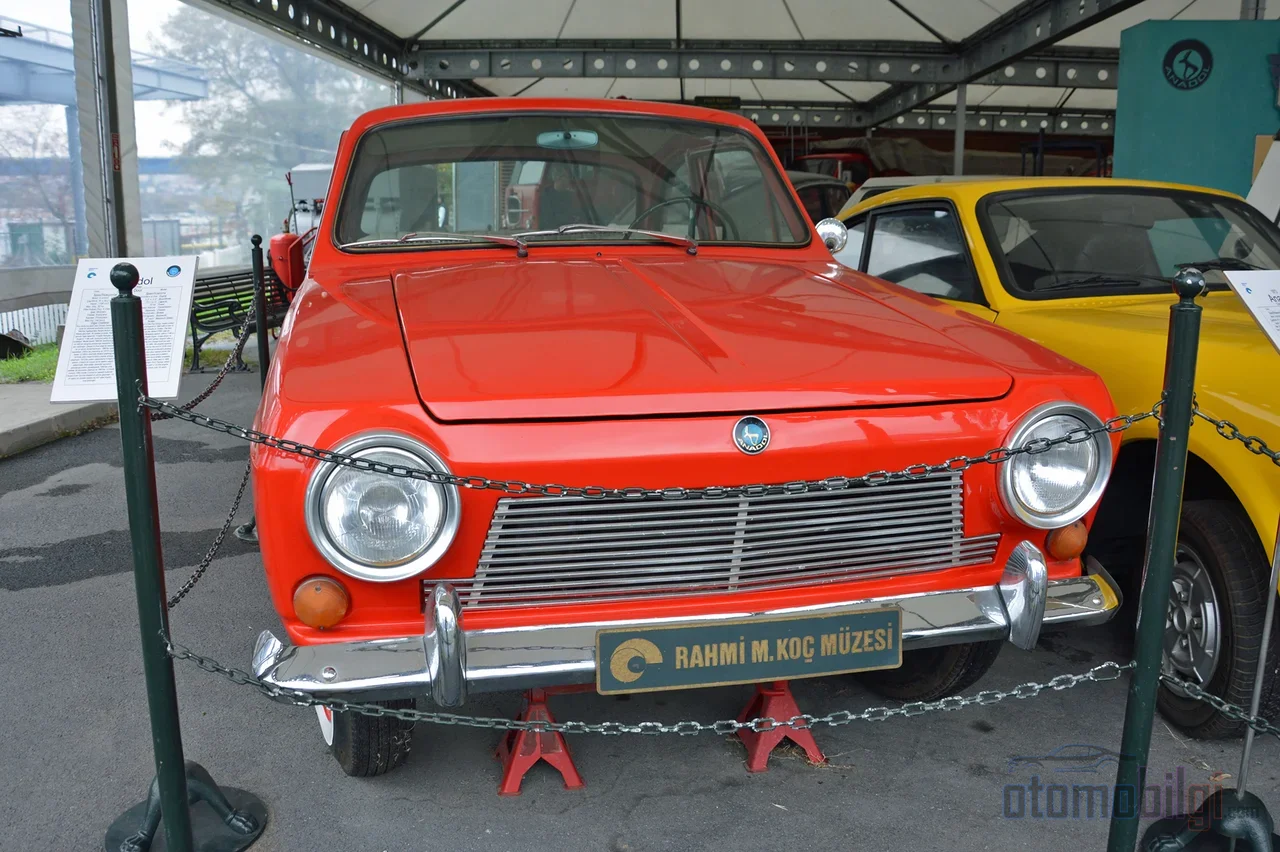
Five years after the Devrim, on December 19, 1966, the Anadol entered the production line; it was displayed on January 1, 1967, and went on sale on February 28, 1967. This time, Otosan, established as a Koç Holding-Ford partnership, was behind the project; the foundations of the Istanbul factory had been laid in 1959.
The Anadol's concept was pragmatic: the body design was commissioned to British Reliant as a prototype, a fiberglass body was chosen, and mechanical parts were supplied by Ford. So it was not a fully domestic vehicle, but it was the first automobile designed and mass-produced in Türkiye - and it remained in production for a full 25 years, until 1991. In 1971, the Anadol STC-16, designed by Eralp Noyan and the first sports car Anadol STC-16 designed and built in Türkiye, hit the roads.
Why did Anadol production end in 1991? The sources offer no single, clear reason; the safest statement is this: Anadol was an endeavor that tried to exist in the free market but became a sharp counterexample because it could not be sustained. The reality behind this assessment is that a fiberglass-bodied model with Ford mechanics could not achieve scale in a small market with uncertain demand.
The licensed assembly era: how did the parts industry emerge?
An interesting detail: automobile production efforts in Türkiye were actually first tried in 1929 with Ford's assembly line in the Istanbul free zone; the economic conditions of the 1930s ended this effort. The foundations of modern industry were laid in the 1950s, and the main development rests on the assembly factories established between late 1960 and early 1970. Otosan entered the picture in 1959, the Anadol in 1966, and TOFAŞ also joined within this wave.
The most enduring legacy of the sector, which was established entirely as an assembly industry in the 1960s, was the supplier industry that developed alongside the main industry. Think about it: an assembly economy means putting together ready-made parts. But as licensed production continued, the need for spare parts, quality standards, and scale demand made a supplier ecosystem in Türkiye inevitable. The fact that projects like Togg can rely on a foundation today is precisely the work of the parts industry that took root in this period. The "undocumented process" problem the Devrim faced was solved here: the available knowledge was no longer just a few drawings, but a functioning production chain.
The 1990s and 2000s: Türkiye becomes a production base
From the late 1980s onward, the picture changed: Türkiye ceased to be a country merely assembling vehicles for the domestic market and became a production base for global brands. Hyundai Assan was established as a 50-50 partnership between Kibar Holding and Hyundai Motor; the Izmit plant's opening and trial production took place in 1997. (Later the majority stake passed to Hyundai Motor and the company was renamed Hyundai Motor Türkiye.) Honda's production in Bursa and Ford Otosan's growing investments are other pieces of this picture.
Bursa stood out in this period as an automotive production base: in just 7 months, approximately 200,000 vehicles rolled off the line - with Hyundai Assan producing 96,506, TOFAS 77,638, Honda Turkiye 16,337 and Ford Otosan 2,703. Today, a new layer has been added to the picture: Hyundai Motor Türkiye announced a 715 million euro investment with Hyundai Mobis for electric vehicle battery and cell production, 55 million euros of which is allocated to cell production. The path from assembly to the parts industry now extends to the most critical components such as battery cells.
Togg: the completion of Devrim?
In the official and political narrative, Togg is presented as "the completion of a story left unfinished after 61 years." But is it really so? The honest answer: partially. Togg currently has two models on sale - the T10X and the T10F. In the first half of 2026, the electric vehicle market share rose to 18.5% while total EV sales declined; Togg nevertheless remains the leader of the electric market. In February, the top two spots in electric sales rankings belonged to Togg: T10F with 1,557 and T10X with 1,393 units. According to ODMD data in September 2026, it held the market leadership position with combined sales of 6,692 units for the two models.
Care is needed when interpreting sales figures: different calculations yield different totals, and market share and absolute sales are not the same thing - share can grow while the market shrinks. A cautious but fair assessment is this: Togg is completing the three missing legs of Devrim. There is series production, there is a documented manufacturing process, and there is a dealer-service network. But there is no proof of a direct, uninterrupted continuity from the Devrim-Anadol line to Togg; the rupture in between is real, and the phrase "broken line" is legitimate precisely for this reason.
The clearest lesson of 65 years is this: an automotive industry is not built with a single prototype or a single model. Devrim proved the idea, Anadol attempted series production, licensed assembly gave birth to the parts industry, the production-base era brought scale - and Togg is an attempt built on this accumulation, deserving an unexaggerated evaluation but still under examination. Do you think the next 65 years will finally make this line uninterrupted?