Partnership Years: How the Sabancı, Kırcaali and Oyak Factories Turned Türkiye into a Producer
Share This Page
Joint production agreements established in the 1990s, such as Toyota-Sabancı, Hyundai-Kibar, and Oyak-Renault, marked a turning point that moved Türkiye beyond being a country that merely assembles vehicles, transforming it into an industrial nation that produces the majority of its parts. On this page, we explain why those partnerships were formed, how local added value increased, and how the road opened to today's production infrastructure - even to Togg.
Highlights
- Toyotasa, established on July 1990, with 350 million dollars was the largest Japanese investment made in Türkiye.
- Hyundai Assan started production in İzmit in 1997 with a 180 million dollar investment; today it carries the name Hyundai Motor Türkiye.
- Oyak Renault in Bursa has produced more than 8 million vehicles ; it closed 2025 with 387,113 units .
- Renault models produced in Bursa reach a localization level of at least 40% ; in the Boreal this rate is 50.51%.
- Togg, with its first automobile holding intellectual property rights became ready for mass production on October 29, 2022.
From Assembly to Production: Why and How Were the Partnerships Established?
There are many pages telling the story of Devrim's failure and Anadol's bold attempt. But the real question is this: if Türkiye transformed into a genuine producer, who did it, when, and how? The answer largely lies in the joint production agreements signed in the 1990s and early 2000s. A country that had to import even the engine for Devrim became, thirty years later, capable of producing hundreds of thousands of vehicles a year, most of them with local parts. Of course it did not happen overnight - but it happened step by step, factory by factory.
The roots of this road reach further back. The sector gained momentum with commercial vehicle production in the early 1960s and moved on to passenger cars in the 1970s; Oyak Renault's factory in Bursa was founded in 1969 and started production in 1971. But in that era, the models and products came "licensed": we assembled here the vehicle designed by the foreign partner. The real leap came in the 1990s, when global giants knocked on Türkiye's door to make direct investments. And why did they knock? Because Türkiye was now both a growing market and a production base close to Europe, with cheap and skilled labor. Both sides were winning - and most importantly, our supplier industry was also nourished by this joint growth.
Toyotasa: The Story of a Giant Japanese Investment
The process began in 1984 with the Toyota distributorship; in 1990, the first spark was struck. In May 1990, former Toyota Group Chairman Eiji Toyoda visited Türkiye, and shortly afterwards, in July 1990, Toyotasa was established: 50% of the shares belonged to Sabancı Holding, 40% to Toyota Motor Corporation, and 10% to Mitsui. With its 350 million dollar investment, it went down in history as the largest Japanese investment made in Türkiye . The factory's foundation was laid in May 1992, and in September 1994 the first vehicle - the 7th generation Corolla Sedan - rolled off the line. The following year, the Corolla Wagon also entered production; in 1996, the ISO 9001 certificate arrived.
Restructuring, Crisis, and Sabancı's Exit
In October 2000, a significant move was made at the company: production and sales were separated. At the production company, Toyota's share rose to 65%, while at the sales company, the majority stake (65%) remained in Sabancı's hands. The partnership clearly stated that the factory would become a production center serving global markets and that localization would be increased alongside rising production. In other words, the plan was clear: produce in Türkiye, sell to the world, and source parts locally.
But life doesn't listen to plans. The November 2000 and February 2001 crises dealt a heavy blow to the industry. In a factory with a capacity of 100,000 units, only 1,019 cars were produced in the first eight months of 2001 - the lowest capacity utilization among the 18 companies in the sector, just 1.5%. Sakıp Sabancı's famous words sum up the situation:
"Production at my Toyota today is zero."
On October 5, 2001, Sabancı transferred its remaining 25% production stake to Toyota and completely withdrew from automobile manufacturing; the company was renamed Toyota Automotive Industry Türkiye (TMMT). With regret? Of course. But that investment stayed with us: today the facility has reached an annual 280,000 vehicles capacity, more than 5,000 employees, and accumulated investment exceeding 2.12 billion euros; it exports to more than 30 countries. The partnership dissolved, but the production culture, trained workforce, and accustomed supply chain remained.
Hyundai Assan: A 50-50 Partnership Between Kibar and the Korean Giant
Hyundai's relationship with Türkiye is very old. ASSAN, part of Kibar Holding, had been marketing Hyundai vehicles in Türkiye since the 1960s; in 1990, Kibar became Hyundai's official distributor. Then came the factory's turn: Hyundai Assan, established as a 50-50 partnership between Hyundai Motor Company and Kibar Holding, opened in İzmit with an 180 million dollar investment, and production began in July 1997. The initial capacity was 50,000 units per year - today approximately 2,500 people work at that factory. In 2025, the trade name was updated to Hyundai Motor Türkiye Automotive Industry ; in other words, the partnership is still standing, its name has simply matured.
In my opinion, this example is the most balanced of the partnerships. Both sides were equal partners from the start, and neither showed the other the door because of a crisis. In short, it grew steadily without experiencing the tragic loss of the Toyota-Sabancı story. You can think of the workings of this model as a kind of test stage: the foreign partner brings the technology and quality culture, the Turkish side brings the market and commercial network, and the resulting production gradually localizes both the parts and the people.
Oyak Renault: 8 Million Vehicles from Bursa to the World
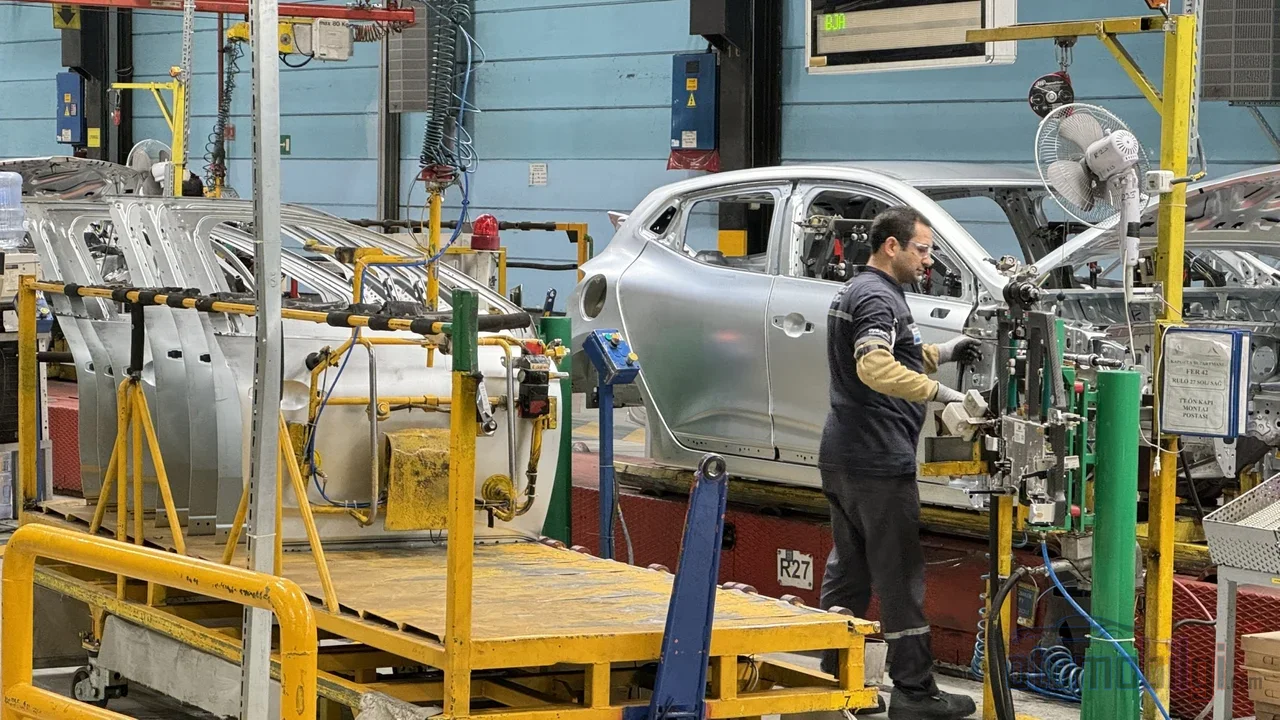
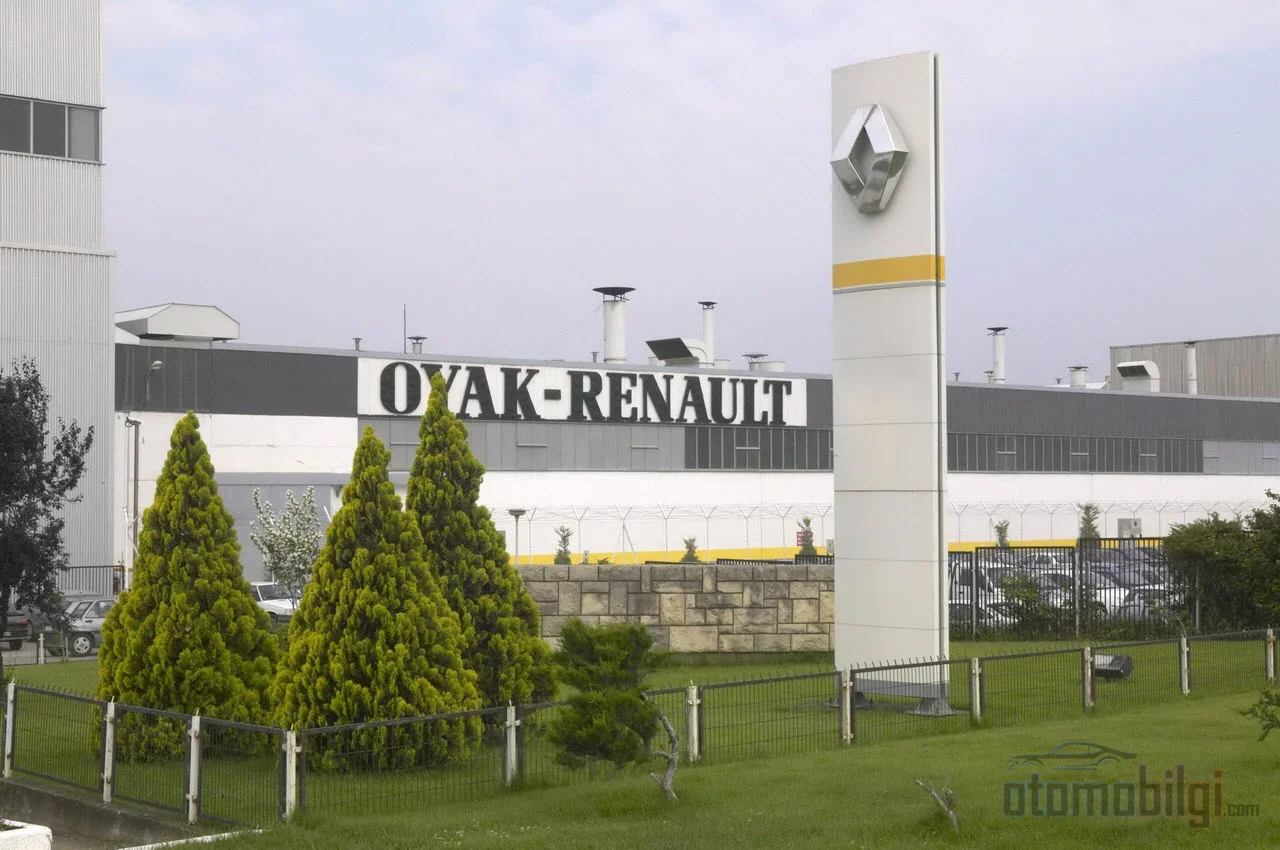
Oyak Renault is considered the grandfather of this story: founded in 1969, production began in 1971. The facility in Bursa has produced more than 8 million vehicles to date; its annual capacity, according to Renault's official figures, is 360,000 cars and 750,000 engines. Renault describes this facility as its major base outside Western Europe. Moreover, in 1996 it was the first Turkish automobile manufacturer to receive the ISO 9001 certificate also holds the title of being one here. In 2018, 336,888 automobiles and 602,421 engines were produced, and roughly 80% of production was exported. In 2025, the factory closed out the year with 387,113 units of production - proof of how far long-lasting partnerships can go.
How Local Is the Localization Rate, Really?
Here is the most beautiful part of the story. Today, all models produced in Bursa reach a localization level of at least 40% The even more striking fact is the Renault Boreal model developed for Türkiye, for which a 50.51% domestic contribution rate has been declared - meaning more than half of the vehicle's value consists of parts and labor produced in Türkiye. Let's also be honest about this: some question whether Oyak Renault's closed-market and licensed production model developed a domestic car vision. The debate is fair; but these figures are also on the table. Localization is not 100% on the day a factory opens; it climbs over the years together with the supplier industry. Bursa's becoming the automotive center of Türkiye with its main and subsidiary industry firms is precisely the result of this accumulation.
How Did the Partnerships Grow the Supplier Industry?
Perhaps the most lasting legacy of these three factories is not the vehicles they produced, but the parts industry they nurtured. Just think: if a factory produces tens of thousands of vehicles a month, every screw, every seat, every wiring harness must arrive on time from where it is made. This is called "just-in-time supply"; that is, the part reaches the production line at the exact moment it is needed - like having salt at hand when you put the pot on the stove at home. This discipline forced suppliers in Türkiye to produce at world-class quality. The result? The Automotive Industry Association was established for motor vehicle and tractor production with the participation of 17 industrial organizations; Bursa, the surrounding area of Izmit, and the Kocaeli line turned into a parts industry network. Today, Türkiye has surpassed 18 European countries in the number of automotive assembly and production facilities - one of the direct results of this production culture.
The Road from This Accumulation to Togg
Now let's come to the real question: What does this whole story have to do with Togg? It would be an exaggeration to make a direct statement like "these partnerships created Togg"; sources that explain that connection in detail are also limited. But this chain cannot be avoided: Thanks to joint production agreements, Türkiye acquired a supply chain capable of producing every part of an automobile, with quality certifications, exporting on a global scale, along with a trained engineering workforce. Togg was built precisely on this infrastructure. It made its first automobile with intellectual property rights ready for series production on October 29, 2022 and aims to become a production center in e-mobility with its Gemlik facility. The company has targets, within a 15-year horizon, of contributing 50 billion euros to GDP and 7 billion euros to the current account deficit, along with 5 thousand direct and a total of 20 thousand jobs. In other words, every step taken on that road from assembly to production culminated in the vehicle rolling off the line in Gemlik in 2022.
Conclusion: Partnership or Subordination - Or Both?
Let's take an honest look at the balance sheet. Partnerships didn't turn Türkiye into a designer on its own; they were our school of "learning to produce." Some partnerships fell apart in crisis (Toyotasa), some surpassed half a century (Oyak Renault), some grew with a 50-50 balance (Hyundai Assan). But they all share one common denominator: while working with foreign capital, our parts industry, our workers, and our engineers gained experience. Rather than looking at Togg and saying "I wish it had existed earlier," I think it's more valuable to know how and by whom that infrastructure was built. Isn't it a wonderful legacy, don't you think?
Sources
- Toyota Türkiye - Wikipedia
- New Structure at Toyotasa - Sabancı Holding
- History - Hyundai Motor Türkiye
- Hyundai - Invest in Türkiye
- Hyundai Assan Otomotiv - Wikipedia
- Oyak Renault completed the year with 387,113 units produced
- History - Oyak Renault
- Developed for Türkiye, Produced in Bursa: New Renault Boreal - OYAK
- Oyak Renault - OSD
- 2026 Motor Vehicles Domestic Contribution Ratio Declarations - Ministry of Industry and Technology
- OYAK Renault - Renault Türkiye
- Development Perspective of the Automotive Industry in Türkiye - SBB
- Automotive Industry Sector - Istanbul Chamber of Industry
- Bursa Province Automotive Sector Report - BEBKA
- Türkiye surpassed 18 European countries in the number of automotive assembly and production facilities - Anadolu Agency
- Togg - Wikipedia
- About Togg - Togg
- Togg will develop both the country and the region - TRT Haber