Devrim 1961: The Real Story of the Car Built in Two and a Half Months
Share This Page
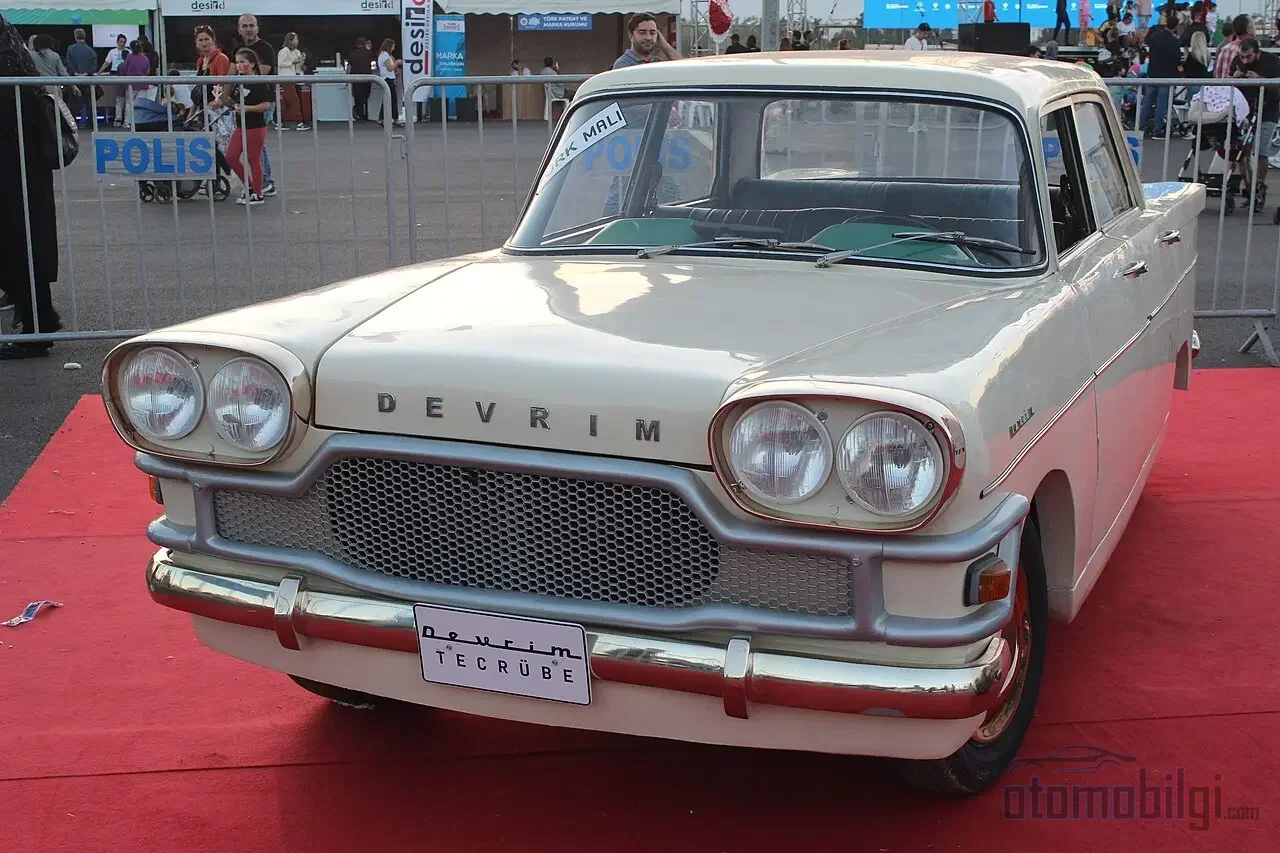
Devrim was the first car designed and produced in Türkiye; It was a project of four prototypes brought to life at the Eskisehir Railway Factory in 1961, on the instruction of President Cemal Gursel, in about 129 days. At the Republic Day ceremony on October 29, 1961, the black car ran out of fuel and stopped after a few hundred meters, and for years it was told as an anecdote of failure; yet in reality the ceremonial run was completed flawlessly with another Devrim, and the project's engine, transmission and chassis came largely entirely from Turkish workshops.
Highlights
- The first Turkish car was produced in about 129 days, with four prototypes completed (2 black, 2 cream)
- With a budget of 1,400,000 liras, 24 engineers from various institutions were assigned to the project
- The engine block was cast in Sivas, and the engines and transmissions were produced at the Ankara Railway Factory
- The reason for the halt on October 29, 1961 was not sabotage, but the fact that the tanks were kept empty for safety reasons
- Only one of the four prototypes is on display today at the TURASAS Devrim Cars Museum in Eskisehir
How was the Devrim car born? A race that started overnight
If it were you, and you were told "we are going to build a car" without any mass production experience, your first reaction would be "why," wouldn't it? Well, in Türkiye in 1961, President Cemal Gursel's answer to those asking this question was mercilessly clear. Opening the Automotive Industry Congress on May 15, 1961, he said "a modern country must produce its own means of transportation" and described those who said it was impossible to build cars in Türkiye as "the product of dark minds."
Shortly before the congress, on April 22, 1961, a "top secret" prime ministry letter had already gone to the Ministry of Transport: a car engine unique to the country and a domestically produced car sample were requested. The heart of the project began beating on June 16, 1961; that day, the managers and engineers of TCDD Factories and Locomotive Departments held a working meeting, and a suitable workshop was determined. The production site became the Eskisehir Railway Factory.
Then things really sped up. 24 engineers working at different institutions were brought together under a single team, and 1,400,000 Liras was allocated to the project. The delivery date was clear from the start: October 29, 1961, the 38th anniversary of the Republic. So this team had to finish the work that began in mid-May by the end of October. It was a race that extended from the technical knowledge emerging from the railway workshops all the way to the next morning's newspaper headlines.
There are small differences among the figures circulating today about the project; some accounts say the team consisted of around 20 engineers, while others say nearly 200 engineers and technicians worked on it. An interesting detail conveyed by the Eskisehir Governorship concerns the psychological side: it is known that Emin Bozoglu took on a special role so that the engineers would not remain under pressure. In other words, a project that managed human morale as much as the factory's electricity.
How much of the Devrim was truly domestic?
This is the least known but most impressive aspect of the Devrim. The car wasn't born only in Eskişehir; the country's railway factories were divided like an assembly line, with each factory producing the parts assigned to it. The engine block was cast at the Sivas Railway Factory, and the engines were assembled at the Ankara Railway Factory. The transmissions were also produced in Ankara, and sources state that they were recorded as "entirely domestically produced."
Let's think of it with a simple analogy: Devrim's heart (its engine) was forged in Sivas, its nervous system (its transmission) was built in Ankara, and its body (chassis and assembly) was completed in Eskişehir. Technical documents report that the engine, chassis, differential, and drivetrain components were all produced in Türkiye. So this was not a simple car assembly job; it was an engineering operation that designed and manufactured from scratch parts never before made in the country.
The number of engines produced is also proof of Devrim's trial-and-error process: a total of 10 engines were produced, of which 4 were of the A4L type. The four-cylinder, four-stroke engine had a bore of 81 mm, a stroke of 100 mm, a compression ratio of 6.8:1, a displacement of 2070 cm³, and a maximum speed of 3600 rpm. On the transmission side, 3 units of Type A and 4 units of Type B were produced. Here is Devrim's technical identity:
| Specification | Value |
|---|---|
| Engine type | A4L (50 HP), A4T (60 HP), B3T (70 HP) |
| Displacement | 2070 cm³ |
| Bore x stroke | 81 mm x 100 mm |
| Compression ratio | 6.8:1 |
| Fuel system | Carbureted |
| Maximum speed | 135 km/h |
| Length / width / height | 4500 / 1800 / 1550 mm |
| Curb weight | 1250 kg |
| Number of prototypes produced | 4 (2 black, 2 cream) |
October 29, 1961: The "Devrim traveled 100 meters" headline and the fuel crisis legend
Now we come to the most famous scene of the story; the big day, Republic Day. The vehicles were sent to Ankara by train. In fact, even the black car's polish was applied during the train journey; imagine it: the last night before the show, a prototype being polished along the way.
So why did the "it ran out of fuel" legend arise? The logic was actually this: sparks from the chimney of the coal-powered locomotive carrying the vehicles posed a safety threat. For this reason, the tanks were filled with only enough gasoline for maneuvering. There was one more complication; because Devrim's compression ratio had been increased, it required high-octane gasoline, and at the time this fuel was available only in Ankara. In other words, the right fuel needed to catch up with the car.
On the day of the ceremony, President Gürsel boarded the black vehicle before it was refueled, and the car stopped after about 100 meters (some accounts say a few hundred meters). Gürsel got out and went to Anıtkabir in the cream-colored gasoline-powered vehicle; both vehicles later completed the ceremonial runs without any problems. The next morning, however, the newspapers wrote that "Devrim traveled 100 meters and stopped," and the car was mocked for years. Yet we should keep this sentence in mind: The car didn't stop because it couldn't go on; it stopped because its tank was empty as a safety precaution.
There is also a quote from the period circulating around this event: The quote attributed to Gursel is roughly passed down as "We built a car with a Western mindset, but forgot to add fuel with an Eastern mindset." There are different versions of the same quote; since it is hard to verify exactly how it was said, I think it is more honest to remember it here not as a written record but as an anecdote reflecting the humor of that era.
Common misconceptions about the Devrim: Who led it, who got in?
In such a controversial story, legends naturally emerged as well. Let us correct the most common one: The claim that "the vehicle did not run and Necmettin Erbakan was at the head of the team" is wrong. Erbakan is mentioned as the pioneer of the cause, but sources clearly state he was not the leader of the project team. Behind the Devrim stood the engineering staff of the railway factories; they must not be forgotten.
Another popular mistake concerns the location: Gursel got into the Devrim not in Eskisehir but in Ankara. So narratives claiming "the President got into the vehicle at the factory and set off" do not match the period photographs. Also, the Eskisehir Governorship's page states that the project began with a request Gursel "voiced at a TUSIAD meeting"; this statement is chronologically impossible because TUSIAD was founded in 1971, while the project dates to 1961. Since even official sources can contain such slips, I say checking Devrim narratives against multiple sources is essential.
The media front after the launch was not one-sided either. The article "Hopes Ran Out with the Gasoline," signed by Mahmut Kiper in Cumhuriyet newspaper, shows the attacks did not focus only on whether it "ran or did not run"; at the time, it was recalled that an imported car was sold for 50 thousand liras. In later years, a "permit document" debate also entered circulation, but detailed, verifiable material on this topic is unfortunately insufficient; making a definitive claim here would be unfair.
Why did mass production not begin? The real obstacles that stopped the Devrim
Here is the real question. The Devrim was a beautiful prototype, but the distance between a prototype and mass production is as long as the distance between a recipe and a factory. The most fundamental reason is this: The vehicles were produced as prototypes and the process was not sufficiently documented; only a few technical drawings remained. In other words, even if someone said "let us set up a factory" today, there was not even a complete production document on paper.
The second reason was economic. In Türkiye of 1961, demand for automobiles was limited; to make series production sustainable, a distribution network, dealerships, and a maintenance and spare parts network had to be established, and keeping that standing under those conditions was difficult. Evaluations of the project's purpose also point to the same point: The Devrim was planned not to establish a permanent production model but to demonstrate the possibility that "Türkiye can build an automobile"; there was no infrastructure, supply chain, or long-term mass production planning. Changing economic conditions and shifting political-strategic priorities further weighed down the picture.
Some commentators say the bad propaganda that spread after the launch was effective in ending production early, and that the cost debates marked the beginning of the project's end. These are assessments intertwined with the period's politics that should be read impartially; but one common conclusion is certain: The cause of Devrim's death was not a faulty engine, but the absence of an industrial plan on which it could build.
The fate of the four prototypes: What remains today?
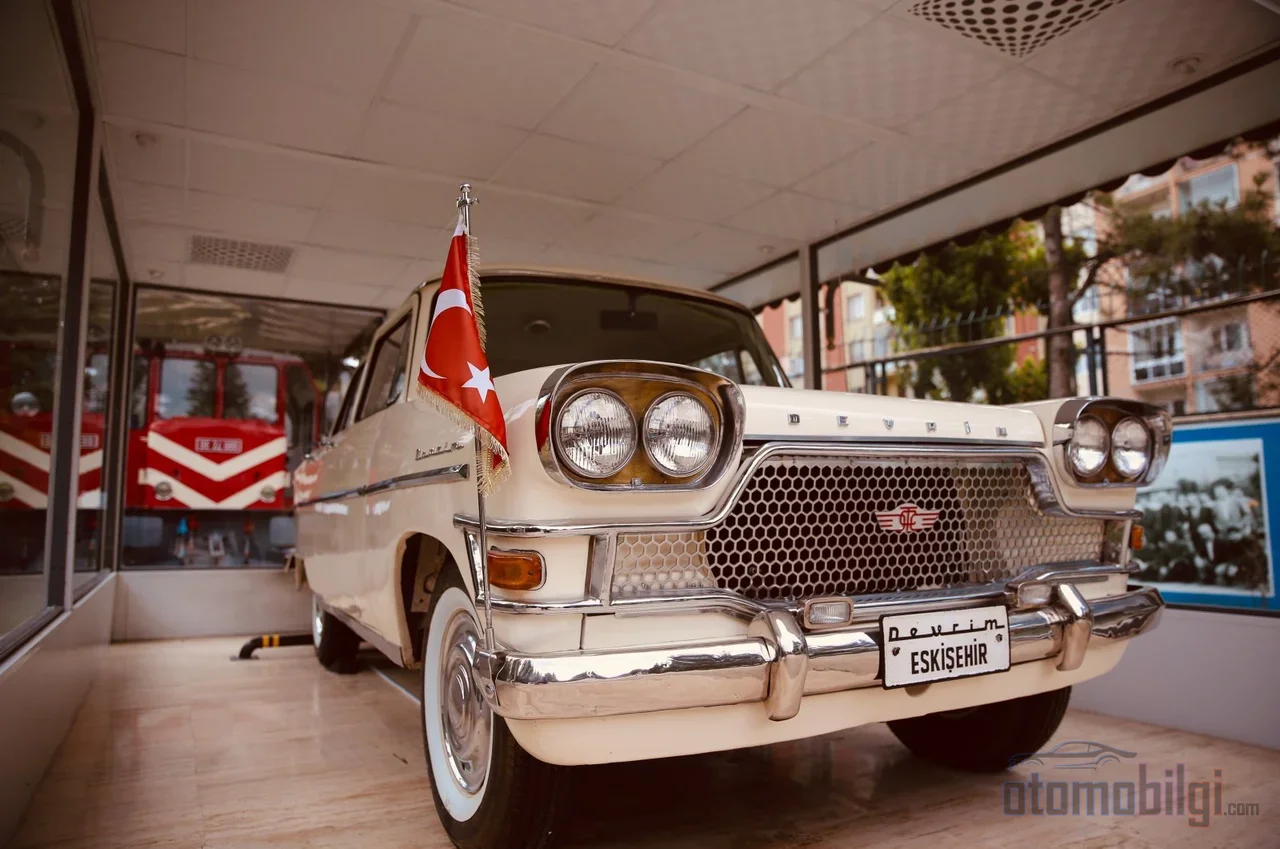
Of the four prototypes (two black, two cream), only one has survived to this day, and that vehicle is currently on display at the Devrim Cars Museum of TÜRASAŞ (formerly TÜLOMSAŞ) in Eskişehir. What happened to the others, like most details of the project, remains unclear. Although the sole surviving example is stationary, its story lives on: Şecaattin Sevgen, one of the project's engineers, sat in Devrim's seat again 58 years later and uttered this sentence:
If you set your mind to doing something, you can do even the impossible.
The archive front is also rich. Ismail Alkılıçgil's archive contained 50 photographs showing the stages of Devrim's construction, and his son Varol Alkılıçgil brought these frames to light. The "Historical Documents" and "Newspapers of the Period (1961)" sections on TÜRASAŞ's website are still browsable; the headline in Milliyet's October 30, 1961 issue also noted history: "The claim that cars cannot be built in Türkiye was refuted by Devrim." Kemalettin Vardar, the project's youngest engineer, shared details about launch day in various interviews over the years, such as "The reason it stopped is unknown"; some of the accounts overlap with each other, while some differ.
Devrim also became a subject of culture. The film "Devrim Arabaları" ("Cars of the Revolution"), directed by Tolga Örnek, was released in 2008; before it, a 1997 Anadolu University documentary, a 2006 Sevcan Aytaç documentary, and TRT's 2008 documentary "Yarım Kalan Devrim" ("The Unfinished Revolution") were made. Prof. Dr. Muhittin Şimşek's 2008 book "Yarım Kalan Devrim Rüyası" ("The Unfinished Dream of Revolution") also addresses the subject in an academic framework.
After Devrim: The road leading to Anadol, Tofaş and TOGG
Devrim stopped, but the journey did not end. The Otosan factory in Istanbul was established in 1959 as a joint venture of Ford and Koç Holding; in 1960 it produced 4 Ford Consul and 8 Ford Thames vehicles per day. Production of Türkiye's first mass-produced car, the Anadol A1, began in 1966. The nuance here is important: Devrim was the first Turkish car designed and produced, while Anadol was the first mass-production brand. Anadol's chassis, engines and gearboxes, however, were supplied by Ford; that is, a licensed assembly model. Then came Tofaş in 1968, the developments of 1971, and today the line extends to TOGG. Looking at this route from Devrim, what we see is this: The four prototypes produced in 129 days did not start an industrial revolution, but they proved that the possibility existed. Devrim is not an ending; it still stands as the boldest question mark in Türkiye's automotive history.
Sources
- Devrim (automobile)
- The Devrim Car
- A Success Story | The Devrim Car | TÜRASAŞ
- He sat in Devrim's seat again 58 years later
- Türkiye's automobile journey from Devrim to TOGG
- Photos of Devrim, the 'first domestic car', taken by his father
- The Devrim Cars; the First Domestic Automobiles of Republic History
- The Devrim Cars
- The facts behind the Devrim legend
- Hopes ran out with the gasoline