How Did Türkiye's Automotive Supplier Industry Reach World-Class Status?
Share This Page
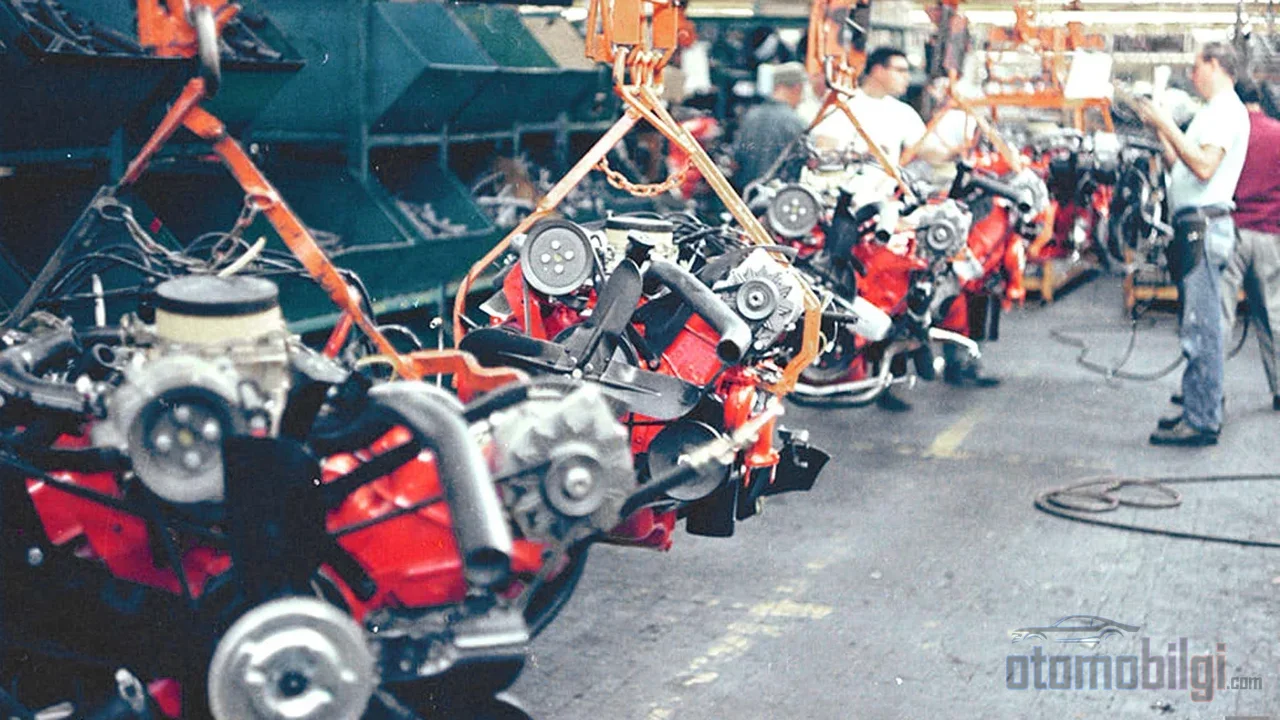
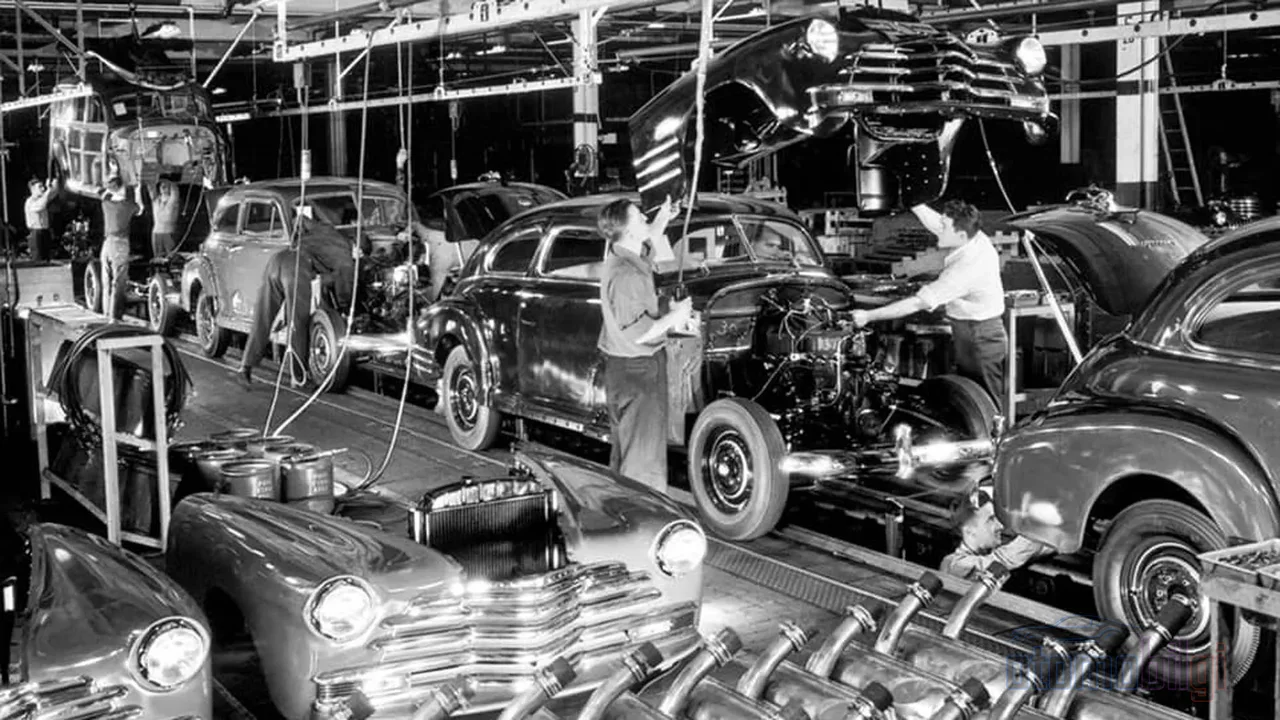
Türkiye's automotive supply industry, which began as small workshops supplying parts to assembly lines in the 1960s, has transformed into a supplier network that feeds Europe's fifth-largest automotive base and exports tens of billions of dollars a year. On this page, we tell the story of that invisible hero, generally overshadowed by the narratives of the Devrim and Anadol, but on which everything else stands.
Highlights
- Automotive exports in 2025 hit a historic record with $41.5 billion; $17.1 billion of it came from the supply industry. Devrim
- remained only 4 prototypes in 1961; the parts industry behind it was lacking.
- The localization requirement for Tofaş (1968) and Oyak-Renault (1969) laid the foundations of the Turkish supply industry.
- Today, approximately 1,100 parts suppliers supporting OEM production operate in Türkiye.
- Türkiye ranks 5th in Europe and 13th in the world as an automotive base.
What Exactly Is the Supply Industry, and Why Is It So Important?
Think of it this way: Imagine an automobile factory as a kitchen. The chef's job (the main industry) is to combine the ingredients and produce the dish (the car). But who prepares those ingredients? Who builds the oven, who grinds the flour? That's the supply industry in the background. Engine parts, transmissions, seats, cables, glass, brake systems... There are dozens, even hundreds of companies producing all of these. There is only one brand written on the car, but perhaps 500 companies bring that car to life.
When the story of Türkiye's automobile journey is told, eyes always turn first to the Devrim, then to the Anadol, then to Tofaş. Yet the real story took place behind the doors of those factories, in the companies delivering parts to the production line. And the first chapter of this story begins with an unfortunate failure.
Why Couldn't the Devrim Move to Mass Production?
1961. By order of President Cemal Gürsel, an automobile is designed and produced at the Eskişehir Railway Factory: Devrim. The first automobile designed and produced in Türkiye. Its transmissions were produced entirely domestically at the Ankara Factory. Sounds great, doesn't it?
But things don't go smoothly. Serious problems arise in fitting the engine to the body, in the clutch, and in the throttle and brake control mechanisms. The result? Only 4 prototypes can be produced, and mass production never begins. In the popular narrative, the vehicle running out of fuel during its presentation leads to its declaration as a "failure"; yet the real story lies much deeper.
Official statements highlight two fundamental reasons: In those years, annual automobile demand in Türkiye was below 5 thousand, meaning there was no economic scale required for mass production. Second, the weakness of the industrial infrastructure, and especially of the parts industry. Establishing an automobile factory doesn't work without building an ecosystem behind it that will supply parts door to door. Perhaps the Devrim's greatest legacy was this: showing that producing automobiles in a country is not merely a matter of a single factory. This lesson is far more important than the "out of gas" scenes that traditional narratives highlight.
Anadol and the First Localization Steps
Türkiye's roots actually go back much further. The 1950s were the period when the foundations of the Turkish automotive industry were laid: in 1954, jeep and pickup production for the army began, followed by the opening of truck factories. In 1959, Otosan was founded through the initiative of the Koç group and Ford Motor Company. And finally, on December 19, 1966, at Otosan's Istanbul factory, Anadol entered series production - the first serious automobile manufacturing effort.
The first model used a 1198 cc Ford Anglia engine, and 1,750 units were produced in the first year. Until production ended between 1982-84, the total reached approximately 87 thousand units (some records show this figure as slightly above 93 thousand; the difference stems from discrepancies in counting related to the year production ended). Annual production never exceeded 7,200 - meaning Anadol, too, could not fully overcome the scale problem. But Anadol's real significance is different: it was the first concrete attempt at gradually transforming an assembly line into "production." And of course, the support Otosan gave to the supply industry during this process was a rehearsal for the next chapter.
From Assembly to Manufacturing: How the Localization Requirement Gave Birth to an Industry
The industry's real transformation began with the founding of Tofaş in 1968 and Oyak-Renault in 1969. But the real issue was not the factories themselves: these factories were required to reach a certain localization rate. The import substitution policy of the Five-Year Development Plans era brought with it the expectation that "every part be localized."
The state's pressure was so clear that Hüseyin Bayraktar, one of the names who lived through this transformation of the industry, summarizes the message the state left for Tofaş and Renault as follows:
Do not import; we will not grant licenses.
The result? The main manufacturers were forced to develop local suppliers. And this obligation turned Tofaş and Oyak-Renault into two factories that laid the foundations of today's Turkish supply industry. In the 1970s, 2-3 supply industry factories were established every year. A striking detail: these facilities were set up with the most up-to-date machinery available in Europe at the time, and according to some, the quality advantage of that initial investment is still felt today. A marriage that began by force has turned into a resounding success.
The Birth of TAYSAD: No Table, No Office, But Determined
So who spoke for these rapidly multiplying companies? No one. In the 1970s, production decisions were made at "quota meetings," and the supply industry was not even represented at these meetings. It was precisely this lack of representation that became the rationale for TAYSAD's founding in 1978.
The founding story is also quite charming: it started with 5 entrepreneurs, and the first board of directors could only be formed once the number of companies reached 13. At first, the association did not even have an office, not even a table. Its first president was Reştan Aras, General Manager of MAKO Elektrik. Today, TAYSAD, with more than 400 members, has its own organized industrial zone and its own building, standing as the sector's sole representative.
The early years weren't easy of course. During the crisis years, the main industry manufacturers were squeezing the suppliers with late payments and pressure; the first "Manufacturers' Union" initiative had also been rebuffed. But there is another side to the coin: Reştan Aras partly understands why the main industry didn't accept supplier products back then - because the products weren't of the desired quality and approval from foreign headquarters was required. So the mutual learning process was somewhat painful but real.
The 90s and 2000s: Partnerships and the Quality Test
The facilities of the localization era were built with the most up-to-date machines in Europe; this provided the initial quality advantage. In the 90s and 2000s, the name of the game changed: as foreign partnerships multiplied, supplier firms became connected not only to the domestic main industry but also to global supply chains. Approval from foreign headquarters was required for a part to be accepted - while this was an obstacle at first, over time it turned into a habit of manufacturing to world standards. Step by step, Turkish suppliers ceased to be "local suppliers" and became "global suppliers."
Today's picture is like a summary of this long journey. According to Ministry of Trade data, the automotive industry in 2025 reached a historic export record of 41.5 billion dollars. Of this, 25 billion dollars belongs to the main industry, and 17.1 billion dollars to the supplier industry. In other words, about 17 of every 41.5 dollars of exports comes from those background firms producing parts. And 71 percent of exports go to EU countries - Türkiye is not Europe's fourth but its fifth, and the world's 13th largest automobile base.
Togg Was Built on This Infrastructure
Now let's return to the coin: was the domestic car produced at Togg's Gemlik facility built on an infrastructure created from scratch? Absolutely not. Spare parts cooperation has been established with 25 TAYSAD member firms, and thanks to this cooperation, it is stated that the spare parts problem was not anticipated. Decades of supplier experience also proved useful in the electric vehicle era; an account written around 2022 emphasized that a significant portion of that year's automotive exports were met by spare parts manufacturers.
On the other hand, to be honest, the question "How local is Togg?" is still being debated. The regional distribution of the supply chain is not clearly documented, and in automotive, a product's local contribution rate must exceed 50 percent to be considered "local." Some circles propose raising this threshold to 60; industry representatives, meanwhile, issue warnings that a drop in the domestic car rate poses a risk. The impact of the "Made in EU" label move on the agenda for 2026 on Turkish automotive is also on the debate list. So the story's ending hasn't been written yet - but take a look at how far ahead the starting point was.
| Period | Milestone | Meaning |
|---|---|---|
| 1954-1959 | Jeep, pickup and truck production; founding of Otosan | The foundations of industry are laid |
| 1961 | Devrim: 4 prototypes | The lesson of the lack of a parts industry |
| 1966 | Anadol series production | The first serious automobile production |
| 1968-1969 | Tofaş and Oyak-Renault | Local content requirements gave birth to the parts industry |
| 1970s | 2-3 parts industry factories every year | The supply network is expanding |
| 1978 | Founding of TAYSAD | The parts industry gains a voice |
| 2025 | $41.5 billion export record | Europe's major supply base |
From the Lesson of Devrim to Today: How Does a Country Become a Supply Base?
The beautiful part is this: the weakness that sealed Devrim's fate - the lack of a parts industry - is precisely why it has become today's strength. The government's "don't import" pressure, a localization drive that started by force, quality growing pains in the early years, then adaptation to global standards, and ultimately an ecosystem formed by approximately 1,100 suppliers. Today, the automotive supply industry alone made exports exceeding $9 billion in the first seven months of 2026.
My favorite part is this: there is no car hailed as the hero in this story, there isn't even a factory, actually. The hero is the hundreds of companies that carried parts to those assembly lines, whose products were rejected in the early years with claims that "their quality wasn't good enough," and who then became Europe's suppliers. Where do you think this story goes in the next chapter - where will the electric vehicle era take this infrastructure? I think it's already exciting.
Sources
- History of the Turkish Automotive Industry and TAYSAD
- Devrim Automobile - Eskişehir Governorship
- Devrim (automobile) - Wikipedia
- A Success Story | Devrim Automobile - TÜRASAŞ
- Anadol - Wikipedia
- What Was the Anadol Produced For? - Arabam.com Blog
- The Automotive Sector After the Republic - Askar Corporate
- Ministry of Trade: $41.5 billion export record in 2025
- OSD Summary Report July 2026
- Automotive - Invest in Türkiye
- The domestic car will not have a spare parts problem - TRT Haber
- Product Localization and Determination of the Localization Ratio - Kobitek