When Did Car Ownership Become Ordinary in Türkiye?
Share This Page
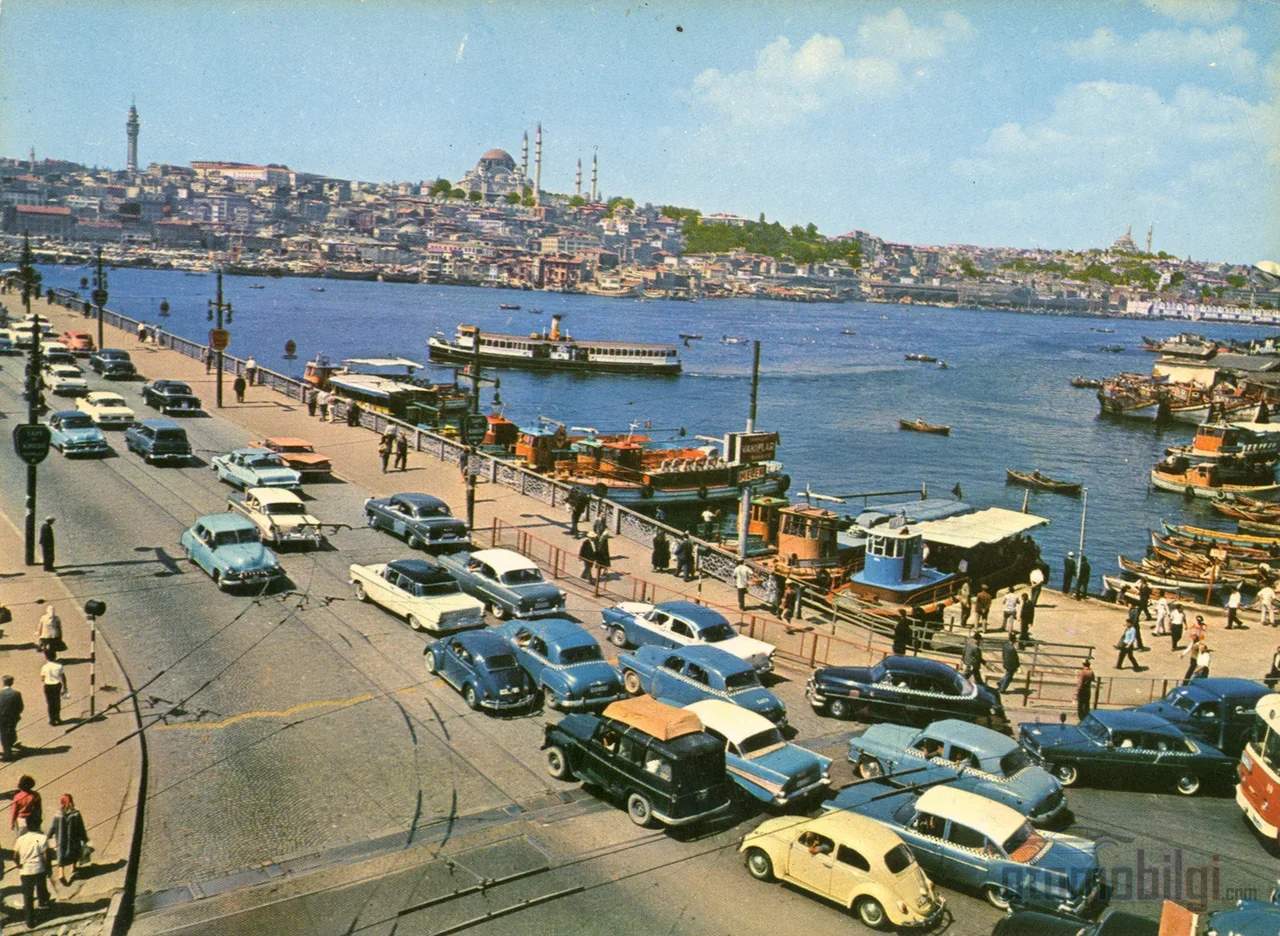
Owning a car in Türkiye was a status symbol in the 1960s; today, with approximately 17.5 million cars registered in traffic, it has become an ordinary household item. This transformation did not happen overnight: import policies, tax structures, credit conditions, and changes in household incomes turned the car from a luxury of the elite minority into the everyday vehicle of middle-income households. So how exactly did this journey unfold?
Highlights
- In 1950, there were only 10,071 cars registered in Türkiye in total.
- The first designed automobile was the Devrim (1961), and the first mass-produced brand was the Anadol (1966).
- Annual car sales reached 91 thousand in 2002, and 665 thousand units in 2013.
- Today, there are an average of 189 cars per 1,000 people; in Ankara this rate is 342, in Hakkari it is 10.
- The hybrid SCT discount introduced in 2018 lowered the rates from the 90-145% band to 45-110%.
The Years When Owning a Car Was a Luxury: The 1960s and 1970s
Today, almost no one in your circle of friends is without a car, right? But there was a time when even seeing a car in Türkiye was an exciting event. In 1950, the number of registered motor vehicles in the entire country was 29,118, of which the number of automobiles was only 10,071 . A number that could fit into the parking lot of a single large shopping mall today - the total number of cars in an entire country!
Interestingly, Türkiye's acquaintance with automotive actually goes back much further. In 1929, a 25-year production agreement was made with Ford in the free zone at Tophane, Istanbul; truck production was planned at the facility where an average of 450 employees worked, with a target of 55 cars and 15 trucks per day. But this early attempt could not turn into a permanent industry. The real leap came in the 1960s.
An academic assessment summarizes this period very clearly: the income gap caused the automobile to be seen as a status symbol for a long time. The arrival of the first car in the neighborhood was an event that neighbors watched collectively; the car was more like a family emblem than a means of transportation. For this reason, in that era, cars were polished by hand by their owners, washed on Sundays, and taken out for rides with the neighbors' children. Here's a question for you: at what age did your grandmother or grandfather buy their first car? The answer is most likely much higher than today's average.
From Devrim to Anadol: The Supply Side Shapes the Story
Half of the transition from the era of luxury to the era of ordinariness is demand, meaning people's income and credit; the other half is supply, meaning the existence of a car to buy. Türkiye wrote its own story on this second side as well. In 1961, by the order of then President Cemal Gürsel, the Devrim was produced at the Eskişehir Railway Factory; this was the first automobile designed and produced in Türkiye. However, the Devrim could not enter mass production and went down in its history as a one-off experiment.
The year that awaited mass production was 1966 was achieved. Anadol, founded by Vehbi Koç, was produced through Otosan's collaboration with the British Reliant and remained on the roads until 1991. Because it was the first car brand to be mass-produced in Türkiye, knowing the distinction is important: the first designed vehicle was Devrim, the first mass-produced brand was Anadol. With Anadol, the dream of owning a car became tangible for middle-income families for the first time; then, with the licensed production model, the factories in Bursa came into play, and the automotive market grew steadily from the 1960s onward.
The real momentum came with the free-market transformation of the 1980s. Production and exports accelerated during this period, the domestic parts industry took root, and Türkiye gradually moved from assembly to a genuine manufacturing industry. Why is this so important? Because as production capacity grew, prices fell through competition, model variety increased, and buying a car ceased to be the privilege of a small number of families.
Tax Leveler or Restrictor? The Impact of VAT and the Special Consumption Tax on Accessibility
Have you ever thought about how much of a car's sticker price is actually the cost of the car itself? In Türkiye, the answer to this question is both interesting and frustrating. For automobiles, the Special Consumption Tax (SCT) is calculated based on engine displacement and the tax base; today the rates start at 70% and go up to 220% and can climb even higher. On top of that, VAT is added. The effect of VAT is felt more strongly on high-priced vehicles, while the VAT amount paid on low-priced vehicles remains lower. A simple analogy: the tax system is like sharing a slice of a big covered pie with the state; the bigger the pie, the bigger the slice.
This structure directly shapes accessibility, and compared to the year 2000, it is clear how the rates have risen over time: that year, the lowest SCT rate for automobiles 27% and the highest rate 50% was around that level. Every shift in the tax brackets effectively determined which income group could reach which car. For commercial vehicles, since the SCT was kept between 1% and 15% the tax difference between an individual car and a commercial vehicle even influenced families' choices.
There is a good example showing that while a tax closes one door, it can open another: hybrid vehicles. With the SCT regulation introduced at the end of 2018, the rate for hybrids with 1,600-1,800 cm³ engines and electric motors above 50 kW dropped from the previous 90% to a band of 45-60% ; for models with 2,000-2,500 cm³ engines and 100 kW of power, 145% was replaced by 100-110% . This brought hybrids closer to the tax bracket of favored domestic models and significantly increased affordability. The SCT and VAT incentives introduced in November of the same year began to revive the market, which had shrunk by 34% compared to the previous year; in November 2018, Toyota with an 11.7% market share topped the list.
Credit, Income, and the Great Leap: The Sales Boom from 2002 to 2013

Here is the heart of the matter: when exactly did owning a car become commonplace? The clearest answer lies in the turning point in the sales figures. In 2002, in Türkiye, 91 thousand cars were sold. Eleven years later, in 2013, this figure broke a record and reached 665 thousand units. Nearly a sevenfold increase - a transformation that population growth or the expansion of the distribution network cannot explain.
Three forces lie behind it: rising income, production capacity, and credit conditions. The spread of individual vehicle loans in the 2000s paved the way for millions of households without cash savings to buy cars in installments. In this period, the automobile ceased to be a status symbol for the first time and became an ordinary consumer loan filed away with the bills in a briefcase. Of course, there is another side to this coin: when access to credit tightens, the market instantly holds its breath. In one January, 68,654 units were sold while the individual vehicle loan volume stood at 71 billion TL and a noticeable contraction in credit usage occurred; consumers whose credit was cut off turned to the used market or credit cards instead of new vehicles.
So the story of normalization is not one-sided. While the wave of income and credit rises, the car behaves like a household appliance, but when the wave recedes, it can move back toward the luxury category.
The Import Window: Used Vehicles Becoming a Matter of Politics
Another front in the accessibility debate is imports. Türkiye was once able to import used vehicles for a short period; this experience corresponds to a brief window reaching back 20-25 years from today, or even roughly 30 years. The aim was to open a cheaper alternative against high vehicle prices in the domestic market. Afterwards, the import gate was tightened again; in 2017, a new regulation came into effect requiring owners of vehicles imported from abroad to pay 25% of the SVMT (special consumption tax).
The subject is still on the agenda today. In 2023, Trade Minister Mehmet Bolat announced that used car imports were not on the agenda; during the same period, a 75% increase in automotive imports compared to the previous year fueled the debate. Business representatives argue that expanded used imports would turn Türkiye into a vehicle dumping ground, while the opposing side points out that, with the tax, an imported vehicle could still come in cheaper than domestic sellers. The figures show the magnitude of the supply side: car imports rose from 9.6 billion dollars in 2015 to 17.7 billion dollars in 2024.
What Does the Picture Show Today? Ownership Rates and Recent Trends
So if we say we have normalized, how normalized have we become? The number of registered cars in traffic is approximately 17,523,423 and 32.4% of them are diesel. But the real number to tell is per capita ownership: in Türkiye, on average, 189 cars fall to every 1,000 people. On a province-by-province basis, the picture differs incredibly.
| Province | Cars per 1,000 people |
|---|---|
| Ankara | 342 |
| Antalya | 259 |
| Istanbul | 243 |
| Hakkari | 10 |
| Şırnak | 15 |
| Ağrı | 21 |
This table shows that normalization has not spread at the same pace everywhere in Türkiye. Differences in income levels, urbanization, and public transportation infrastructure mean that car ownership is still being shaped by geographic and economic inequalities. Owning a car in Ankara is commonplace, while in Hakkari it is still a rare occurrence.
The recent balance, however, paints a picture swinging up and down. In 2025, the number of second-hand car transfers exceeded 6.6% with an increase, reaching 7.5 million units; transfers of 0-5 year old cars passed 2 million and the age of vehicles sold grew younger. But in 2026 the market cooled: in the January-September period, car sales shrank by 15.45% compared to the previous year, falling to 627,977 units; the total market remained at 13.39% with a decline, at 803,465 units. In September 2026, total vehicle sales fell 24.3% year-on-year, declining to 83,469 units; in July, sales of new cars and light commercial vehicles shrank by 25% falling to 80,786 units. On the production side, total automotive production in the first nine months fell by 6% and exports by 11% . Adding to this picture developments such as the Chinese brand Chery set to re-enter the Türkiye market from spring onward, one cannot help but wonder how competition will accelerate normalization.
In Summary: When Did the Car Become a Commodity?
Let's wrap up the story. The transformation of the car in Türkiye from a luxury item into an ordinary commodity cannot be attributed to a single event or date; it is a three-stage process. In the first stage, mass production in the 1960s (starting with the Anadol) created supply. In the second stage, liberalization in the 1980s accelerated production and exports. The third and perhaps most decisive stage revealed itself in the 2000s, when annual sales jumped from 91 thousand to 665 thousand as credit conditions loosened. The tax structure continuously braked this journey, and at times reduced the gains (such as the 2018 hybrid incentive).
Even today, the differences in car ownership between provinces remind us how differently owning a car can be meaningful within the same country. But the big picture is clear: the automobile, which once brought the neighborhood together, is now just an ordinary means of life - one we impatiently steer in weekday traffic and one that everyone can access on the roadmap. What do you think the next threshold will be - electric vehicles, or the very concept of ownership changing?
Sources
- Devrim (automobile) - Wikipedia
- Anadol - Wikipedia
- Cars and Their Owners - Manifold
- Supply Shocks in the Turkish Automotive Market: 1963-2012 - Yalova University (Pehlivanoğlu, 2014)
- Turkish Society and the Automobile (Güneş) - DergiPark
- Tax Increases on Automobiles - PwC Türkiye
- Special Consumption Tax Collected on Automobiles and Commercial Vehicles in Türkiye (Somuncu) - DergiPark
- How Are SCT and VAT Calculated on Vehicles? - MAPFRE
- Toyota Türkiye: A Twenty-Year History - Abdul Latif Jameel
- Car sales in Türkiye broke a record in 2013 - Doğruluk Payı
- Many buy cars, few take out loans - Dünya
- Automobile Import Regime in Türkiye: 2015-2025 - Ekonomim
- A new era in second-hand imported cars - Gazete Vatan
- Will second-hand vehicles be imported? Minister Bolat explained - GZT
- Second-hand vehicle imports: 'Türkiye would turn into a vehicle dump' - Timeturk
- ODMD Press Release, October 2, 2026
- OSD - Automotive Industry Association
- Total Vehicle Sales in Türkiye - Trading Economics
- The number of cars transferred in 2025 exceeded 7.5 million - Bigpara
- Decline in New Car Sales - Quickfinans
- The most preferred car fuel type in 2026 - Sabah
- Who in Türkiye Has More Cars at Their Door? (TÜİK data) - Instagram/İstasyon
- Chery enters the Türkiye market - Yeni Şafak