The Story of Anadol, Türkiye's First Mass-Produced Automobile
Share This Page
Anadol is the first car brand to be mass-produced in Türkiye. Entering production on December 19, 1966, at the Otosan factory in Istanbul, Anadol A1 opened the door to a new era in Turkish industry as the first domestic car born on its own line rather than on an assembly band.
Highlights
- December 19, 1966: Mass production of the Anadol A1 began at the Otosan factory in Sarıyer.
- The body was entirely fiberglass; the chassis, engine and transmission were supplied by Ford.
- The sales price in the first year 26,800 lira; in 1967 approximately 1,750 vehicles hit the roads.
- Between 1966 and 1984, a total of approximately 87 thousand Anadols were sold.
- Production stopped in 1984 and was replaced by the Ford Taunus.
Under what conditions was Türkiye's first mass-produced car born?
In 1960s Türkiye, a car was a dream that most people could only gaze at from behind a shop window. Almost all vehicles entering the country were imported or produced by assembling imported parts. The Devrim car had proven in 1961 what we could do, but it was a prototype; it never reached mass production. The real question was this: Could this country produce a car not one by one, but side by side?
Vehbi Koç's answer was clear. Otokoç, which he founded in 1928, had become Ford's Türkiye representative in 1946; after 1954, talks about car production with Ford representatives began. In 1956, with a letter from the then prime minister Adnan Menderes, Koç took Bernar Nahum and Kenan İnal with him and went to the USA, where he met with Henry Ford II. At the end of the meeting, cooperation was decided. In 1959, the Koç group founded Otosan and began assembling Ford trucks in Istanbul. So the story of the Anadol actually began to be written on a truck assembly line.
How was the fiberglass idea born?
The most interesting part of the story is that the trigger for the domestic car idea was an Israeli-made fiberglass vehicle seen at a fair in Izmir. In 1963, Bernar Nahum and Rahmi Koç fell in love with this vehicle. Why is that important? Because the classic way of producing a car body meant hammering out sheet metal molds weighing tons; this requires enormous capital. Fiberglass, meaning a mixture of glass fiber + polyester, reduces this investment to nearly zero. A simple analogy: if producing a body with a sheet metal mold is like building a factory, fiberglass is like making ice cream with an ice cream mold. Seeing this cheapness, Vehbi Koç dared to say "we can do it too."
How was the Anadol A1 designed and produced?
The drawing board for the Anadol A1 was not in Türkiye, but in England. Upon Otosan's order, the exterior design of the vehicle developed under the code FW5 was drawn by Tom Karen from the firm Ogle Design; the chassis, engine and transmissions came from Ford. The first engine was the 1959 model, 1200 cc Ford Kent engine from the Ford Cortina; in 1968 it was replaced by the 1300 cc Ford Crossflow. The body was made of glass fiber and polyester, on top of which sat an H-type full steel chassis.
The prototype produced in England set off on January 18, 1966, crossing the Alps in 63 hours reached Istanbul after a journey. Crossing the Alps under the conditions of that day was no small feat; the fact that a fiberglass-bodied car survived that journey proved the reliability of the technology against all doubts. The official application for production was made on January 10, 1966, and Industry Minister Mehmet Turgut announced that Otosan had been granted permission to produce automobiles. Production began on December 19, 1966; the car was unveiled on January 1, 1967, and was put on sale on February 28, 1967, upon receiving the Certificate of Qualification from the Chamber of Mechanical Engineers.
Where did the name "Anadol" come from?
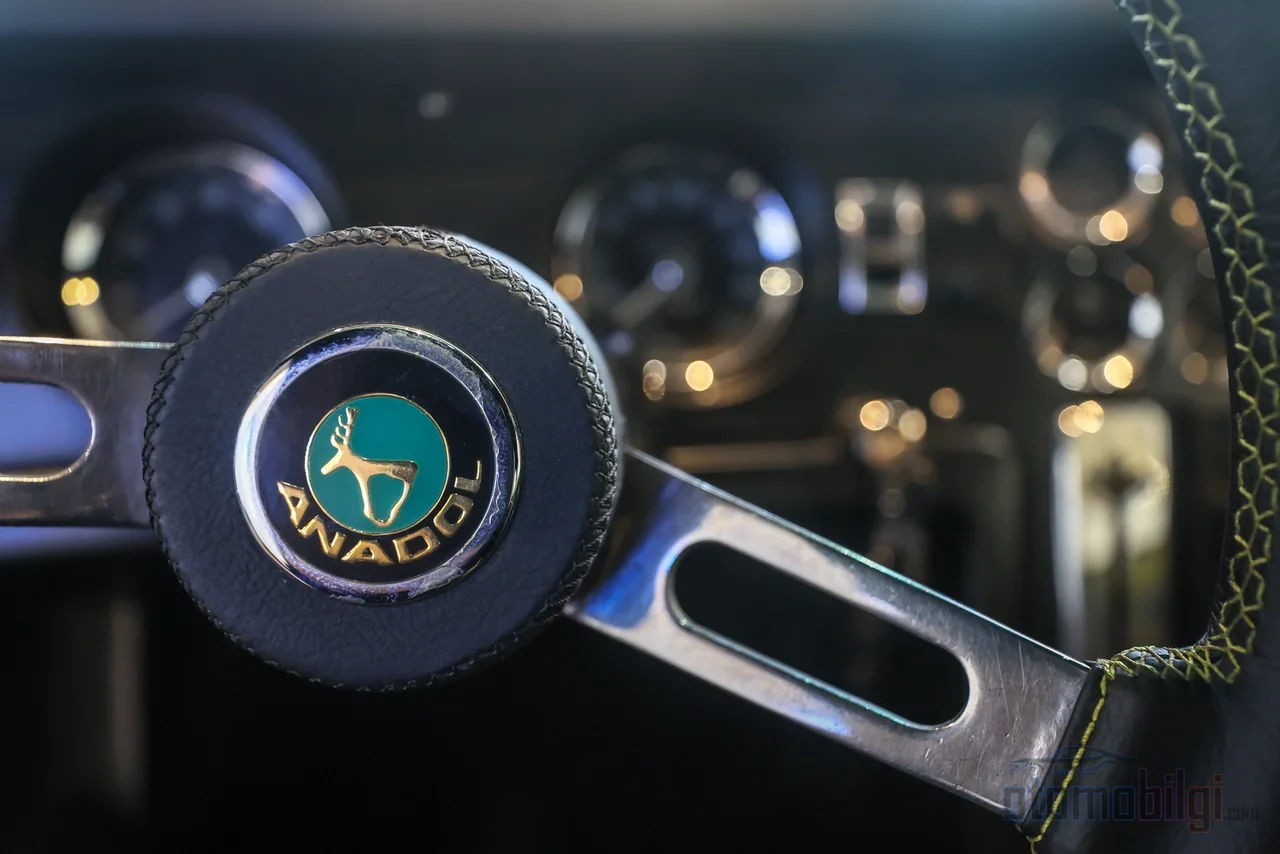
The name was not chosen like on some fashion site today, but through a serious public contest. In the final of the contest opened at Vehbi Koc's request, "Anadolu", "Anadol" and "Koc" remained; the winner Anadol was chosen. As for the emblem, it points to the Hittite deer statue, one of Anatolia's oldest symbols. I think it is a very right choice in terms of brand identity; both deeply rooted and easy to pronounce even on television.
Was Anadol really "domestic"?
This is a frequently asked question, so let's give the honest answer: Anadol was not entirely domestic in terms of design and engineering. The design came from Reliant's FW5 license, drawn by Tom Karen of Ogle Design; its heart and gearbox were from Ford. That is why those who commemorate the Devrim as the product of 100% domestic engineering sometimes belittle the Anadol as "assembly industry production." But I think the comparison is unfair. The Devrim was a simultaneous miracle and never reached mass production; the Anadol, on the other hand, became the first domestically produced car to be commercially manufactured, sold, serviced, and to enter the garages of thousands of families. Domesticity is not always an all-or-nothing matter; rooting industry is also a form of domesticity.
Is the legend of "the ox ate the body" real?
My favorite story about the Anadol is the rumors themselves. When the fiberglass body came out, people simply could not believe it; a rumor spread that the body was fed to oxen, goats, and donkeys. It looks funny from today's perspective, but it was a serious crisis of confidence at the time. Yet this technology was already in use around the world; even the British firms that designed the Anadol had fiberglass experience. The legend's connection to reality, since you ask: zero. But the mere fact that a brand was talked about like this among the people shows how much it was talked about. Let's call it a rumor file that did the advertising for free.
Anadol models: the roadmap from the A1 to the Bug
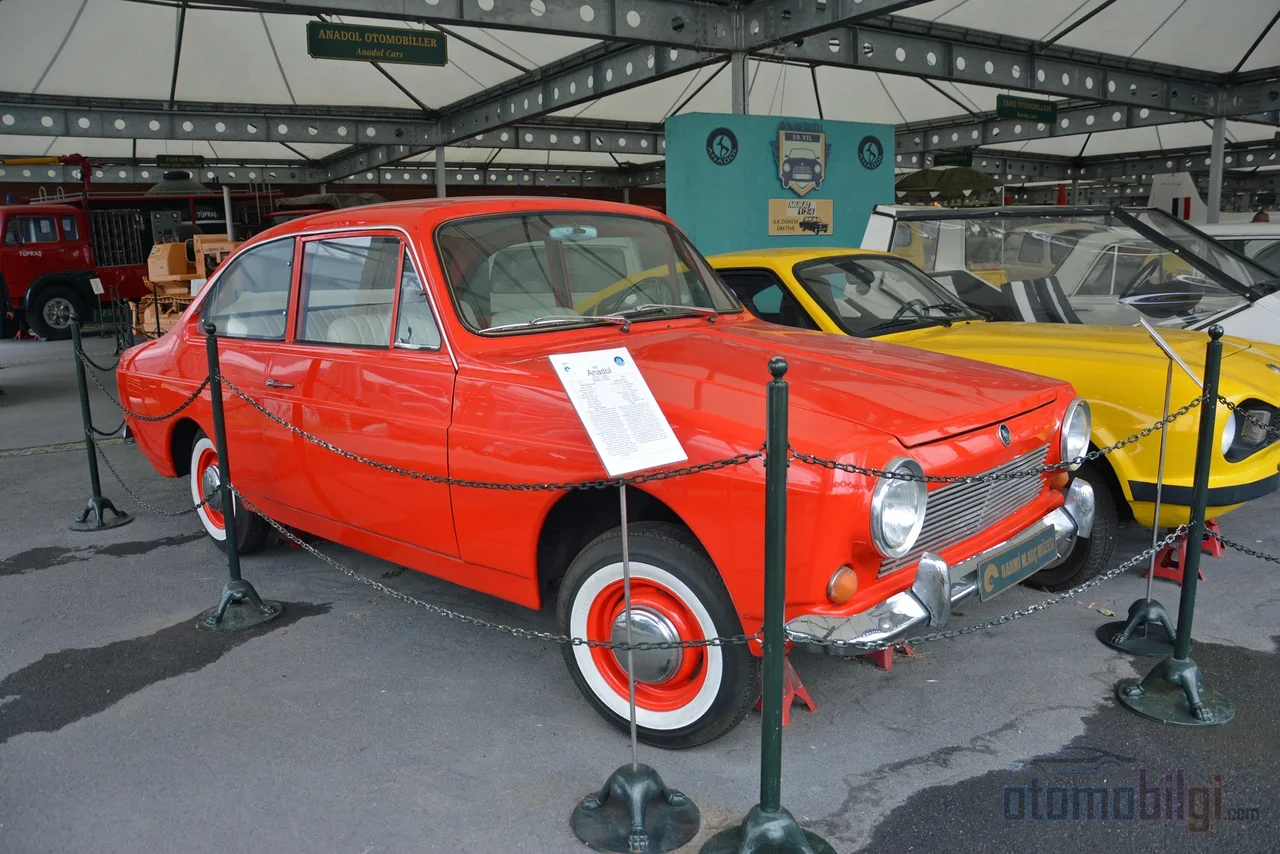
Anadol did not stop at a single model; for 18 years it filled both the roads and our imagination with models. Here is a brief table according to OSD production data:
| Model | Years | Production | Why is it remembered? |
|---|---|---|---|
| A1 | 1966-1975 | 19,724 | The first mass-produced model; Türkiye's first rally car |
| A2 | 1970-1981 | 35,668 | The best-selling; the world's first 4-door sedan with an all-fiberglass body |
| A4 STC-16 | 1973-1975 | 176 | The first car designed and mass-produced in Türkiye |
| A5 SV 1600 | 1973-1982 | 6,499 | The world's first fiberglass-bodied 5-door station wagon |
| A6 Bug | 1975-1978 | 203 | Designed by Jan Nahum, developed at the request of the Turkish Armed Forces |
| A8-16 | 1981-1984 | 1,013 | Known colloquially as "Baltaburun" |
| P2 Otosan 500/600D | 1971-1991 | 36,892 | Pickup; the idea came from the A1, which carried materials around the factory |
The A1's success on the rally side is a bonus too: in 1968, at the Trakya Rally, Türkiye's first official rally, Renç Koçibey and Demir Bükey took the win. A Turkish car winning a rally with a fiberglass body - in 1968, even imagining that took courage.
Dreams shelved away
Not only series-produced models came out of the Anadol desk. The 100-horsepower Wankel engine project developed under the leadership of Claude Nahum never came to life; one example is on display today at the Rahmi Koç Museum. 4 prototypes were produced from Marcello Gandini's FW11 design, but the project later passed to Citroen and gave birth to that company's BX model. Jan Nahum's "Çağdaş" prototype won an Industrial Design award but never entered production. The Bertone-designed A9 became the brand's last prototype. One moment a design is shelved, the next it has inspired one of Europe's sedans for sale - automotive history is sometimes a total domino effect.
Why did Anadol cease production, and what did it leave behind?
Anadol's production was stopped in 1984; as a result of Otosan's new production agreements with Ford, even the Ford Taunus moved in, and Otosan 500/600D pickup production continued until 1991. Ford Trucks have been produced at the Eskişehir İnönü Plant since 1983. In 1997, Koç Holding and Ford equalized their shares and founded Ford Otosan; today, the name at the center of Türkiye's automotive power is that very same company, with roots in the same line where Anadol was born.
So what is Anadol's lasting legacy? In my view, its most important contribution was showing that the transition from assembly to genuine series production was possible. Producing a car in the thousands is a completely different job from building a single prototype: establishing a supply chain, developing parts manufacturers, weaving a service network. Anadol was the first link in that chain, and from 1966 to 1984, with roughly 87 thousand vehicles, it helped the automotive parts industry sprout in Türkiye. Today, including the fact that Togg is on Europe's roads, the story of the normalization of car manufacturing in the country must be read starting from Anadol.
Moreover, the story has not been forgotten: in the 59th year since Anadol rolled off the production line, an exhibition called "The Birth of Anadol" was prepared. A vehicle that left the line more than forty years ago still opens exhibitions, clubs are still gathering, and people still argue about "where was the first capital meeting held." In my opinion, this is the most beautiful retirement a car can have.
And let me leave you with a question: If you stood in front of an Anadol A1 you saw on the road today, looking at its fiberglass body and that Hittite deer emblem, what would you think? My answer is clear: Anyone who took a country's dream seriously and opened a factory deserves a smile from today's brands as well. Anadol was the first name to do this; the rest, in the most beautiful sense of the word, is history.
Sources
- Anadol
- The first series-produced domestic car: Anadol
- At 55... Stubbornly on the roads... - Anadol Fan Club
- The History and Story of Anadol Cars
- Why Was Anadol Produced? Why Did Production Stop?
- Did an Ox Really Eat the Anadol's Body Panels?
- How the Anadol Automobile Was Born and Its History
- Anadol: The Story of the First Domestic Series-Production Car
- Ford Otosan
- What is Otosan, which produced the Anadol, Consul, Taunus and Escort, doing now...
- Devrim (automobile)
- OSD - Automotive Industry Association