Why Do Car Designers Still Work with Clay?
Share This Page
Car designers are still working with clay in the digital age, because no screen can offer the experience of feeling the surface of a car by hand at real size and under real light. This tradition, going back roughly 100 years to the industrial era, remains the only physical stage that digital modeling has not been able to completely eliminate today: computer sketches bring the model to life, but the fingertips still decide the final surface.
Highlights
- Clay modeling entered the automotive world in the 1930s with General Motors head of styling Harley Earl.
- The material used is not real clay; it is a non-drying industrial plasticine that softens in heat.
- The cost of a full-scale clay model can reach up to 650,000 dollars.
- Today the standard workflow is hybrid: clay milled by CNC from CAD data is finished by hand, and changes are scanned and carried back into the digital world.
- The tradition is alive in Türkiye as well; Ford Otosan employs full-time clay modelers in Sancaktepe.
Now let me ask you a question: have you ever looked at a car render on your phone and said "wow, this car looks amazing"? Of course you have, I know. But that image sits flat and two-dimensional on the screen. The question designers really ask is this: How will this surface look in the real world, under the sun, as you walk past it? The only way to find the answer is to take that car in your hands at full size. Or rather, to carve it.
What Is Clay Modeling and How Did It Come About?
Clay modeling is the process of shaping the exterior body of a car at full size or in a reduced scale from a special clay-like material. Its history is much older than you might think: this method was introduced to the automotive world in the 1930s by General Motors' head of styling Harley Earl . It is said that Earl discovered handmade clay car models in his youth and brought this passion to GM. So in an era when computers did not even exist, hand-carved models decided what cars would look like.
Over time, the craft became so serious that in major studios no work was ever started before the modelers were given technical drawings. Design and modeling had shaken hands and become two complementary crafts.
Is what they carve actually real clay?
No! That is the most surprising part. The material used in studios is not garden clay, but a special mixture called industrial plasticine . It contains commercial sulfur and a small amount of sulfur; it supposedly has a characteristic smell, but only those in the studio would know. The nice thing is: it is soft when warm, hardens at room temperature, but never dries out. So when you make a mistake, it does not crack; you can fix it and continue. Just like play dough, but a much more serious and much more expensive version.
How Is a Car Clay Model Made? Step-by-Step Process
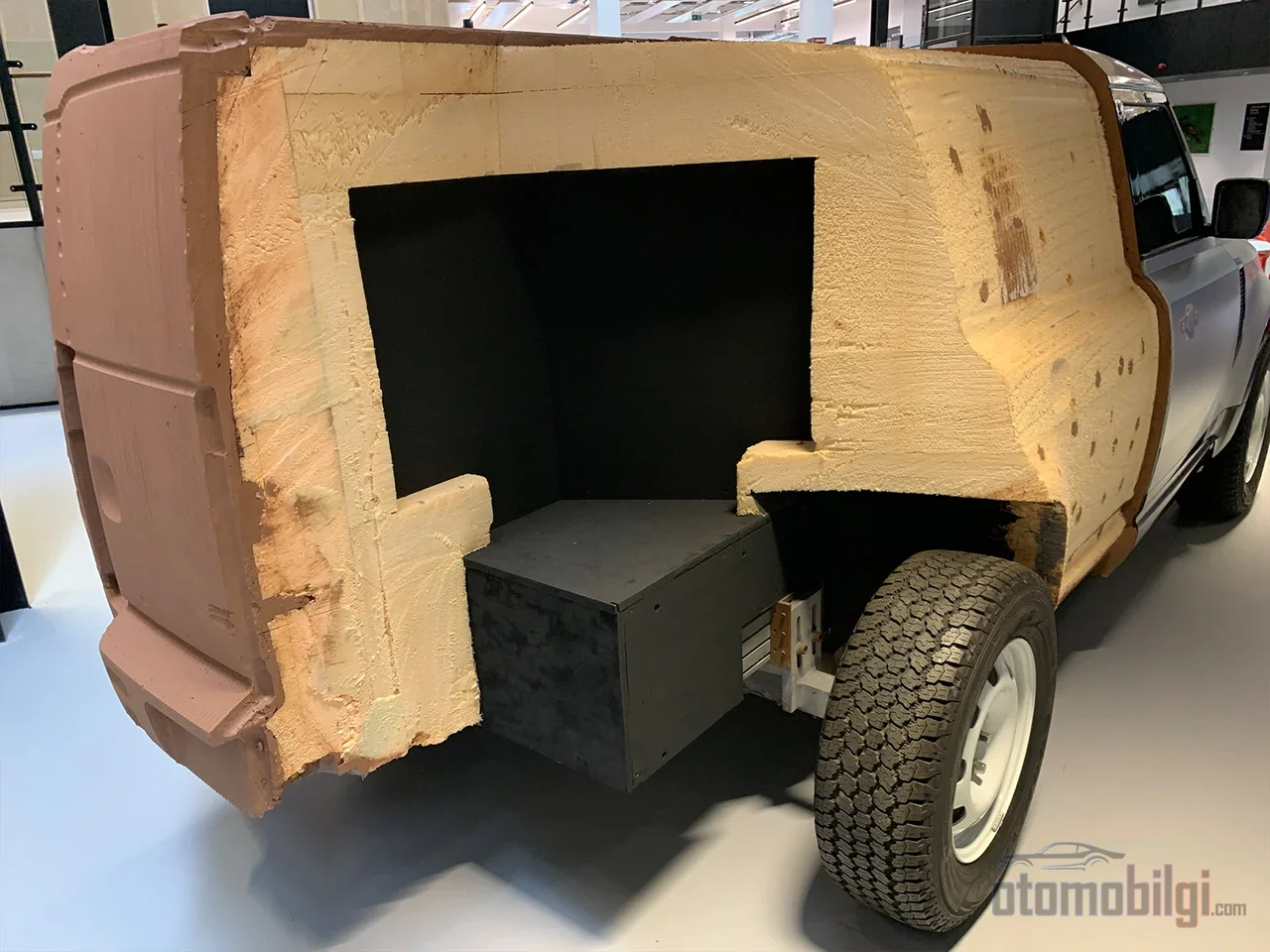
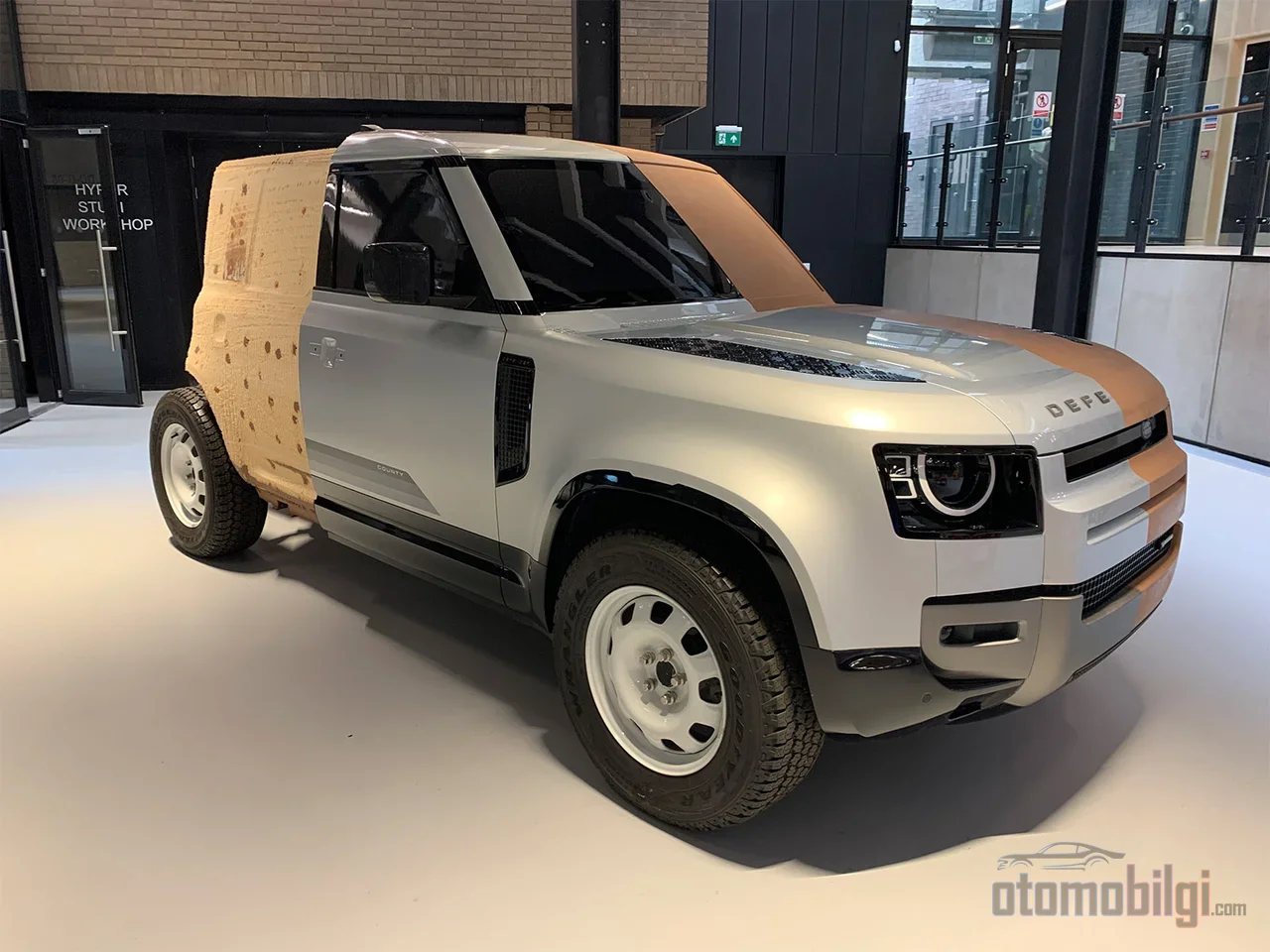
I think everyone has an image in their head of "a designer sitting at a huge block of clay and carving the car." The reality smells much more of engineering. The process roughly works like this:
- Once the sketch is approved, digital modelers convert the drawings into a three-dimensional computer model.
- The model operations team builds the model's internal structure using engineering software.
- For this armature is prepared; an aluminum framework is filled with wooden boxes.
- On top of it, hard foam is applied, and finally clay about 2.5 centimeters thick is applied.
- Five-axis CNC machines rough out and then finely carve the clay according to digital data.
- Modelers scrape, shape, and smooth the final layer by hand.
Why not solid blocks of clay but foam on a framework? Because a full clay model could reach up to 8 tons! That's why full-scale models today still weigh a few tons, but most of them consist of framework and foam. Five-axis milling machines work on calibrated metal floors; in large studios these machines operate 24/7 and mill the model in a few days. I'd like to add that one milling brand also offers studio solutions in Türkiye - a small sign that the impact of this craft extends all the way to us.
What follows is pure craftsmanship: Modelers scrape, carve, and smooth the clay by hand. For light inspection, the model is first dressed in a neutral silver color, so that how the surface holds light comes to the fore instead of the paint. Toyota's master modeler Kazushi Eto's working style is very meaningful at this point: He applies pressure to the clay with his fingertips and then steps back to look at the overall form. In other words, he both touches and moves away to observe. It's impossible for a screen to do both at the same time.
Why Can't Digital Design Replace Clay?
Let me be honest: The digital side is very powerful. Sketches become realistic within minutes, and changes can be applied instantly. But the real issue is this: The screen remains two-dimensional. It is often said that cars designed without hand-carving look stiff and dull. No matter how much you work on the computer, you cannot fully grasp a car's true appearance without a physical prototype.
Let me make an analogy: There's a difference between looking at a photo of a dish and tasting that dish with your fork, right? The clay model is exactly that "tasting" moment. Everything on the screen is a representation filtered through the camera settings of rendering software. Whereas what actually resembles a real vehicle is the massive full-scale model itself. Adjusting the flow of light on the surface by adding a few thousandths of an inch of clay is not something that can be appreciated in front of a screen - only the hand and the eye together can notice this.
So can VR finish off clay?
Virtual reality actually adds real value to a specific part of the process: it narrows the costly gap between the CAD stage and clay milling. Some studios talk about the creative, "dream" part of the process shifting to VR, and prototypes quickly carved from large blocks have partially replaced the old full-scale clay models. But the picture is clear: GM explicitly emphasizes that it has kept clay as a critical part of its creative process even in a design environment working with advanced digital tools. According to Mercedes-Benz's official statement, after the final decision, scanning and milling machines produce the first full-scale prototype, and all details are finished by hand. So the story is not that clay is being "completed" but that it is complementary. Clay, combined with digital, has not been replaced.
How Much Does a Clay Model Cost? Scale, Weight and Cost
This is not cheap work, and the numbers here are truly astonishing. Major car companies have been producing for about 100 years human-sized clay models. In studios where several models exist at once, material consumption is enormous; hundreds of thousands of pounds of plasticine are used per year and recycled as much as possible. Škoda's exterior studio alone can host up to seven models at 1:1 scale . Volvo, meanwhile, presents its clay studio as a secret workshop where the "soul" of future models is carved.
| Feature | Detail |
|---|---|
| Material | Industrial plasticine (contains sulfur and a small amount of sulfur) |
| Clay layer thickness | Approximately 2.5 cm |
| Weight of a full clay model | Up to 8 tons (reduced with a skeleton and foam system) |
| Milling time | A few days (machines run 24/7) |
| Time from sketch approval to model | A few weeks |
| Cost | Can go up to $650,000 |
Looking at this picture, you understand why digital visualization is so appealing: clay modeling is an expensive process. But automakers are still paying this money, because the tangible feedback it provides is of a kind no digital tool can deliver.
Clay Modeling in Türkiye: From Ford Otosan to Independent Designers
If you ask, "Do we have this in Türkiye too?", my answer is yes. The most concrete evidence is this: Ford Otosan is opening a clay modeler position for its design studio in Sancaktepe, and the job posting states that hand-modeling automotive models, both full-scale and scaled, on clay is the primary responsibility. So the surfaces of vehicles going into series production in Türkiye are also carved by hand.
There are inspiring examples on the independent side as well: Turkish designer Sedat Öztürk's Z-TRK 101 Hypersports concept project, professional clay modelers worked day and night to complete the full-scale model. There are also ventures in our country offering studio equipment and training for automotive clay modeling. Let me add a note: when "clay modeling" is mentioned in Turkish sources, you mostly encounter the pottery and tile tradition (Karacasu, Kütahya, Iznik); Turkish content on the automotive side is still scarce. But Ford Otosan's active staff and independent projects show that this craft is alive here too. In my opinion, a great career alternative for those considering it!
The Role of Clay in Concept Cars and the Prototyping Process
When a concept car sparkles on a motor show stand, behind it there is most likely a clay model that has been sculpted, scanned, and sculpted again. Today the standard workflow is hybrid: Clay is rough-milled from CAD data with a five-axis CNC on a wooden skeleton, then finished by hand. When changes are made, the model is scanned and the new surfaces are transferred back to the digital model. In short, clay and digital are two worlds that transform into and feed each other. Leading digital design studios also use clay models alongside flexible render technology; Hyundai North America supports this process with 3D scanning.
Another detail from the past, which I find very enjoyable: What did designers do before five-axis milling machines? At full scale, with the tape drawing method, they stuck flexible black tapes onto film to draw the lines; they took points with rail-mounted measuring machines, and by scraping certain areas went all the way down to Tipp-Ex dots. Compared to today's technology, it makes you say "this job takes such patience."
Is Working with Clay Ending, or Being Reborn?
In my opinion, the answer is the latter. The transition from analog to digital happened with surprising speed at the end of the twentieth century, but clay still stands its ground. The reason for designers' resistance is not nostalgia, but physics: hand-eye coordination, the pleasure of adjusting the light on a surface by hand, and the proportions felt by walking around at full scale. The computer cannot provide all three at once. Clay is not a rival of digital design, but its most faithful partner. When you see the next concept car, don't forget that behind those flowing surfaces there are modelers correcting the clay with their fingertips. Do you think VR will one day move them away from their tables too? I don't really think so.
Sources
- How Clay Car Models Really Work And Why Designers Still Use Them – The Autopian
- Peter Brock: The lost art of clay design models – Classic Motorsports
- Blending artistry and AI to shape the future of GM Design – GM Newsroom
- The design process: from the idea to the prototype – Mercedes-Benz Group
- Hidden figures of design: car sculptors – Škoda Storyboard
- Inside Volvo's Clay Studio: Crafting the Soul of Future Cars – Volvo Cars
- #7 Kazushi Eto, a master of clay modeling – Toyota Times
- Clay modeling – Wikipedia
- The story behind clay modelling – Autocar
- How to design a new car in 2026 – The Washington Post
- The clay modeling method in automotive design – inLibrary
- Hyundai North America & 3D scanning – Creaform
- Benefits of VR vs Clay Modeling in the Automotive Industry – Form Trends
- Digital Car Design: How Studios Use 3D from Day One – Vizcom
- Clay Modeller (Design Studio) – Ford Otosan, LinkedIn
- Z-TRK 101 Hypersports – Sedat Öztürk
- Clay Milling Machines – Claymill/Tarus
- Why Car Brands Pay $650K For Clay Models – Insider