A Look at Automotive Design Eras
Share This Page
The eras of automobile design are the names of the periods that defined every car's appearance: the first automobiles born with a horse-drawn carriage heritage, the streamlined lines of the 1930s, the tailfins of the 1950s, the angular "folded paper" aesthetics of the 1970s, the soft curves of the 1990s, and today's LED-signed, seamless surfaces. Each era is the reflection of the technology, laws, and atmosphere of society at that moment, cast into steel. Shall we take a tour? In my opinion, this journey will make you look at every car you see on the street with completely different eyes.
Highlights
- 1934 Chrysler Airflow, is considered the pioneer of automobiles designed according to aerodynamics.
- Tailfins became known with the 1948 Cadillac; their peak was reached with the 1959 models.
- 1970 The Clean Air Act required a 90% emission reduction in new cars by 1975.
- 1998 McLaren F1: carbon monocoque body, central driving seat, and 627 hp of power from a 6.1L V12.
The Motor Car: Not Design, but a Survival Period
Did you know that the first automobiles were called "horseless carriages"? Because that's exactly what they were: there was almost no concern for aesthetics at all. Designers copied the only shape they knew, namely the horse-drawn carriage. Some early automobiles were no different from a horse carriage with an engine mounted on it; open on the sides, minimal protection, and barely any comfort to speak of.
As the starting point, 1803 is generally shown: that year in London, Richard Trevithick demonstrated a steam-powered vehicle. Of course, at that time no one was thinking about "how this car should look." The goal was simple: to travel without a horse. Style was a luxury that would come much later. Those open-sided, clumsy bodies that look funny today when viewed through museum glass are actually the point where everything began.
1930s: Streamlines Inspired by Aircraft and Art Deco
The first great leap in automobile design came in the 1920s-30s with the emergence of streamlining, that is, aerodynamic forms. Designers looked at the aerodynamic bodies of aircraft and thought this: "If we reduce air resistance, we go faster." The result? Rounded lines, flowing surfaces, and an appearance completely different from what came before. In the same years, the Art Deco movement also swept over design; with the era's new materials such as aluminum, stainless steel, chrome, magnesium, and leather, a chic and luxurious atmosphere was captured.
The hero of this period is definitely the Chrysler Airflow. Introduced in 1934, this vehicle is regarded as the first streamlined-design automobile in America. Its story is also wonderful: the idea came to Chrysler executive Carl Breer upon seeing military aircraft flying in formation in the sky. They wanted to bring a form that flowed like air to the road, and the pioneer of automobiles designed according to aerodynamics was born. The interesting thing is that the Airflow was commercially an idea ahead of its time; buyers were not ready, but designers could no longer turn back.
Let's not forget the other icons of the era: Bugatti Type 57 SC Atlantic (1936), of which only 4 units produced, with its magnesium alloy body and tail fin, it was practically a rolling sculpture. The Mercedes-Benz 540K , on the other hand, was the luxurious face of the streamliner era.
Where Did Tail Fins Come From and Why Did They Disappear?
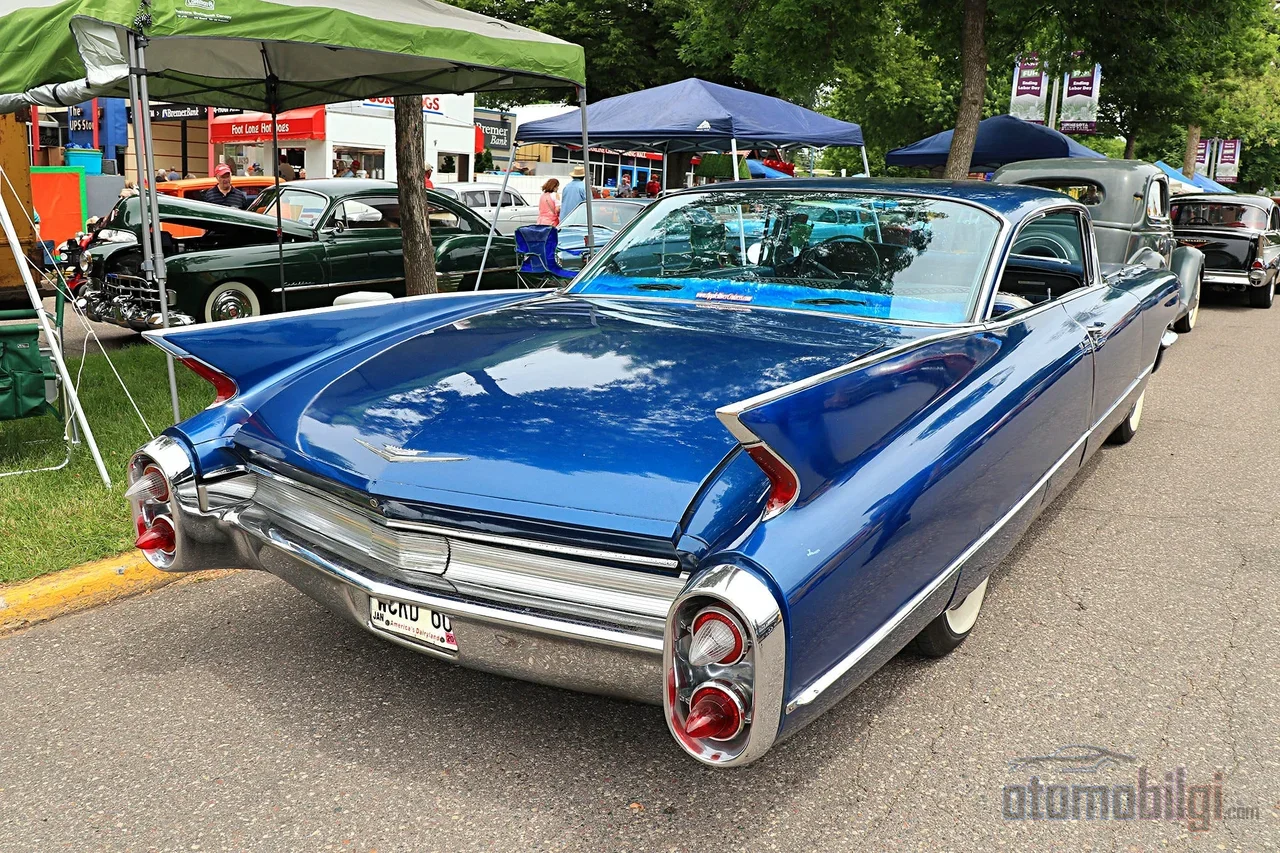
World War II was over, and American designers were fascinated by things that flew in the sky. Harley Earl, drawing inspiration from airplanes, introduced tail fins on the 1948 Cadillac and single-handedly sketched the look of the 1950s. It is even said the idea flew on a military runway in 1941. Earl was also the owner of the LaSalle, the first American automobile drawn by an actual designer; and the 1951 GM Le Sabre concept, inspired by the F-86 Sabre fighter jet, redefined post-war design with its "jet age" aesthetics.
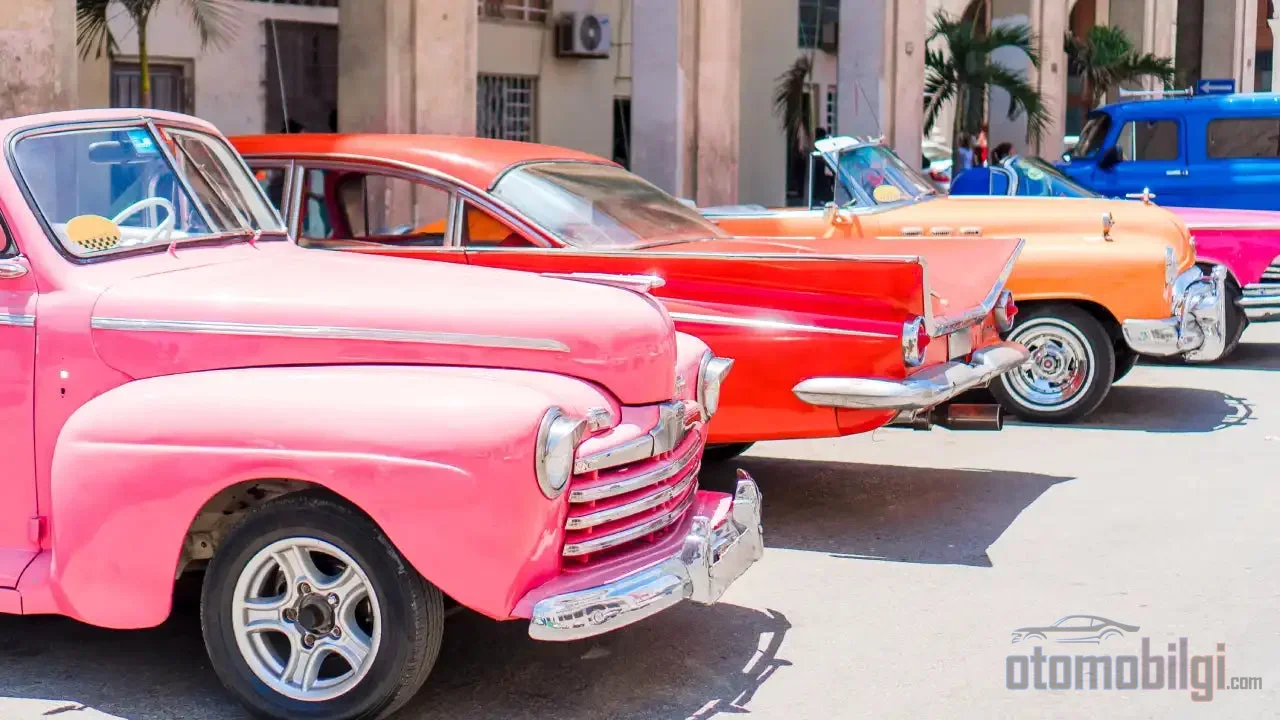
The fins quickly grew: the tailfin era spans the 1950s-60s, peaks between 1955 and 1961 , and spreads across the world. The peak point is the 1959 Cadillac: massive, dramatic fins topped with plenty of chrome. In the same period, cars got smaller, prices dropped; fiberglass bodies, large windows, and overhead valve engines arrived. Bold colors like pink and turquoise were also products of exactly this era.
So why did it disappear? Because the fins could never go beyond resembling a vehicle hovering in the air; the airplane influence was a fashion, and fashions pass. In the next era, it would no longer be imagination but rules that set the direction of design.
The 1960s-70s: The Space Age, Muscle Cars, and the Folded Paper Aesthetic
When the space race began, cars started to envy rockets. In the 1960s-70s, the goal was to make even a stationary car look fast; angular and aggressive forms were all the rage for precisely this reason. The 1963 Chevrolet Corvette Sting Ray, with its split rear window, became the most famous icon of space age aesthetics.
In those same years, the muscle car era was also at its peak: big V8 monsters like the Chevrolet Camaro, Ford Mustang, and Dodge Challenger roamed around with long hoods, short trunks, large air intakes, and aggressive grilles. Shall we give an example? The 1971 Ford Mustang Boss 351: 5.8L V8, 330 hp. A silhouette that still turns heads in a parking lot even today.
Then, in the late 1960s and the 1970s, someone else arrived: "folded paper," that is, the folded paper aesthetic. The name is very fitting, because these cars were sharp-edged and extremely geometric, as if paper had been folded and put on the road. Giorgetto Giugiaro's design language left a lasting mark; the wedge-shaped Maserati Boomerang prototype took the stage as a static model at the 1971 Turin Motor Show, while Giugiaro's Bizzarrini Manta was counted among the radical wedge examples. But let's be honest: a low-profile wedge vehicle no longer looks futuristic to today's eyes, but "as old as the 70s." The life of fashion is short, after all.
How Did Safety and Emission Rules Change the Face of Automobiles?
Here is the new hand kneading the dough of design: laws. 1968 U.S. Federal Motor Vehicle Safety Standards came into force; side marker lights and steering columns that collapse in a crash became mandatory. On the environmental front, the air was rapidly becoming polluted: 1967 The Air Quality Act became the first federal legislation controlling lead emissions. 1970 Congress passed the first major Clean Air Act, mandating a 90% emission reduction in new cars by 1975. By the 1980s, emission control had become a core engineering discipline.
What does any of this have to do with looks? A great deal. Safety requirements introduced the idea that "not just air but also people should flow over the vehicle"; in other words, crumple zones that would protect lives in a crash, hood heights and body structures reshaped design. The origins of safety-focused design debates, however, go back to 1950s Sweden and the safety innovations of that era. In other words, after the '70s, the drawing pencil passed into the engineer's hand.
Wind Tunnels and the Soft Curves of the 1990s
After the 1970s, aerodynamics became a necessity, not an ornament. The drag coefficient (Cd) was now the star of the design table; Cd 0.34 A car launched with this figure was considered a milestone in the industry, and aerodynamic curves gradually became the new norm. Manufacturers leaned on wind tunnels and calculations, and engineers became involved in the design process much earlier. So why did cars look boxy in the '80s and round in the '90s? The answer is right here: in the '90s, new safety and emission rules changed the way vehicles were built, and manufacturers renewed their bodies with curves. The transition from boxy to soft lines was less an aesthetic choice and more the result of air resistance and production logic. (But '90s SUVs, such as the Ford Explorer, were roaming around with less efficient values like a Cd of 0.43 ; so not everyone was on the same page.)
These years have two more stars: the Japanese sports car era and modern supercars. Toyota Supra, Mazda RX-7 and Nissan Skyline GT-R brought lightweight bodies, "shark nose" design, and technologies such as traction control and ABS; the third-generation Supra between 1986 and 1992 achieved aerodynamic efficiency with its flowing curves, reaching 230 hp with its turbo inline-6. On the other side, the 1998 McLaren F1: carbon monocoque body, a central driver's seat and 6.1L V12 producing 627 hp. Carbon fiber, CAD, 3D printing, wind tunnel and CFD optimization; the modern supercar era became firmly established precisely with this car.
Today: LED Signatures, Smooth Surfaces and a Nod to the Past
The electric age rewrote design from scratch: large battery packs put weight and aerodynamics at the center, and long wheelbases with short overhangs established the new proportions. The new-generation Nissan LEAF is a fine example of this; designers describe transforming the iconic EV into an "airy, flowing" crossover. One Mercedes model, meanwhile, is described with a focus on "smooth surfaces, slimmer lights, less heavy curves." In other words, today's language: clean, flowing and signed with light.
But history is not being erased; on the contrary, the past is now more visible. The new-generation Nissan Z Heritage Edition salutes its heritage with new LED lighting and vertical grille details; Toyota Century displays a classic stance with its vertical grille and slim LED headlights; and restoration workshops keep the classics alive with "Heritage" programs that preserve the original style. The retro wave of the 2000s-2010s had begun with vehicles that combined classic forms like the Mini Cooper with modern technology; that interest never faded.
Today is also the era of ADAS: lane departure warning and automatic emergency braking are now standard; designers hide sensors and cameras into surfaces, while aerodynamic efficiency is the number one priority in hybrid and electric powertrains. So the circle is complete: the first automobiles were engines trying to look like carriages, while today's cars are design works that read the air, the law, and the past all at once. The next time you see a car on the road, ask yourself this: "Who drew that line, and why?" The answer is always the story of an era.
Sources
- A Brief History of Car Design
- Horseless carriage
- The Chrysler Airflow Offered a Streamlined Design
- A Revolution Now at Revs Institute: The Chrysler Airflow
- The Rise and Fall of 1950s Car Tailfins
- Car tailfin
- Harley Earl
- The Folded Paper Era and Beyond: Giorgetto Giugiaro
- Timeline of Major Accomplishments - EPA
- The Evolution of Vehicle Safety
- Why Automobiles Look The Way They Do
- How Aerodynamics Changed Car Design After The 1970s
- Why cars went from boxy to curvy
- 2026 Nissan LEAF design story - Nissan News USA