Why Are Cars So Gray Now?
Share This Page
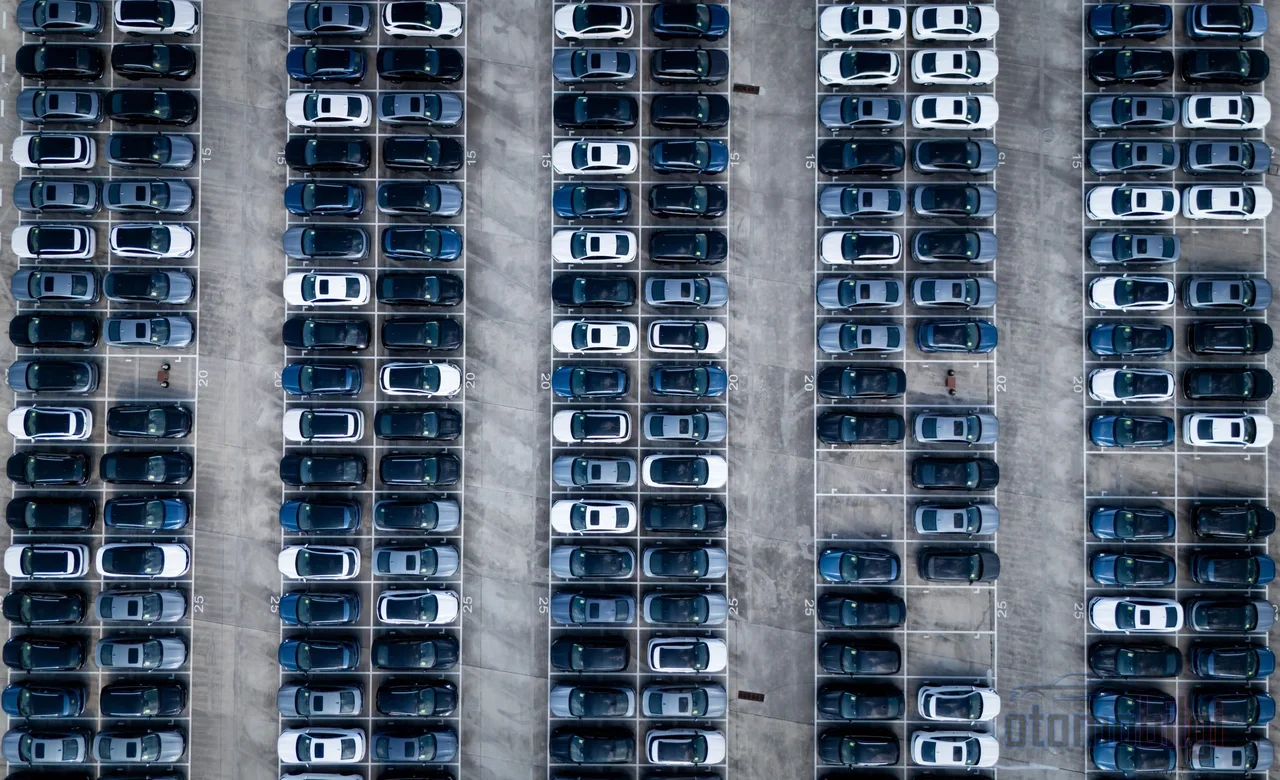
Most new cars these days are white, black, or gray, because these colors sell more easily on the second-hand market, carry less risk in production, and technically work more smoothly with sensors. In the US, these "grayish" colors account for roughly 80% of vehicles; half a century ago the streets were completely different: there were two-tone paints, metallics made from fish scales, and dozens of vivid non-metallic colors.
Highlights
- In the US, the market share of gray-white-black vehicles rose from around 60% in 2004 to a level exceeding 80%.
- 1955 models offered more than 36 colors and two-tone combinations.
- The first metallic paints were made from real fish scales and were sold only to the very wealthy.
- A car's color can affect its resale value 3 years later by more than 5,000 dollars. can affect it.
- In Türkiye, the most preferred color among cars registered in a year is gray.
Let me start by saying this: I think about this topic so much that when I walk into the parking lot after school, I genuinely mope. The same cars, the same colors, row after row of gray and white boxes. So how did the streets end up like this? The story of car paints is actually a complete journey through time - and at every stop of this journey there are reasons that make perfect sense but are just as heartbreaking.
It Began with a World Full of Color: The Eras of Paint History
The patent regarded as the automobile's birth certificate was obtained by Carl Benz on January 29, 1886. But back then, color meant not a catalog like today's, but oil-based paints inherited from horse carriages. These paints took weeks to dry, and on top of that, the color would yellow over time and require repainting. In other words, the first car owners endured a test of patience just to get their cars painted.
Mass production, which started with Ford's Model T, produced 15 million vehicles in 20 years - but it was stingy with colors. Things changed a bit in the 1920s: in 1926 Ford introduced a brown Model T, and then came the 1929 crash and the Great Depression. As the economy sputtered, the paints sputtered too; dark greens, grays, black, and white became the dominant colors. I find the reflection of the era's mood onto the car absolutely fascinating.
Metallic Paints: From Fish Scales to Fine Aluminum
Here's my favorite part: in the 1930s the first metallic paints appeared, and they were made from an incredible material - real fish scales! That's why they were so expensive that only very wealthy buyers could reach them. Then aluminum-flake paints were developed and metallics became democratized. Those shiny, light-playing paints you see in every parking lot today are descended from fish scales. I think you'll never be able to forget this again.
The war years were not the years of paint, but of aircraft factories: manufacturers channeled their resources to the military. When the war ended, a color explosion arrived like a hunger. For the first time, buyers could choose multiple shades of blue, green, and red at the same time.
The Two-Tone Madness of the 1950s: Why Did It Disappear?
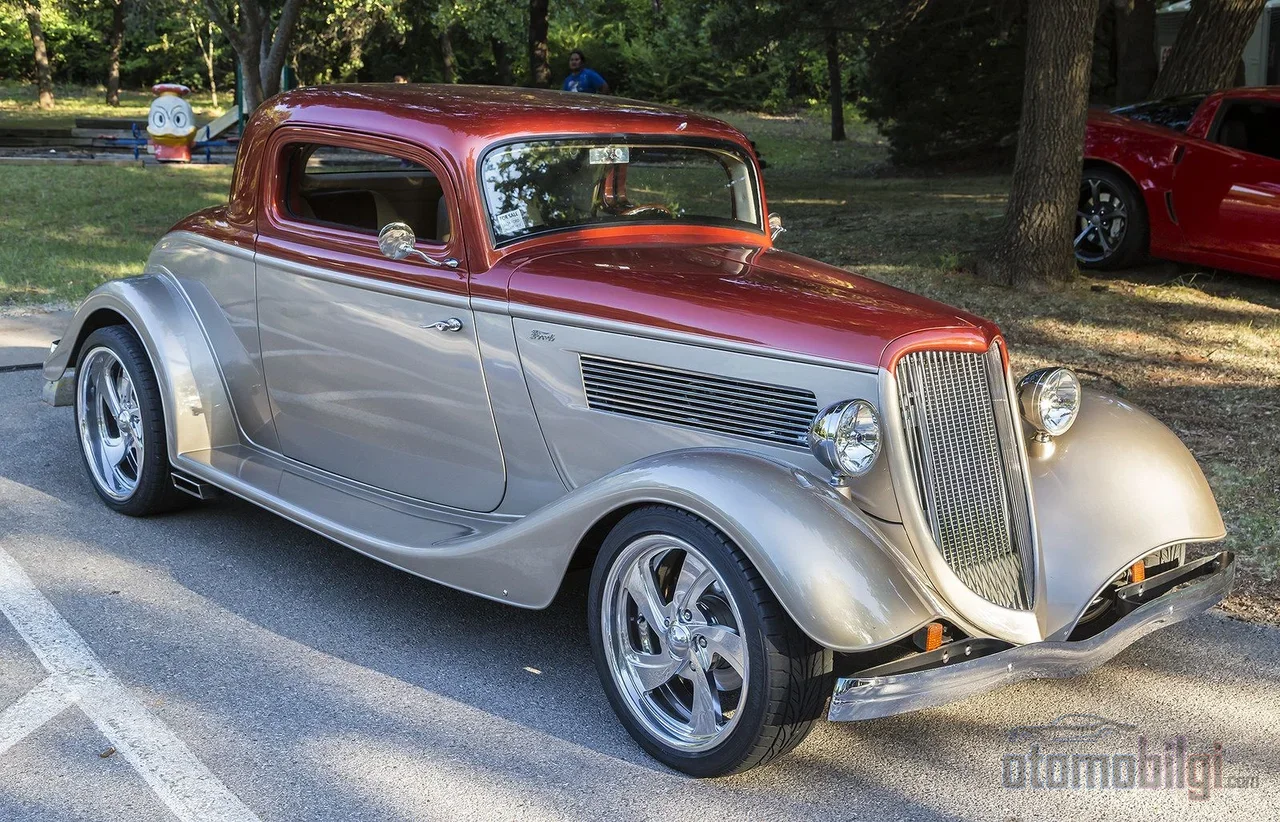
The 1950s, the golden age of automotive fashion. Postwar enthusiasm, the joy of owning a vehicle no longer considered a luxury, and the desire for personalization combined to produce the most iconic trend of the era: two-tone paint. Upper body one color, lower body another. Sometimes the accent was on the roof, sometimes it shifted to the body; in the 1960s it returned to the roof, but this time it was short-lived and gave way to vinyl roofs.
The numbers show the era's generosity: 1955 models had more than 36 colors and two-tone combinations. In 1956 alone, Daimler-Benz offered 26 solid colors and 23 two-tone paint schemes. For an early-70s Dodge Challenger , 20 different color options were available. If you visited a dealership today, these figures would be hard to find.
Two-tones also had a practical side: in an era when air conditioning was expensive and rare, a white roof heated the interior less. So that stylish look was also a first-generation "heat management" solution. But after a brief revival in the late 70s, the trend completely disappeared through the 80s. It had become an idea that was hard to produce, costly, and out of fashion.
The 80s and 90s: The Metallic Explosion and the Green Fashion
The 80s were the decade when paint caught up with technology. At the start of the decade, pearl effects arrived, and by the end, metallic coatings and micas had become widespread. There was also a major change in painting: the industry moved from single-stage paint to a two-coat system. To simplify: color first, then a protective glossy layer. A similar logic is still used today.
The star of the 90s, however, was green. In North America, green exceeded 20% of automobile color popularity - shades such as Emerald Green, Hunter Green , and Deep Jewel Green were the stars of the era. Meanwhile, the 2000s brought glass flake pigments, a small comeback attempt by two-tones, and the 2010s brought matte paints. I will also touch on matte paint, because the debate still continues.
So How Did Gray Become This Dominant?
Now let's get to the real question: why are cars so gray these days? The answer isn't a single factor, but several major reasons stacked on top of each other.
Resale Value: The Effect of Color on Your Wallet
This is the most tangible reason. Research shows that a vehicle's color can affect its resale value three years later by more than $5,000 . Yellow and orange vehicles lose 24.0% and 24.4% of their value respectively over three years, while neutral colors hold their value better. So buying a brightly colored car is no longer just an aesthetic choice; it becomes a financial risk. No one wants to be stuck with a "bold" car three years later.
There's also an interesting contradiction: brightly colored vehicles that are hard to sell at dealerships can find buyers more easily in direct sales to end users. In other words, a yellow car doesn't bother anyone, but no dealer wants it in their cash register either.
Neutrality: The Color Nobody Loves but That Offends No One
Another key to the gray-white-black hegemony is neutrality. Gray does not actively please anyone, but at the same time it does not bother anyone either. A car is no longer just an object of passion; it is also about payment, prestige and the perception of safety. A neutral color is the "safe" option in all three of these. There is also the sales side: manufacturers have to produce the color that will sell the most. If demand is gray, the factory paints gray. The result: a self-perpetuating cycle.
Technology: Are Sensors Affected by Color?
Here is a technical aspect that very few people know: color really matters in radar systems. The radar is behind a plastic part and needs to be able to "see" through it, and the paint must not obstruct this. Even more interestingly, according to academic studies, paint color affects the LiDAR point cloud - deliberately painting a vehicle in a less detectable color is considered a safety risk that can fool autonomous systems. For this reason, special pigments with high near-infrared reflectivity that can be detected by LiDAR are being developed for dark colors. So today, color choice is not just an aesthetic matter but also an engineering one. Just as air conditioning keeps white roofs cool, technology is quietly shaping color choices.
Matte Paints: A Rising Trend, Demanding Maintenance
Within the dominance of gray-white-black, there is a notable exception: matte paints. Rising since the 2010s, matte paints are preferred because they offer a look of luxury and prestige. But the other side of the coin is brutal. Scratches and stains on matte paint cannot be repaired with polishing; it requires special products, special tools and special techniques. While spot repair is easy when glossy paint is damaged, the same process on matte paint is far more difficult and costly.
Also, matte paints are generally more prone to damage than glossier ones; scratches and stain marks appear more prominent. In sunny countries like Türkiye, there is also a fading problem: UV rays, improper washing, faulty compounding-polishing, bird droppings, acidic rain and iron dust are the main causes of gloss loss. So matte paint is very stylish, but maintaining it is a real responsibility. Even a shopping cart that bumps into and scratches your car while you are sitting on a bench can ruin your day.
Are Colors Coming Back? The Chance for a Comeback of Vibrant Colors
Good news: colors are indeed coming back. Consumers are increasingly turning to bolder colors, and manufacturers have begun to question the monotonous palette again. In trend analyses for 2026, even the headline "green is in fashion" is being used. There are also small signs of a comeback for two-tone paints.
But there is also the voice of the skeptics: "People do not want anything other than white-black-gray-silver; ordinariness is the fashion." There is also an interesting class dimension: manufacturers generally try vibrant colors on cheap vehicles; as the vehicle gets more expensive, black, silver and white come back; and in the top segment, colors return again - because those vehicles are bought precisely to "look at me". So color seems to oscillate depending on the vehicle's status.
Türkiye's Gray Story
Turning to our own country: In the first 6 months of a year, the most preferred color for newly registered cars was gray; gray and white were declared the colors of the year. Türkiye is described as a "country of gray cars," and this is not only about aesthetics. Here, vehicle color is directly tied to prestige, trust, and resale value. In fact, on the used car market, the perception of "accident-free" and paint history determines the buying decision one-to-one; while a car with a paint record is considered valuable in Europe, in Türkiye it significantly lowers the price.
There is also a regional difference in the data: In one analysis, white ranks first at 26.2% and black second at 20.7% , while Türkiye's data puts gray at the forefront. This is not a contradiction, but a matter of where and how the measurement was made: a different market, a different dataset, different priorities. In Türkiye, it is also thought that the experience of colorful cars from the '80s having their paint deteriorate in the sun - the so-called "sunburn" - played a role in steering consumers toward neutral colors. Back then, the paint on colorful cars faded and dulled; now everyone has the perception that neutral = quality.
Final Word: Who Chooses the Color?
The story of car colors actually tells us this: What determines color is not the designer's palette, but a combination of resale price, cost calculations, technology, and consumer psychology. While two-tone paints were like a celebration in the 1950s, today gray is a kind of safety blanket. But there are also signs that the trend is reversing: bolder choices, greens being talked about again, and two-tones returning on a small scale.
In my view, the real question is this: How do you feel when you see a yellow car in the middle of a gray sea in a parking lot? Do you say "How stylish!" or "May God make it easy for the owner"? Whatever your answer, the very fact that you ask this question is proof that colors still matter.
Sources
- History of Color
- CC Color Commentary - Two Strange Two Tones
- Colorful Sensations: Vibrant Designs in Classic Car History
- Gone Grey: Why Nearly Every New Car Is Colourless
- Why 80% of cars in America are now white, black, or gray
- Most Popular Car Colors in 2026
- The Best and Worst Car Colors for Resale Value
- New car colours – it's a bit of a grey area
- Is the era of colorful cars making a comeback?
- Matte paint: advantages, disadvantages and maintenance
- Why dull car paint jobs are here to stay
- Understanding the Effects of Paint Colors on LiDAR Point Clouds
- How does color affect radar and LiDAR waves?
- What Causes Paint Fading?
- This year's preferred car colors are "grey" and "white"
- Türkiye, the land of grey cars: What does your car's color say about you?
- BASF analyzed the distribution of 2018 automotive colors