The Line Drawn by the Wind: The Dance of Aerodynamics and Automobile Design
Share This Page
Aerodynamics is the branch of science that measures how a car's body gets along with the air and has changed design at its deepest level. Every new line that comes out of the wind tunnel directly affects fuel consumption, speed, range and stability; which is why the car silhouette, from the drop shapes of the 1920s to today's closed grilles, has always been reshaped by the lines drawn by the wind.
Highlights
- A brick's Cd value is approximately 1.0; the drop shape goes down to 0.05.
- Rumpler Tropfenwagen, measured in a wind tunnel in 1979 with a Cd of 0.28, was far ahead of its time.
- Tatra T77 (1934), with a Cd of 0.212, was not surpassed until the GM EV-1 in 1995.
- Chrysler Airflow was an engineering revolution but a commercial disappointment: in its first year, traditional models outsold it 2.5 to 1. sold.
- The active grille shutter market is expected to grow from $5.5 billion in 2025 to $9.25 billion by 2032.
What Is Cd and Why Is It at the Center of All This Haggling?
Let's start from the very beginning. The drag coefficient, or Cd, is a number that indicates how "smoothly" a body moves through the air. The really nice thing about it is this: it is independent of the car's size. A huge pickup truck and a tiny city car could theoretically have the same Cd; but for total air resistance, Cd is multiplied by the frontal cross-sectional area (Cd x ft²). So a big car pushes more air even at the same Cd.
To give an everyday analogy: when you extend your hand out of the car window, the difference between the push you feel with your palm flat and the push you feel with your palm edged is exactly what Cd describes. A brick-like angular body has a Cd of approximately 1.0; a bullet-shaped body 0.295; and the most aerodynamic shape, the drop, an incredible 0.05. So nature had drawn the answer almost a century before the engineers did. But we'll get to what happens when you try to fit the drop shape onto a car shortly.
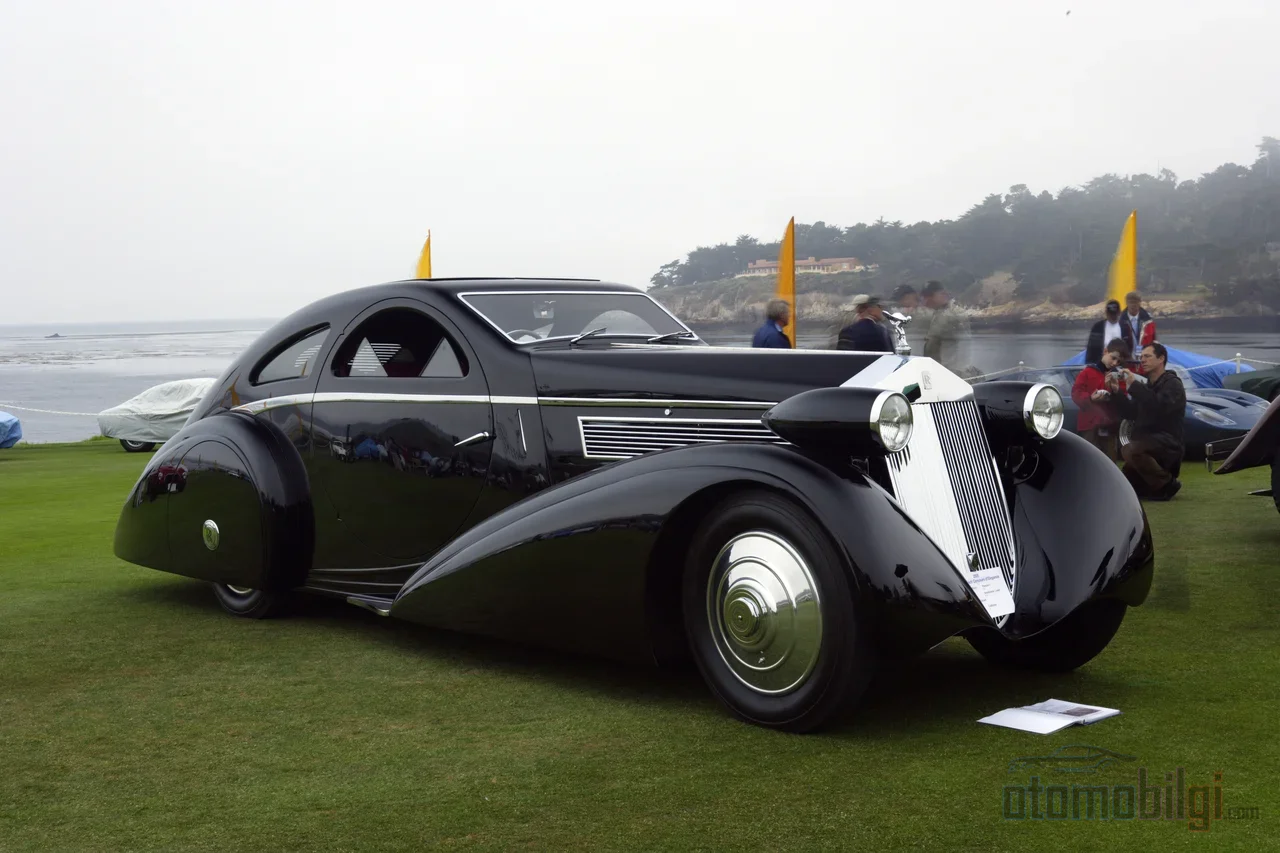
The Drop Dream: The 1920s and the First Streamliners
The idea is actually very old. In 1804, Sir George Cayley described the ideal streamline shape as a "very elongated spheroid"; in 1865, Samuel Calthorpe received a patent for an "air-resistant train". And here's the surprise: the first car to exceed 100 km/h, La Jamais Contente (1899) - was an electric one! In other words, it was an electric motor that wrapped the first body to break the speed record; wind and electricity had met on that very day.
The first documented passenger car attempt came in 1914 with an Alfa Romeo built by Castagna for an Italian count; but the body was so heavy that there was no gain in speed. The real breakthrough came from the Rumpler Tropfenwagen (1921): with its mid-mounted W6 engine and swing-axle independent suspension, this drop-shaped car measured a Cd of 0.28
Meanwhile, Paul Jaray carried his zeppelin experience over to the automobile and received the streamliner patent filed in 1922. Brands like Mercedes, Opel, and Maybach used Jaray-licensed bodies; in other words, aerodynamics became a licensable concern from its earliest years.
Tatra and the Kamm Tail: Physics' Most Elegant Answers
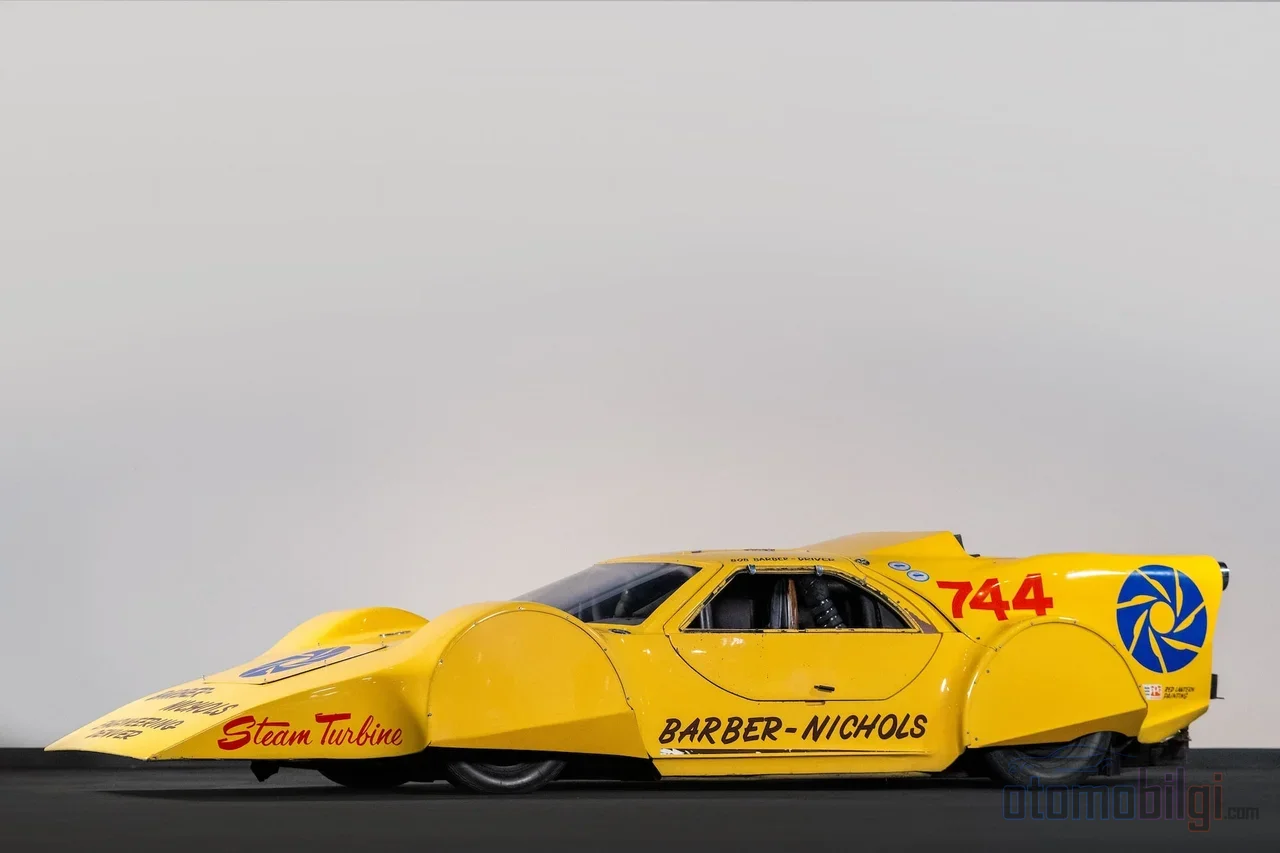
Hans Ledwinka's Tatra, starting from 1921, drew the template for streamliners with platform chassis, independent suspension, and air-cooled rear engines. Tatra T77 (1934), with a Cd 0.212 value, was not surpassed by any production vehicle until 1995 - that is, for more than sixty years; the GM EV-1 only beat it that year with 0.195. The 1939 Schlörwagen prototype, on the other hand, signed off on a figure like Cd 0.186 . For comparison: the Ford Probe V could only get down to 0.137 in 1985.
But the teardrop fascination had a hidden cost: the teardrop shape plus rear engine combination pushed the center of pressure forward and the center of gravity rearward. The result? Directional instability. This is precisely why the Schlörwagen failed and was extremely sensitive to crosswinds. In other words, the slipperiest body is not always the safest body.
At exactly this point, Wunibald Kamm enters the scene. The German aerodynamicist Kamm's 1930s solution was materially simple: you cut off the teardrop's impossibly long tail at the point where the body narrows to roughly 50% of its maximum cross-section. What emerges is both a usable car and low drag - and that's the Kammback. Is it beyond debate? No. Some technical analyses argue that, purely in terms of drag, a fully attached long tail is still better; "there's no magic in the Kamm tail!" they say. The Kamm tail's real advantage stems from practicality: from the fact that no one in the real world would ride in a six-meter-long teardrop car.
Chrysler Airflow: The Car That Did Everything Right but Couldn't Sell
In 1934, Chrysler launched the first full-size American production car based on streamlining: the Airflow. The team consisting of Carl Breer, Fred Zeder, and Owen Skelton conducted wind tunnel tests in collaboration with Orville Wright; by April 1930, at least 50 scale models had been tested. And here's the sweetest story: it was discovered that a two-box design was more aerodynamic when turned around, and Chrysler announced this in Detroit with a "reversing" chassis demonstration. The most elegant form of an engineering joke, in my opinion.
It was revolutionary mechanically too: the engine moved to the front, passengers moved onto the axle; the weight distribution was about 54% front while loaded it settled at nearly 50:50. The all-steel body offered a light yet strong construction. So the result? Total production stayed below 29,600 . Manufacturing defects occurred in the first 2,000-3,000 vehicles (including the engine mount breaking at 80 mph). In its first year, Chrysler's conventional sedans and coupes outsold the Airflow 2.5 to 1 . Fingers of blame usually point to that controversial "waterfall" grille and the unified design being perceived as an "anonymous lump."
The most interesting part is this: the mechanically weaker one Lincoln Zephyr achieved sales success because it preserved nose symbolism. In other words, the public isn't buying correct physics, they're buying the right story. That lesson still holds today. Oh, one note: lift forces were not yet truly understood in 1930s streamliners; the spoilers and air dams modern designers use did not exist. So those bodies were only being pushed through the air, not pressed onto the road.
After the 1970s: The Wedge Shape and the Cd Race
For the past three or four decades, one shape has dominated car silhouettes: the wedge. A nose sloping upward from below, then a roofline that stretches toward the rear and ends abruptly - in Jalopnik's words, the modern reading of the Kammback. The wedge became widespread for both aerodynamic and packaging reasons; but this transformation came at a cost. Even if designers can dream big, they ultimately have to yield to the laws of physics; the debate over whether aerodynamics "killed" design still continues. If you ask why every car isn't a perfect teardrop, the answer is simple: differentiation and market needs. If everyone's car looked like the same teardrop, this whole thing would be very boring, wouldn't it?
In this era, the visible "add-ons" attached to the body were also standardized. A spoiler is a device intended to disrupt adverse airflow over the body; by directing the flow, it improves drag and high-speed fuel consumption. Active versions make a tangible difference over passive ones: in a Miata study, an adjustable rear spoiler delivered lap times 0.28 seconds faster than a long fixed spoiler. Manufacturers like BMW also use adjustable spoilers and air ducts on their saloon models. And let's not forget the critical points: the front bumper, wipers, side mirrors, the top of the trunk lid, and the tire-road contact patches - these are the areas where aerodynamics sweats the most.
The Electric Era: Closed Grilles, Hidden Wings, and Togg
Today the most visible face of the bargaining is right at the nose of the car: the active grille shutter. It opens to feed air to a cold engine and closes when it's not needed, reducing drag; when closed, it lowers CO2 emissions and fuel consumption. The market for this tiny part is expected to grow from 5.54 billion dollars in 2025 to 9.25 billion dollars in 2032, with an annual growth of 7.6%; in 2026, internal combustion platforms are estimated to account for 46% of active grilles. Suppliers like Magna are continuing in this field with solutions like StyleShutter, which also improve appearance. In electric vehicles, the grille has almost completely disappeared - because there's no need for a hole in front of a motor whose cooling is not critical. Aerodynamic optimization is now the key technology for increasing fuel efficiency, extending EV range, and enhancing driving performance. A note from the Formula 1 front too: 2026 cars have active rear wings that the driver opens on straights and that close automatically under braking and throttle lift-off; Ferrari's rear wing that rotates completely in the open position sparked serious debate.
So where does Türkiye stand in this picture? Togg's T10X is promoted on its official page as an electric SUV that stands out with "aerodynamic lines"; it was reported that aerodynamic and aeroacoustic optimization was carried out on the pre-production prototype in 2022. Even more notably T10F: thanks to its aerodynamic design, it is offered as offering a range of over 600 km, the brand's longest-range fastback model. In other words, the same equation has been at work since Kamm's tail-cutting idea: a sleek body, a longer range. Turkish automotive sources give the same summary: reducing air resistance boosts performance, efficiency, stability, and safety; it also makes the car look sleeker and more modern.
Can the Designer and the Engineer Make Peace?
The greatest lesson learned from history is this: the legacy of the Airflow lies in the formula of "an engineering revolution but a commercial failure." If physics says everything but people don't fall in love with the car's looks, sales figures don't listen to physics. The good news is this: computational fluid dynamics (CFD) is reducing that old conflict by strengthening the collaboration between designers and engineers on efficiency and performance. Instead of placing a sculpture in the wind tunnel after shaping it, every design line can now be tested thousands of times on the computer. In my view, this is the healthiest negotiation table ever established between visible design and invisible physics. If it were you, which side would you listen to first: your eyes, or the wind tunnel?
Sources
- An Illustrated History Of Automotive Aerodynamics - Part 1 (1899-1939) - Curbside Classic
- Chrysler Airflow - Wikipedia
- Kammback - Wikipedia
- What Is a Kammback Car? - MotorTrend
- Spoiler (car) - Wikipedia
- How Aerodynamics Changed Car Design After The 1970s - Jalopnik
- Are Aerodynamic Requirements Killing Automotive Design? - WardsAuto
- How CFD Bridges The Gap Between Car Design And Aerodynamics - ENGYS
- Active Grille Shutter - Röchling
- Automotive Active Grille Shutter Market Share Report, 2032 - Persistence Market Research
- Automotive Active Grille Shutter Actuator Gear Market - Future Market Insights
- Japan Automotive Active Grille Shutter Systems Market 2026 - openPR
- Improving the aerodynamics of a fastback car body using a rear adjustable spoiler - PMC (Kheirkhah 2025)
- Reaction to Ferrari's new rotating rear wing - Formula1.com
- Active Aero Wings and Spoilers - Occam's Racers
- Proof That Bertoni Applied Kamm Tail Benefits to the Sleek DS - Citroenvie
- Five weird expressions from car design, explained - Medium
- Aerodynamics: What the Drag Coefficient Is and Why It Matters - Car Shooters
- Togg T10X SUV Features and Performance Information - Togg
- Togg T10F Features and Performance Information - Togg
- Aerodynamic Analysis of the TOGG SUV Model for Drag Coefficient - ResearchGate
- The Design of the Domestic Car TOGG Has Been Updated - Webtekno
- What Is Aerodynamics and Why Is It Important? - Koluman
- Aerodynamic Impact in Automobile Design - Ceyrek Engineering
- A Review of Aerodynamic Optimization Design for Automobiles - ResearchGate
- Why aren't all cars built to maximize aerodynamics - Quora