Kia's Design Identity Built from Scratch with Peter Schreyer
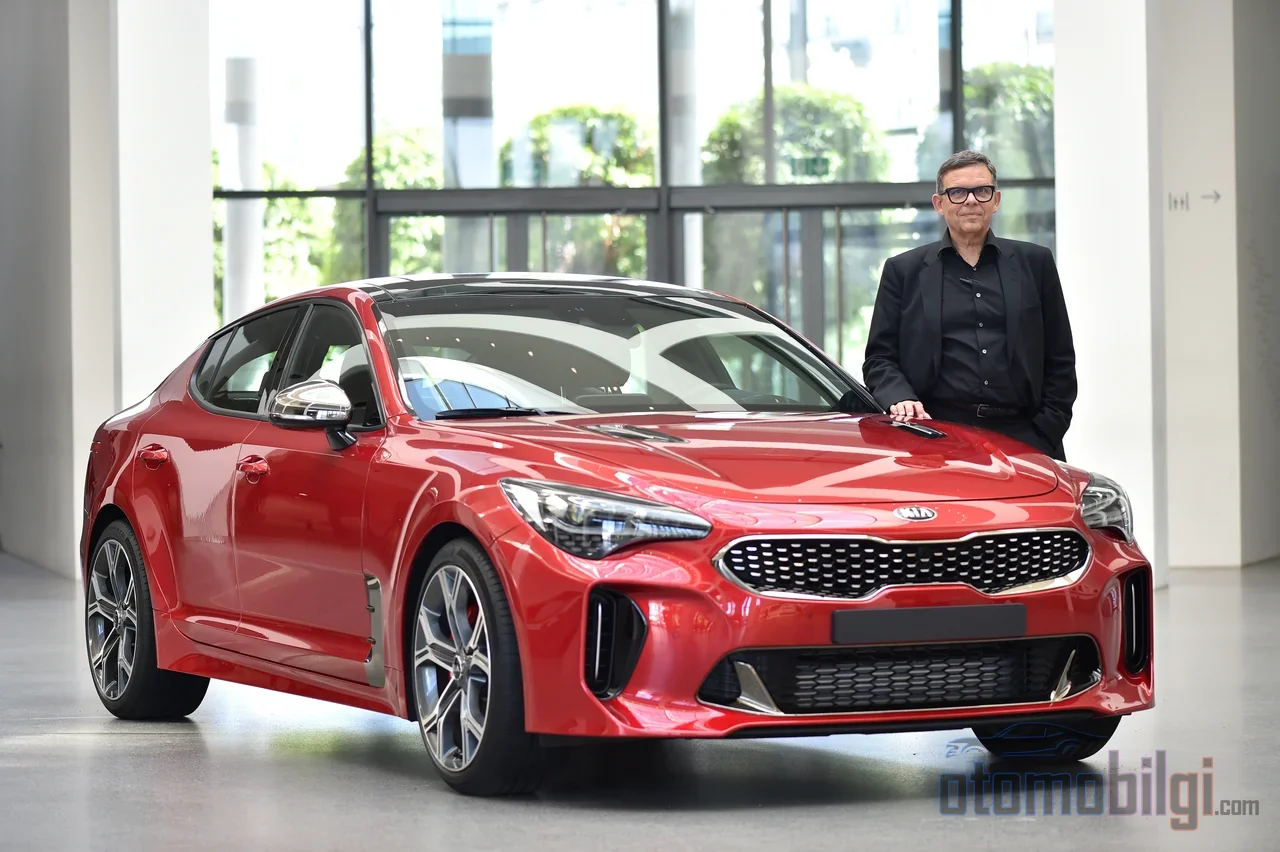
One day in 2006, the phone rings of a designer sitting comfortably in his chair in Munich, the man behind legends like the Audi TT and the Volkswagen New Beetle. The offer from the other end was bold: Build a design identity from scratch for a Korean car brand. For Peter Schreyer, it was the biggest risk and biggest opportunity of his career. So how did this man create a face that could turn a brand stamped as a "fair-value Korean car" into one of the world's top 10 best-selling brands in a decade? The answer is hidden in a single grille.
Who Was the Architect of the Audi TT?
Born in 1953 in the town of Bad Reichenhall in Bavaria, Peter Schreyer grew up on his parents' farm and developed a passionate attachment to cars and airplanes at an early age. In 1975 he began studying industrial design at the University of Applied Sciences in Munich, and in 1978 he joined Audi as a student. With an Audi scholarship he studied transportation design at the Royal College of Art in London, and in 1980 he officially began his career in Audi's exterior, interior and concept design teams.
He spent the next 25 years at Audi and the Volkswagen Group: the Audi studio in California, the Volkswagen exterior design department, projects like the Golf IV and the New Beetle. But the work that wrote him into design history was elsewhere. The Audi TT, which he developed together with Freeman Thomas and the Audi team, was unveiled as a concept at the 1995 Frankfurt Motor Show and hit the road in 1998. Named best new car of the year by Auto Europe in 1999, the TT is still regarded as one of the most influential works in the automotive design world.
So when Schreyer came to Kia, he was a proven name in his field. So why did he agree to leave Europe's comfortable world and go to South Korea? The answer is simple: the chance to start from nothing. Building a design language from scratch is every designer's dream.
Kia's Problem in 2006: Being a Neutral Brand
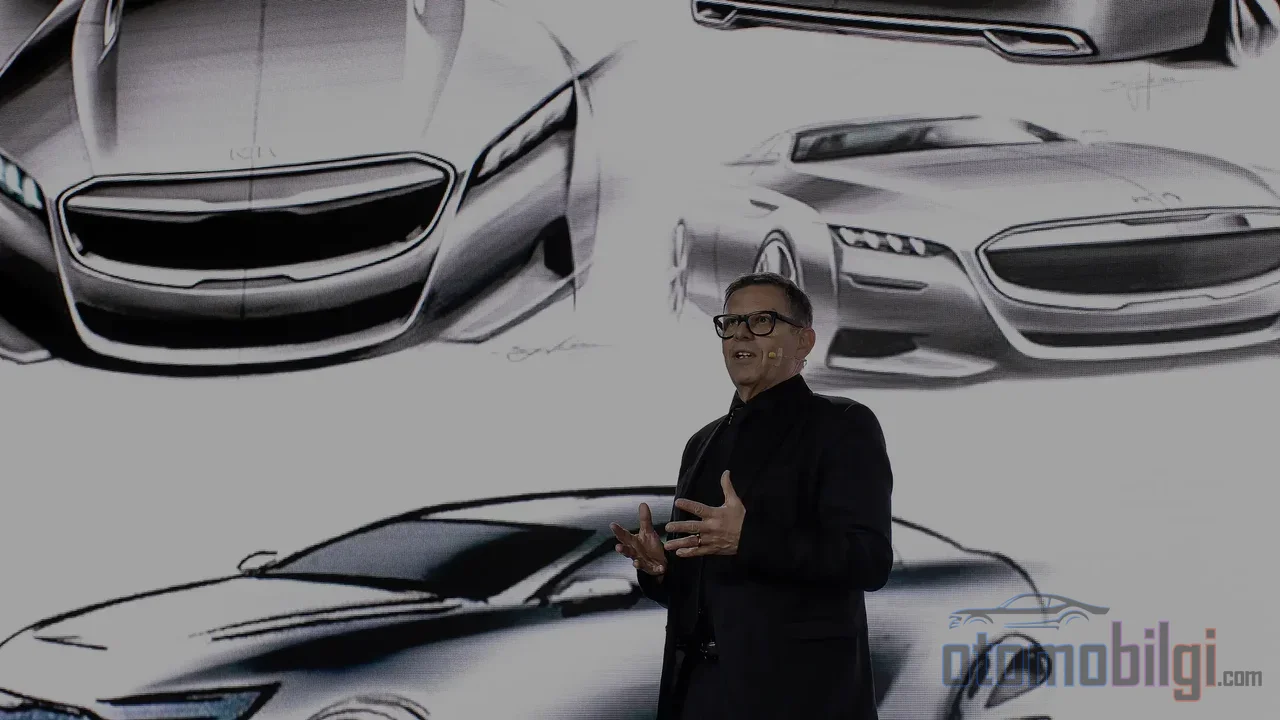
Now consider Kia's situation at that time. From 2005 onward, the brand had focused on the European market and placed design at the center of its growth strategy. But Kia had a perception problem: the brand was not one that was "desired beyond being necessary." In Schreyer's own words, Kia had "a neutral image"; when someone said Kia, what came to mind was a silhouette that was neither clearly Japanese nor Korean, and that did not stick in memory.
Let me explain this with an everyday analogy: Kia was the student whose name nobody quite remembered in class, whose grades were not bad but who never stood out. And the fastest way to get noticed at school is to have a distinctive stance of your own. That was precisely the task given to Schreyer: to give Kia a face that could be recognized even from afar.
The Highlights
- Peter Schreyer became Kia's chief design officer in 2006.
- The tiger-nose grille was first introduced with the Kee concept at the 2007 Frankfurt Motor Show.
- Kia's global sales were 1,141,000 units in 2006; a decade later the brand was running toward the 3 million target.
- Schreyer became the first non-Korean executive, one of Kia's presidents, in 2012.
How Was the Tiger Nose Born?
The Kee Concept: Where the Face Was First Seen
The turning point was the Kee concept, unveiled at the 2007 Frankfurt Motor Show. In Europe, this concept sports car designed under Schreyer's supervision used lightweight aluminum panels and weight-reducing plastic panels; but the real story was at the front. The Kee introduced the new corporate grille designed to give Kia a recognizable face. That grille quickly came to be called the "Tiger Nose".
Schreyer's idea was this: a car's front face is its identity. The brand needed a strong visual signal, a seal; even from a distance, it had to be clear that the car was a Kia. The grille was designed in three dimensions, not like a mouth drawn on a flat surface, but like a real face. Imagine this: the tiger is powerful, but at the same time distinctive and unique. A brand's front face should be exactly like that.
The Debate Over the "Tiger" Name
An interesting detail: Schreyer himself did not pursue this nickname. He did not want the word "Tiger" to evoke outdated associations with Asian economies; names like Kevin Kearns at the company, meanwhile, preferred to simply call this element the "Kia signature grille". Today, "Tiger Nose" is still on everyone's lips, but the official language is more cautious. There is also this: Schreyer openly stated that he wanted this grille to become a permanent brand signature, like BMW's kidney grille. In other words, the goal was not a one-season fad, but an identity that would last for decades.
How Did the Design Language Become a System?
A single beautiful grille is not enough to transform a brand. The real issue was bringing together design teams scattered in all directions around a single language. Schreyer took on the task of overseeing all design activities in Frankfurt, Irvine, Tokyo, and the Namyang Design Center in Korea. Namyang, located in Hwaseong, is the center known as the birthplace of Kia's future cars; it was there that the heart of the system Schreyer established beat.
Kia's own historical narrative describes this period as the announcement of the era of "design-driven management". The philosophy Schreyer brought, meanwhile, was called "the simplicity of the straight line": clarity, simplicity, and good proportions. In other words, instead of dazzling the eye with complex curves, creating character with clean lines. During this period, models such as the Ceed and Soul entered the production line, and the design language the Kee had previewed moved from the concept stage to its series-production models.
Another important stance of Schreyer's was this: he refused to settle for slow, gradual evolution. He considered gradual design changes dangerous; because they carried the risk of disappearing in the middle of the pack. That is why Kia's face changed not with small touches, but with a clear move.
Did Kia's Global Perception Really Change?
This is where the numbers come in. When Schreyer arrived in 2006, Kia's worldwide sales were 1,141,000 units, and in the UK it could find only 36,000 buyers. A decade later, in 2016, the brand was targeting three million vehicle sales worldwide, had reached around 87,000 sales in the UK, and had become the ninth best-selling automotive brand in the world.
To be honest, design was not the sole hero of this rise. Platform and powertrain sharing with Hyundai, a strong dealer network, and smart marketing also contributed greatly. But design's share was large enough to radically change the brand's perception on its own. Kia evolved from a "neutral and forgettable" position into a brand with a recognizable face and a consistent character. The industry press described Schreyer's role in this transformation as decisive.
So How Exactly Did Peter Schreyer Change Kia's Face?
The short and clear answer is this: Schreyer unified the design centers spread across four continents under a single discipline, made the tiger nose grille the brand's permanent signature with the 2007 Kee concept, and transformed Kia into a brand recognizable even from afar with his philosophy of "the simplicity of the straight line." The neutral perception gave way to a global design identity over ten years.
After Schreyer: Where Is the Legacy Today?
Schreyer's Kia journey continued as chief design officer until 2018; in 2012 he was appointed as one of the company's three presidents, becoming the first non-Korean to hold that title. In November 2018, Luc Donckerwolke moved to the role of chief design officer of Hyundai-Kia; Schreyer, in turn, moved to the presidency of design management within the group and retired from his full-time role at the end of 2023. In retirement, he continues to support partnerships with institutions such as the Royal College of Art and student awards. The book Roots and Wings, published in 2021, tells of inspiration sources ranging from the Bauhaus to jazz music and the fusion of German design tradition with Korean culture.
On the Kia side, the legacy lives on. The brand's current era is represented by Karim Habib and the Opposites United philosophy; the tiger nose has evolved into the "Tiger Face," gaining a new interpretation in models such as the EV6, EV9, and K4. The shape of the grille changed, but the principle remained the same: Kia continues to be a brand recognized by its front face.
A car brand's face can be a stronger identity card than its logo. We recognize BMW by its kidney grille, and Kia by its tiger nose. A phone call, a bold decision, and a system built from scratch; sometimes a brand's fate changes in such a concrete detail.
Sources
- From Design to Philosophy | Innovation Powered by Kia Design
- Peter Schreyer
- Influential designer Peter Schreyer honored with new book Roots and Wings
- Meeting Peter Schreyer - the man behind Kia's tiger nose grille
- New Sports Concept Holds the "Kee" to Kia's Future
- Kia Kee concept (2007): first official pictures
- Kia Kee news - Frankfurt show
- Kia promotes design chief Schreyer: first non-Korean president
- Peter Schreyer marks 10 years with Kia Motors
- Kia Design Chief Tells Us Tiger Nose Will Last Forever