How Did Steering Wheels Become Brands' Signatures?
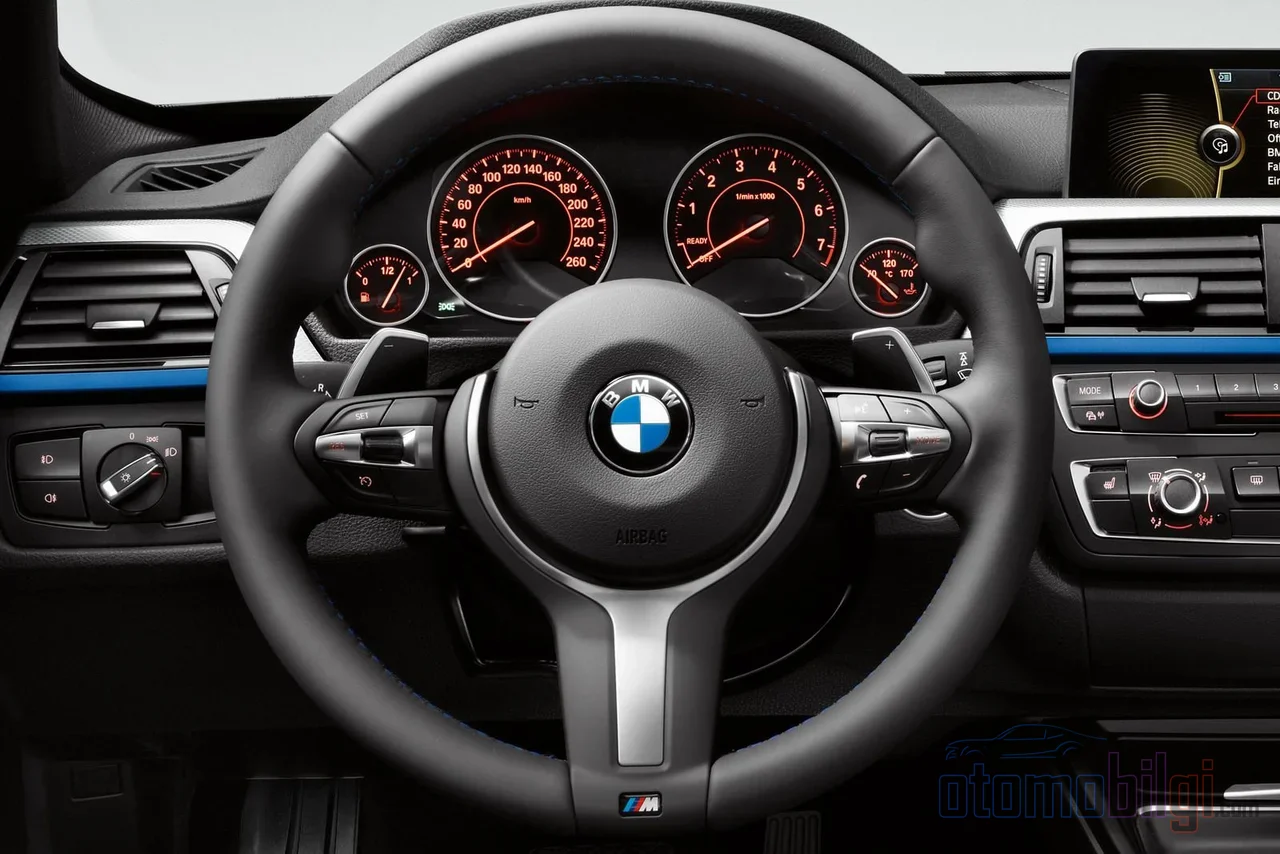
When you first get into a car, where do your eyes go? Most often, to the steering wheel. The logo at the center of the wheel, the shape of the spokes, whether the bottom edge is flat or round... All of that is really the brand's way of shaking hands with you. So how did this part, a simple turning device, become a brand's signature? The story is far older and far more fun than you might think.
From Ship's Helm to the Race Track: The Birth of the Steering Wheel
The funny thing is, the car's most iconic part was actually copied from a ship. Early engineers started by adapting the idea of a ship's helm to a land vehicle. The first known steering wheel was fitted for a race: For the 1894 Paris-Rouen race, Alfred Vacheron mounted a wheel on a Panhard 4hp. Shortly after, from 1898 onward, Panhard et Levassor cars began coming with steering wheels as standard. Charles Rolls is also remembered as the person who brought the first car with a steering wheel to England - and that car, too, was a Panhard.
The look of early steering wheels was nothing like today's. They were mostly four-spoked, and the wire spokes served as bumpers, even as impact absorbers. The Banjo-type wheel, with four or five wires on each spoke, emerged at the start of the 20th century. The grip ring and the spokes connected to the steering column formed the foundation of the design for decades. So there was no such thing as a brand signature yet; it was enough for the wheel to do its job first.
Highlights
- The first steering wheel was fitted to a Panhard for the 1894 Paris-Rouen race.
- In the early days, four-spoked wheels were the standard; over time they moved to three spokes, but four spokes never disappeared entirely.
- In 1963, the tiltable (tilt) steering column was introduced on a wide scale.
- Audi's flat bottom opens up legroom and is the signature of its sporty equipment.
- BMW's design chief defended the two-spoke layout in front of the new Panoramic Vision screen with a test track.
Why the Number of Spokes Changed: From Four to Three, from Three to Two
This is where things get interesting. In the early days, the most common configuration was four spokes; over time they moved to three, but four-spoked wheels never completely disappeared. Although the number of spokes may seem like an aesthetic choice, it is actually a decision about hand placement, visible area, and the brand's character. That's why the wheel has become one of the most personal areas of design languages - it has become the brand's face, almost as much as the grille on its hood.
There was also a major turning point on the comfort side: In 1963, General Motors' Saginaw division introduced the 7-position tiltable steering column for all passenger cars except Chevrolet. Drivers could now adjust the wheel to their liking - a freedom that seems perfectly natural to us today was a serious innovation back then. From the 1950s onward, motorsport and performance cars began to influence the design; lightweight materials and smaller diameters became widespread.
How Do Brands Stand Out in Steering Wheels?
When you get into a car, you can guess the brand even with your eyes closed - because every brand's steering wheel speaks a different language. Mercedes-Benz is ambitious in this field: it has a 120-year history in steering wheel development, and the brand's design philosophy centers on the meeting of intelligence and emotion. On the BMW side, the classic line is clear: in the BMW Z8's wheel, the spokes were arranged in a classic T-shaped three-spoke layout, and the BMW 5 Series uses thick, usually leather-covered three-spoke designs.
In recent years, however, BMW's agenda has been far more radical. The brand's design chief took to the test track to advocate a two-spoke steering layout so the horizontal spokes of the new Panoramic Vision display wouldn't block the view. Just imagine: a designer lapping a track to prove his idea. This tension between the classic three-spoke heritage and the new minimal layout is proof of just how emotional a topic the steering wheel still is.
Why the Flat Bottom Exists: Audi's Signature
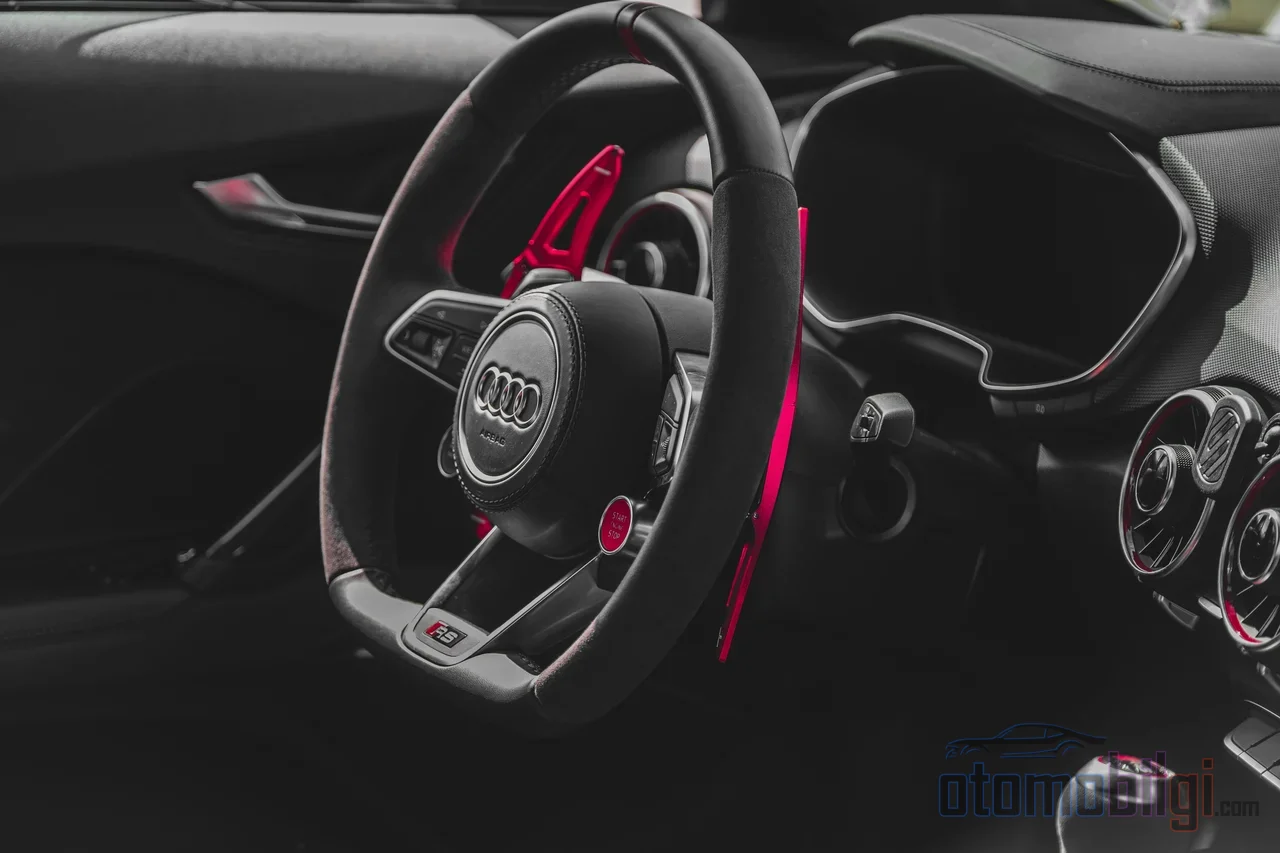
When you see wheels with a flat, that is, cut-off bottom edge, what comes to mind? Probably a sports car. This perception is no coincidence: flat-bottomed wheels have become the signature of sporty equipment packages, especially Audi's S-line. But does it actually work? Yes, because the logic is very simple: since the driver's legs occupy the lower zone of the wheel, the flat edge opens up legroom. Think of it like the difference between sitting in a cramped bus seat and sitting in a spacious one - a subtle detail, but you feel the difference instantly.
That's why the flat bottom does two jobs at once: it serves as a practical space solution and promises a sporty look. This dual combination is what made the feature synonymous with sporty trims. Of course, like every trend, this one is not without controversy; quite a few people champion the simplicity of the round form. But one thing is certain: the wheel's silhouette is now a decision, not a coincidence.
Does the Airbag Tie the Designer's Hands?
Here is the steering wheel's greatest hidden hero, or nightmare: the airbag. The center hub is the heart of driver safety and an almost untouchable zone for designers. Research samples cite typical steering wheel dimensions such as a 340 mm diameter and a 30 mm diameter rim - a module deploying in the middle of this frame constrains not just the design but even spoke placement. A few decades ago, the steering wheel was an invention considered extremely simple; today it has turned into an extremely complex component.
But the wall is already starting to come down. ZF announced that by repositioning the driver airbag in the steering wheel, it has opened up future-oriented design options for steering wheels and controls. In other words, against the cliché that the safety module ties designers' hands, it is trying a solution that promises greater design freedom. Developments in the airbag module market are also focusing on improving driver protection and deployment precision. This struggle between safety and aesthetics seems set to change the shape of the steering wheel in the coming years far more than it is today.
Touch Surfaces and the Steering Wheel's New Role
The steering wheel is no longer just a circle you turn; it is an interface. The steering wheel is evolving from simple controls into advanced interfaces; even functions like automatic lane changes can be triggered through the wheel with driver input. It is said that touch steering wheels make it easier for the driver to access audio and video content on their phone. The transformation F1 has undergone over the last century can be seen as a precursor to this - racing wheels long ago reached a level of sophistication that road wheels could only dream of.
Then there is the craft side, which I find the most touching of all. The integration of traditional crafts such as embroidery into steering wheel design allows logos and signature patterns to be placed in a far more expressive way. Demand for personalization is growing: monograms, commemorative motifs, custom color combinations... Each steering wheel can become not only an extension of the brand's identity and values, but also a personal expression of its owner. In other words, the wheel is now both the brand's signature and your own.
So, The Signature: Why Did the Steering Wheel Become the Face of the Brand?
Let's wrap up the answer. The steering wheel is the one part the driver never touches anywhere else on the car, yet is in contact with every single second. That is exactly why brands concentrate their logos, control layouts, and design philosophies here: a functional tool born from a ship's helm has, over more than a century, become an identity element as recognizable as the grille. Safety constraints like airbags and touch innovations are constantly reshaping this signature. Next time you get in the car, pause for a second and look at what is under your palms: what you are holding is not a wheel, it is the signature that brand has given you.
Sources
- Steering wheel
- Evolution Of The Steering Wheel
- 100 Years of Automotive Steering Wheels
- Why Do Some Cars Have Flat-Bottom Steering Wheels?
- BMW's Head of Design Went to a Skid Pad to Defend the Wheel
- 120 years of steering wheel development at Mercedes-Benz
- ZF rearranges driver airbag on steering wheel
- When Traditional Embroidery Craftsmanship Meets Modern Steering Wheel Design
- The greatest steering wheels ever
- The evolution of the Steering Wheel