Single-Line Kidney Grille Headlights, Brands' Signature Design Elements
Share This Page
The secret to recognizing a car without looking at its badge lies in the signature design elements that brand has kept virtually unchanged for years: Details like BMW's kidney grille, Volvo's Thor's Hammer headlights, Audi's Singleframe front face and Saab's single-line headlight give away a vehicle's identity from afar - even with your eyes closed. In this guide, I explain where these signatures came from, which designers shaped them, and why they have resisted change so stubbornly. At your next stop in traffic, instead of saying "what is that," you'll say "hey, look, that's definitely this brand" - promise!
Highlights
- The BMW 303, introduced in 1933, was the first car to carry the kidney grille.
- Volvo's T-shaped LED daytime running lights entered our lives with the XC90 in 2015.
- Audi's Singleframe grille was first seen on the 2004 A8 facelift.
- Saab sold more than a million vehicles between 1978 and 1998 and was known for its aviation-inspired design signatures.
- BMW's closed-kidney electric models (i3, i7) prove that the grille has become a purely aesthetic symbol.
What Exactly Is a Signature Design Element?
Think of it this way: you recognize your best friend without looking at their shoes, just by their way of walking, right? Cars have a "way of walking" too. We call it a signature design element: a visual signature a brand carries from model to model, evolving over the years but never abandoned. It could be a grille, a headlight line, even a roofline. Why it matters is this: even if you strip off the badge, these elements still let you recognize the car. In fact, the question "how do you identify a car without looking at the badge" is always debated online; the heart of the answer lies precisely in these signatures.
So why are these signatures so valuable? Because they carry a family bond across all of a brand's models. They are what make a compact hatchback and a giant luxury SUV look like "siblings" under the same logo. Designers don't do this by accident; with every new generation they reinterpret the signature, but they never abandon it entirely. Some brands even resort to legal means to protect these signatures - we'll get into that shortly with the Volvo example, and that part is genuinely interesting.
BMW's Kidney Grille: A Signature Running from 1933 to Today
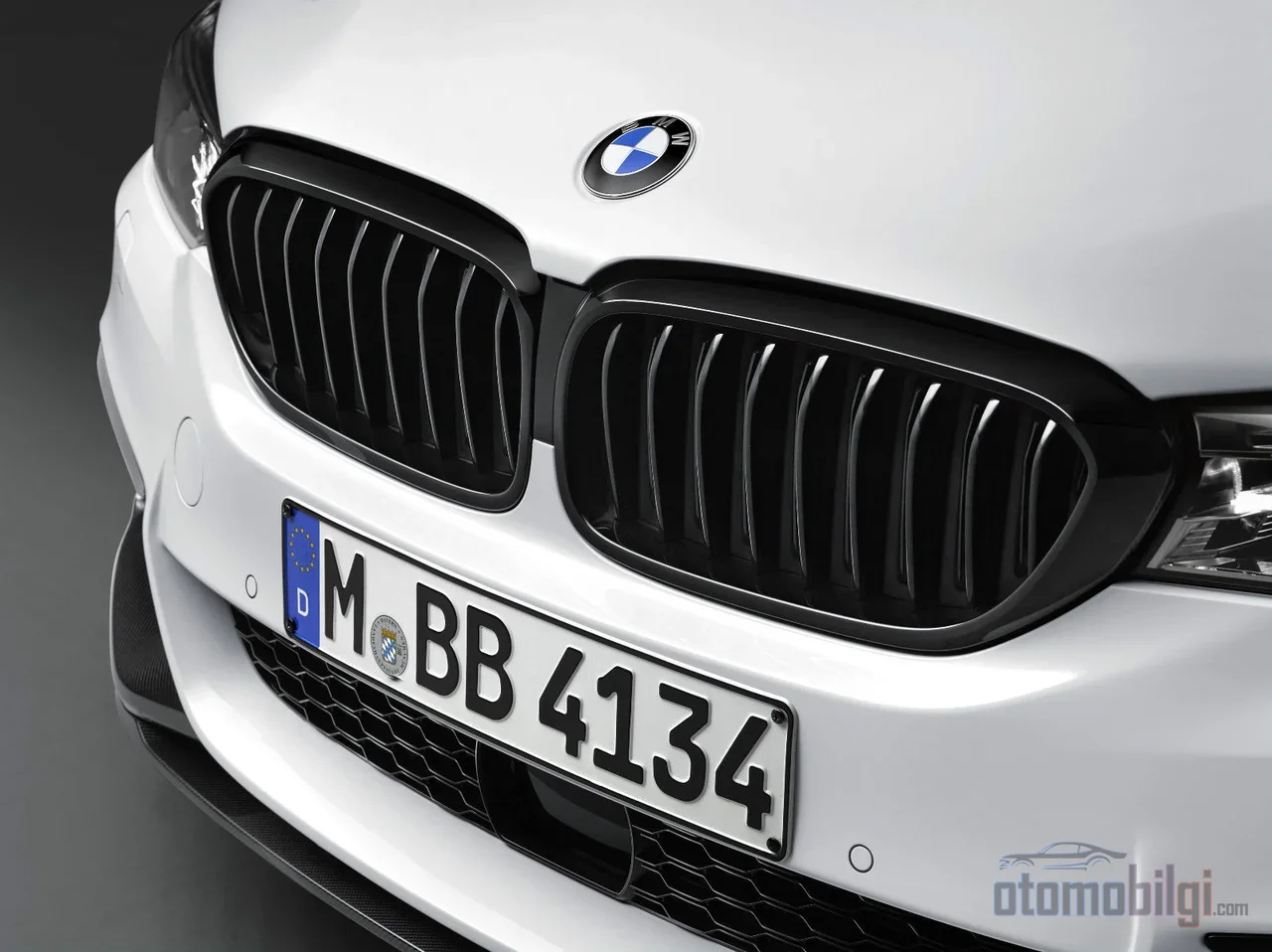
If we were to debate the most consistent design signature in automotive history, I think this is the first one that comes to all our minds. BMW's twin kidney grille has been facing us on the front of nearly every BMW since 1933. The starting point was the BMW 303: the brand's first six-cylinder model and the first vehicle to carry the kidney-shaped air intake. It was a rounded, sculptural radiator grille, taller than it was wide; the blue-and-white quarter circles of the BMW emblem were also set between the upper arches. Until World War II, the grille grew narrower and more refined with every new model.
A Transformation Diary of a Signature
There are favorite stops in the kidney's story for me. The 1956 503: two compact, fully chrome-clad kidneys - since the cooling function was shared with two side air intakes, the grille could shrink. That same year, the 507 signed by Count Albrecht von Goertz: with its two large, horizontal air intakes, the most radical interpretation of the kidney grille up to that era, and BMW's first dynamically fronted model dubbed the "Sharknose". This approach was not repeated until the 1990s. Then came the Neue Klasse (the 1961 1500), and the two kidneys were linked for the first time and placed between two wide horizontal grilles - this template defined the front face of the core models until the 1980s.
The M1 of 1978, due to its low front end, carried one of the smallest kidneys ever seen on a BMW; its inspiration was the 1972 BMW Turbo concept. The E36 3 Series of 1990/1992 separated the kidneys again, and the 2011 F30 connected them directly to the headlight surfaces for the first time. In 2018, the 8 Series and the Z4 arrived with horizontal, very wide trapezoidal kidneys. And then came the big controversy: the large, upright, forward-leaning grille of the 2020 4 Series Coupé and the frameless, vertically stretched kidneys of the M3/M4. This latest mix was so polarizing that those who say "BMW ruined its design" and those who say "the grille is a trademark that keeps being reinvented" are still locked in debate to this day.
Electrification, meanwhile, completely changed the game. In an electric vehicle, there is no need for a large grille to feed air to the engine; so the i3 (2013) carried a closed-surface "grille" with blue accents, and the i7 hides radar and sensors behind its closed kidney - BMW calls this "shy tech". The XM (2022) made Iconic Glow contour lighting standard, and the X3 (2024) brought an asymmetric inner structure of vertical and diagonal slats. In Neue Klasse concepts, the kidney is now flat but spans the full width and becomes a single unit with its light signature. In short: the kidney is no longer an air intake, but the carrier of light and identity. We are talking about a signature that has gone through thirteen designs in 88 years - this is serious business!
Volvo's Thor's Hammer: From Mythology to the Headlight
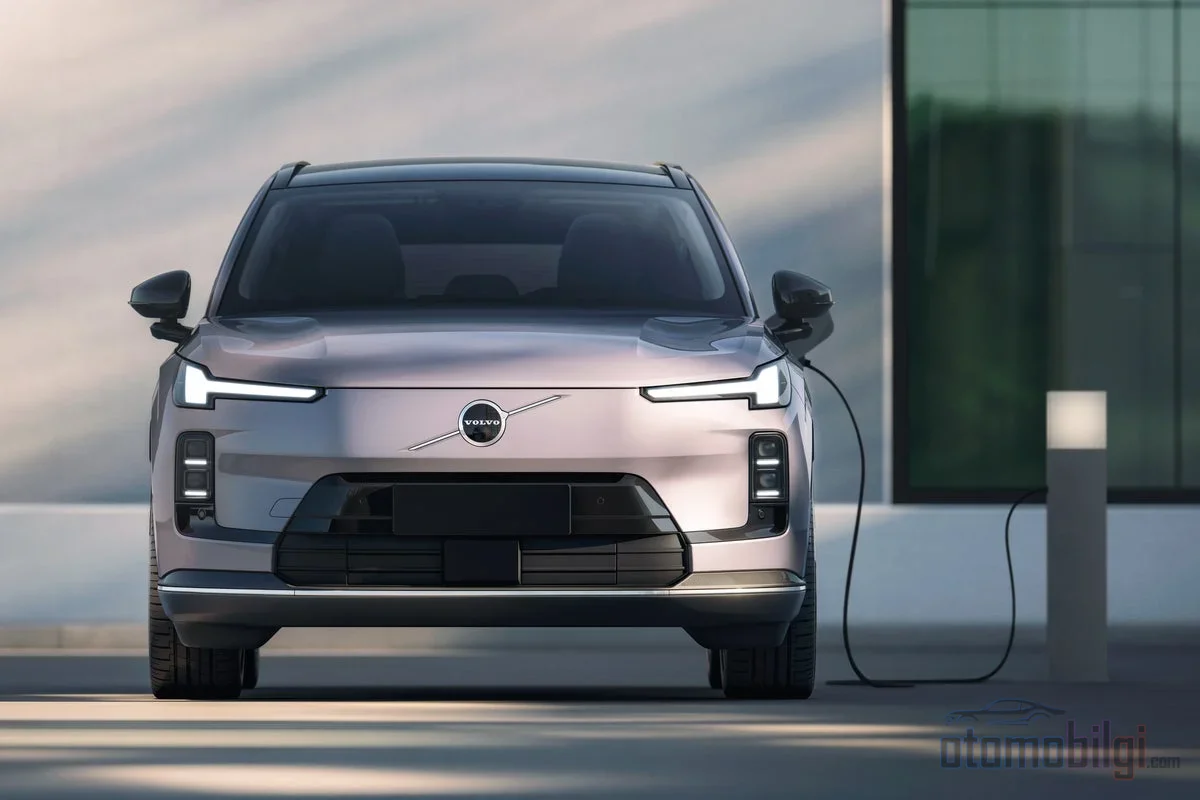
Now before us is one of the coolest naming stories in the design world. Volvo's T-shaped LED daytime running lights are called "Thor's Hammer". The name comes from Mjölnir, the weapon of Thor, the god of thunder in Scandinavian mythology. This signature entered our lives in 2015 with the XC90; the first version is said to have had a design resembling a Y, with its narrow end pointed sideways. Today, when you see a Volvo coming down the road at night, you cannot help but recognize that T shape - and that is exactly why it has become a signature.
The part that surprises me most is this: Volvo resorted to unconventional trademark attempts to protect this light signature. In other words, trying to bring a headlight line under legal protection as a core part of brand identity - when you consider that this even started a debate, you can get a fair idea of the weight light signatures carry in the design world. Meanwhile, a small detail: Thor's Hammer is not standard on every Volvo; some base equipment levels may still come with halogen daytime running lights. So it's worth taking a second look before you say "I saw a Volvo, it must have the tow hook."
There's one name we cannot skip in Volvo's design heritage: Peter Horbury. His name is mentioned most often for his work at Volvo; he ran Ford's Premier Automotive Group and Geely's brands, and passed away in 2023. In 2010, a magazine described him as "the respected designer of more than 60 vehicles." The work Horbury did was hugely significant: he evolved the brand by consistently adding a sporty edge to Volvo's image - without breaking it, without tearing it down. When they compared him with Chris Bangle, who was much talked about for his controversial decisions, they summed it up as "a less controversial legacy." One thinks: so there is such a thing as soft power in the design world, too.
Audi Singleframe: The Bold Risk of the Single Frame
Audi's story goes a bit like "we did this, everyone laughed at first, then everyone copied it." When Walter de Silva came over from Alfa Romeo and took charge of Audi's design studio, the era of the bold, upright and at the time genuinely controversial single-frame grille began. The Singleframe first appeared in the 2004 facelift of the A8 and still stands today as a signature element on current models. So for more than twenty years, a single large frame has defined the front face of every Audi. Brand officials have openly stated they will not change this controversial style - a signature is a signature, after all.
The Singleframe has also evolved over time: where the original was a slightly square, "beard-like" frame, today there are different interpretations; modern RS models, meanwhile, use large honeycomb-pattern grilles. So how powerful is this signature? Here's an interesting test: someone imagined current Audi models without the Singleframe and created renders, and the result was scandalous - it was said that the Audis without grilles looked alike, and even resembled other brands. The fact that the brand fades that much when a single design element is removed is, in my view, the clearest proof of how central the signature is. For some readers this is beauty, for others boring uniformity; but its impact is undeniable.
Saab and the Single Line Headlight: Safety's Signature of Light
The most emotional line on our list: Saab. The company was founded in Sweden in 1945 as a small car project of its parent company Saab AB, and its aviation origins left a lasting mark on its design. Saab's marketers leaned heavily on aviation-themed (aero) design cues and elements like the wraparound dashboard; between 1978 and 1998 they sold more than a million vehicles. As you can see, Saab was in fact a brand built on signatures itself.
On the lighting side, Saab's signature element was that slim lighting line introduced with the 9-3 facelift. The beautiful detail is this: this element was not added just to "look stylish"; it was positioned as a design element with the slogan of safety-conscious Saab drivers. Saab is no longer in production, but it is said to have been one of the first brands to apply LED headlight strips around 2008 - in other words, it is one of the pioneers of the slim daytime running light lines we see everywhere today. When a brand you love disappears, you see its design signatures living on. So when you see a slim-lined headlight in traffic, a whisper of "maybe it's a Saab" can pass through your mind - even in 2026.
How Do You Distinguish These Signatures in Traffic?
Now, let's get to the main point: how will you use this information on the road? Models from these four brands are quite common on Türkiye's roads, so you'll have plenty of chances to practice. Let me list the signatures one by one so they stick in your mind:
- BMW: The twin kidney at the front - it's there even when closed off (as in electric models like the i7), because it now carries identity more than function.
- Volvo: A T-shaped LED line inside the headlight that curves from vertical to horizontal; Thor's Hammer. (But remember, it may not be present on base trims.)
- Audi: A single, wide, upright-framed grille embracing the front bumper from end to end; honeycomb pattern on RS models.
- Saab: Aircraft-inspired aerodynamic lines and a slim, single-piece LED headlight strip.
| Brand | Signature Element | Year/Model First Seen | Current Status |
|---|---|---|---|
| BMW | Twin kidney grille | 1933, 303 | Closed off on electric models, merging with the light signature |
| Volvo | T-shaped LED daytime running light (Thor's Hammer) | 2015, XC90 | Debated with attempts at trademark protection |
| Audi | Single-frame grille (Singleframe) | 2004, A8 facelift | Continues on RS models with its honeycomb-patterned version |
| Saab | Single-line signature headlight | 9-3 facelift | No production, design legacy lives on |
One more tip: read the signatures not one by one, but in combination. The shape of the kidneys, how the headlights connect, whether the grille is open or closed - together they all reveal the vehicle's generation and even its trim level. For example, if you see a closed kidney, you can immediately start saying "this vehicle is electric"; if radar and sensors are hidden behind the grille, an electric BMW is also likely. Once you play this game for a while, moments where you say to yourself "I recognized it!" in traffic will pile up, I promise.
So Why Do Signatures Resist Change So Much?
As for the final question: why does a brand never change the shape of a grille while developing vehicles worth billions? The answer is simple but deep: signature elements are the brand's memory. For a BMW that has carried the kidneys since 1933, abandoning this signature would be like erasing everyone from a family photo. Moreover, these signatures turn into commercial value - Volvo's attempt to seek legal protection for its headlight signature is the most concrete proof of this. If a design element is valuable enough to be registered, giving it up means a loss of money for the brand.
Of course, not everything is frozen solid; signatures are evolving. As electrification eliminated the need for cooling, the front fascias were freed up and BMW took advantage with new kidneys that serve as "carriers of light, identity and digital presence." Even with Saab gone, its thin headlight line lives on in today's daytime running light aesthetics. So while signatures resist change, they are actually adapting to a changing world - much like the style of your best friend, whose hair has grown and shortened over the years but whose walk has never changed. Now it's your turn: on your way to school or work tomorrow, see how many signatures you can spot along the way - I bet the number will surprise you.
Sources
- The BMW Kidney Grille Through Time 1933-2025
- A BMW Design Icon Through the Ages
- History of the BMW Kidney Grille Design From 1933 to 2021
- Volvo Thor's Hammer: A Powerful Headlight
- Volvo's experiments with non-traditional trade marks to protect Thor's Hammer
- The Evolution of Audi's Singleframe Grille, Explained in Detail
- From subtle to Singleframe: Audi's grille revolution
- Audi Won't Change Its Controversial Styling
- Saab Automobile
- The history of Saab - picture special
- Signature light upgrade kit for the Saab 9-5 NG
- Peter Horbury, The Quiet King Of Car Design, Has Passed Away
- Q&A: Chris Bangle Is Ready For The Next Design Revolution