Why Are Car Interiors Filled With Screens?
Share This Page
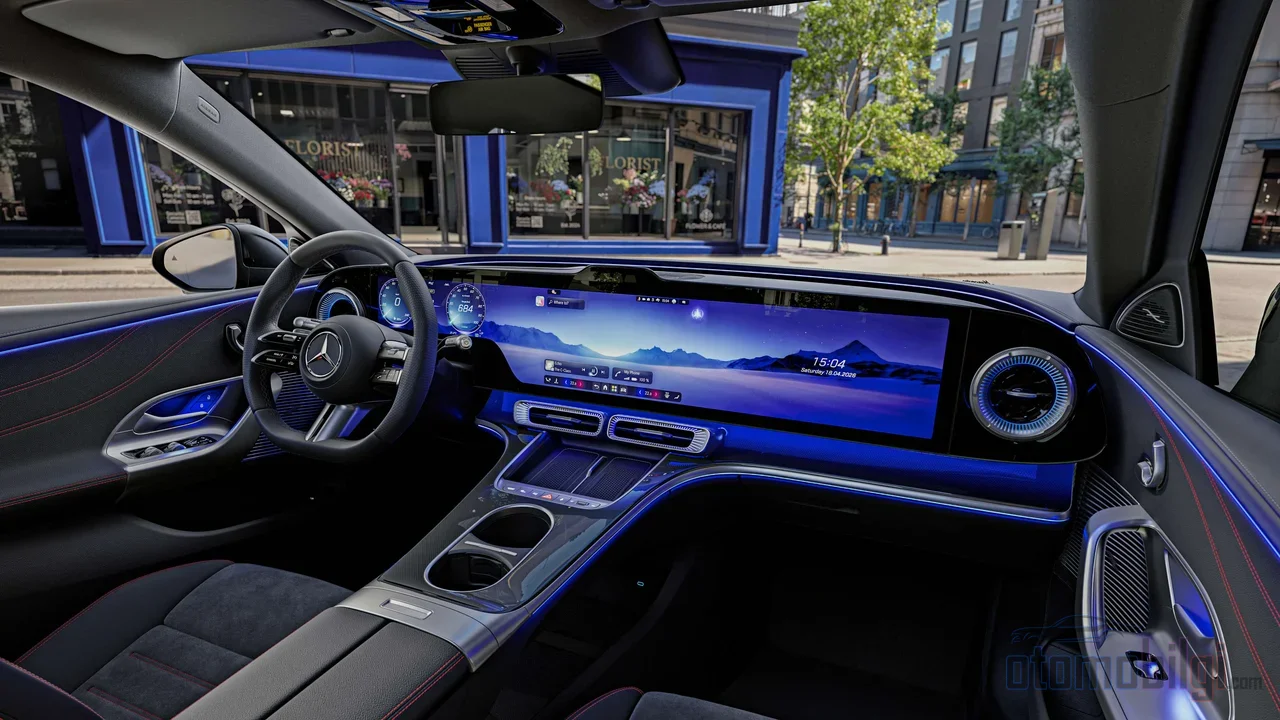
Car interiors have all turned into the same template because the touchscreen revolution locked cabin design into the same formula: a fully digital instrument panel, a giant central screen between the seats, and two air vents. The result: interiors where it is nearly impossible to guess the brand if you cover the logo. Now the wind is shifting; while some manufacturers are rushing back to buttons, a few brands are still searching for their character on the screen.
Highlights
- Mercedes' 141 cm MBUX Hyperscreen combines three displays under a single glass surface.
- Tesla Model 3 and Model S, defined the era with their 15-inch central displays.
- Euro NCAP aims to mandate physical controls for basic functions such as turn signals and wipers in 2026.
- Volkswagen Head of Design Andreas Mindt described the touchscreen-heavy approach as a "mistake."
- In AAA tests, setting navigation on a touchscreen took an average of 40 seconds .
The Same Screens Everywhere: How Did the One-Size-Fits-All Cabin Formula Emerge?
First, ask yourself: close your eyes and think about the last new car you got into. What was in front of the steering wheel? My guess: a flat, wide, glass-like glowing rectangle. You are not alone; almost every new car features the same view. Moreover, this is no coincidence, but the result of a long chain reaction.
The first link in the chain is in our pockets. With the introduction of the iPhone in 2007, the expectation of "I control everything from a touchscreen" took hold in our lives. Cars envied this interaction language and started copying it. When Apple CarPlay was announced in early 2014, the phone's interface moved directly onto the car screen; cabins began to resemble phones visually as well. Then Tesla took the stage and, with the Model S and Model 3 and their 15-inch central displays, declared "this is what the future looks like." Everyone followed suit.
Why did everyone take the same path? Because the logic sounds sweet at first glance. A single screen takes over the job of a crowded panel with dozens of buttons; the cabin looks cleaner and more spacious. The same hardware can be personalized with software across different models, and vehicles can be updated over the internet. A familiar interface also reduces the learning burden. Screen size has even become a purchase criterion for some buyers. Sounds like a win, doesn't it?
But things got out of hand. The formula of a fully digital instrument panel plus a giant central screen plus two air vents cast interiors from a single mold. If you look at a cabin without a logo, it is often impossible to tell which brand it is. While every brand has its own signature in exterior design, design no longer even seems like a priority in this interior race. It is as if everyone studied the same lesson and submitted the same written paper.
How Far Will the Screen Race Go? From Hyperscreens to Giant Central Panels
Those who say "bigger is better" for screens pushed the race even further. Mercedes-Benz entered the scene with a huge showpiece: the MBUX Hyperscreen, 141 centimeters wide - three OLED screens combining an area of more than 56 inches under a single glass surface. This is the largest screen Mercedes has ever put into production; it also includes details such as haptic feedback, fingerprint-resistant and glare-reducing coatings. EQS and EQS SUV feature a 17.7-inch central OLED that integrates with the 12.3-inch screens on either side. Mercedes markets this as "the fusion of analog and digital design," but what you ultimately see is still one giant glass rectangle.
BMW is also in this league with its curved display. Its curved panel, which combines a 12.3-inch driver display with a 14.9-inch central control screen in a single unit, sits in the cabin like a single cohesive picture rather than an awkward afterthought. Of course, the race doesn't end at the Center; MG announced the new Hector in India with a 14-inch screen, and it was announced at launch that it would be the country's car with the largest touchscreen. Tata took things a step further and, in its Avinya and Curvv concepts, placed a screen not where the logo would go but right in the very center of the steering wheel. A screen in the middle of the steering wheel! How would you feel if it were you?
Are Touchscreens Safe? Where Is the Driver Looking?
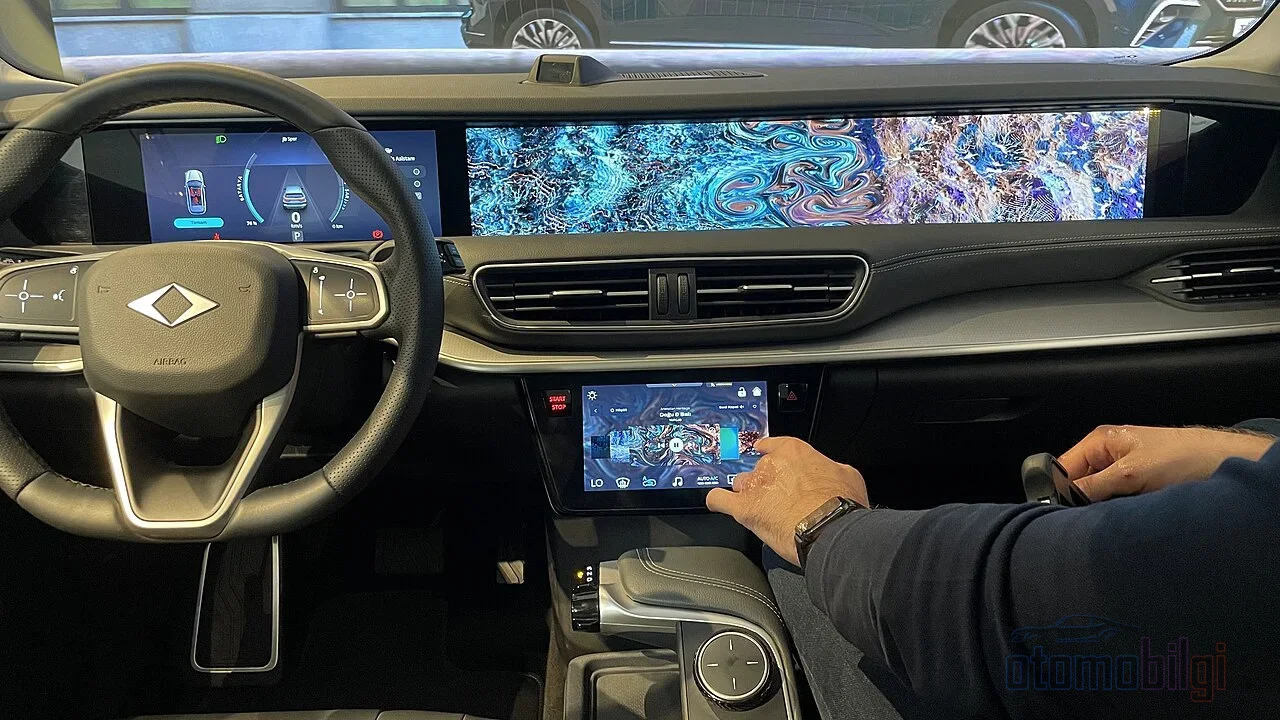
Now for the other side of the coin. Driving a car is different from scrolling on a phone: your eyes need to be on the road. Yet to adjust anything on a touchscreen, you have to look at the screen. Think about this: in old cars, you could reach for the turn signal stalk or the climate knob without looking, much like typing without looking at the keyboard. With a screen, you have to look every single time.
This isn't just theory. In AAA Foundation tests, setting navigation on a touchscreen took an average of 40 seconds. 40 seconds! In that time, you cover quite a distance on the highway. A 2022 test by a Swedish car magazine went as far as evaluating touch-based instrument panels as a possible cause of accidents. These criticisms are so strong that they have become institutionalized: Euro NCAP is targeting driver distraction in its 2026 test plans and wants to require dedicated physical controls for basic functions such as turn signals, hazard lights, wipers, horn, and emergency call in order to earn the top safety score. ANCAP on the Australian side is also rewarding physical controls for the same functions in its 2026 criteria. New safety rules in Europe and China are, in short, pushing manufacturers back toward buttons.
As Buttons Come Back, Who Is Staying with Screens?
Here comes the most interesting part of the story: the camp is splitting. One group of manufacturers is rushing back to buttons, saying "we made a mistake," while the other group is doing the exact opposite - wiping buttons out entirely and burying everything in the screen. Let's compare:
| Brand | Direction | What Are They Doing? |
|---|---|---|
| Volkswagen | Return to buttons | The design chief called the touchscreen-heavy approach a "mistake"; buttons are coming back for volume, heating, fan, and hazard lights. |
| Audi | Return to buttons | After years of giant-screen dominance, it is preparing a new design philosophy that prioritizes usability. |
| Ford | Return to buttons | In its 2025 model year series, it is bringing back physical buttons on safety grounds. |
| Hyundai | Standing back | Is counted among the manufacturers backing away from the giant screen policy. |
| BMW | Staying on screen | Targeting young buyers with smartphone habits and moving away from buttons and knobs; leaning toward touchscreens and voice assistants. |
| Mercedes-Benz | Staying on screen | Positions the Hyperscreen as a brand symbol. |
| Porsche | Its own path | Offers a characterful cabin with the Taycan's curved dashboard; the Macan Electric has an award-winning interior. |
| Genesis | The third way | Offers a simple design with real buttons instead of giant screens. |
Volkswagen's turnaround is particularly striking. Design Chief Andreas Mindt openly said that the previous touchscreen-heavy approach was a "mistake" and announced that physical buttons will return for critical functions like volume, heating, fan, and the hazard lights. Moreover, the advantage of physical buttons is tangible: thanks to muscle memory, your eyes stay on the road while your finger finds the right button. This debate is also being hotly discussed in the Turkish automotive media; the suggestion that frequently used functions should be physical while rarely used ones stay on screen is the most common common ground.
Porsche and Mini Contrast: Can There Also Be Character on Screen?
So is it possible to build a characterful cabin amid the same screen wind? I think yes, and the best proof is Porsche. When you look at the Taycan's curved dashboard, you feel the cabin shouting Porsche; a cabin bearing the signature of the same brand, with sporty and clear lines. Moreover, Porsche doesn't leave the job at just the dashboard: the Macan Electric won Wards' 10 Best Interiors & UX award. Of course, a small note; in the 2026 Taycan, traditional analog buttons have been replaced by touch glass panels, meaning even Porsche is getting its full share of the screen wind. The difference lies in how the design is used.
At the opposite end is Mini. Its round screen sits in the center of the cabin like a giant clock, saying "I'm different" before you've even closed the door. Hyundai Motor Group also confesses the problem in a straightforward way: interior design is now shaped by technology, and interior similarity is a real problem. But the interesting thing is this; the same technology can be both an instrument of uniformity and of identity. Interface design, light signatures, and material choices can tell the brand's story. The digital cabin has, in a way, become the brand's first and most lasting impression. So the question is: exterior design has long been considered "the face of the car"; can identity also be carried into the cabin, or will everyone keep using the same app?
What Do You Think Cars of the Future Will Look Like?
I think both ends of the map are visible. On one side, when regulators tie basic functions to physical controls, buttons will return at least in the vital section of cabins; nobody enjoys searching for the hazard light on screen under a third menu anyway. On the other side, brands like BMW are embracing young buyers' phone habits and moving even closer to screens and voice commands. So the future doesn't look uniform, but split in two: physical for safety and usability, digital for flair and software.
My hope is cabins that take the best of both worlds: characterful lines, smart screens, and a few buttons that know where your finger is going. Which one are you? Are you one of those who can't give up screens, or an old-school type whose hand is used to buttons? Let's meet in the comments, I never want this debate to end.
Sources
- MBUX Hyperscreen - Mercedes-Benz
- Why Car Interiors Are Starting to Look Like Smartphones - Dace Motor Group
- Zig Opinion: Why Do All New Car Interiors Look Similar? - ZigWheels
- Volkswagen: Physical Buttons and Controls Are Coming Back - Motor1 Türkiye
- Physical Buttons Are Back in 2026 - NDTV Auto
- Physical Buttons Return: ANCAP Forces Change - CarSeekers
- BMW is moving away from buttons & knobs - The Supercar Blog
- Why Future EV Buyers Are Quietly Rejecting Touchscreen Cabins - Carbuzz
- Porsche Macan Electric Wins Wards 10 Best Interior & UX Award - Champion Porsche
- The Evolution of Technology and Interior Design - Hyundai Motor Group
- The Cabin as a Canvas - 3SS
- Is the Touchscreen Era for Cars Coming to an End? - Vidyoto