Chris Bangle and the Controversial Revolution of Flame Surfaces
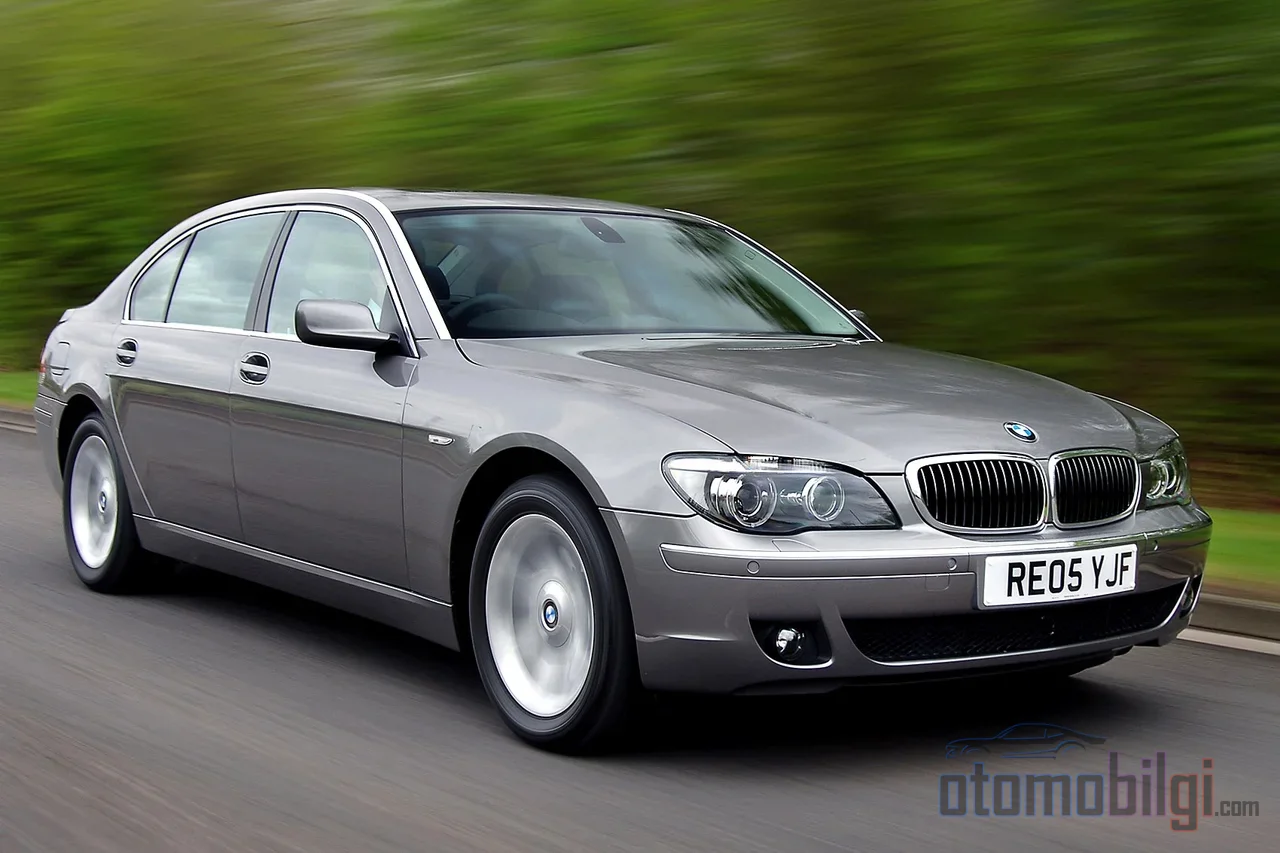
When the first photos of the BMW 7 Series, which would go on sale a year later in 2001, leaked onto the internet, the design world practically split in two. Some couldn't even bear to look at this car, while others couldn't look away precisely for that reason: Because no BMW had ever looked like this before. A rising, stepped trunk lid, taut lines sweeping across the body from end to end, and an entirely unfamiliar face... So what exactly is this design language, known as flame surfacing, and why are we still talking about it today? Let me tell it from the beginning.
What Exactly Is Flame Surfacing?
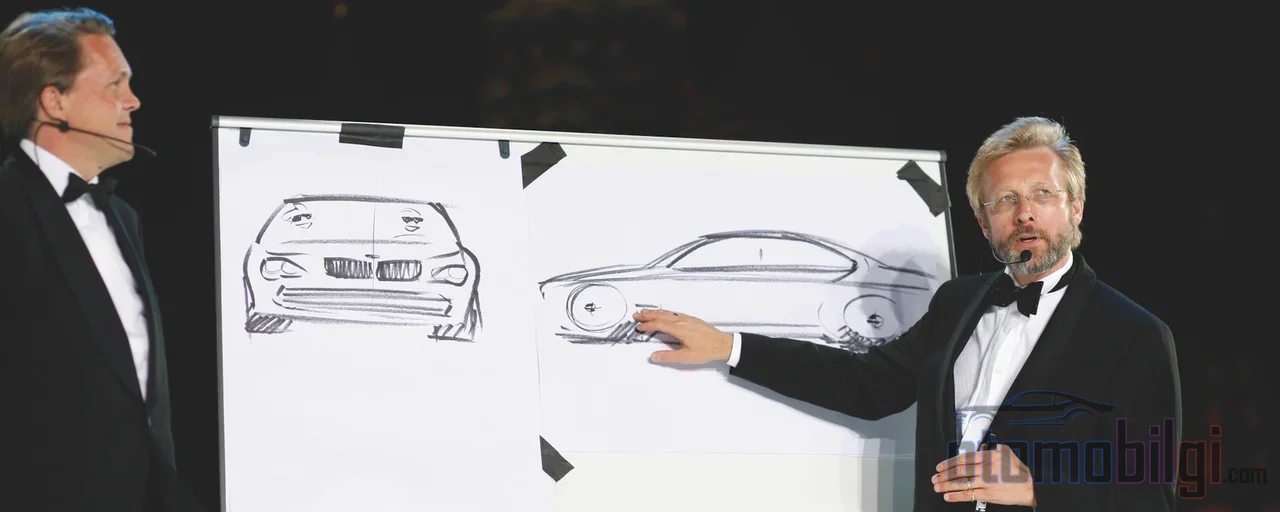
Flame surfacing is a design approach developed by BMW in the early 2000s. The name sounds a bit fantastical, doesn't it? But the logic behind it is actually very simple: Instead of seeing a flat surface or a single sharp line when you look at the car's side panel, you see surfaces that curve like a flame, twisting within themselves. As light glides over these surfaces, the car's entire appearance constantly changes; one person looks at it from the front, another from the back, and the two see different cars.
The inspiration for the concept, too, is like a design lesson. Anders Warming, known as the chief architect of the idea, explains that he derived this approach from drawing the human body: When drawing a body, you consider not just the outer contour but the shape in between, the bone structure, and the muscles. Automobile designers, however, are taught to draw the outer line first, then the shape. Warming's way was the exact opposite: Shape first, then line. When Chris Bangle was working on the sketches of the E85 Z4, he saw those twisted surfaces and said they looked just like flames - and the name stuck from there.
By roughly the mid-2000s, this language had spread to all BMW models, from the 3 Series to the newly born 1 Series. So it instantly became not just an interesting experiment on a single model, but the new face of the entire brand. And this mass adoption would make the reaction massive as well.
From the X Coupe to the E65 7 Series: The Story of a Growing Backlash
The public's first encounter with this language actually came through a concept: The X Coupe. This vehicle, considered an early precursor of the X6 and subverting the hitherto nonexistent idea of a sports activity coupe, received interest that was, at best, lukewarm. In other words, the world still wasn't ready. Then the real bomb went off: The E65 7 Series.
The E65's design was so radical that BMW had to soften it in the subsequent facelift (LCI), and sales increased along with it. Even today, this detail says a lot: The brand itself had been forced to admit that its flagship's face was a bit too sharp. But here's the interesting part: The facelifted E65 came to look better and better as the years passed; in fact, despite the criticism of its era, the E65 went down in history as the best-selling 7 Series of its time.
Highlights
- The name flame surfacing comes from the flame-curved surfaces of the sketches of the E85 Z4.
- Despite the backlash, the E65 7 Series became the best-selling 7 Series up to that point.
- The "Bangle Butt" nickname still watches over that raised trunk lid today.
- The E60 5 Series was actually inspired not by the human form, but by stretched fabric.
- Despite the backlash of the era, this language was later adopted in many corners of the industry.
The "Bangle Butt" Phenomenon: How a Trunk Lid Divided Everyone
The E65's most talked-about element was undoubtedly its raised, stepped trunk lid. The reaction was so intense that a nickname stuck to the bodywork, and even as years passed, it never let go of BMW: Bangle Butt. Even before the social media era, this name spread everywhere, from the automotive press to forums. Critics were split in two over the E65; for some, it was a betrayal of 50 years of BMW design tradition, while for others it was the brand's gateway to the future.
Other BMWs of that era were also given similar nicknames: The E60's characteristic headlights were dubbed "Dame Edna," and the front fascia of the first-generation E90 3 Series became known by the nickname "the mustache." In online debates, it was said time and again that these designs drew "extraordinary hate" and marked a break from the classic BMW era. But there is an interesting detail: Many ideas that seemed controversial in 2003 became almost standard in the automotive world in the years that followed. How, you ask? That is where the real story of this article begins.
Is the E60 Really the Emblem of Flame Surfacing? A Common Misconception
Here is what most people know (or think they know): The E60 5 Series is the emblem model of flame surfacing. But things are more colorful than we think. As conveyed in design historian Steve Saxty's book focused on BMW design, the E60 was actually a thing of its own; it was not primarily shaped by flame surfacing.
The E60's designer, Davide Arcangeli, focused on the shape within each panel, but drew his inspiration not from the human body, but from fabric. More precisely, from the form of fabric stretched over the skeleton of an airship or zeppelin. Just as stretched fabric creates a soft yet taut, sculptural surface, so did the E60's panels. So although it may seem like part of the same design language as the E65, the E60's story represents a separate branch. That is why these two models are still mentioned together: One is BMW's official new language, the other is the sibling of the same soul, inspired by fabric.
Who Was Bangle and Why Was He So Bold?
Known by his full name, Christopher Edward Bangle, he made headlines as the first American appointed as BMW's global design chief. He joined BMW in 1992 and during his tenure signed off on models such as the 5, 6, and 7 Series. But he had actually announced himself much earlier: The 1993 Fiat Coupe is still remembered as a strange-looking, bulky, and sullen car; Bangle's unconventional mind was already evident that day.
And Bangle's approach was not only about aesthetics. He was a designer who turned emotion into strategy; BMW tried to blend its classic lines with modern forms, and against the criticism he argued that the brand needed a new direction and that real change would only be possible through a complete break with the past. This defense made him one of the most controversial designers in the world in the short term. In the long term, however, a chance to be proven right emerged. There is even an unverified legend circulating about the approval of the 6 Series (E63), which says Bangle picked one of several proposals at random; considering how beloved that E63, and especially the M6, is today, the irony of this story is quite something.
After parting ways with BMW, he worked at the Italian yacht manufacturer Sanlorenzo. So the sea also became a field where he spoke through design. An interesting note: In later years, Bangle openly stated that he did not like BMW's current design language either. In other words, a legend who was both criticized and criticized - literally.
Did Time Prove Bangle Wrong? A Lasting Legacy in Modern Design
Looking back today, the picture is much clearer. The designs of the Bangle era are "aging" well; many lines that were shocking at the time now look fresh and even lovable. The first-generation Z4 is exactly like that: While Bangle's forms were frowned upon at its launch, today it is regarded as an elegant and distinctive roadster. The facelifted E65 is also now considered a rather balanced design, beyond the criticisms of its era.
More importantly, this language did not stay within a single brand. The automotive industry traditionally copies its radical ideas from other sectors, but this time the industry itself changed: Complex, even seemingly absurd shapes at first glance, stretched surfaces and abstraction seeped into the design evolution of nearly every major brand. That feeling created by Bangle - that "evolutionary touches are not enough, only a bold break can move a brand forward" - was etched into the DNA of modern automotive design. Even J Mays, Ford's chief creative officer of the time, admitted that although he did not like Bangle's designs, he was important in reshaping the modern automobile. Admission from even a rival, that says it all really.
When I look at today's BMW design, there is still a clever combination of that classic BMW-ness with the controlled chaos and surface playfulness left behind by Bangle. Flame surfacing was born as a sharp response to the popular, flat and monolithic designs of the time, and it achieved its purpose: It made BMW recognizable from a distance, at a single glance. It is debatable whether it was ahead of its time or right on time; but it must be acknowledged that it emerged at the exact moment it was needed.
What Does Flame Surfacing Mean Today?
In short: Flame surfacing is a design language that means designing car body surfaces with curves and tension instead of planes and lines, which BMW radically adopted in the early 2000s. Let me give you an analogy: Designing a car used to be like drawing a line on a flat sheet of paper; The Bangle era, on the other hand, took that paper, crumpled and stretched it slightly, letting light dance across the surface. The first people to see it asked, "Where did these lines come from?", but today almost every modern car body carries a bit of that dance of light.
Can a design language deserve both this much hatred and this much imitation? Chris Bangle's story is the best proof that the answer could be yes. If it were you, would you have liked the E65 when it launched? I'm curious to hear in the comments!
Sources
- BMW Flame Surfacing Explained: The Design Language That Changed Everything
- We Were All Wrong, Chris Bangle Was A Prophet
- Before the Big Grilles, BMW Had the "Bangle Butt"
- Chris Bangle - Wikipedia
- 10 Best BMWs From The Controversial Bangle Era
- BMW's influence in car design, by Stephen Bayley
- BMW's former design chief tears into the new design language
- Chris Bangle: BMW's legendary designer at Sanlorenzo
- The man who made BMW fly
- Bangle: Good design feels good to the touch