Can Hybrid Cars Tow a Caravan?
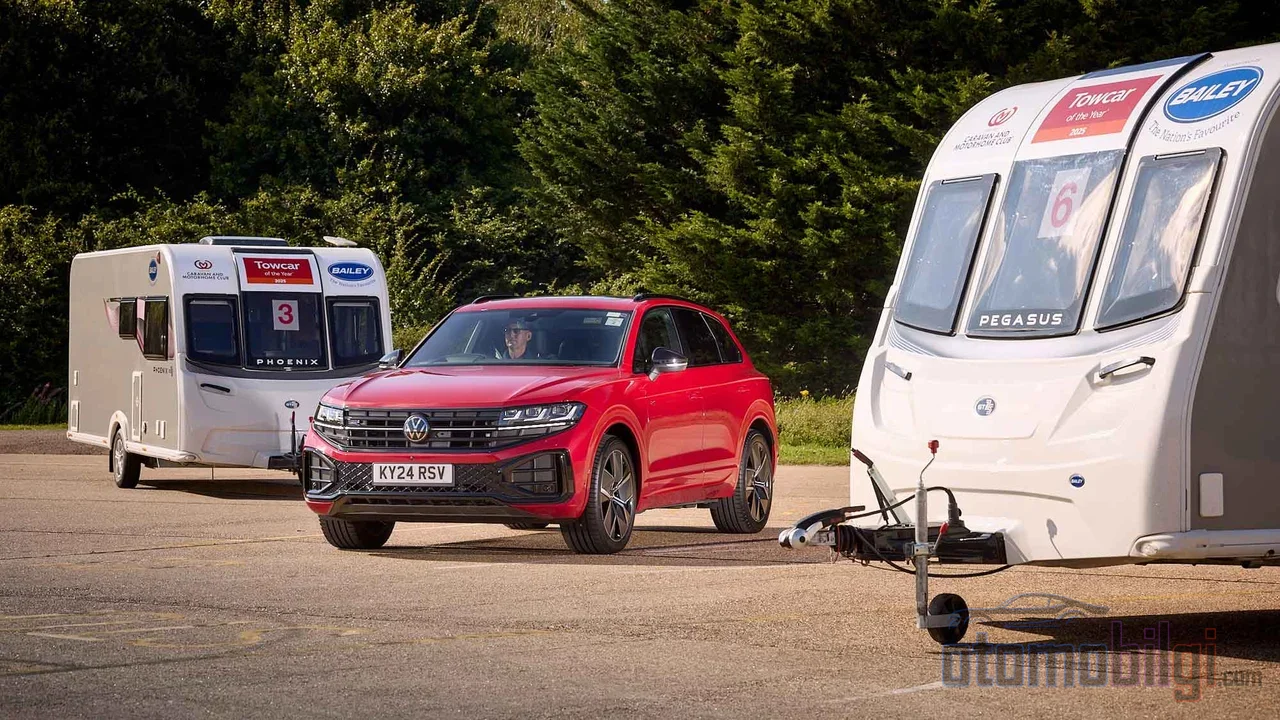
You hooked up the caravan, turned the ignition, and looked at the instrument cluster: how many kilograms is this hybrid actually allowed to tow? Many drivers learn the answer to this question only after buying the car, and they often hit the road with a misleading impression. To some, every electrically assisted car is a weak tug; to others, silent torque has done the job where the caravan begins. The truth lies between these two extremes, in a far more interesting place.
On this page, we examine the towing capacity of hybrid and plug-in hybrid cars along with manufacturer limits and the technical rationale behind them. We take a close look at why towing permits are low or nonexistent on small hybrids, what the electric motor does at takeoff and on gradients, how regenerative braking behaves with a loaded vehicle, and how much real-world consumption changes.
Highlights
- Many hybrids stay at or below a towing capacity of around 2,000 pounds (roughly 900 kg).
- Among plug-in hybrid models, some are permitted up to 3,500 kg: Audi Q7 55 TFSI e, Mercedes-Benz GLE 350 de, Land Rover Defender 110 P400e, Porsche Cayenne E-Hybrid.
- In fully electric vehicles, towing a caravan typically reduces range by 40-60%.
- In a real-world test, a plug-in hybrid pickup towed a 2.2-tonne caravan for 400 km, with consumption measured at around 14 L/100 km.
- The primary determinant of the towing limit is not propulsion power, but braking performance and stability.
Can a hybrid car tow a caravan, and what determines the limits?
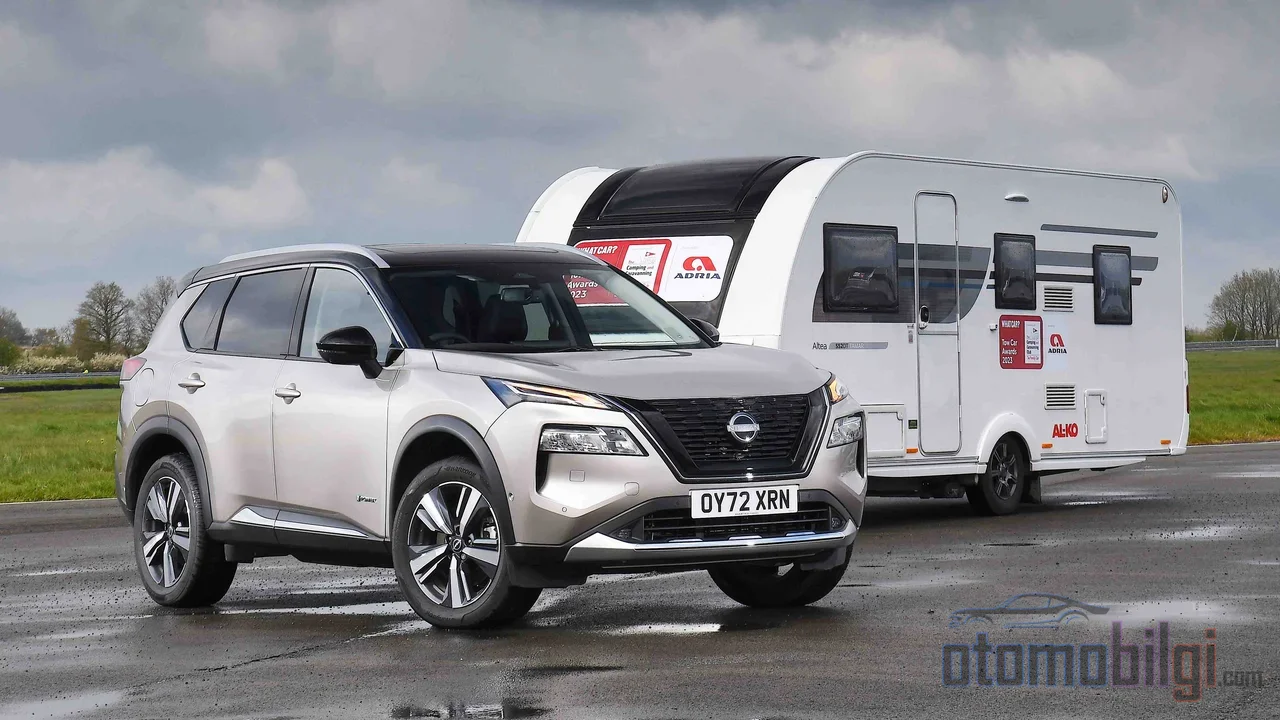
The answer depends on the model, and the reason for this uncertainty is technical. Not every hybrid on the market is built on the same idea: a full hybrid integrates the gasoline engine and the electric motor through the transmission; a plug-in hybrid (PHEV), on the other hand, carries a markedly larger battery that can be charged from an external source and offers longer range on electricity alone. This architectural difference directly affects towing capacity.
The scale looks like this: many hybrid models have a maximum towing rating in or below the 2,000-pound, or roughly 900 kg range. In contrast, some hybrid and plug-in hybrid SUVs from the current model year can tow loads of 3,500 pounds (roughly 1,590 kg) and above. In other words, the hybrid label alone says nothing about towing capacity; what matters is the permit the manufacturer has granted for that specific drivetrain and chassis.
The most critical point here is this: the limit is not a power contest, but a safety calculation. The primary determinants of towing limits are braking performance and vehicle stability. Even if the engine is powerful enough, the vehicle that accelerates the caravan must also be able to stop it safely and keep trailer sway under control. That is why manufacturers define the permit based on the load the brakes and chassis can carry.
Why is the towing permit low or absent on small hybrids?
Once you decode the mechanical logic behind small hybrids, the low limits explain themselves. The first item is the transmission. Most conventional hybrids operate with a power-split e-CVT; this type of transmission cannot carry as much torque as a classic automatic or manual gearbox. Add to that the already relatively low engine output in hybrid setups, and the load on the drivetrain under heavy loads quickly exceeds the limit.
The second issue is the way the gasoline engine operates. Most hybrid engines run on the Atkinson cycle: they gain efficiency by keeping the expansion stroke longer than the compression stroke, but the price is reduced specific power. In normal driving, the electric motor covers this shortfall. With a caravan behind, there is no such thing as reserve power; the engine is already running at the limit of its load, and even if the brakes are upgraded, there is no backup power on the engine side.
Battery weight and load-carrying limit
Another limiting factor is the battery itself. In some hybrids, the towing hitch's load rating is defined as low due to the battery's weight and its position in the chassis. The vertical load hung on the hitch depends directly on the capacity of the rear axle and that region of the chassis; the heavy battery pack consumes part of this capacity even when the vehicle is empty. Additionally, experts agree that prolonged towing close to maximum capacity can affect battery life; some technicians add that heavy towing is not recommended because it can strain the generator/motor windings and related components.
In plug-in hybrids, moreover, a software restriction can come into play: during towing, electric-only operation can be limited, or even shut off entirely. In that case, the vehicle effectively acts like a standard gasoline tow vehicle, and its large battery serves as nothing more than a burden along the way.
Manufacturer figures: how much can each hybrid tow?
The best way to make the picture concrete is to look at manufacturer values. The figures below belong to models featured in towing guides published as of 2026, and keep in mind that in some cases the maximum value may require certain options or towing packages.
| Model | Towing capacity | Notable feature |
|---|---|---|
| Toyota RAV4 PHEV | 1,500 kg | 302 hp, approximately 46 miles of electric range |
| Audi Q7 55 TFSI e | 3,500 kg | 3.0 V6 + electric motor, 381 hp |
| BMW X5 xDrive50e | 2,700 kg | 483 hp, approximately 40 miles of electric range |
| Volvo XC90 T8 | 2,400 kg | 455 hp; trailer stability assist can correct swaying |
| Mercedes-Benz GLE 350 de | 3,500 kg | Diesel + plug-in hybrid, peak torque at around 1,600 rpm |
| Land Rover Defender 110 P400e | 3,500 kg | 404 hp / 472 lb-ft; can use low-range in electric mode |
| Porsche Cayenne E-Hybrid | 3,500 kg | 25 kWh battery, approximately 42 miles of electric range |
The dividing line in this table is clear: Thanks to the gasoline engine taking over once the battery runs out, PHEVs are far more practical for long-distance towing than fully electric vehicles. When towing a caravan, the battery gauge is not a cause for panic but an energy buffer. On the fully electric side, the picture is narrow: there are only a few models capable of towing over 2,000 kg; the Kia EV9 GT-Line AWD is one of them and allows 2,500 kg. With its 98.8 kWh battery offering a range of 311 miles, this vehicle's range drops noticeably when towing; towing a caravan in a fully electric vehicle typically reduces the range by 40-60%, meaning a 300-mile range could drop to 150 miles with a load.
The electric motor, torque management, and what happens on an incline?
The hybrid's towing identity lies in the character of the electric motor. An electric motor produces full torque from 0 rpm; which is why in plug-in hybrid SUVs, the motor delivers additional power during towing for smoother acceleration. At takeoff and at low speeds, this instant support never asks for the turbo or rev band a naturally aspirated engine has to wait for.
The incline scenario is where this advantage is seen most clearly. Modern hybrid pickups offer instant electric torque at low revs, helping the engine carry loads on inclines at low rpm. The behavior observed in Toyota hybrids is also instructive: with electric torque support, engine revs are kept high at all speeds, as if driving in a low gear. Rather than draining the battery, the system uses engine revs to manage the load, and regenerative braking works in the opposite direction with the same logic.
To be honest, there's a limit here too: although torque and horsepower are good, sustained heavy loads drain the battery quickly. The electric motor's torque is only a part of the motor's total output; a long incline or mountain pass can deplete the battery's buffer capacity within minutes, and the vehicle drops into full hybrid gasoline mode.
How does brake recovery behave when towing a caravan?
The principle of regenerative braking is simple: when slowing down, it uses the electric motor as a generator; when you lift off the accelerator, the motor resists rotation, and this resistance slows the vehicle while writing energy back to the battery. For a lightly loaded hybrid on a flat road, this is a small efficiency gift every time you approach a red light. So what changes when a caravan is behind you?
Two things change. The first is magnitude: the kinetic energy of a loaded vehicle multiplies, so the energy that can be collected during braking also increases; the slowing capacity of regenerative braking becomes even more valuable when a load is added. The second is a limitation: a different regenerative braking profile may be needed while towing, and the vehicle's regenerative system cannot harvest unlimited energy from the trailer during braking. The trailer's axles and brakes are not connected to the tow vehicle's motor.
A critical detail is also where the energy goes: the tow vehicle's regenerative braking charges the tow vehicle's own battery, not the trailer's battery. The living battery of the caravan home must be powered by its own sources. Also, regenerative braking, as it currently exists, cannot replace the traditional braking system and must not interfere with ABS and stability control; so compatibility with the caravan's own braking system is still the job of the mechanical brakes.
What does "B" mode actually do?
The "B" mode in Toyota hybrids is a concrete example of this behavior: applies strong regenerative braking when shifted out of drive, slowing the vehicle to about 5 mph (8 km/h) but not bringing it to a full stop. It provides speed management on long descents without touching the brake pedal; when towing a caravan, this is a valuable tool that delays the overheating of the service brakes. The final stop is still handled by the hydraulic brakes, and you need to keep that in mind.
Battery cooling and the strategic role of drive modes
Heavy towing also tests the hybrid's thermal management. The good news is that in hybrids approved for towing, this calculation has already been done at the factory: hybrid pickups are extensively tested in extreme temperature ranges for heavy towing, and liquid cooling systems monitor and manage battery temperature. For example, a hybrid Ford Maverick comes with a transmission cooler as standard, and the battery has its own cooling system; the goal is a cool tow even on the hottest days.
Drive modes, in this scenario, are not cosmetic but strategy. Since electric operation can be limited or shut off while towing, the driver of a plug-in hybrid chooses where to spend the battery: to cover the last kilometers before entering the city quietly and without using fuel, or to use that energy as torque support at the foot of the ramps. Setting off with a full battery means effectively covering the first few dozen kilometers of a long towing day for free. In models with bidirectional charging, like the Kia EV9 example, the energy provided extends to powering devices at the campsite.
How much does fuel consumption actually change when towing a caravan?
Consumption figures on paper lose their meaning behind a caravan; what matters are field measurements. In a real-world test, a plug-in hybrid pickup towed a 2.2-ton caravan over 400 km, during which consumption was measured at around 14 L/100 km. Hybrid Ranger owners also actively share their towing consumption experiences on forums; although the numbers vary by model, wind, and trailer aerodynamics, the picture is common: while towing, consumption can rise to at least twice the unladen figure.
That said, the consumption psychology of a plug-in hybrid is different from that of a full electric. Range anxiety is lower because the gasoline engine takes over when the battery is depleted; you lose some of the electric efficiency, but in return you get range assurance. Two sides of the same coin: shutting off electric operation while towing effectively turns the PHEV into a gasoline-powered tow vehicle; it can be read both as an advantage and as a loss of efficiency.
Conclusion: hybrid or plug-in hybrid - which makes more sense as a tow vehicle?
Let's summarize. A hybrid car can tow a caravan, but only if you pick the right model. Most conventional hybrids remain limited to a low towing capacity; the reason is less a lack of power than the e-CVT's torque-carrying limit, the absence of reserve power in the Atkinson cycle, and the load the battery adds to the chassis. The main criterion for the towing limit is not propulsion power but braking performance and stability; that's why manufacturers don't grant permissions generously.
If you're towing a serious caravan, the practical answer lies on the plug-in hybrid side. Models such as the Audi Q7 55 TFSI e, Mercedes-Benz GLE 350 de, Land Rover Defender 110 P400e and Porsche Cayenne E-Hybrid, which allow 3,500 kg, combine everyday electric efficiency with weekend towing power in the same body. When towing a caravan, the electric motor provides torque at startup and on ramps, regenerative braking rests the brakes on descents, liquid cooling manages the battery, and when the battery runs out, the petrol engine is the range guarantee. When the right model is chosen, a hybrid's caravan-towing ability is not a deficiency but a deliberate engineering choice that reconciles efficiency with towing power.
Sources
- Best Hybrid and Electric Cars for Towing in 2026 - Stratstone
- Hybrid SUVs with the Best Towing Capacity - Car and Driver
- Why do many hybrids have little or no trailer towing capacity? - Mechanics StackExchange
- 12 Best Hybrid SUVs For Towing In 2025 - CarBuzz
- Hybrid towing guide: how much can your hybrid SUV or car tow? - Chasing Cars
- Why Are Hybrid Cars Not Allowed To Tow? - Toyota Owners Club
- Hybrid or plug-in hybrid as a tow vehicle? - Escape Forum
- Is there a mechanical reason why the Hybrid can't have the tow... - Reddit
- Can you tow with a hybrid car? - Toyota Malta