Series, Parallel and Power-Split Hybrid Architectures
Two hybrid cars carry the same label on their hood: hybrid. While one makes you feel the electric motor kick in instantly on a highway ramp, the other glides along almost silently like an electric vehicle, connecting its engine directly to the wheels only at speeds above 90 km/h. This difference is no coincidence; it is a difference in how the engine and the electric motor are mechanically connected, in other words, the hybrid architecture. Beneath the same word "hybrid" lie three fundamental powertrain layouts: series, parallel, and power-split (series-parallel). This page compares these three architectures by explaining the technical terms in plain language, and shows why vehicles carrying the same label can feel so different.
Parallel Hybrid: Two Engines, One Shaft
In the parallel layout, both the internal combustion engine and the electric motor can mechanically drive the wheels. Whether they work together or alone, the power reaches the wheels through the same mechanical path. If the two sources are connected to the same shaft, their speeds are equal and their torques are summed; when one of the sources is disengaged, the other keeps rotating without damage via a one-way clutch or freewheel mechanism.
This is the most common layout of hybrid technology; the first two generations of the Honda Insight were built in this style. Honda's IMA (Integrated Motor Assist) system, used in the Civic Hybrid and Accord Hybrid, is among the well-known examples of parallel architecture. GM's parallel hybrid trucks, the Saturn Vue and Aura Green Line, along with the Chevrolet Malibu hybrids, also fall into the same class.
The strongest aspect of the parallel layout is its mechanical advantage in efficiency: the engine's power goes directly to the wheels through a loss-free transmission. In stop-and-go traffic, this architecture demonstrates its efficiency at its best with regenerative braking and electric assistance. There is also a variant called "through-the-road": while the conventional powertrain drives one axle, the electric motor drives the other. The Peugeot 3008 HYbrid4, BMW i8, and second-generation Honda NSX are examples of this all-wheel-drive approach.
Series Hybrid: Using the Engine as a Generator
In the series layout, there is no mechanical connection whatsoever between the engine and the wheels. The engine only generates electricity by turning a generator; the energy flow follows this sequence: engine → battery → electric traction motor → wheels. This layout, used for years in diesel-electric locomotives and ships, is actually a very old idea in automotive: the Russian riverboat Vandal, built in 1903, was the first diesel-electric vehicle, and Ferdinand Porsche designed "System Mixte" series hybrid vehicles with hub motors for Lohner-Werke.
The real strength of series hybrids is that they completely free the combustion engine from mechanical load. The engine can run continuously at an efficient rpm range under constant load; thanks to this, an efficiency of approximately 37% can be achieved, compared to the typical average of around 20% for internal combustion engines. An increase of approximately 50% in total system efficiency (from 19% to 29%) is possible under low and mixed driving conditions. There is also a control side to this: a series hybrid is a relatively simple arrangement, because the engine's speed and the wheel's speed are independent of each other.
Some series hybrids are called range-extended electric vehicles (EREV); all series hybrids fall under this definition, but not every EREV fits into a hybrid class. Well-known examples include the BMW i3 range extender, whose generator is connected only to the battery, the Fisker Karma, and the Mazda MX-30 with an optional range extender. The Chevrolet Volt operates almost in series; it only opens a mechanical path from the engine to the wheels at speeds above approximately 110 km/h. The Nissan e-Power, on the other hand, is a fully series system: the engine turns the generator, and the traction motor drives the wheels.
Power-Split Architecture: The Joint Management of Two Paths
The power-split (series-parallel) architecture is a parallel hybrid with a power-splitting device added inside it. Both a mechanical and an electrical power path from the engine to the wheels are possible together, and the system's fundamental principle fits in a single sentence: splitting the power provided by the engine according to the power the driver demands at that moment. When the point at which the engine operates and the power the wheels want are decoupled, the engine can always stay in its efficient region, and the surplus is directed to the generator.
Highlights
- As of 2016, the parallel hybrid is the most common hybrid arrangement; the engine and the electric motor can drive the wheels together.
- In a series hybrid, the engine runs at a fixed efficient speed and can achieve 37% efficiency, roughly twice the typical engine average.
- The e-CVT is not actually a CVT; instead of a belt and pulleys, it uses a single planetary gear set.
- The Honda e:HEV operates in series at low speed and with a direct mechanical connection at highway speed.
- The Toyota Prius is the vehicle that spread the series-parallel architecture into today's market.
Is the e-CVT Really a CVT?
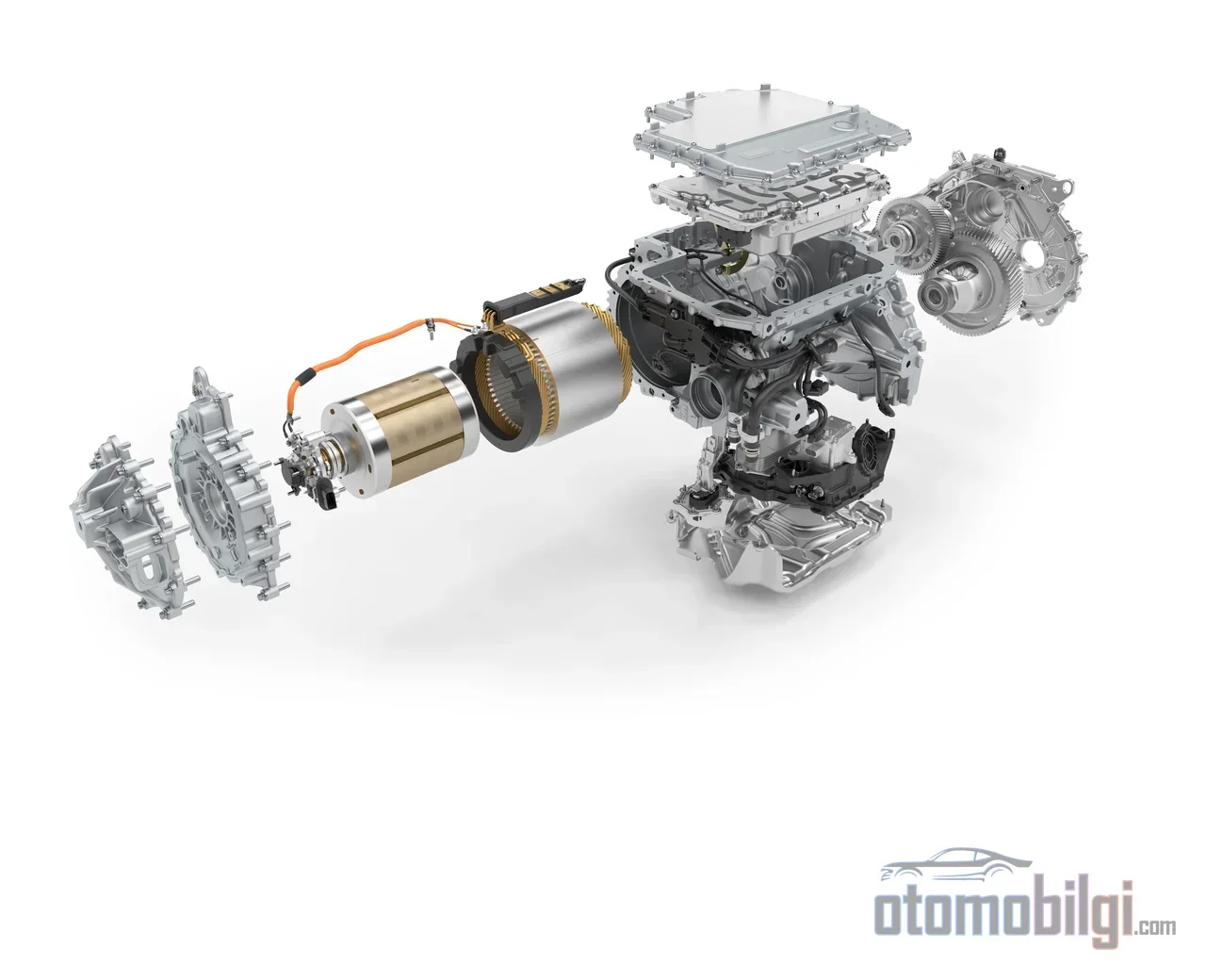
The continuously variable effect produced by power-split systems is known in marketing as the e-CVT. This name is misleading: the belt-and-pulley pair found in a classic CVT is absent here. The Toyota Hybrid System uses a single three-shaft planetary gear set to continuously convert the difference between the engine's and the generator's speeds into a variable ratio. In the Gen 3 Prius, the engine-generator and traction motor paths were assigned separate gear ratios; Gen 4 removed the second planetary set and connected the motors on a parallel axis with a single combining gear.
Since the electric traction motor's torque is available instantly from zero speed, the initial response is strong, and the ratio change comes not from a gear shift but from the speed balancing of two electric machines. Models such as the Toyota RAV4, Honda CR-V, and Accord use this structure. A more ambitious example is the "two-mode" system jointly developed by General Motors, BMW, and DaimlerChrysler: This arrangement, launched in 2007 with the Chevrolet Tahoe Hybrid, has two planetary gearsets and four clutches, offering four fixed gears alongside full electric and hybrid modes; it behaves like a parallel hybrid at high-speed cruising and when towing a trailer. The BMW X6 ActiveHybrid and Mercedes ML 450 hybrids also belong to this class.
Honda's Series-Parallel Bridge and Other Manufacturer Choices
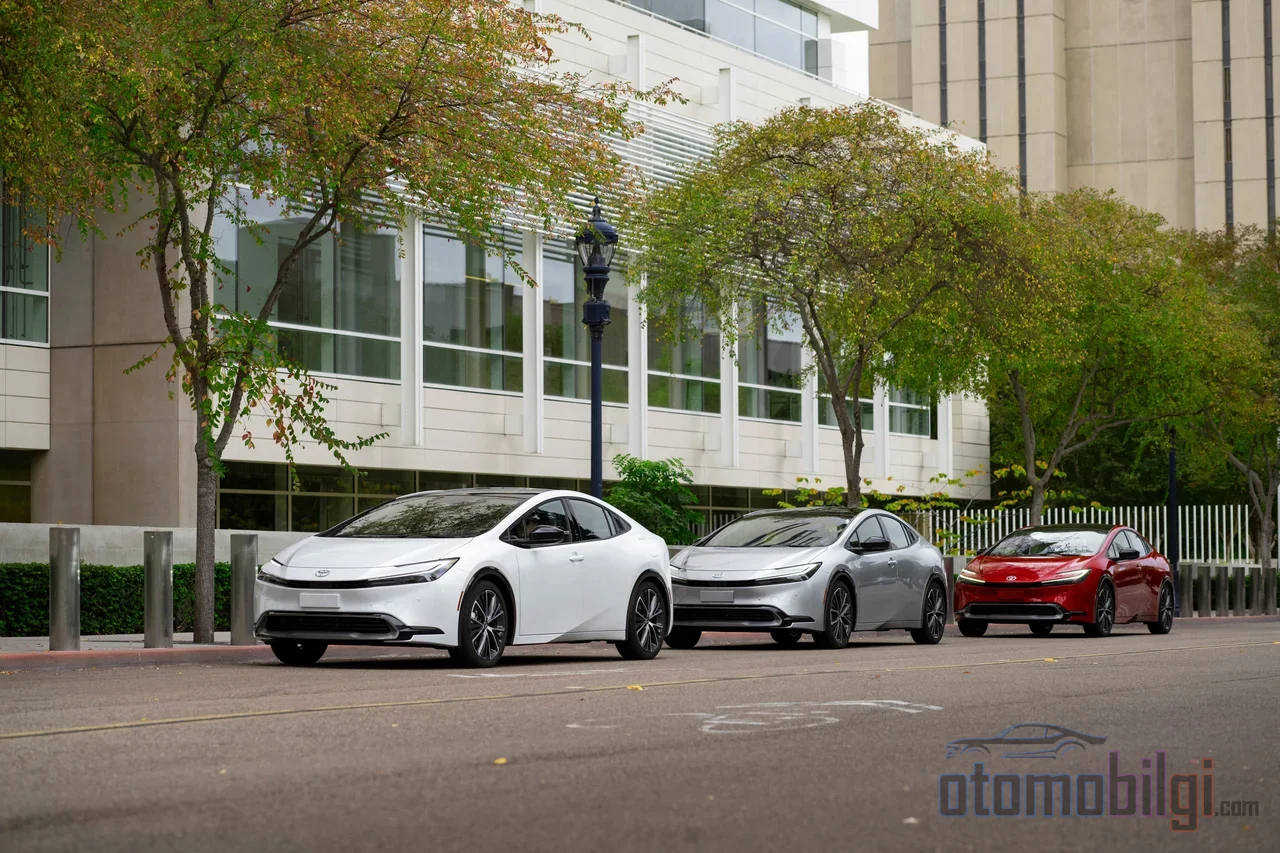
Manufacturers' architectural choices directly define the character of their products. Toyota is the pioneer of the series-parallel approach with a single power split device; The Prius made this architecture popular, and 5. The 2026 Prius with THS generation 5 is still described as a "series-parallel full hybrid". Honda, on the other hand, builds a different bridge: the e:HEV system, used since the 9th generation Accord, operates mostly in electric, i.e. series mode at low speeds; at high speeds, it connects the engine directly to the wheels with a lockup clutch. This is effectively a single-speed hybrid transmission, and in the 6th generation CR-V a second direct gear for low speeds was added, making it a two-speed system.
BYD's journey follows the same philosophy: it has used a series-parallel arrangement since its first plug-in hybrid, the F3DM (2008); the 1st generation DM offered mostly series operation plus a clutch-based mechanical path at high speeds, while the 4th generation DM-i and DM-p return to this approach with a single-speed DHT. Nissan's e-Power, however, has chosen to remain fully series.
| Architecture | Mechanical connection | Example system |
|---|---|---|
| Series | None; the engine can only drive the generator | Nissan e-Power, BMW i3 range extender |
| Parallel | Both motors can mechanically drive the wheels | Honda IMA, Chevrolet Malibu hybrid |
| Power split | Both mechanical and electrical power paths | Toyota Hybrid System, Honda e:HEV |
Which Architecture Is More Efficient Where?
The efficiency debate cannot be reduced to a single number, because there are two different efficiencies: the engine's own efficiency and the total efficiency of the energy from the drivetrain to the wheels. In a series hybrid, the engine can operate at a high efficiency such as 37%; however, the journey of the generated electricity through the battery and electric motor to the wheels produces more losses than a good mechanical transmission itself. The parallel arrangement therefore retains its mechanical advantage in conditions such as highway cruising, where the engine already operates efficiently.
The real key to hybrid efficiency, however, is independent of architecture: recovering momentum energy that would otherwise be lost as brake heat through regenerative braking. As the number of braking events increases in stop-and-go traffic, the value of this recovery grows, and parallel or power-split systems deliver the best results in city conditions. The series-parallel architecture offers a third way: by separating the engine, generator, and traction motor, it uses the strengths of all three worlds in a mixed driving profile. The combination of series and parallel approaches, when designed correctly, can deliver better performance and lower consumption than either one alone.
It must also be honestly noted that the classification boundary is blurry: Whether the Chevrolet Volt counts as "almost series" or series-parallel, and whether Honda's system falls into the series or parallel class, is debated in the technical literature; Honda's system is also described as a dedicated hybrid transmission (DHT). These designs, which add a mechanical connection at high speeds, are engineering decisions that in practice acknowledge the series hybrid's highway weakness.
How Does Architecture Combine with Hybrid Type?
Architecture is an axis independent of hybrid classification (mild, full, plug-in); one describes the form of connection, the other the depth of electrification. In a mild hybrid, the system offers only start-stop, regenerative braking and acceleration assistance; there is no full electric driving or external charging. The unit placed between the engine and transmission works like a large starter motor; the 42-volt GM Silverado PHT delivered roughly 10%, and the BAS hybrid in the 2009 Saturn VUE achieved fuel economy improvements of up to 27% in EPA tests. Pre-2015 Honda IMA also could not propel the vehicle on electricity alone.
Full hybrids, with a larger battery and motor, can drive fully electric over short distances and at low speeds but are not externally charged; because the technology is more advanced, they are more expensive than mild hybrids, and plug-ins are more expensive than full hybrids thanks to their larger-capacity batteries. Different architectures can pass within the same class: while mild hybrids are mostly set up in parallel, in the full hybrid world parallel, series and power-split arrangements live side by side. Therefore, one must look not at the label but at how the engine and electric motor are connected.
Series, Parallel, or Power-Split: Which One Suits You Better in Practice?
The honest, single-paragraph answer to the main question is this: Because the series hybrid keeps its engine at a constant efficient rpm, it offers a quiet, EV-like driving experience in city and mixed use, but it can lose efficiency at highway speeds due to the lack of a mechanical connection; the parallel hybrid, as the arrangement with the highest mechanical efficiency, is strong on the highway and at high speed; the power-split architecture, meanwhile, separates the engine's operating point from demand, combining both worlds in a single body and targeting the lowest consumption in mixed driving.
This answer turns into a concrete test in model selection. For a predominantly city driver, Honda's mostly series approach or Nissan's fully series e-Power promises an unusual, electric feel. For a highway-oriented user, systems that open a direct mechanical path at high speeds - Honda's lockup clutch, BYD's single-gear DHT, the two-mode arrangement with two planetary gear sets - offer a more consistent experience. For drivers whose mix changes in every condition they encounter, Toyota's single planetary gear set power-split solution represents the balance the architecture was designed for in its purest form. Even when the label stays the same, the mechanics differ; now you know where to look.
Sources
- Hybrid vehicle drivetrain
- Series vs Parallel vs Series/Parallel Drivetrains
- What's the Difference between a Parallel and a Series Hybrid
- e:HEV – Original Honda Hybrid System
- How Do Hybrid Electric Cars Work?
- Comparative analysis of series, parallel, and series-parallel HEV
- A guide to hybrid powertrain layouts
- How Parallel And Power-Split Hybrid Systems Work