Why Do Hybrid Cars Run on Electricity at Low Speeds and Gasoline at High Speeds?
Share This Page
Hybrid cars use the electric motor at low speeds and low power demands, and the gasoline engine at high speeds or under high loads; because at urban speeds electric drive is more efficient and quiet, while at highway speeds the increased air resistance and power demand coincide with the gasoline engine's efficient operating range. The transition decision is made instantly by the vehicle's computer, and no driver intervention is required. Below, we break down this transition logic layer by layer.
Highlights
- A typical hybrid's EV mode runs on electricity only over short distances and up to speeds of about 40 km/h .
- Full hybrids can typically travel short distances of about 1.5-3 km in pure electric mode.
- In plug-in hybrids, the electric range is usually around 48 km ; once the range is depleted, the vehicle behaves like a conventional gasoline car.
- Hybrid models offer more than 10 mpg of extra efficiency compared to non-hybrid equivalents in most cases.
- Toyota's power-split system, thanks to its gear set, makes the electric-to-gasoline transition almost imperceptible.
Who Makes the Decision, and Based on Which Criteria?
In a hybrid powertrain there are two power sources: an internal combustion engine and one or more electric motors. The transmission connecting them to the wheels is managed by the power electronics controller. The controller continuously reads variables such as the accelerator pedal position, vehicle speed, battery state of charge, and engine temperature to decide which source will produce how much power.
The logic is actually based on a simple efficiency equation. The electric motor delivers its torque instantly and fully at low revs; in stop-and-go traffic, this makes it more advantageous than a gasoline engine with delayed engagement. The gasoline engine, on the other hand, is at its most efficient at moderate to high loads and steady speeds. That's why the vehicle selects the mathematically cheapest energy path for every speed and power demand - the cheapest in terms of fuel.
This system also has a built-in advantage: thanks to the extra power provided by the electric motor, the gasoline engine can be chosen in a smaller size while still suffering no performance loss. The battery also powers auxiliary loads such as lights and air conditioning, eliminating the engine's idling - that is, idle fuel consumption - when the vehicle is stationary.
Electric in the City, Gasoline on the Highway: Why Not the Other Way Around?
The definition of urban driving is stop-and-go traffic: short accelerations, stops at lights, low average speed. This profile is the electric motor's strong suit. When a hybrid car stops at a red light, it can shut off the gasoline engine completely and set off using only the battery. In slow-moving traffic, pure electric driving noticeably reduces fuel consumption. When braking, regenerative braking kicks in: as the vehicle slows down, the kinetic energy of the spinning wheels is converted into electricity via a generator and fed back into the battery. Because you brake frequently in city traffic, this recovery continues constantly.
On the highway the picture changes. As speed increases, air resistance grows with the square of speed, and the continuous power needed for propulsion multiplies. Feeding the battery with this power is both inefficient and drains the charge quickly. A gasoline engine, on the other hand, can operate in its optimal efficiency band under this steady load. When a demand for strong acceleration comes, the system usually engages both at once: the gasoline engine provides the base power, while the electric motor delivers a temporary torque boost.
In short, the switch is not a speed threshold but a calculation of power and efficiency. Even at the same speed, the gasoline engine may engage uphill and the electric motor downhill; the system looks not at speed but at the instantaneous torque demand.
So is it always gasoline above 80 km/h?
No. There is a widespread belief among drivers that hybrids switch from electric to gasoline once they exceed a certain speed - 80 km/h being a commonly cited example. This is not a strict rule. In reality, the system works according to instantaneous power demand: at a steady, moderate speed on the highway, engine-off electric driving is possible for brief moments; however, in high-load situations such as acceleration or ramps, the gasoline engine kicks in. The correct interpretation is this: speed alone is not decisive; speed multiplied by power demand is.
Hybrid Types and Differences in Transition Behavior
Not every hybrid works the same way. How the system switches from electric to gasoline varies greatly depending on the battery's size and architecture.
| Type | Electric driving | Transition behavior |
|---|---|---|
| Mild hybrid | None, purely electric driving is not possible | The gasoline engine is always engaged; electricity only provides extra torque during acceleration |
| Full hybrid | Over short distances, usually 1.5-3 km | At low speeds and in stop-and-go traffic the engine shuts off completely and the car moves on electricity |
| Plug-in hybrid (PHEV) | Approximately 48 km of electric range | When the range runs out, it switches to gasoline mode and operates like a conventional gasoline car |
Talking about a transition in mild hybrids would be wrong, because the internal combustion engine is never completely deactivated. The electric system only provides support and requires no external charging. In full hybrids, a significant portion of city driving can pass in silence. When plug-in hybrids are charged regularly, they cover most of daily use on electricity alone; once the battery is depleted, they smoothly transition back to gasoline mode. This is precisely the fundamental difference between a full hybrid and a plug-in: the battery's size, cost, and purpose.
Series, Parallel and Power-Split Systems: Three Paths to the Same Transition
To understand how the transition feels, one needs to look at the system's architecture. There are three basic approaches.
In a series hybrid, the gasoline engine is never directly connected to the wheels; it only runs the generator, and the vehicle typically moves via an electric motor powered by the battery. In a parallel hybrid, however, the engine and the electric motor can drive the drivetrain together or separately; a computer system continuously manages the power distribution. The power-split - that is, series-parallel - system adds a second power path from the engine to the wheels to the parallel architecture and can use the two sources independently or together.
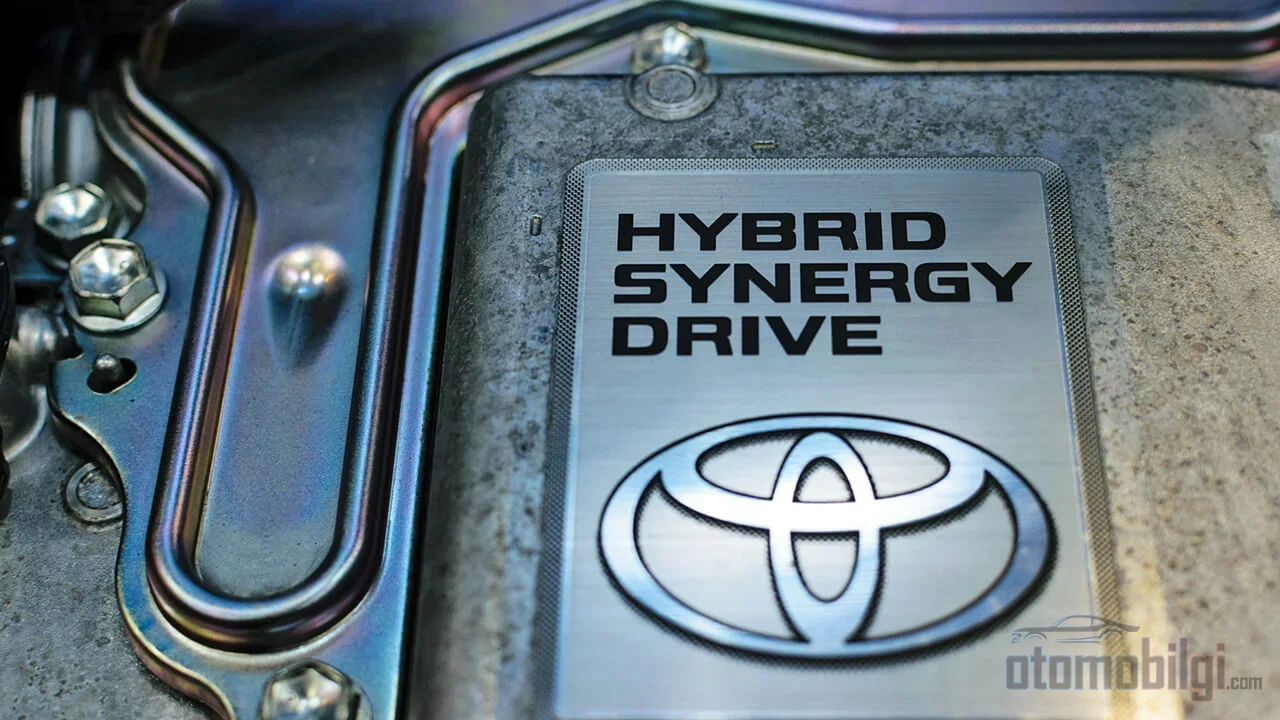
A concrete example is one of the best-known applications of power-split logic: Toyota Hybrid Synergy Drive uses a power-split gear set that connects the gasoline engine, the generator, and the electric motor into a single unit. This allows the vehicle to run on gasoline alone, electricity alone, or both at once; the engine's energy is directed toward charging the battery or driving the wheels directly as needed. Some modern systems, on the other hand, act like a parallel hybrid at high speeds and high gear ratios, and like a series hybrid at low speeds, choosing the most efficient architecture for each regime.
Why the Transition Is Not Felt: The Technical Background of Seamless Shifting
What drivers are most curious about is whether the transition can be felt. In a well-designed hybrid, the moment of transition is almost imperceptible. The main reason is that some hybrid transmissions have no clutches engaging and disengaging: the power-split gear set is permanently connected, and while the system brings the gasoline engine into play, it continuously recalculates to match engine speed and torque. Since there is no clutch shock or drop in revs, the driver usually only hears a slight engine sound.
The e-CVT, known as an electrically controlled continuously variable transmission, is one of the components that establishes this balance. It should not be confused with a classic CVT: it is not a true continuously variable transmission; it adjusts gear ratios not with a belt but with the difference in rotational speed between two motor-generators. Since electric torque is available instantly, the initial response is strong and there is often no need for the engine to reach high revs. This is also the fundamental job of the hybrid transmission: to constantly rebalance the power from the two power sources according to driving conditions.
This does not mean it is flawless in all vehicles. In some models - for example, in compact hybrid SUVs - the engine shutting off and restarting can be noticeably felt, especially with a cold engine and high battery consumption. The difference from vehicle to vehicle stems from the system's gear architecture and software calibration.
When Does EV Mode Work, and When Does It Burn Fuel for Nothing?
Most full hybrids have an EV mode that the driver can select manually. This mode is designed for short periods of pure electric driving at speeds up to approximately 40 km/h: scenarios where quietness and low emissions are desired, such as exiting parking spots, enclosed areas, or passing through residential neighborhoods at night. It also provides fuel savings on short, low-speed trips.
However, EV mode cannot always be said to be advantageous in terms of economy. Persisting in EV mode when the battery is low keeps the gasoline engine running longer to charge the battery and can increase total consumption. For those aiming for maximum fuel economy, Eco mode and gentle-throttle normal driving is usually the better choice; it makes more sense to save EV mode for moments requiring zero local emissions. On the highway, no mode offers urban efficiency anyway: as speed increases, rising air resistance makes both electric and gasoline modes inefficient.
To read the drive mode system correctly, the energy flow display on the instrument panel is also instructive: the arrows changing direction between the engine, battery, and wheels is the most intuitive way to understand which source the system is using at that moment.
Summary: How Should You Read Your Own Vehicle's Behavior?
A hybrid switching between electricity and gasoline is not a flaw or indecisiveness; this is the system's very purpose. The vehicle moving silently in the city switches to the gasoline engine on the highway, carrying itself to its most efficient regime. The perceptibility of the transition depends on the architecture: power-split systems hide the transition with gearless gear sets, while in some parallel systems the engine kicking in can be heard. When interpreting your own vehicle, ask three questions: at what speed, at what power demand, and at what battery charge level does the transition occur. The answers will follow a consistent logic of efficiency - and once you understand that logic, every silence and every hum beneath the pedal takes on meaning.
Sources
- How Do Hybrid Electric Cars Work? - AFDC
- How hybrids work
- Hybrid vehicle drivetrain
- Series vs Parallel vs Series/Parallel Drivetrains - UCS
- Toyota Hybrid Drive Modes
- How the Toyota Hybrid System Works: A Beginner's Guide
- How do hybrid transmissions work? - Horse Powertrain
- An eCVT isn't really a CVT
- What Is a Hybrid Vehicle and How Does It Work?
- What's a mild hybrid? And how's it different to a full hybrid?
- Hybrid vs. mild hybrid vs. plug-in
- Plug-in Hybrid-Electric Cars
- Best way to drive a hybrid
- Electric driving modes
- How to get more mpg out of your Toyota hybrid