REEV: How Do Range-Extended Hybrids Work?
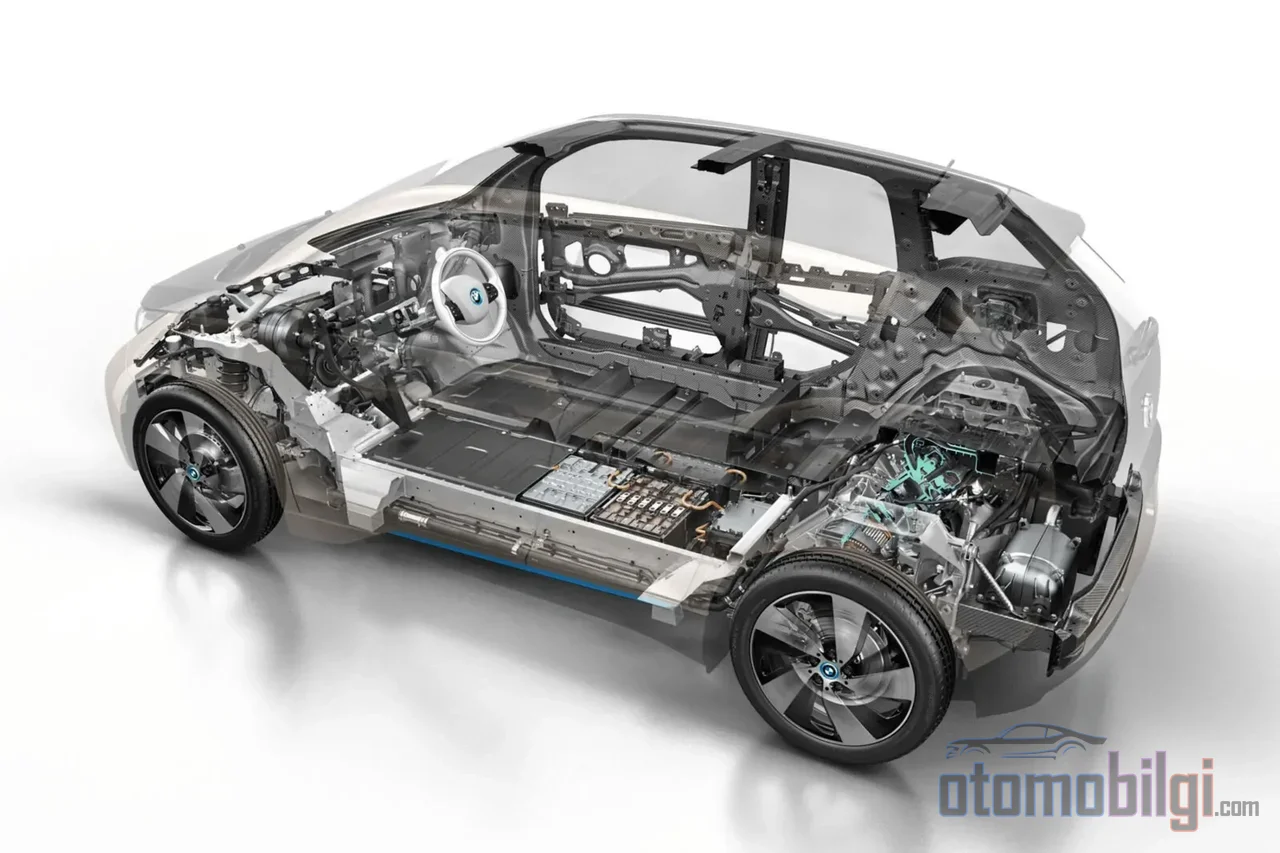
We assume that if a car has a gasoline engine, that engine is what turns the wheels. Extended-range hybrids, or REEVs for short, are machines that shatter exactly that assumption: The internal combustion engine here is not a source of propulsion; when it runs, its only job is to spin a generator and feed the battery. The feel behind the steering wheel is always fully electric; the engine kicking in is noticed by most drivers only as a slight difference in sound. So why does this architecture exist, who does it truly benefit, and why do some manufacturers count it as a separate type while others see it merely as a plug-in hybrid variant? The answer lies hidden in the physical layout of the powertrain.
How Does the Extended-Range Hybrid Architecture Work?
REEV stands for range extender electric vehicle. The structure is built on a simple but clear logic: Only the electric motor delivers power to the wheels. With a battery charged from the plug, the vehicle covers daily use entirely on electricity. When the battery drops below a certain threshold, a small-displacement internal combustion engine kicks in, spinning a generator to charge the battery or feed the electric motor directly. The engine has no mechanical connection whatsoever to the powertrain, the transmission, or the wheels.
This layout is a special case of the series hybrid architecture, and the engineering advantage it brings should not be underestimated. The engine is no longer sized to meet the peak power demand during acceleration, but to cover the vehicle's average power needs. That is why REEV engines are relatively tiny: Most examples on the market use engines between 1.0 and 1.5 liters; In the Mazda MX-30 R-EV, an 830 cc rotary engine did the job, while in the BMW i3 REx it was a 647 cc two-cylinder gasoline unit taken from a scooter. Moreover, the engine runs constantly in its most efficient rev range, independent of vehicle speed; this also eliminates the need for a multi-speed transmission.
Highlights
- In a REEV, only the electric motor drives the wheels; the gasoline engine has no mechanical connection to the wheels.
- Most REEVs in the Chinese market carry small engines of 1.0-1.5 liters with 30-50 kWh batteries.
- In 2024, global EREV sales reached 1.2 million units; the forecast for 2030 is 3.2 million.
- Chinese REEVs travel more than 70% of the distance covered fully electric.
- For users who do not regularly plug in, real fuel consumption can rise to an average of 2-4 times the type-approval values.
What Is the Difference Between a REEV and a Plug-in Hybrid (PHEV)?
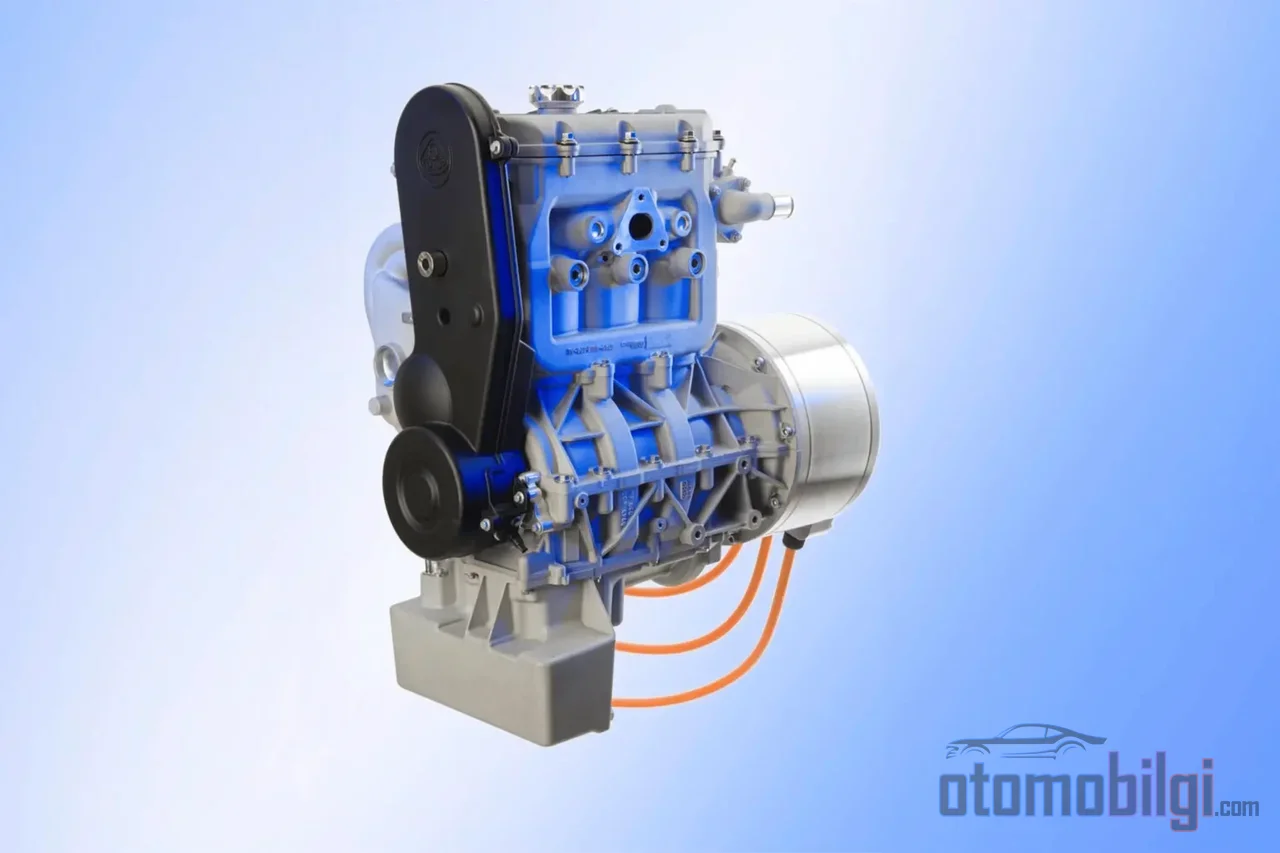
On paper, a REEV and a plug-in hybrid are similar: Both have a battery charged from the plug, and both have an internal combustion engine. The real distinction is whether that engine is connected to the wheels. In a conventional PHEV, the engine can drive the wheels directly at high speed or under heavy load; the vehicle behaves like a series hybrid when needed and like a parallel hybrid when needed. In an REEV, this mechanical link does not exist at all.
It should also be noted that the boundaries are not always sharp. Some vehicles marketed as PHEVs operate mostly like series hybrids in daily use; while some EREVs allow the engine limited direct contribution under high load. The Chevrolet Volt is technically a series-parallel plug-in hybrid: When needed, the engine can also drive the wheels. The BMW i3 REx, by definition, is a true range extender; its engine only charges the battery. Regulatory bodies also approach the matter practically: Under EPA in the US and WLTP in the EU, EREVs are classified and certified as plug-in hybrids, i.e. PHEVs; while China treats them as a separate segment.
Why is the Nissan e-Power not considered a REEV?
Another frequently asked question concerns the status of Nissan's e-Power system. Architecturally, e-Power is the same as a REEV: The engine works only as a generator, and an electric motor drives the wheels. The difference is that it cannot be plugged in. Since there is no external charging capability, e-Power is classified not as a REEV or a PHEV but as a conventional hybrid.
Fully Electric in the City, Generator on Long Journeys
The usage logic of the REEV concept is based on the overlapping of two scenarios. In daily urban use, the vehicle is effectively an electric car: quiet, with instant torque, no gear shifts, and strong regenerative braking. REEVs in the Chinese market typically carry a 30-50 kWh battery and 150-200 km of CLTC electric range; real-world usage data shows that more than 70 percent of the distance covered by an average REEV is traveled entirely on electricity.
When the electric range runs out, the vehicle does not stop; a small engine continues to feed the generator at a fixed rpm. Since the engine does not operate under variable load, fuel consumption drops in range-extending mode, and engine wear is also reduced. In terms of user experience, this means range anxiety practically disappears: The driver can plan far less frequent stops instead of the habitual intense fast-charging pauses typical of electric vehicles.
History of the Idea: From Emergency Generator to the Mainstream
The first mass-produced REEV was the Chevrolet Volt, which hit the roads in 2011. In its first generation, a 1.4-liter engine kicked in as a generator after 40-80 km of electric driving; in the second generation, the electric range rose to about 85 km and the engine to 1.5 liters. Owners who charged regularly could cover more than 1,560 km between two refuelings; GM halted production in February 2019.
The BMW i3 REx implemented the concept in an even purer form: With its 9-liter tank, a tiny engine that kicked in when the battery dropped to 6 percent carried the total range to about 240-300 km. However, the REx version was discontinued in Europe in 2018, and BMW management announced that this technology had no future in the brand's strategy. In the same period, LEVC carried the format into commercial use with London taxis featuring a 33 kWh battery and a 1.5-liter range extender. The real breakthrough came in China: With the Li One in 2019, Li Auto established a model that dedicated the large battery to fully electric urban use, while the small engine served as regular backup on long journeys; this was a philosophy entirely opposite to BMW's emergency approach. In 2024, global EREV sales reached 1.2 million units, and the overwhelming majority came from the Chinese market.
Two opposing trends by 2026
The market is currently being pulled in two directions at once. In China, new battery-electric models reaching an average CLTC range of 500 km and the charging network growing to 12.82 million units by the end of 2024 are weakening the reason for REEV's existence; sales in the segment have declined year-over-year for several months in a row since mid-2025. In the West, however, the picture has reversed: Manufacturers such as Stellantis, Scout Motors, Ford, Kia and Hyundai have announced REEV programs for 2026-2027 production. The Ram 1500 REV promises 145 miles of electric range with its 92 kWh battery, roughly 690 miles of total range with its 3.6-liter V6 generator, and 175 kW DC fast charging. On the Scout side, about 85 percent of pre-orders came for the range-extender versions of the Terra and Traveler. The idea BMW abandoned years ago is being reborn as a bridging technology in North America's large pickups and SUVs.
Maintenance and Ownership: Differences from Classic Hybrids
On the ownership side, the picture is twofold. On one hand, the drivetrain architecture is simple: No transmission, no clutch, the engine does not run tied to wheel speed; the mechanical chain with failure potential is shortened. On the other hand, the vehicle has both a large battery and a piston engine, and even though the engine is small, classic maintenance items like oil changes continue. In practice, since this maintenance can usually be scheduled to coincide with other periodic procedures such as tire rotation, an extra service visit is not always necessary.
The more critical point is cost and weight: A REEV adds a generator set, a fuel system and additional complexity compared to an equivalent electric vehicle. At the production stage, plug-in hybrids and REEVs emit 41.6 to 49.1 percent more greenhouse gases than conventional vehicles, because battery production accounts for roughly 30 percent of vehicle cycle emissions; but during use, this gap can be offset by emission reductions of 14-53 percent depending on the class and the electricity source.
The real-world consumption problem
The most controversial aspect of the REEV is that its benefit depends largely on user behavior. In an analysis of roughly 100,000 plug-in hybrids and REEVs in China, Europe and North America, the real fuel consumption and tailpipe CO2 values of owners who did not regularly plug in measured an average of 2-4 times the type-approval values; a 2024 Chinese study found that real gasoline consumption reached 3-6 times the approved values. In summary: The REEV offers an experience close to that of an electric vehicle for users who plug in regularly; for users who do not plug in, it can turn into an ordinary gasoline car carrying a heavy battery on its back.
Who Is REEV a Sensible Choice For?
The profile is becoming clearer: REEV is for households that have charging options at home or at work and can cover daily urban use of 40-100 km with electricity, but regularly drive beyond the charging coverage on long trips. For this user, the vehicle is effectively a zero-exhaust-emission electric car five days a week, and on weekends a long-distance machine with no range anxiety. In contrast, for a driver who rarely takes long trips, a fully electric vehicle is a simpler and lighter solution; while for a driver who can almost never charge, a classic full hybrid is a more honest choice.
Summary: When Does REEV Give Which Answer?
The range-extender hybrid is an architecture in which the wheels are driven solely by the electric motor, while the gasoline engine is used only as a generator; its fundamental promise is to eliminate range anxiety without compromising the electric driving experience. As charging infrastructure strengthens, the appeal of this promise narrows, while in markets where infrastructure is sparse and in heavier vehicle classes its value increases. The answer to the question of whether REEV is a transition technology or a permanent category will take shape in the coming years along with the spread of the charging network.
Sources
- Extended-range electric vehicle
- What is a REEV? How Range-Extended Electric Vehicles Work
- What Is an EREV, and Why Are They Being Revived?
- What are range extender cars?
- What is the difference between a hybrid, MHEV, PHEV, REEV and EV?
- A New Kind Of Hybrid: Extended-Range EVs Are Coming
- 16 Range-Extender (EREV) vehicles expected in the U.S.
- Range Extender EV vs Plug In Hybrid: Australian Buyer Guide
- What is a range extender? - Top Gear
- A Review of Range Extenders in Battery Electric Vehicles