How Did the Volvo ReCharge Concept Shape Its PHEV Vision?
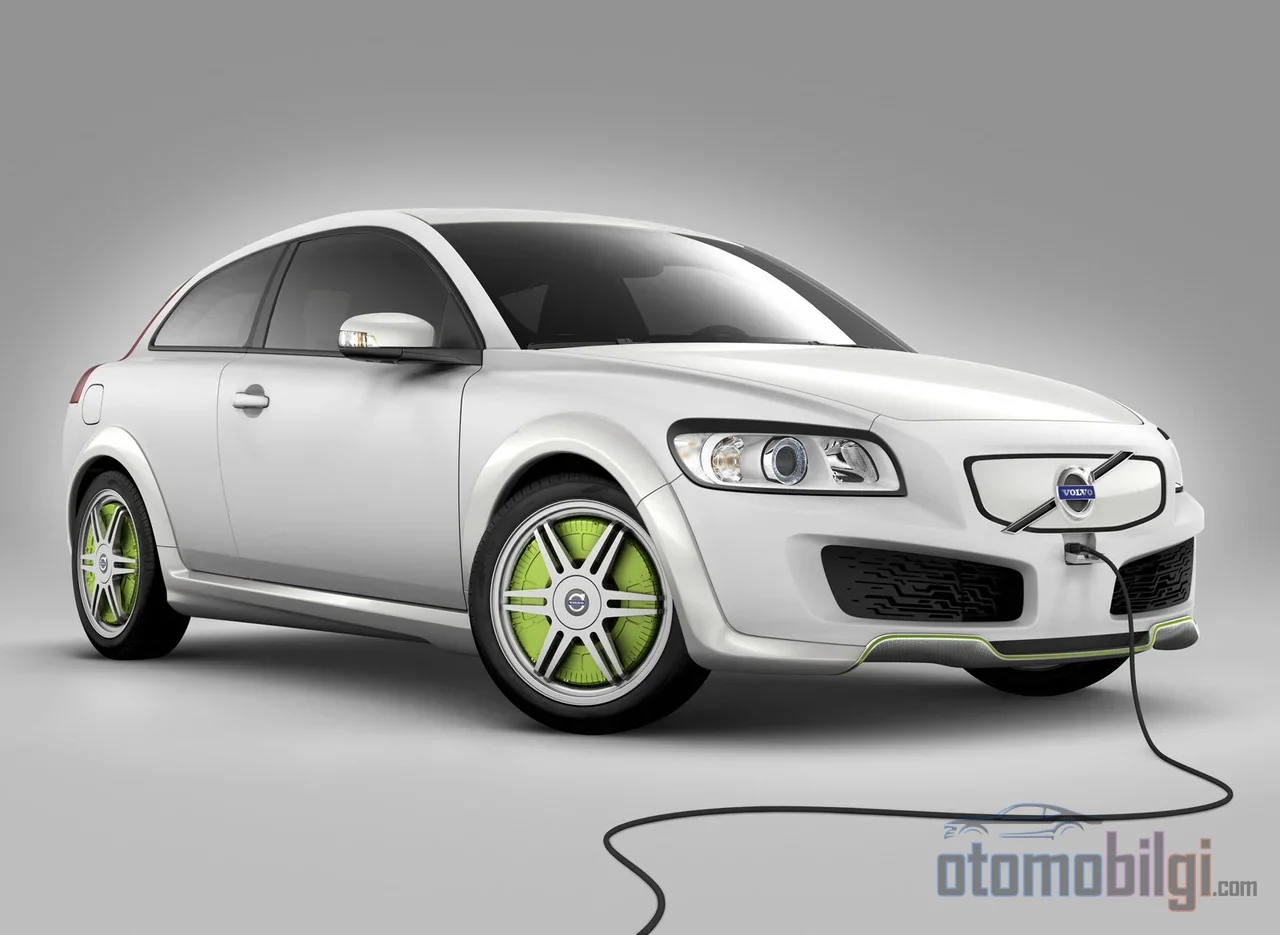
At the September 2007 Frankfurt Motor Show, not at the Volkswagen stand but at Volvo's, one of the most interesting questions in automotive history was hanging in the air: Can a hybrid really behave like a fully electric car? Volvo's project, named the ReCharge Concept, arrived with an architecture that turned the era's understanding of hybrids on its head. The vehicle did have a combustion engine, yes; but that engine would never be mechanically connected to the wheels.
The concept was built on a specially prepared Volvo C30 body, and in the nineteen years since its introduction it has contained most of the ideas that changed how the plug-in hybrid concept was conceived in the premium segment. Yet ReCharge never entered series production. So what kept such an ambitious engineering effort from reaching showrooms? The answer first requires understanding the car's architecture.
Series Hybrid Architecture: No Mechanical Connection to the Wheels
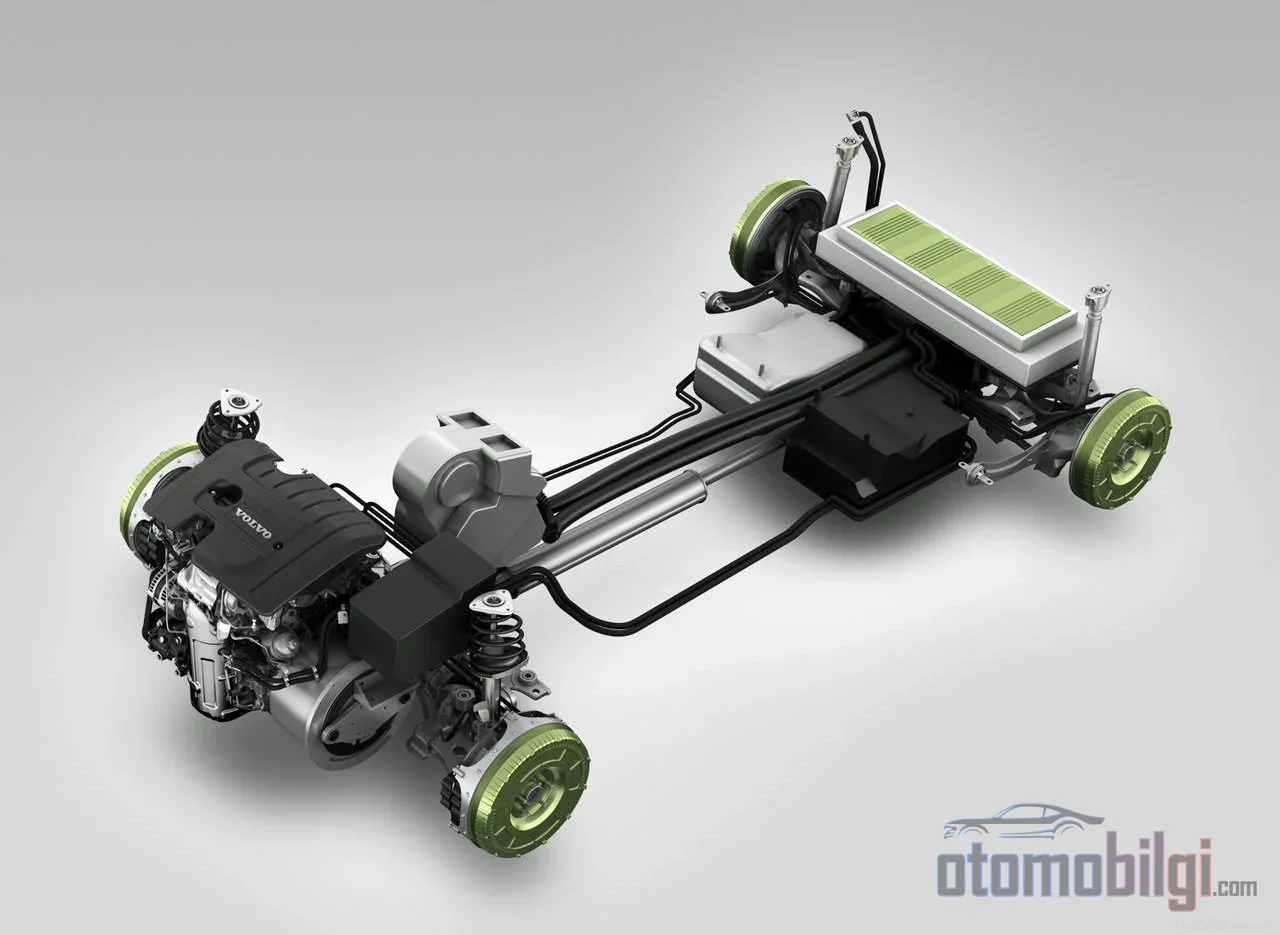
At the heart of the ReCharge Concept lies what we today call a series hybrid arrangement: There is no mechanical connection whatsoever between the internal combustion engine and the wheels. Volvo described the car simply as a battery electric car plus an efficient generator; the term the manufacturer used for the generator was Auxiliary Power Unit, or APU. The internal combustion engine's sole task was to generate electricity by driving this generator when the batteries were depleted.
The most striking consequence of this arrangement occurred in the drivetrain. Components such as the gearbox, gear lever, differential and driveshaft all disappeared; because what delivered power to the wheels was not shafts mechanically transmitting rotational force, but electrical cables.
A Separate Electric Motor at Each Wheel
An electric motor was placed on each of the four wheels, and each motor sent power independently to its own wheel. According to Volvo, this topology provided three gains: optimized weight distribution, reduced mechanical losses, and a genuine four-wheel drive system in which the power sent to each wheel could be controlled individually. The system's electronic control layer was designed with fourfold redundancy for the reliability of drive and braking functions; an engineering measure taken extremely seriously for a hybrid concept.
The wheel motors and the APU generator were developed jointly with PML Flightlink, a British firm specialized in electromagnetic systems. The tires were not off-the-shelf products either: Michelin had prepared tires specifically designed for the motorized wheel structure. In other words, the concept was the work of a consortium, not of a single supplier.
Why Four-Wheel Braking Was Gradually Becoming Unnecessary
Braking energy was recovered and transferred to the battery, and Volvo's long-term plan was to replace the classic wheel brakes entirely with electric brakes once the system matured. This goal is one of the clearest signs of how far ahead the vehicle was envisioned: ReCharge was presented not merely as a show car but as the first stop on an engineering roadmap.
Highlights
- Unveiled at the Frankfurt Motor Show in September 2007, it was a concept based on the C30
- Approximately 100 km of range on battery power alone (PHEV-60 class)
- A separate electric motor at each of the four wheels, with no mechanical connection to the wheels
- A 1.6-liter Flexifuel engine serving purely as a range extender that fed the generator
- 0-100 km/h in 9 seconds, top speed 160 km/h
PHEV-60: 60-Mile Electric Range Target
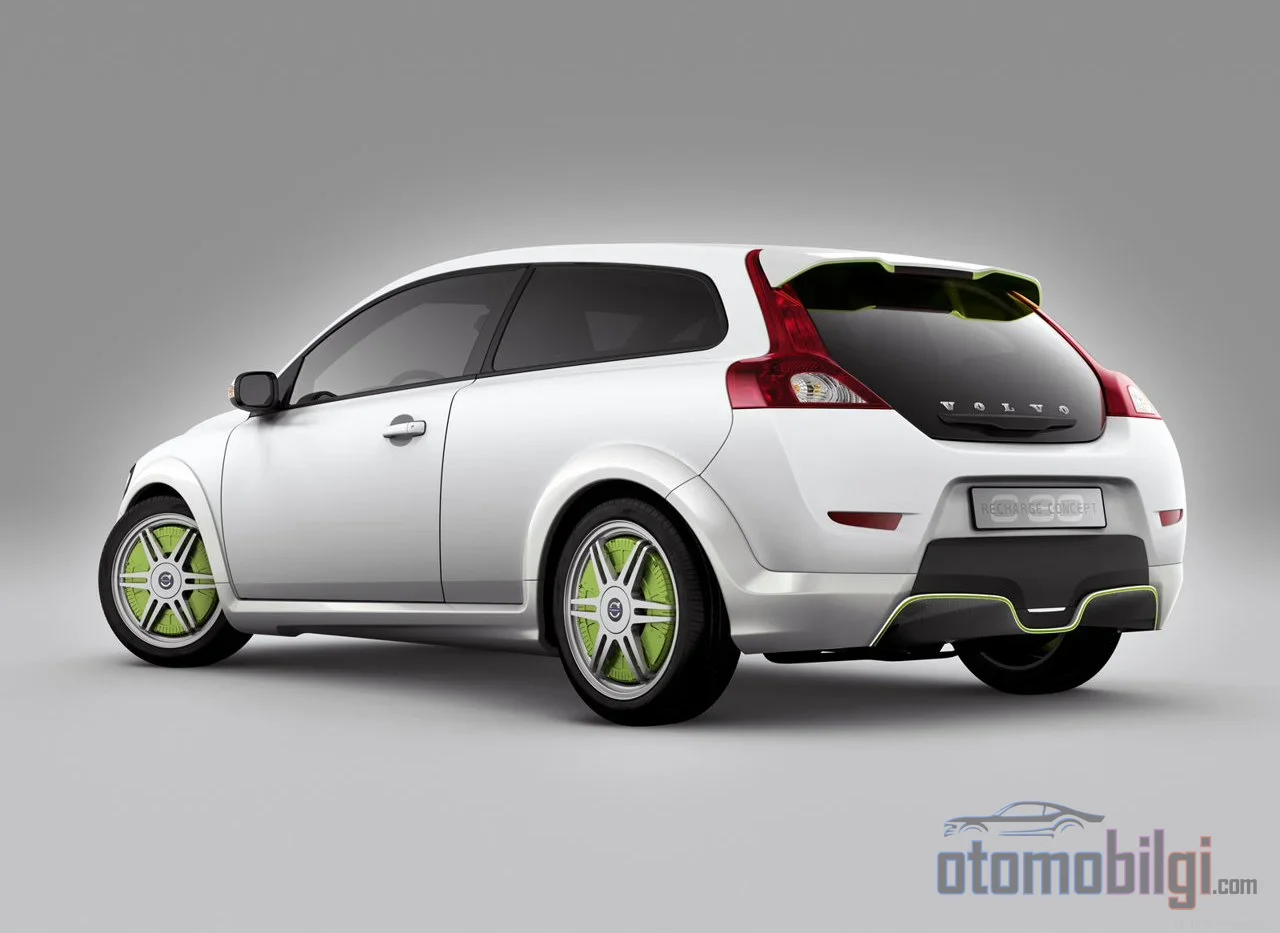
The ReCharge is classified in the literature as a PHEV-60; that is, a plug-in hybrid capable of traveling about 60 miles - 100 kilometers in metric terms - on battery power alone. That figure was striking in the 2007 context: The mass-produced hybrids of the era could not be plugged in and used their battery only for short-term assistance. The ReCharge, by contrast, was conceived as battery-first.
The approach summarized by project manager Ichiro Sugioka confirms this: For most of daily use, the vehicle would run on electricity, with the combustion engine serving as a safety net only as a secondary electrical source. The concept was developed at Volvo Monitoring and Concept Center (VMCC), Volvo's think tank in Camarillo, California; Project leader Magnus Jonsson described the project as carrying the approval of the company's top engineering echelon.
Battery and Charging System
The battery pack, built with lithium-polymer technology, was integrated into the luggage compartment, with a service life targeted to exceed that of the vehicle itself. There was an ambitious goal on the charging side as well: A full charge from an ordinary household outlet took only 3 hours, and one hour of charging delivered about 50 kilometers of range. These values, extremely bold for 2007, were proof that the concept was designed with everyday life in mind.
The management strategy was also sensibly tiered: When the battery capacity dropped to 70 percent, the combustion engine kicked in automatically, and the driver could start it earlier via a button on the dashboard if desired.
Range Extender: 1.6-Liter Flexifuel Engine and the Diesel Experiment
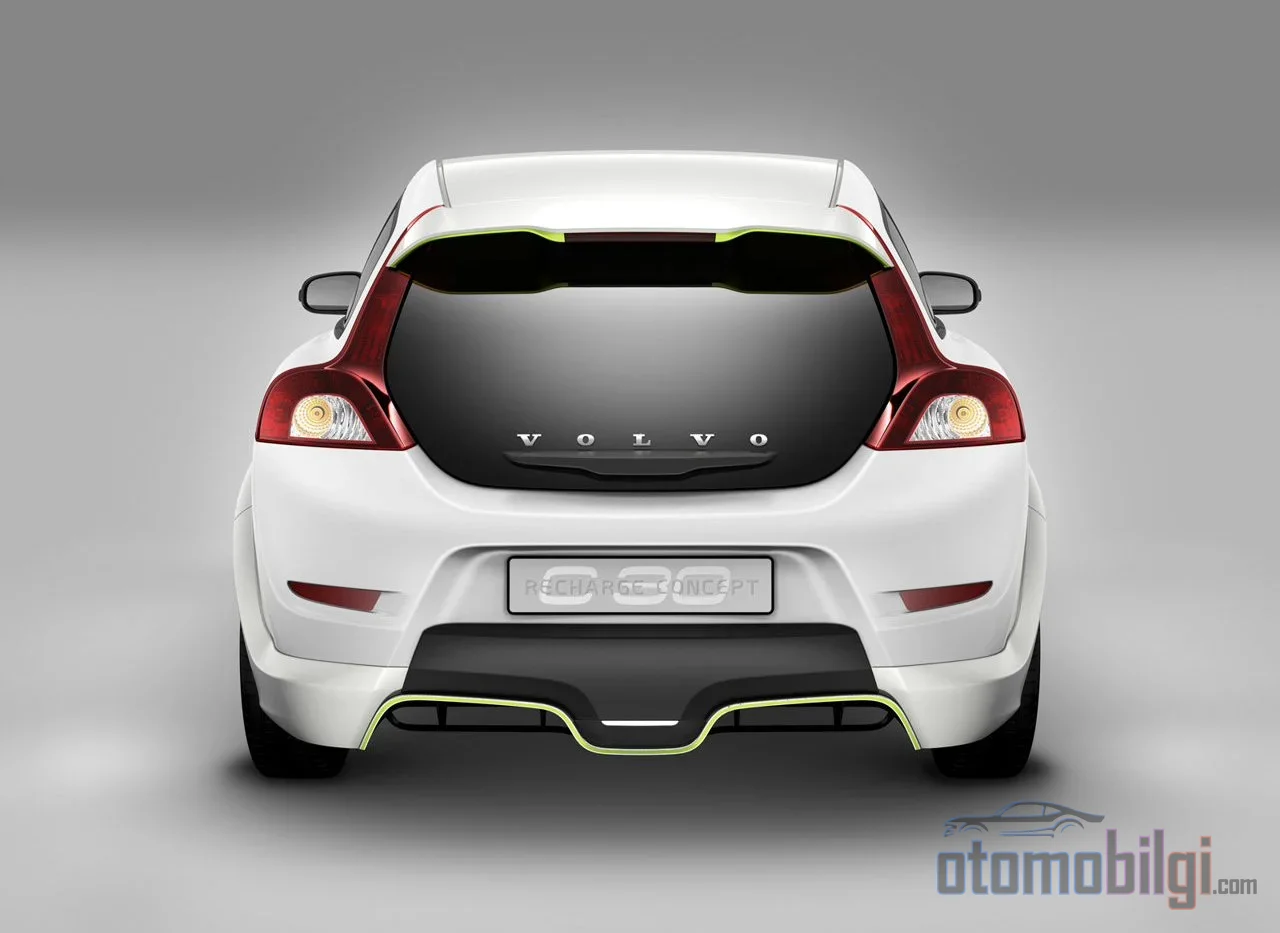
The unit that came into play when the batteries ran out was a 1.6-liter four-cylinder Flexifuel engine; in other words, a unit capable of running on a blend of E85 bioethanol and gasoline. The engine drove an advanced generator that fed the wheel motors, and it had no mechanical connection to the wheels whatsoever. This was one of the clearest premium-segment examples of the range extender concept of its era.
An interesting detail: A few months after the Frankfurt unveiling, Volvo also showed the same concept with a diesel-powered range extender. The bioethanol-versus-diesel dilemma was a clear sign that manufacturers' alternative fuel strategies had not yet crystallized in the 2007-2008 period. The fact that the same platform could be offered with two different fuels also proved that the architecture was conceived independently of fuel type.
Performance, Consumption and Emissions Figures
With a C30 body and four wheel motors, the ReCharge offered respectable performance figures on paper: It accelerated from 0 to 100 km/h in 9 seconds, and top speed was limited to 160 km/h. A perfectly sufficient profile for everyday use, for a plug-in concept.
The figures on the consumption side were even more impressive. Once the 100 km battery range was exceeded, fuel consumption varied between 0 and 5.5 L/100 km depending on the distance traveled. On a 150 km journey starting from a full charge, less than 2.8 liters of fuel were consumed in total, which equated to an effective level of 1.9 L/100 km. According to Volvo, with proper use, CO2 emissions were approximately 66 percent lower than the best hybrids of the era; this was a manufacturer's claim and depended on ideal usage conditions. Operating costs in electric mode were expected to be roughly 80 percent lower than the gasoline equivalent.
| Feature | Value |
|---|---|
| Debut | September 2007, Frankfurt Motor Show |
| Architecture | Series hybrid, no mechanical connection to the wheels |
| Electric motor | 4 units, wheel-mounted |
| Horsepower | Not disclosed by the manufacturer |
| Torque | Not disclosed by the manufacturer |
| Range extender | 1.6 L Flexifuel (diesel in a later presentation) |
| Electric range | Approximately 100 km |
| Battery | Lithium-polymer, integrated into the trunk |
| Charging time | 3 hours with a household outlet (full charge) |
| 0-100 km/h / max. speed | 9 s / 160 km/h |
One more detail shows just how broadly the ReCharge was conceived: The APU was powerful enough to supply a villa, and with minor modifications it was capable of serving as a home generator during a power outage. The vehicle was also designed as an energy unit.
Why Didn't the ReCharge Reach Series Production?
The open part of the matter is this: An official statement on why the concept was abandoned for production was never made. What is known is that Volvo did not erase the plug-in hybrid idea from the table right after the concept; quite the opposite, in March 2008 it officially announced a Swedish plug-in hybrid development program, and in this announcement the ReCharge was mentioned as an example. In other words, the concept served as a roadmap, not a product.
Viewed from an engineering perspective, the framework of the reasons draws itself. Four wheel motors, four-fold redundant electronic control, specially designed Michelin tires, and the PML Flightlink partnership: Each of these was a component far too expensive to carry over to a series-production C30 under the cost realities of 2007. Lithium-polymer battery technology had not yet matured at an automotive scale; the cost of the batteries and the production infrastructure made it impossible to offer a 100 km electric range at the price of a premium hatchback. Moreover, the series hybrid architecture could not be adapted to a standard production line because it required a motor per wheel; the vehicle was a bespoke architecture from top to bottom.
The Legacy of the ReCharge: Volvo's Plug-in Hybrid Strategy
The short answer is this: Although the Volvo ReCharge never reached series production, it became the template that established the company's plug-in hybrid vision; the ideas of battery-first usage, a chargeable battery and a range extender formed the foundation of Volvo's product strategy over the following decade.
This legacy can be measured in concrete results. Volvo launched the first long-range plug-in hybrid variants of the XC60 and XC90 for the European and American markets, and as of September 2026 it has delivered its one millionth plug-in hybrid. The ReCharge name did not disappear either: Today it continues to live on in Volvo's plug-in hybrid and electric model designations. The Concept Recharge, introduced in 2021 and reflecting the company's goal of becoming a fully electric brand by 2030, is regarded as a direct reflection of the 2007 concept. The idea was not transferred to a product, but to the brand's vision.
The result: A Concept That Never Reached Production But Set the Direction
The story of the Volvo ReCharge Concept is an instructive example of a familiar pattern in automotive history: What happens when the right idea is presented at the right time with the wrong level of technology maturity? Four wheel motors and 100 kilometers of electric range were not producible in terms of cost in 2007; but the battery-first hybrid philosophy was exactly right. Over ten years, Volvo knew how to turn this philosophy into sellable products like the XC60 and XC90.
What mattered about the ReCharge was not its flashy show performance, but that it asked the right question: Should a hybrid be a gasoline vehicle supported by a battery, or an electric vehicle supported by a combustion engine? In 2007, Volvo sided with the second answer, and as the plug-in hybrid era matured, most of the rest of the automotive industry moved to the same side.
Sources
- GROUNDBREAKING PLUG-IN HYBRID - THE VOLVO RECHARGE CONCEPT - UNVEILED AT FRANKFURT MOTORSHOW
- Volvo ReCharge Concept: Plug-in hybrid with battery-only range of 100 km - and Flexifuel engine for backup power
- Volvo ReCharge Concept: Plug-in hybrid with battery-only range of 60 miles - and a combustion diesel engine for backup power
- Volvo ReCharge Concept: a plug-in hybrid
- Volvo ReCharge Concept (2007) - Overview
- History of plug-in hybrids
- Volvo officially announces Swedish plug-in hybrid development program
- One millionth Volvo plug-in hybrid now on road
- Volvo Cars launches long-range plug-in hybrid variants of best-selling XC60 and XC90 SUVs
- Volvo Concept Recharge is the electric wagon of the future