From Lohner-Porsche to the Lunar Rover: The Space Connection
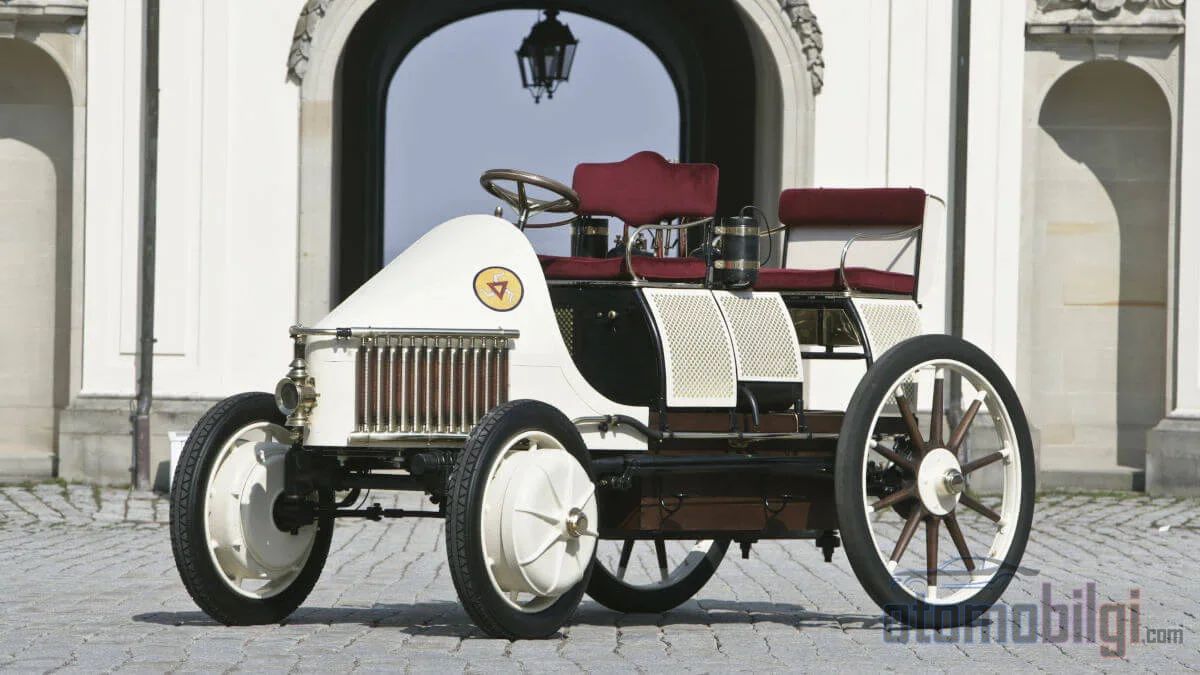
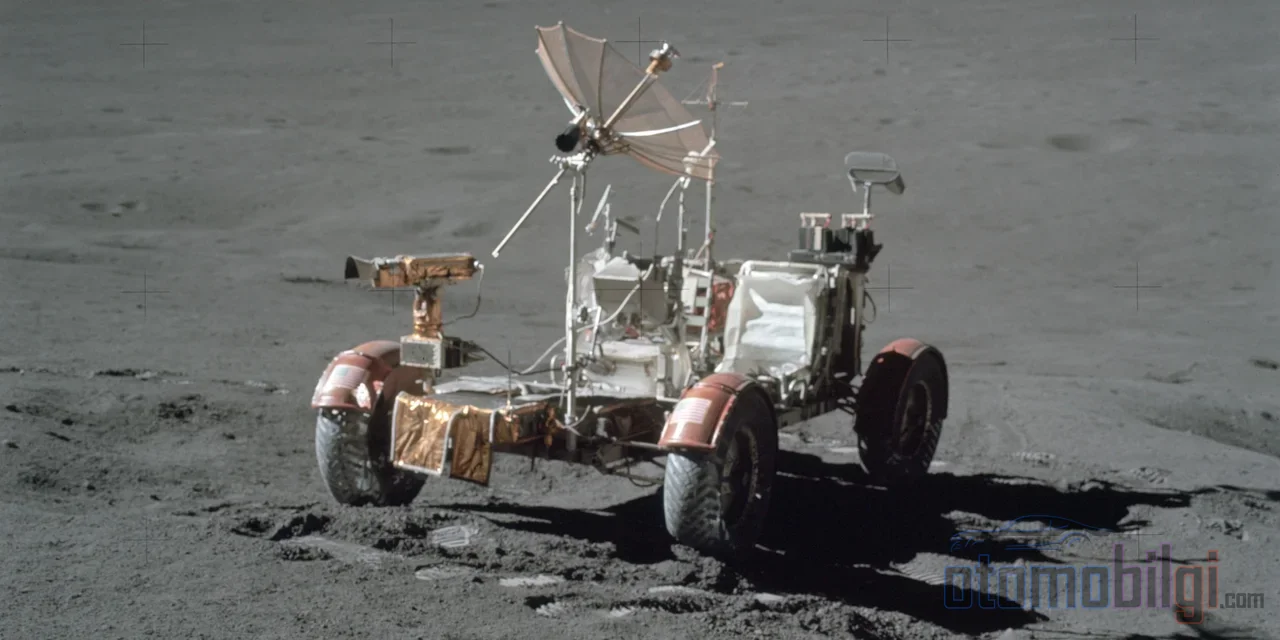
On July 31, 1971, a small four-wheel-drive vehicle was moving across the dusty surface of the Moon. Each wheel of the Lunar Roving Vehicle had its own electric motor; there was no gearbox, no driveshaft, no differential. When an automotive engineer reads this description, Vienna of 71 years earlier comes to mind: In 1900, Ferdinand Porsche had embedded the same architecture into a hand-built automobile. The connection between these two machines that seem worlds apart makes us rethink the starting point of the hybrid car and electric propulsion.
A System Born in 10 Weeks: The 1900 Lohner-Porsche
When Ferdinand Porsche arrived in Vienna at the age of 18 in 1893 and began working at Béla Egger & Co., he laid the foundations of electrical engineering there. While working at that company, he built the first electric hub motor; the idea for the concept belonged to the American inventor Wellington Adams, but the concrete engineering came from Porsche's hands. In 1897, a vehicle with this motor raced. This experience would carry the young engineer to Jacob Lohner & Co. and open the door to a system that would go down in history.
The 24-year-old Porsche developed, for Lohner, an automobile with electric motors integrated into its front wheels in just 10 weeks. Each motor produced 2.5 PS of power, the top speed was 32 km/h, and braking could be applied to all four wheels - an extraordinary feature for 1900. The real innovation was the complete elimination of the drivetrain: the motor sat directly in the wheel hub, with no gearbox, clutch, or chain in between.
This design was not a single vehicle but a modular platform called System Lohner-Porsche. Three different motor sizes were offered, up to 12 PS per wheel of power could be provided, and the solution scaled from automobiles to buses and even heavy trucks. With lead batteries, the range was approximately 50 km. The system made its public debut at the Electricity Palace of the Paris Exposition on April 14, 1900.
La Toujours Contente and the First Four-Wheel Drive
That same year, Porsche realized an even more ambitious version: a four-hub-motor electric vehicle named La Toujours Contente, equipped with a 14 PS motor for each wheel. With this machine, the world's first all-wheel-drive automobile was born. Records offer two accounts as to whom the vehicle was built for: it is described on one hand as a 1900 racing car built for motorsport, and on the other hand it is stated to be based on the order of its first private customer, E.W. It is stated to be based on Hart's order. The two purposes do not contradict each other; regardless of the vehicle Hart wanted, the racing potential of the four-motor configuration was immediately apparent.
Hart's vehicle is also one of the first customer orders in hybrid history: this English customer from Luton wanted a gasoline-electric, four-seat 4x4. The vehicle came with a 44-cell, 80-volt lead-acid battery; the battery itself weighed 1.8 tons, the four motors totaled 1,280 pounds, and the vehicle's total weight was over 4 tons. Total power reached 56 hp, and the price was 15,000 Austrian kronen. It was exhibited in Paris in December 1900; and in the Automobile Club of Great Britain reliability trial of November 6-9, 1900, tire failures ended the race after 34 miles had been covered with Porsche at the wheel. Even this detail summarizes the engineering balance of the era: electric propulsion worked, the problem was in the tires.
Highlights
- The system was introduced as the Lohner-Porsche at the Paris Exposition on April 14, 1900; in total, ~300 vehicles were produced.
- La Toujours Contente, with 14 PS motors per wheel, is the first fully all-wheel-drive automobile in history.
- Semper Vivus (1900-1901) is the world's first functional hybrid automobile and the starting point of the series hybrid principle.
- The Lunar Roving Vehicle was first used on the lunar surface on July 31, 1971; each wheel had a 190 W electric motor.
Semper Vivus: Hybrid Was Born When Batteries Fell Short
The reason that carried Porsche's electric design into hybrid territory was a technical reality: the lead batteries of the era frequently caused problems, and the charging infrastructure was virtually nonexistent. The solution was to generate electricity on board the vehicle. In the autumn of 1900, the Semper Vivus (always alive) prototype was prepared. Two water-cooled 3.5 PS DeDion Bouton gasoline engines turned two generators; each generator produced 20 amperes, 90 volts. The battery was reduced from a 74-cell pack to a 44-cell pack; the prototype weighed approximately 1,200 kg.
This arrangement is the birth of the series hybrid principle: the internal combustion engine never turns the wheels directly, it only generates electricity; propulsion is always provided by the electric motors. A remarkable elegance was that the generators could also be used as electric starter motors by reversing their polarity. The function we today call a starter-generator in modern hybrids was united in a single component here for the first time.
Mixte: The First Series-Production Version of the Hybrid
In 1901, the production limousine arrived: the Lohner-Porsche Mixte, named after the French voitures mixtes. In the Daimler-engined versions, a 5.5-liter, 25 hp four-cylinder engine from Austrian Daimler served as the generator. In 1901, 5 Mixtes were sold; each cost approximately 14,000 Kronen. The first series customer was Emil Jellinek, who would later inspire the birth of Mercedes. Only 7 vehicles were produced with Daimler engines; from 1903 onward, the switch was made to Panhard & Levassor engines.
The Mixte's commercial fate explains why hybrid technology was shelved for eighty years. Prices ranged from 14,400 to 34,028 Kronen - in some cases almost twice the price of a conventional automobile. The sales figures also show that demand remained narrow: while it is stated that 11 hybrids were sold between 1900 and 1905, a figure of 12 sales is also cited for the primitive Mixte; the difference is a matter of definition regarding which set of vehicles the number covers. In contrast, around ~300 vehicles were produced across the Lohner-Porsche system overall, including electric and hybrid versions; 40 of these went to the Vienna fire department, and some worked as taxis. Around 65 pure electric Lohner-Porsches were sold in the first five years.
Sporting results masked the commercial weakness: the Exelberg-Rally victory in 1901 and a large car class win at the Exelberg race in 1902. In 1902, Porsche carried Archduke Franz Ferdinand in his own car. In 1905 he won the Potting Prize, Austria's most prestigious award for automotive engineering, and in 1906 became chief designer at Austro-Daimler. The engineering had been proven; the market was not yet ready.
| Criterion | Semper Vivus (1900-1901) | Lunar Roving Vehicle (1971) |
|---|---|---|
| Drive | Hub motors + series hybrid production | Hub motors, battery-powered |
| Motor power | 2x 2.5 hp petrol + 2.7 hp electric per wheel (replica) | ~190 W (0.25 hp) per wheel |
| Energy source | Petrol + 44-cell battery | Silver-zinc batteries |
| Max. speed | 35 km/h (replica) | Low speed on the lunar surface |
| Range | 200 km (replica) | Mission-limited use |
| Weight | ~1.7 tons (replica) | Lightweight structure portable to the Moon |
Why Was the Hub Motor Reborn on the Moon 70 Years Later?
The story of the Lunar Roving Vehicle began in 1960, when lunar rover studies were transferred to the newly established Marshall Space Flight Center. NASA approved the Manned Lunar Rover Vehicle Program with approvals in 1965 and 1967, and then definitively in May 1969. The contract was awarded to Boeing in October 1969, worth $19.6 million; production took place at Boeing's facilities in Kent, Washington, and the first flight vehicle was delivered to NASA in March 1971. The vehicle was used in the Apollo 15, 16 and 17 missions; its first use date is July 31, 1971.
The engineering logic parallels that of 1900 exactly. Having its own 190 W (~0.25 hp) electric motor for each wheel provided two things. The first was fault tolerance: in a configuration with four independent motors, even if one or two motors failed, the remaining wheels could continue providing traction - a vital feature on the lunar surface, where there is no rescue service. The second was the complete elimination of mechanical transmission: the driveshaft, differential and gearbox meant both weight and points of failure. The rover also offered four-wheel steering in addition to four-wheel drive; the electric motors were paired with harmonic drive transmissions, and the electrical system was designed so that any steering or drive function could be carried over to the remaining batteries. The vehicle's 36-volt outlet also powered the communications relay.
According to NASA, the LRV was a lightweight, electric vehicle designed to operate in the Moon's low-gravity vacuum - when first used on July 31, 1971, it measured approximately 12.9 ft long and 6 ft wide, with a wheel diameter of 2.6 ft. Open-source accounts and archive notes indicate that the Lohner-Porsche design was examined by Boeing and NASA while developing the Apollo Lunar Rover, and that a large portion of its design principles were carried over to the Rover. The fact that the hub-motor, multi-motor electric drive concept had been proven in Vienna 71 years earlier was an engineering reference NASA could trust. This parallel is attributed partly to Porsche's pioneering work.
After the Gap: The Line Extending to the Prius
The Mixte's hybrid idea slept commercially for nearly a century; the economic logic was the same, but batteries, power electronics, and control systems had not yet matured. The awakening came in 1997: Toyota launched the serial-production hybrid era with the Prius, which it brought to market in Japan in 1997; the vehicle reached the US market three years later. Honda, meanwhile, began hybrid-electric sales in 1999 with North America's first production hybrid model: the Insight. The three-door, two-seat first-generation liftback (1999-2006), with its parallel hybrid architecture and simple equipment devoted to the goal of fuel economy, was the first gasoline-electric hybrid sold in the US.
Porsche itself closed the circle: the brand introduced its first production hybrid in 2011 with the Cayenne S Hybrid; this was followed by the Panamera S Hybrid and plug-in hybrid developments with the 918 Spyder. On the battery side, the breakthrough was the high energy density of lithium-ion chemistry; today it retains its position as the most commercially viable EV battery. Modern accounts trace the Prius's lineage directly back to the 1900 Lohner-Porsche - because the fundamental question, generating energy on board the vehicle and delivering it to the wheels electrically, has not changed from that day to this.
Why Did the Hub Motor Become History, Yet the Idea Lived On to the Moon?
The reason the hub motor failed to become widespread in series automotive production is a balance of weight, cost, and raw materials. Embedding the motor in the wheel increases the mass carried by the suspension, and centrally driven concepts were better suited to series production. So even if the hub motor is absent from automobiles, the idea carried by the architecture - distributing the traction function to independent electric motors - lived on in specialized applications.
And the lunar rover was exactly such a specialized application. For a vehicle that would roam the surface, could not be repaired, and had to be carried to the Moon with minimum mass, the most reliable drive was one with an independent motor in each wheel. The architecture that could not find its way in 1900 Vienna because of cost was the right answer in 1971, in a place where cost was negligible but reliability was vital. The line extending from the Lohner-Porsche to the Lunar Roving Vehicle is the clearest example of a good engineering idea never dying, but waiting for the right application; today, hub-motor electric vehicle projects are playing a new round of the same idea.
The lost replica detail also demonstrates this continuity: Between 2007 and 2011, the Porsche Museum built a fully functional replica of the Semper Vivus with Karosseriebau Drescher in about three years and displayed it at the New York Auto Show on April 20, 2011. The replica preserved the original principles: two 2.5 hp De-Dion-Bouton single-cylinder engines, a 2.7 hp electric motor per wheel, a maximum speed of 35 km/h, and a range of 200 km. The fact that the same principles stood up again 110 years later is the quietest but most convincing proof of the story.
Sources
- Ahead of his time: Electric wheel-hub motor from 1900
- Lohner–Porsche
- Prof. Ferdinand Porsche created the first functional hybrid car
- 1901 Lohner-Porsche Semper Vivus and Mixte
- How the Prius Traces Its Lineage to a 1900 Car
- Lunar Roving Vehicle
- First Use of the Lunar Roving Vehicle – July 31, 1971
- The Boeing Company wins NASA contract for lunar rover
- The Development of Wheels for the Lunar Roving Vehicle
- What Is the History of Hybrid Cars?