Audi Duo and the Forgotten European Hybrid Experiments of the 1990s
Share This Page
When the history of hybrid cars comes up, the Toyota Prius and Honda Insight come to mind; yet Europe's first entry into this stage happened much earlier and with a far less talked-about name: the Audi Duo. Audi seriously explored hybrid propulsion with three generations of Duo prototypes developed from 1989 onward, and in 1997 the third generation, based on the A4 Avant, hit the road as a limited production run - the first hybrid offered for sale by a European manufacturer. This page explains the technical anatomy of this European hybrid experiment that remained in the shadow of Toyota and Honda, the measurable reasons for its commercial failure, and why European manufacturers stayed away from hybrids for years.
Highlights
- The first Audi Duo prototype was built in 1989; 8 years before the Toyota Prius entered series production.
- Duo I: A 2.3-liter 5-cylinder engine (~134 hp) at the front, a 9 kW Siemens electric motor at the rear.
- Electric range of approximately 38 km; nickel-cadmium battery pack weighing 181 kg.
- The 1997 Duo III was priced at 60,000 DM: roughly twice the price of a standard A4 Avant.
- While 500 sales per year were targeted, only 60-90 units were sold before production was discontinued.
Lohner-Porsche: Europe's forgotten hybrid origin
The ancestor of hybrid propulsion, as one might guess, was neither Japanese nor Australian, but Viennese. Ferdinand Porsche produced the world's first hybrid electric car around 1900-1901 with the Lohner-Porsche Mixte, developed together with Jacob Lohner. The Semper Vivus, introduced in 1900 according to Porsche's own corporate history, is regarded as the first working hybrid; its series production version, the Mixte, was built in 1901. Porsche had set out on this path with the Egger-Lohner C.2 Phaeton, which he designed in 1898 and which produced 3-5 PS of power with an octagonal electric motor.
What is truly striking is how this early experiment ended. Vehicles built with Mixte technology continued to be produced into the 1910s, but they sold poorly because they were more expensive and less powerful than gasoline cars. So on its very first appearance in history, the hybrid idea already encountered a familiar scenario: a solution that worked technically but failed the cost equation. Let's keep this pattern in the back of our minds; it is almost exactly what would happen to Audi ninety years later.
Audi Duo I: The 181-kilogram idea in the trunk, in 1989
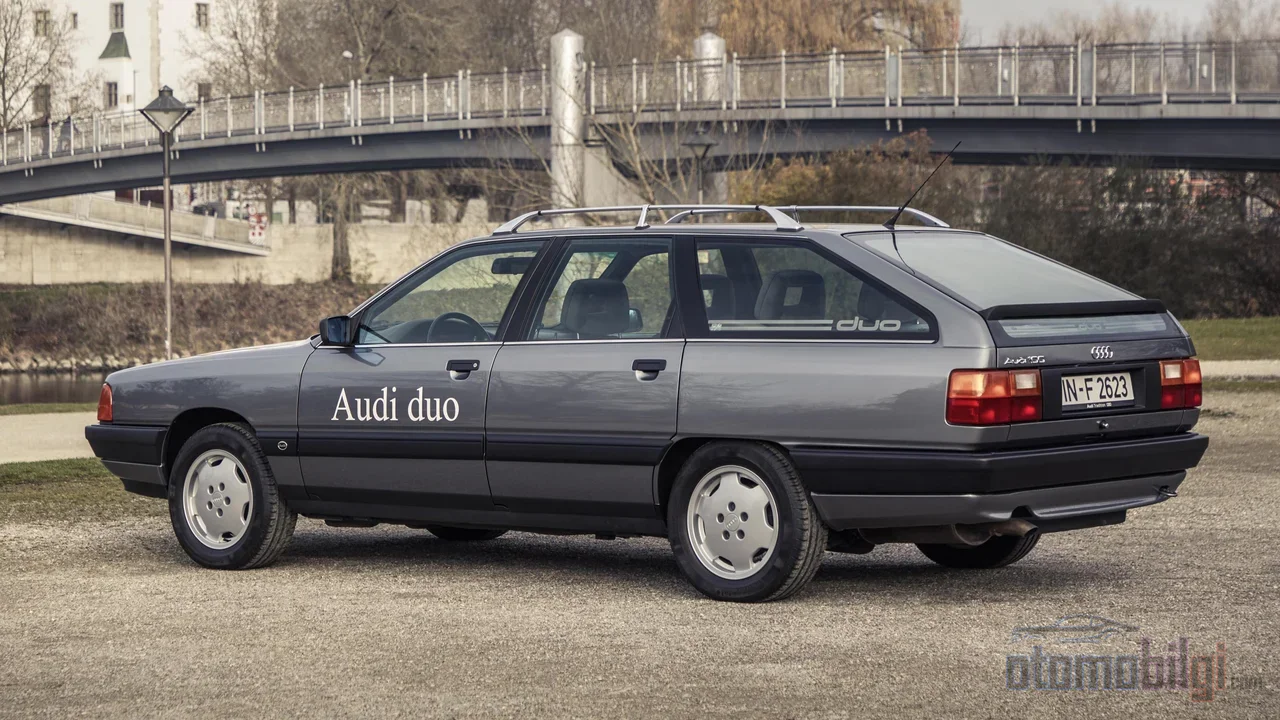
Audi's first Duo prototype was built in 1989, based on the C3-generation Audi 100 Avant, and was unveiled at the Geneva Motor Show in March 1990. The project was developed in cooperation with Pöhlmann KG, based in Kulmbach, Bavaria. The architecture followed a logic that is understandable even by today's standards: While the 2.3-liter 5-cylinder fuel-injected gasoline engine drove the front wheels with about 134 hp (136 PS / 100 kW), the Siemens 9 kW (12 hp) DC electric motor on the rear axle took over city traffic.
The battery carried the physical burden of the system: the nickel-cadmium package placed under the luggage compartment floor weighed 181 kg, operated at 64.8 volts and had a capacity of 8.4 kWh. A full charge took 8-10 hours from a 220-volt outlet - meaning the vehicle was, by today's definition, a plug-in hybrid. The electric range was around 38 km (24 miles), and the vehicle could drive entirely on electricity up to a speed of 50 km/h. Regenerative braking was also present; Audi also experimented with placing a solar panel on the roof.
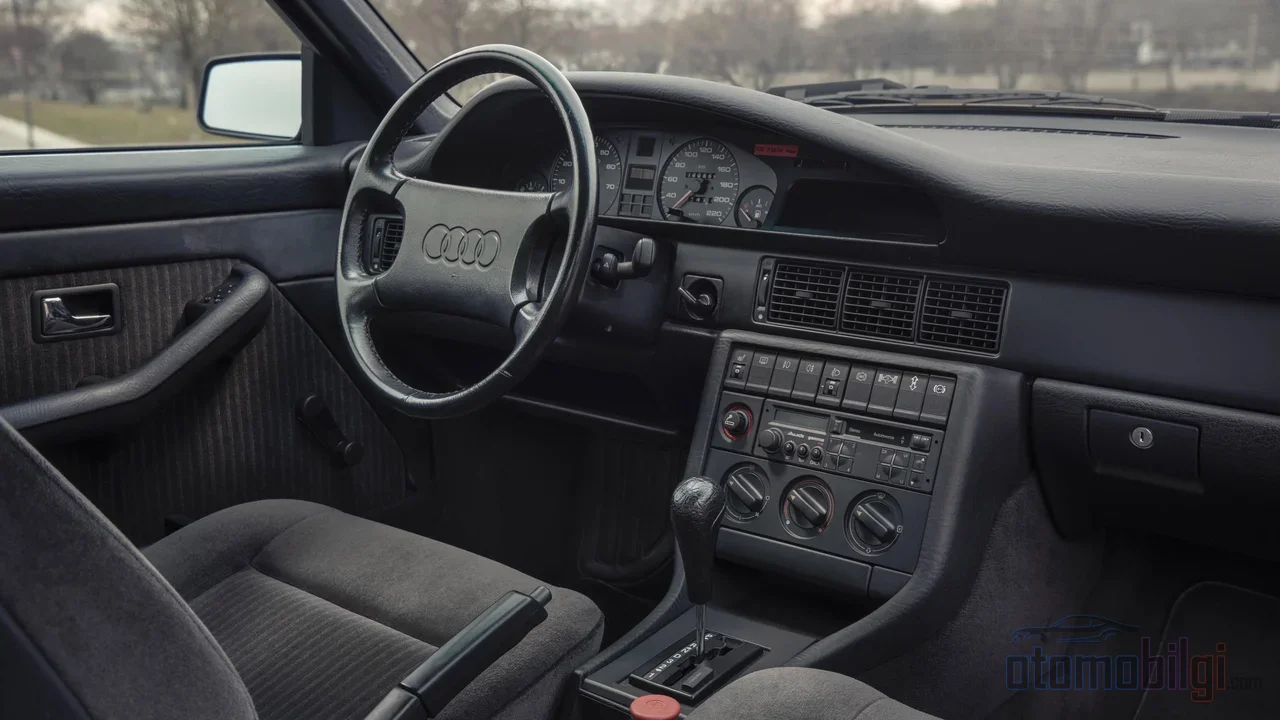
For someone used to today's plug-in hybrids, the most striking detail is not the generosity of the mode transition, but the effort involved. To switch to electric mode, you had to stop the vehicle, put the gear lever in neutral, and press the "E" button. There was no seamless transition requiring no conscious decision. The vehicle, carrying about 200 kg more than a standard 100, was produced in a total of 10 units; one of them was tested as a taxi in Ingolstadt, Audi's hometown. None were sold - because they were never produced for sale in the first place.
From Duo II to Duo III: from petrol to diesel and from prototype to sale
The second generation came on the basis of the C4-generation Audi 100 Avant. It adopted a 2.0-liter 4-cylinder engine and a permanent all-wheel-drive system; the petrol engine also charged the batteries in the luggage compartment when necessary. However, the real leap came with the third generation: introduced in 1996, the Duo III was based on the A4 Avant and made two critical decisions.
The first was on the fuel side: instead of petrol, a TDI diesel with 90 PS of power and 1.9 liters. The second was on the drive side: all-wheel drive was abandoned in favor of front-wheel drive. The water-cooled electric motor produced 29 PS (20 kW). The rear-mounted lead-gel battery offered a capacity of about 10 kWh, and the vehicle supported plug-in charging and energy recovery through braking. On the performance side, the top speed in electric mode was 80 km/h; with the TDI engaged, 170 km/h.
In September 1997, the Duo III went on sale in limited production - the first hybrid sold by a European manufacturer and, according to claims, the first series-production plug-in hybrid. Putting the key parameters of the three generations side by side shows how systematically Audi worked:
| Feature | Duo I (1989) | Duo II (1991) | Duo III (1996/97) |
|---|---|---|---|
| Base | Audi 100 Avant (C3) | Audi 100 Avant (C4) | A4 Avant |
| Internal combustion engine | 2.3 lt 5-cylinder, ~134 hp | 2.0 lt 4-cylinder | 1.9 lt TDI, 90 PS |
| Electric motor | 9 kW Siemens, rear axle | Rear axle | 20 kW, front-wheel drive |
| Electric range | ~38 km | - | - |
| Sales | None (prototype) | None (prototype) | ~60-90 units |
Why did it fail? The three reasons shown by the numbers
The Duo's commercial journey was a short one. Audi expected around 500 sales per year; by the time production stopped in 1999, about 60 to 90 units had been sold - production and sales figures are given as a range due to differences in definition. The accounting can be kept in three items.
Price: the same car for twice the money
The A4 Avant Duo was priced at 60,000 DM (approximately €30,000); roughly twice the price of a normal A4 Avant. The value proposition offered to the buyer can be summed up as buying the same body twice. No amount of engineering refinement can turn that difference into a fuel savings calculation - especially with the fuel prices of that era.
Weight and usability: physics does not negotiate
In the Duo I, the batteries added ~200 kg to the vehicle, compromising the performance-efficiency balance from the very start. On the usability side, the fact that switching to electric mode required stopping the car and putting the gearbox in neutral made it impractical for everyday use. Today's seamless transitions in plug-in hybrids were built precisely on that weakness.
The market: demand suppressed by cheap gasoline
The biggest factor on the cost side was fuel prices: initially, low gasoline prices made the hybrid unnecessary; after the global rises in oil prices, manufacturers turned to hybrids undoped, so to speak. Toyota, on the other hand, positioned itself in the early 1990s, seeing that environmental awareness and tightening emission regulations would shape the future; the 1997 Prius proved that a market exists when the balance of efficiency and price is achieved. In the same equation, Audi remained the side that failed to achieve efficiency and price at the same time. History had in fact written this before: the failure of early hybrids to sell in the 1910s and the subsequent dominance of gasoline vehicles delayed hybrid initiatives around 1916 for years.
Why did Europe stay away for a while - and what did Audi do?
After the Duo III was retired to the company museum in 1997, Audi did not present a new hybrid concept for a long time: it was not until the 2005 Q7 hybrid concept and the 2007 MetroProject Quattro (later to become the A1). The first modern series-production hybrid, the Q5 hybrid, was announced in 2011, combining the 210 PS output of the 2.0 TFSI gasoline engine with a 45 PS electric motor. In that announcement, Audi described it as its first hybrid; technically speaking, the truth is that it was its first hybrid after the Duo. So the most honest summary is this: Audi was a European hybrid pioneer, but not a persistent one.
That lack of persistence was not Audi's problem alone. It is a widespread industry assessment that European manufacturers did not take the hybrid seriously as a transitional technology and raced toward electric vehicles through a window that closed late; even decades later, the future of plug-in hybrids in Europe remains a matter of debate. Today, Audi is present in the hybrid market with models such as the Q5 TFSI e and Q8 TFSI e; the Duo, meanwhile, is being retroactively re-evaluated as the pioneer of today's plug-in hybrid technology. A 5-cylinder hybrid built eight years before the Prius being left in the shadows is one of the greatest injustices in the narrative of hybrid history.
Conclusion: the right idea, the wrong decade
The Audi Duo was an experiment showing that hybrid drive had long been technically mature; its failure did not deny that maturity, it only revealed its economics. An electric range of about 38 km, an 8.4 kWh battery and regenerative braking were already on the table in 1989; so were the 60,000 DM price tag and low fuel prices in the market. The fate of the Lohner-Porsche Mixte in the 1900s and the fate of the Duo in the 1990s share the same formula: a working system, a cost that did not work. The difference was that Toyota broke this formula in 1997 by getting both price and efficiency right. That is how the first chapter of Europe's hybrid story was written - early, on target, and far less read than it deserved.
Sources
- The first hybrid | Audi Magazine Australia
- Audi built a plug-in hybrid in 1989 - Top Gear
- European Hybrid Pioneer – The Audi 100 Avant Duo
- The story of the Audi 100 Avant Duo - Below The Radar
- Audi Built An Inline-5 Hybrid 8 Years Before The Toyota Prius - CarBuzz
- Electrification | Audi USA Media Newsroom
- Gamechanger: first hybrid car - Porsche Stories
- Lohner–Porsche - Wikipedia
- The History of the Electric Car - Energy.gov
- The Toyota Prius Transformed the Auto Industry - IEEE Spectrum
- In 1916, hybrid cars could've changed history - Popular Science
- A Brief History Of Hybrid Cars - CarsDirect