Victor Wouk's Rejected Hybrid Dream of the 1970s
Share This Page
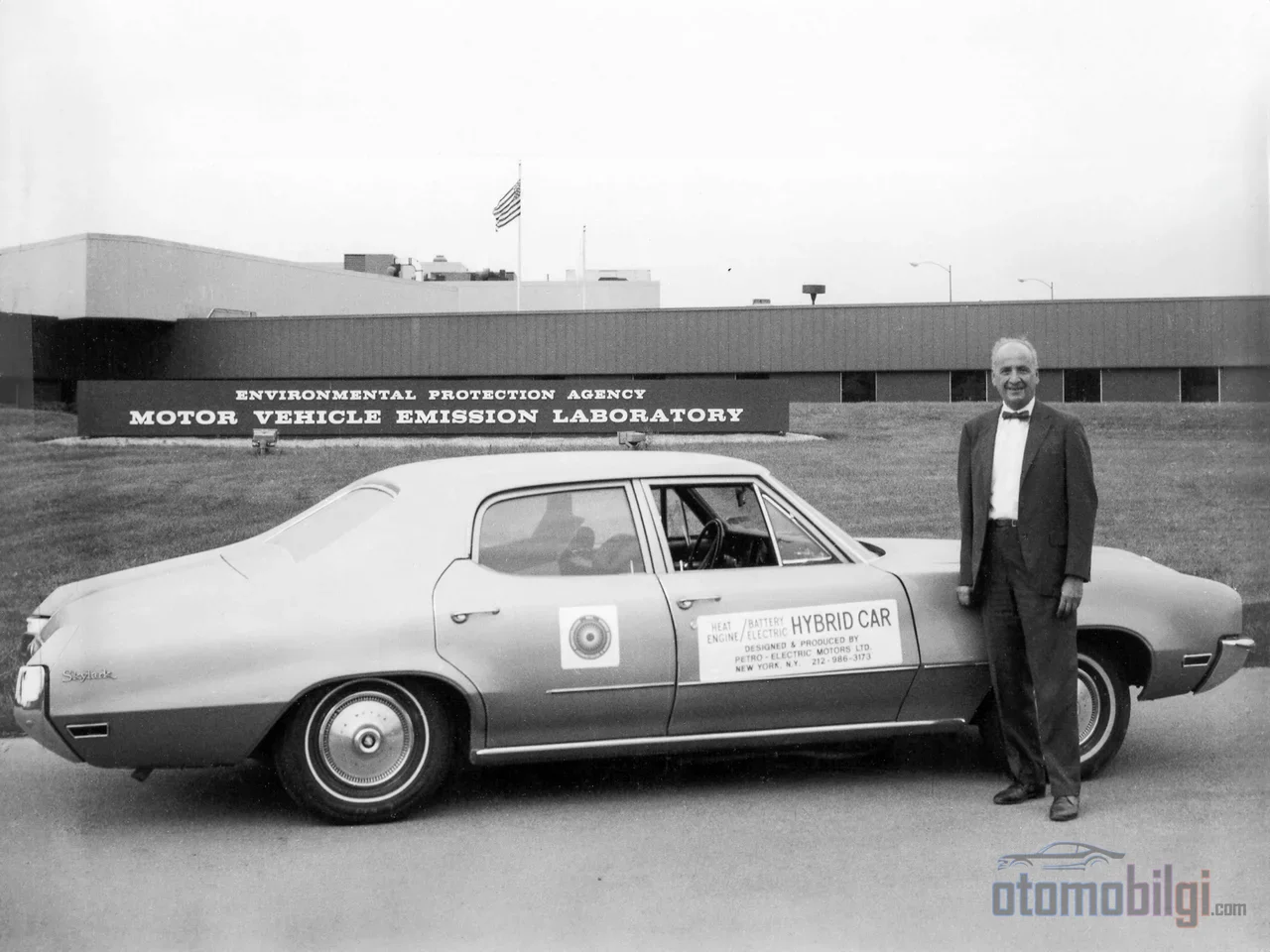
Victor Wouk produced a working prototype carrying all the fundamental principles of the modern hybrid automobile for a contract issued under the US government's Clean Air Act in the early 1970s. Based on a 1972 Buick Skylark, this vehicle achieved emission reductions of up to 91% and significantly reduced urban fuel consumption; yet the EPA did not complete the program, and the hybrid idea was shelved in the US for decades. Wouk's story is one of the best-documented examples of how decision-making mechanisms, not technology, can delay a technology.
Highlights
- 1972 Buick Skylark prototype: start/stop, regenerative braking and electric launch - nearly everything in today's hybrids
- In emissions, up to 91% reduction; 0-60 mph in approximately 12 seconds
- Engine: 2 x 1.1-liter Mazda 12A Wankel rotary engine + 15-20 kW electric motor
- EPA official's directive: the hybrid "would not be accepted under any circumstances"
- The first mass-produced consumer hybrid, the Toyota Prius, was 25 years delayed
Who was Victor Wouk and how did he turn to electric vehicles?
Victor Wouk was born on April 27, 1919, in the Bronx borough of New York. His parents were Jewish immigrants from present-day Belarus; his brother Herman Wouk was a renowned novelist. Victor earned his bachelor's degree from Columbia in 1939 and his doctorate from Caltech in 1942; his thesis was on static electricity generated during gasoline distribution. During World War II, he worked on Manhattan Project-related research at Westinghouse.
His career was built on power electronics. In 1956, he founded Beta Electric, one of the leading high-voltage equipment suppliers in the US; in 1960, he founded Electronic Energy Conversion Corporation, which developed high-efficiency AC/DC converters. The turning point came in 1962: at the request of Motorola co-founder Russell Feldmann, he turned to electric vehicles and designed the first solid-state electric vehicle speed control for the Henney Kilowatt - an electric Renault Dauphine. After selling his company to Gulton Industries in 1963, he entered the world of batteries and motors completely.
The AMC-Gulton collaboration in the mid-1960s brought him a critical experience. The 1967 Amitron concept was introduced with a NiCad and lithium-nickel-fluoride dual battery and regenerative braking; in 1969, a Rambler American was converted to electric with 160 Gulton NiCad cells under the name "Voltswagen". These projects led Wouk to a definitive engineering conclusion: the energy density of the lead-acid and NiCad batteries of that era was not sufficient for a pure electric vehicle on its own. From 1970 onwards, he turned all his attention to the hybrid solution.
What was the 1972 Buick Skylark hybrid prototype like?
FCCIP and the one-dollar prototype clause
The 1970 Clean Air Act called for a 95% reduction in vehicle emissions. To support this goal, the Federal Clean Car Incentive Program (FCCIP) was established; $25 million per year was set aside for the purchase of low-emission vehicles. Wouk, together with chemist and thermodynamicist Charles Rosen, founded Petro-Electric Motors - the company's name was given by his brother Herman. The contract was signed in 1971, and its terms seemed incredible by today's standards: the prototype would be built with its own resources, and $1 would be paid upon delivery to the EPA. If the vehicle passed the tests, $37,351 would follow, then an annual fleet of 10 vehicles, and after that a purchase of 350 vehicles.
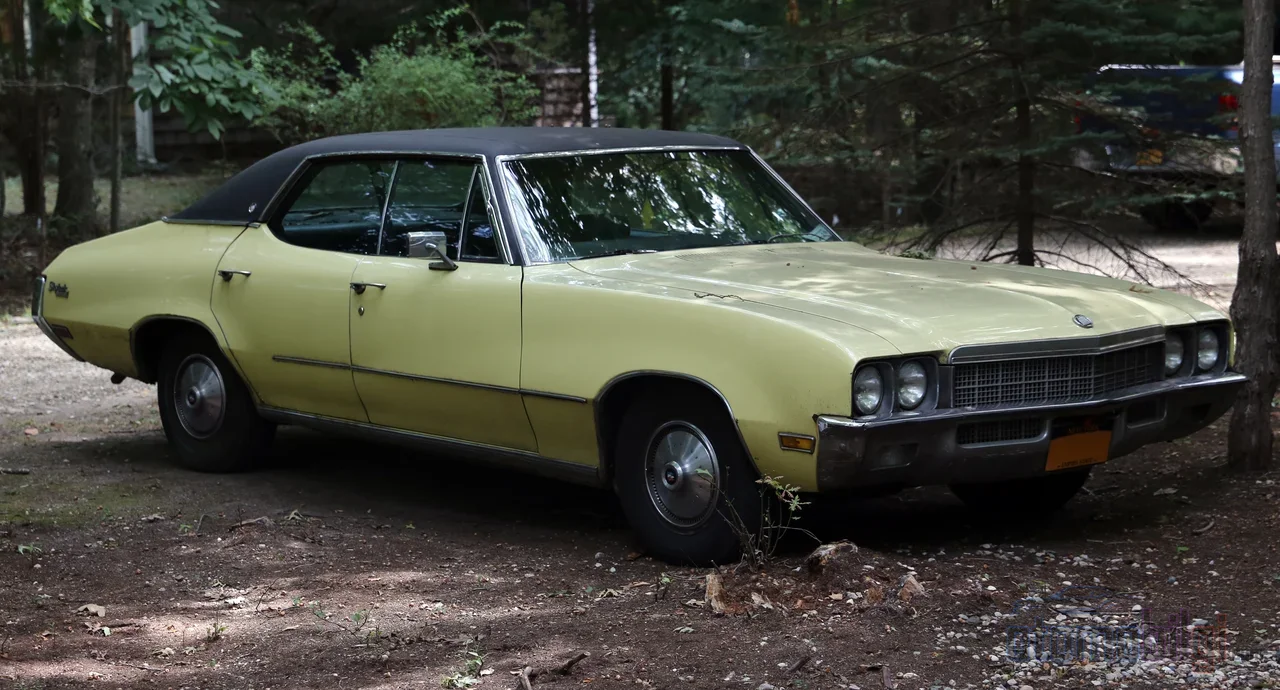
The Buick Skylark was chosen as the body, because the engine bay was accommodating enough to house both the combustion and the electric unit. Petro-Electric paid approximately $2,700 for the vehicle - about $500 below MSRP. Wouk and his partners put about $300,000 of their own money into the project in total.
Technical breakdown: full parallel hybrid, 1972
The powertrain was an unusual but logical combination in the automotive world of the era. Mazda sent two 1.1-liter twin-rotor 12A Wankel rotary engines free of charge - the unit used in the RX-2, producing 110 net horsepower. Alongside it, a 15-20 kW DC electric motor and 20 six-volt, golf-cart-type deep-cycle lead-acid batteries were installed. The system operated as a full parallel hybrid.
What was truly striking was the vehicle's software and control layer. An Intel 8008-based microprocessor controller managed functions that are considered standard in every hybrid today: start/stop, regenerative braking, and moving on electric power alone at startup. Speaking with an engineer's eye, the component-level first draft of the 1997 Prius's architecture was already turning on the roads of Ann Arbor in 1972.
| Feature | Value |
|---|---|
| Base vehicle | 1972 Buick Skylark |
| Combustion engine | 2 x 1.1-liter Mazda 12A Wankel (110 net hp) |
| Electric motor | 15-20 kW DC |
| Battery | 20 x 6 V deep-cycle lead-acid |
| Configuration | Full parallel hybrid, Intel 8008 controller |
| Acceleration | 0-60 mph ~12 seconds |
| Top speed | 85 mph |
| Emission reduction | Up to 91% |
Performance figures vary by measurement method: while city consumption is given as 55-60 mpg, some records cite a value of around 30 mpg in the context of "more than twice the efficiency of the original." Behind the difference lie definitional variations such as the test cycle and which mode was taken as the basis; both figures show that the vehicle was significantly cleaner and more economical than the era's standard gasoline-powered Skylark. On the emissions side, the picture is clear: the vehicle came down to a level of roughly 9% of the era's gasoline car's emissions.
Why did the EPA end the hybrid program?
The Skylark was the only hybrid submitted under the FCCIP and the only bid to produce a functional prototype. It was tested at the EPA's Ann Arbor laboratory in 1974; the EPA made the Phase I payment as required by the contract and paid Wouk and Rosen $33,000. However, it did not continue.
Behind the decision there was not institutional but personal resistance. Eric Stork, deputy administrator of EPA's Mobile Source Air Pollution Control program, was opposed to the hybrid idea from the start and threatened to end the program entirely, saying "The hybrid will not be accepted under any circumstances." For the test to proceed, Wouk applied to the National Science Foundation; faced with a specially formed committee, Stork backed down, the test was carried out, and Wouk argued that all the conditions had been passed. The EPA later sent a 75-point report as justification for not continuing - in the report, Stork acknowledged that the vehicle produced better fuel economy and lower emissions, but wrote openly that his opposition to hybrids was "philosophical" and that he was bothered by Wouk profiting from the venture.
It was set up on the dynamometer to run on battery alone... Not a very practical technology for automotive use. Even today it's marginal.
Stork maintained his skepticism until his death in 2014. Wouk later summed up hitting the opposition's wall in a single sentence: "By 1976 I was so angry and had lost so much energy that I gave up." The tragic-functional aspect of the process was that in 1993, officials of the Clinton administration's Partnership for a New Generation of Vehicles program were not even aware of the existence of the 1970s FCCIP when asked by Wouk - the institutional memory had been erased that thoroughly.
The century-old family tree behind the prototype
Wouk's Skylark was not born in a vacuum. The hybrid idea itself dates back to the automobile's infancy: Ferdinand Porsche designed the world's first functional hybrid car, the Semper Vivus, in 1900 - he was around 23-25 at the time. Its production version, the Lohner-Porsche Mixte, was the first commercial vehicle to use wheel hub motors. A century later, the New York Times traced the Prius's family tree precisely to this 1900 vehicle.
The roots of electric propulsion go back even further: Ányos Jedlik built the first electric motor in 1827, and Robert Anderson developed his own motorized vehicle between 1832 and 1839. General Electric produced electric vehicles in 1898-99 and in 1899 made a hybrid attempt with a four-cylinder gasoline engine. So the idea that the EPA turned away in 1972 had both a 70-year history and an application that was mature in engineering terms. Even Toyota's hybrid development work goes back to 1968 and project manager Kenya Nakamura.
How many years did the cancellation delay the hybrid car?
Assessments usually speak of a two-decade delay, and this characterization is measurable: the technology was ready at prototype level in the 1970s, while the first consumer hybrid only arrived in 1997 with the Toyota Prius. In the US market, the first hybrid was the Honda Insight - in December 1999, at roughly 53 mpg, as a "mild hybrid" with a parallel system; the Prius made its transatlantic crossing with the 2000/2001 model year. The computer-controlled HTV-1 developed by GE Research Lab in 1982 is considered the prototype of today's Toyota and Honda systems; Audi made its own attempt in 1989. In other words, the door closed in the US in 1974 was reopened two decades later by engineering teams from other countries.
After the delay, the market accelerated. In 2010, the Chevy Volt became the first plug-in hybrid sold commercially; global PHEV sales were just over 300 in 2010, reaching 222,000 in 2015 and 7.2 million in 2025. The maturation of battery technology from lead-acid to NiMH and then to lithium-ion was the main driving force behind this curve - but the fact that the curve began in 1997 rather than the 1970s had a concrete decision behind it: the Ann Arbor testing followed by the 75-page report.
How did Wouk return to history?
After the project ended, Wouk did not fall silent: he published more than 100 technical papers, worked as a consultant including on hybrid city buses, and held more than 10 patents, most related to hybrid or electric propulsion. It is emphasized that Toyota's first hybrid used the same fundamental principles as the Skylark. When the first hybrid arrived in the US, Wouk rented a white 2001 Prius, and in 2004, saying he had received apologies from colleagues who had initially opposed him, he finally felt vindicated.
After his death - May 19, 2005, at his home in Manhattan, aged 86, from cancer - he was called "the godfather of the hybrid" and "the grandfather of electric and hybrid vehicles in the US." The Elmer A. Sperry Award for advancement in transportation was awarded to him posthumously; an annual lecture series bearing his name continues at Caltech. Where the prototype itself is today remains unclear; there is no record of the Skylark's fate in public sources.
Conclusion: was it the technology or the decision that delayed things?
The lesson of the Wouk case lies on the process side, not the engineering side. The 1972 Skylark, with its grant, test laboratory, and measurable results (91% emission reduction, nearly doubled efficiency, a working controller), was shelved for decades by a single decision-maker's "philosophical" opposition. It is impossible to say with certainty today whether the hybrid car could have hit the roads in the 1970s rather than 1997 - questions of scalability, cost, and battery production remained open. But knowing that the technology had been proven, and that even after being proven it was not accepted, documents one of the most expensive cases of reinvention in automotive history. Wouk's legacy is remembered with every regenerative brake and every stop-start cycle that today's hybrids employ.
Sources
- Victor Wouk: The Godfather of the Hybrid Car
- The "Godfather of the Hybrid" | Columbia College Today
- Victor Wouk
- Oral-History: Victor Wouk
- Victor Wouk, 86; Developed Hybrid Car in '70s
- Timeline of major accomplishments in transportation air pollution - US EPA
- How Ferdinand Porsche designed the first hybrid car
- The History of the Electric Car - US Department of Energy
- Development of Prius and Hybrid Strategy - Toyota Global
- Milestones: Toyota Prius, the World's First Mass-Produced Hybrid Vehicle, 1997
- History of plug-in hybrids