Woods Dual Power: Why Did the Series-Production Hybrid Attempt Go Wrong?
Share This Page
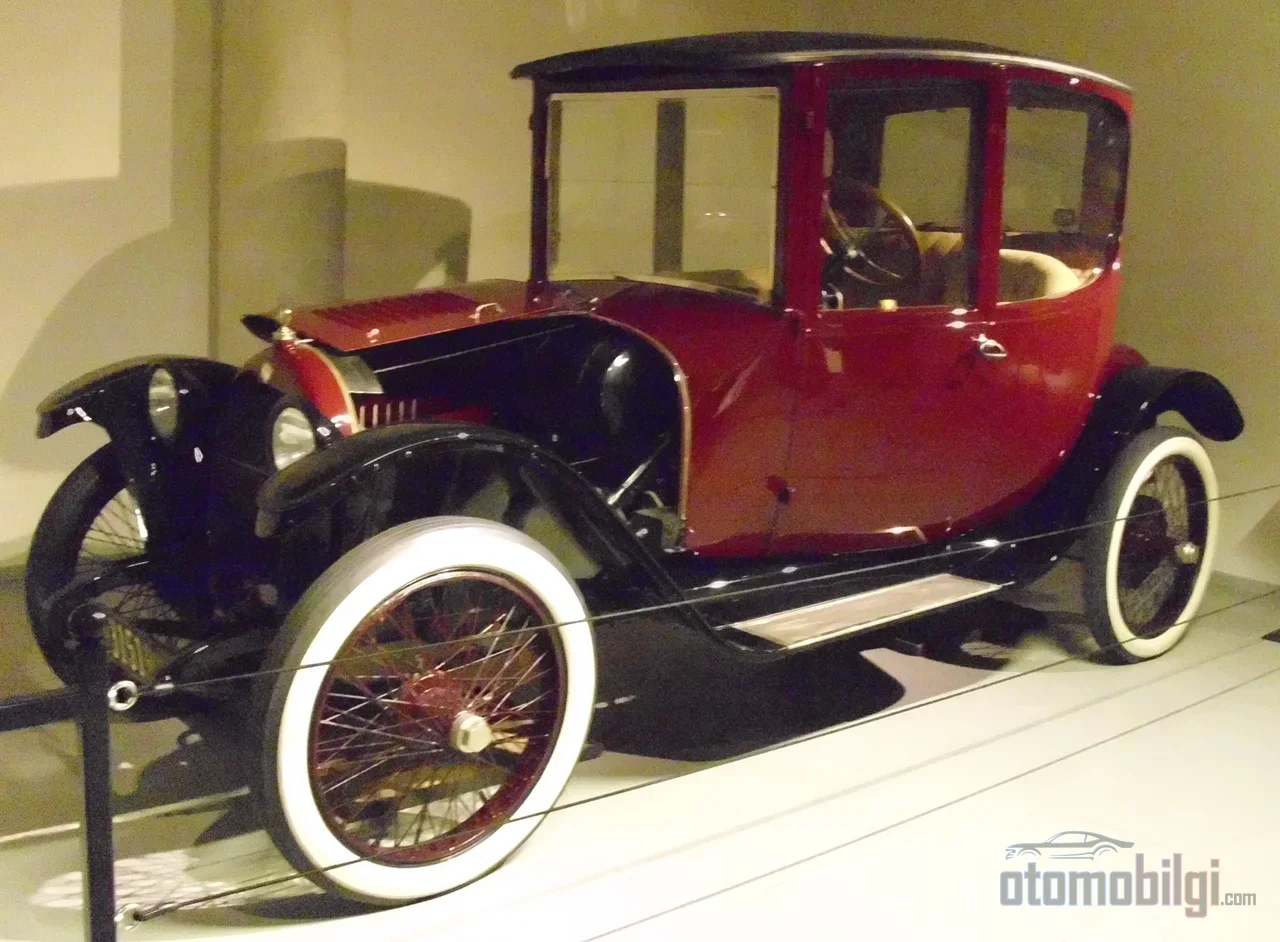
Woods Dual Power is the world's first mass-produced hybrid car, announced in 1916 and produced until 1918 by the Chicago-based Woods Motor Vehicle Company, combining a gasoline engine and an electric motor in the same drivetrain. Going fully electric up to 15 mph (24 km/h) and switching to gasoline above that, the car was a commercial failure; because its $2,650 price was equivalent to two Buicks and, in an era of cheap gasoline, convinced no one. This link, filling the gap between the Lohner-Porsche and the Toyota Prius, is the most tangible evidence of hybrid history's lost years.
Highlights
- 1916-1918: the production years of the Woods Dual Power; the company faded into history in 1918.
- 14 hp Continental gasoline engine + 6 hp General Electric DC motor-generator.
- Fully electric below 24 km/h, gasoline-powered above that up to 56 km/h.
- $2,650: the 1916 price - equivalent to two Buicks in the money of the day.
- Surviving examples: in the Petersen and The Henry Ford museums; the only running vehicle is in the Louwman Museum in the Netherlands.
Why Did Chicago's Electric Car Company Turn to Hybrids?
The Woods Motor Vehicle Company was founded in Chicago on September 28, 1899, by Clinton Edgar Woods. Incorporated with $10 million in capital, the company's headquarters was an 1891 building standing at 1130 South Wabash Avenue on Motor Row. For nearly twenty years, Woods lived as a brand producing only electric cars; its founder was so deeply involved in the subject that in 1900 he also penned one of the first books written on electric automobiles.
By the 1910s, the picture had changed. Electric vehicle sales were falling, and in the face of Ford's assembly line efficiency, Woods' business model had been pushed onto the defensive. The company's answer was to sell two worlds at once: a model combining the ease of use of the electric car with the range of the gasoline one. In this sense, the Dual Power was less an engineering ideal than a commercial survival strategy - the goal was not fuel economy; in those years gasoline was cheap and no one factored in emissions.
Historical records shift slightly regarding the production years: some sources state the car was produced in 1915, others place the launch in 1916 and continuous production in 1917-1918. What is certain is that the model's short life ended in 1918 with the demise of both the car and the company. This uncertainty is not surprising considering the record-keeping habits of the era; but one piece of data is clear: today we have at least two museum examples of the model and one running copy.
The Dual Power's Drivetrain: The Magnetic Clutch Hybrid System
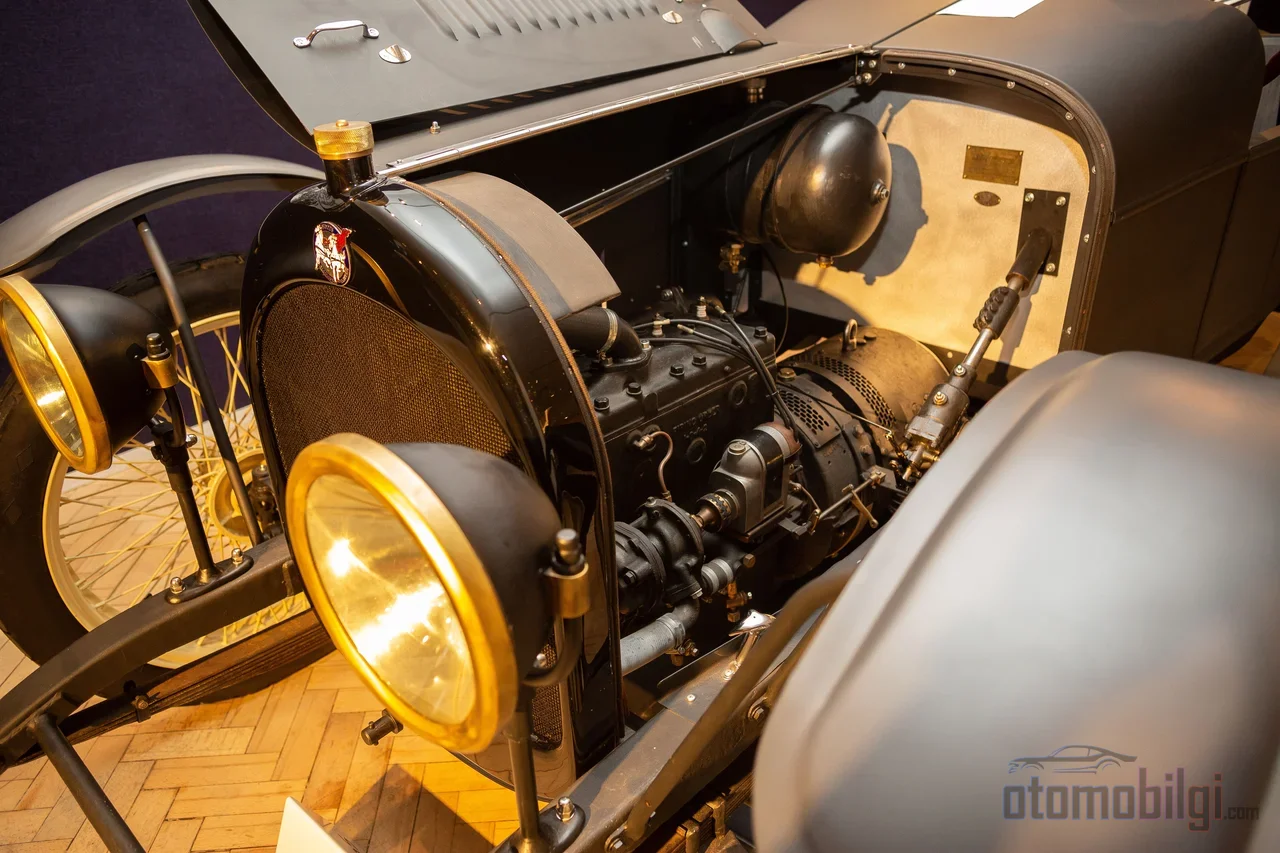
To understand the system from an engineering standpoint, it is enough to look at its two main components: a Continental-built 4-cylinder, 69 CID (approximately 1,125 cc) gasoline engine and a General Electric-built DC motor-generator with 6 hp of power. For a reader accustomed to today's hybrids with their 100-horsepower integrated starter-generators, 6 hp may seem laughable at first glance; but it should be remembered that this power was designed solely to move the car at city speeds and was in the same class as the motors used in the electric vehicles of that era.
The two machines were joined through a magnetic clutch. This clutch could transmit power from the gasoline engine's crankshaft to the wheels via the electric motor's armature shaft; the vehicle had no transmission at all. The system was based on Roland Fend's US patent number 1,303,870. It is worth making a small but important historical correction here: the common claim that the Dual Power used an Entz transmission is not correct; the architecture comes from the Fend patent.
The source of energy was a 48-volt lead-acid battery bank - sources report the number of cells and the battery's position on the chassis (rear chassis or under the seats) in different ways; there are also accounts giving higher figures such as 20 hp for the electric motor's power, and these differences most likely arise from different definitions of measurement. The axle distance was 110 inches; in 1918 it was extended to 124 inches and the gasoline engine was enlarged to 95 CID - meaning Woods did not stop developing the car even in its final year.
The Two-Mode Operating Logic
The operating principle is surprisingly modern: At all speeds below 24 km/h (15 mph) and in reverse, the car ran on the electric motor alone. Above that speed, the gasoline engine kicked in and the car could reach up to 56 km/h (35 mph). During the journey, it was possible to perform regenerative braking or charge the batteries by running the gasoline engine as a generator; in gasoline mode, when the field windings were shunted, the electric motor turned into a dynamo. The whole logic of the series hybrid - electric launch, on-the-move charging, energy recovery - was present here, a full 80 years ago.
The controls were also ambitious for their time: two levers on the steering column allowed the driver to change modes. Ease of use was the main selling point, and the marketing campaign was aimed primarily at female buyers. Eliminating the hand-cranking chore, the biggest practical headache of the electric vehicles of that era, was conceived precisely with this target audience in mind.
The Lack of an Electric Starter and Other Fatal Flaws
And here is the pinnacle of irony: The first production version of a car sold to female buyers on the promise of being free from hand-cranking had no electric starter for the gasoline engine. A fixed crank handle stood under the radiator. Toward the end of production, engineering found an elegant solution - the crank handle was removed entirely; the electric motor accelerated the car up to 15 mph and, spinning the gasoline engine through the magnetic clutch, started it on its own. In the 1916 sales catalog, the electric starter was praised as the most important feature. But this solution came too late.
The accounting for the commercial failure is actually a short and clear list:
- Price: $2,650 in 1916 - the equivalent of two Buicks. It was raised to $2,950 in 1918, which failed to revive sales.
- Rival: The Model T's simplicity and Ford's production efficiency. The hybrid drivetrain must have seemed overly complex to a customer paying money for an utterly simple car.
- Era: Cheap gasoline, ignored emissions, a market where range anxiety had not yet been born. The promise of fuel savings was on nobody's list of needs.
- Timing: The absence of an electric starter weakened the promise made to the target audience from day one.
Woods Motor Vehicle Company went bankrupt in 1918, only two years after the Dual Power reached the streets. It was the company's final attempt to stay in business, and the venture took the company down with it.
Are the Lost 80 Years of Hybrid History Really Lost?
The popular narrative of the hybrid car is usually built between two points: the Semper Vivus and its hybrid versions with wheel hub motors, developed by Ferdinand Porsche at Lohner Carriage Works in Vienna in 1900-1901; and the Toyota Prius, launched for sale in Japan in 1997 and introduced in the US with the 2000 model year. The roughly one century in between appears as a blank page in most accounts - as if the field was almost empty when Toyota began its first hybrid work in 1968.
The Dual Power is one of the most tangible examples filling this gap, because it was not a prototype but a product sold by order. The Lohner-Porsche had been unable to get beyond an expensive, limited-range confection; while the Prius arrived a century later with mature battery and power electronics. The 1916 Woods Dual Power in between shows that the hybrid idea did not die, only that its market had not yet been born. The idea was right; the calendar was wrong.
What Happened, Where Are They?
The known surviving examples today are exhibited at the Petersen Automotive Museum in Los Angeles and at The Henry Ford in Dearborn, Michigan. The vehicle at the Henry Ford is original and unrestored, with only 11,085 miles on it - a silent testament to how little the car was used. The only working example on record is a 1917 Type 44 Roadster living at the Louwman Museum in the Netherlands after restoration. A note for the curious: a roadster of the same specification changed hands for £5,000 at an auction on July 30, 2025; the market value of historic hybrids remains modest, unlike their stories.
On the Chicago side, the physical legacy is also disappearing: demolition of Woods' historic building at 1130 South Wabash Avenue began in the fall of 2024. Today only archival records remember the place where a dealership sold hybrid cars a century ago, in the south of the city.
What Does the Woods Dual Power Tell Today's Hybrid Engineer?
Viewed through the eyes of a mechanical engineer, the Dual Power's fault was not technical shortcomings but wrong marketing and the wrong decade. The system carried all the elements of today's parallel/series hybrid debates - electric launch, motor-generator pairing, regenerative braking, transmission-free drivetrain. What was missing was the energy density of the batteries, the maturity of power electronics, and most importantly, the fact that fuel prices exerted no pressure whatsoever to push engineering forward.
For those interested in digging deeper, Ernest Wakefield's 1998 book on the history of the electric automobile remains accessible among the primary literature of this era. The real lesson of the Dual Power is this: when the right engineering arrives before the market is ready, it goes down in history as a footnote - and stays on hold for a full 80 years.
Sources
- Hybrid Pioneer: The 1916 Woods Dual Power
- Woods Motor Vehicle
- 1916 Woods Dual-Power Coupe: Hybrid Before Hybrids Were Cool
- It wasn't the first hybrid, but the 1917 Woods Dual Power was an electrically assisted marvel
- Woods Dual Power Hybrid Electric Car
- Plus ça Charge: 1916 Woods Dual Power
- LOSS: Active Demolition of Woods Motor Vehicle Company at 1130 S. Wabash Avenue
- South Loop had a hybrid car dealership - a century ago
- 1917 Woods Dual Power Type 44 Roadster
- Milestones: Toyota Prius, the World's First Mass-Produced Hybrid Vehicle, 1997
- Development of Prius and Hybrid Strategy
- What Is the History of Hybrid Cars?
- History of the Electric Automobile: Hybrid Electric Vehicles (Wakefield, 1998)