From Nickel-Metal to Lithium: The Quiet Evolution of Hybrid Batteries
Share This Page
The battery story of hybrid cars is like a distance relay passed between three successive chemistries: lead-acid, nickel-metal-hydride (NiMH), and lithium-ion. In 1900, Ferdinand Porsche built the world's first functional hybrid running on a lead-acid accumulator; in 1997, the Toyota Prius took the hybrid to mass production with NiMH; in 2010, the Chevrolet Volt opened the plug-in hybrid era with lithium-ion. Today, 800-volt architectures have moved the battery beyond being a mere energy store and placed it at the heart of the drivetrain. This page follows every step of that evolution through measurable data that crosses technical thresholds.
Highlights
- 1900: Porsche's Semper Vivus became the first functional hybrid to establish the series hybrid principle.
- Between 1900 and 1905, only 11 hybrid Mixtes were sold; the price was roughly double that of gasoline equivalents.
- 1997: The Prius hit the road as the world's first mass-produced hybrid car.
- The Honda Insight's G1 battery: 144 V, cylindrical NiMH, 6,500 mAh.
- From 2024 to 2025, electric vehicle battery deployment increased by about 30% reaching 1.2 TWh.
Lohner-Porsche: The History That Began with a Lead-Acid Accumulator
Ferdinand Porsche's relationship with electricity was no coincidence. In 1893, at the age of 18, he installed electric lighting in his family home, which landed him a job that same year at Vereinigte Elektrizitäts-AG Béla Egger in Vienna; within five years he rose to head of the test department. In 1898, the Egger-Lohner C.2 Phaeton he built produced 3-5 PS with an octagonal-bodied electric motor and reached a top speed of 25 km/h .
In 1899, he joined k.u.k. Hofwagenfabrik Ludwig Lohner & Co. in Vienna and developed the electric wheel hub motor. The first Lohner-Porsche Electromobile, unveiled at the 1900 Paris Expo, could reach 37 km/h with two 2.5 PS motors. Lohner's motivation was clear; in his own words, the air was being "ruthlessly polluted" by the large number of gasoline engines in use.
The air was being ruthlessly polluted by the large number of gasoline engines in use.
Semper Vivus and Mixte: The Birth of the Series Hybrid Principle
In 1900, Porsche designed the world's first functional hybrid car, the Semper Vivus("always alive"). The principle was exactly the series hybrid architecture we know today: the gasoline engine fed the generator, which supplied electricity to the hub motors. To avoid gaining weight, the original 74-cell accumulator was replaced with a smaller 44-cell battery. Two water-cooled 3.5 PS DeDion Bouton gasoline engines drove two generators, each producing 2.5 hp / 20 amps / 90 volts. Weighing approximately 1,200 kg , the prototype offered a 200 km range and a top speed of 35 km/h .
In 1901, the production-ready version arrived as the Lohner-Porsche Mixte ; a 5.5-liter 25 hp Daimler four-cylinder engine drove the generator. The first five vehicles cost 14,000 Krone in return, the first buyer Emil Jellinek purchased it. In 1902, Porsche won the Exelberg Rally with the Mixte, and he also carried Archduke Franz Ferdinand of Austria in this vehicle. Built in September of the same year, La Toujours Contente showed where the scale was heading: the lead-acid battery with 44 cells, 80 volts, and a capacity of about 270 ampere-hours alone weighed 1.8 tons and the vehicle's total weight exceeded 4 tons.
Why Did It Fail? The Weight, Range and Cost Triangle
A system that worked technically dying commercially was a different matter. The Mixte sold at nearly twice the price of its gasoline counterparts, in a band of 14,400-34,028 Kronen and between 1900 and 1905 only 11 hybrids could be found. Although more than 300 Lohner-Porsches in total had been sold by 1906, the weight approaching 2 tons, the short range and the lack of infrastructure shelved the hybrid concept for decades. An interesting footnote: Boeing and NASA examined this early hub motor architecture in the design of the Apollo program's Lunar Roving Vehicle - the idea was out of fashion, but it was correct.
Early Prototypes and the Forgotten Interlude
In 1899, General Electric built a hybrid with a four-cylinder gasoline engine; the origin of the electric motor goes back even further, to Anyos Jedlik's first electric motor in 1827. There is actually a century erased from common memory: in 1973, electrical engineer Victor Wouk built a prototype hybrid based on a 1972 Buick Skylark. In 1989, Audi introduced the experimental Audi Duo. Toyota's hybrid work dates back to 1968; the project was halted in the early 1980s and restarted in 1993. So 1997 was not a miracle, but the point where repeated attempts spanning three centuries matured.
The NiMH Era: How Did the 1997 Prius and Honda Insight Mature the NiMH Battery?
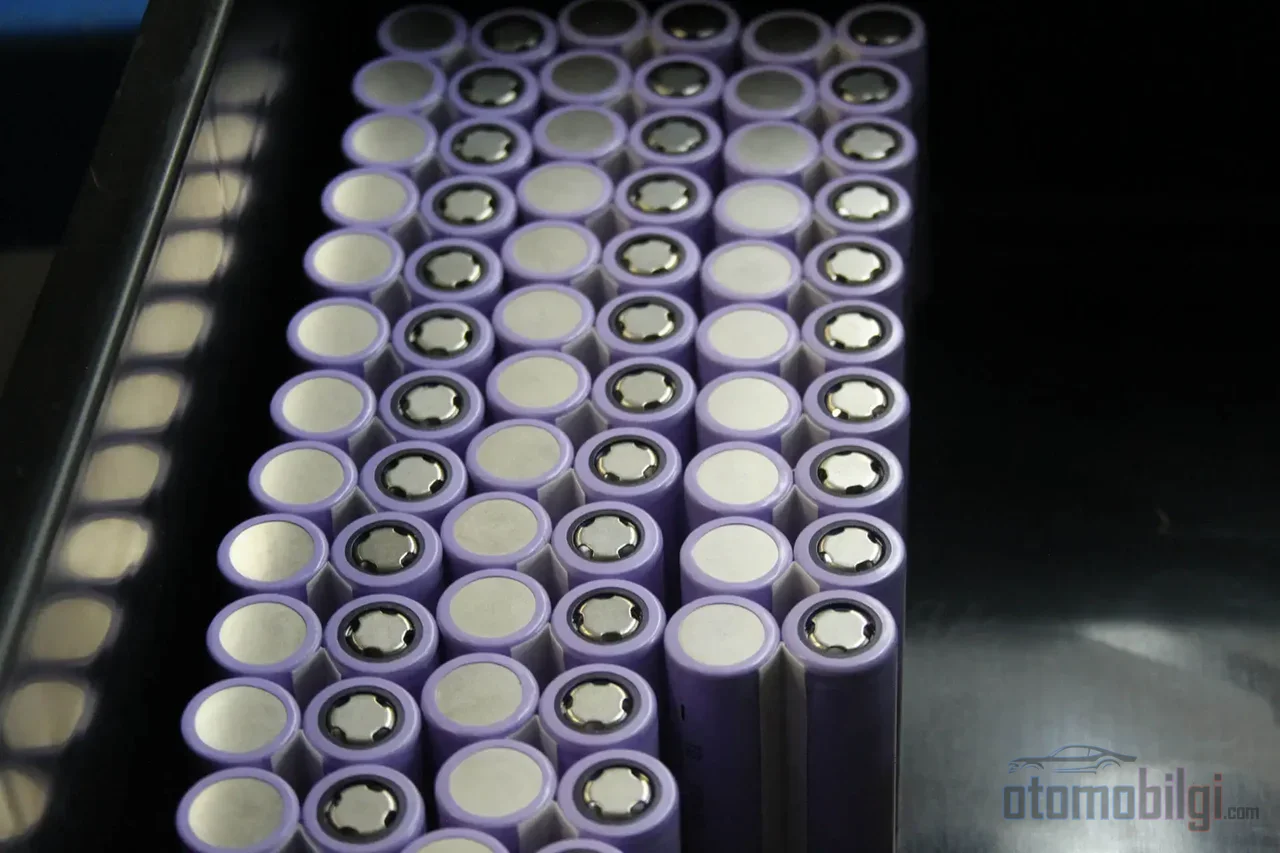
In 1997, Toyota launched the world's first mass-produced hybrid car, the Prius. Two years later, Honda presented the Insight, the first gasoline-electric hybrid sold in the US. Their common denominator was NiMH chemistry. The G1 Insight's battery pack is a concrete reference point: cylindrical cells, 144 V system voltage, 6,500 mAh capacity.
Why Was NiMH Preferred for a Decade?
The question is a fair one: the fundamental chemistry of lithium-ion had been developed decades earlier and was already being used in consumer electronics in the 1990s. The answer lies hidden in the hybrid's operating profile. A hybrid battery lives in continuous shallow charge-discharge cycles; it stores regenerative braking energy within seconds and returns it at startup. This profile matches NiMH's strengths perfectly:
- Cheaper per watt-hour.
- More resistant to charge-discharge cycles.
- Tolerates a wider temperature range.
- Safely recombines the gases produced during overcharging - meaning it is more forgiving.
There was a price, though: high internal resistance, high self-discharge and a tendency to heat up in hot environments. But the 2010 third-generation Prius was mature enough on paper that even its not switching to lithium-ion would spark debate, a niche choice. Summary sentence: NiMH was the chemistry that offered the cycle durability and safety required by hybrids of that era with the lowest risk.
The Shift to Lithium-Ion: Which Thresholds Were Crossed?
Lithium-ion is lighter, more efficient and has higher energy density than NiMH. So why did an industry wait until the late 2000s? The thresholds were cost and safety. Li-ion cells were more sensitive to overcharging, the management electronics were more demanding, and per-cell costs were still high. Against NiMH's factory-proven reliability, li-ion only became an advantage with the right engineering - cell monitoring, thermal management and budget management.
| Feature | NiMH | Lithium-ion |
|---|---|---|
| Cost (per watt-hour) | Cheaper | More expensive |
| Energy density | Lower | Higher |
| Cycle tolerance | High | Long life, low tolerance |
| Safety | Recombines overcharge gases | More sensitive to overcharging |
| Temperature behavior | Wide range, tendency to heat | More efficient, requires strict management |
| Weight and efficiency | Heavier | Lighter and more efficient |
In 2010, the Chevrolet Volt became the first plug-in hybrid commercially sold, and the US Department of Energy's research contributed directly to the development of the Volt's lithium-ion battery. The chronology is also clear on the Porsche front: the Cayenne S Hybrid (2010) was the first production hybrid; the 911 GT3 R Hybrid (2010) was the first race car with partially electric drive, collecting braking energy in a flywheel-type accumulator; the 918 Spyder (2013) 6.8 kWh lithium-ion battery 31 km of electric range while setting a record of 6:57 at the Nürburgring; and the Panamera S E-Hybrid (2015) became the world's first plug-in hybrid luxury model, with 36 km of electric range.
High Voltage: The Battery's New Role in the Powertrain

The 800-volt technology developed through the 919 Hybrid racing program paved the way for the future voltage standard of series-production hybrid and electric powertrains. The logic chain is simple: for the same power, reducing current decreases conductor cross-section and losses; the result is thinner cables, less weight and faster charging. Today, growth projections for 400 V and 800 V architectures are forecast in the 20%+ band, and the battery is no longer just an energy reservoir but the voltage backbone of the powertrain.
The scale is also striking: electric vehicle and storage markets account for roughly 90% of today's lithium-ion market; EV battery deployment has exceeded seven times that of 2020, reaching 1.2 TWh levels. Getting here from a 144-volt NiMH pack in 1997 is precisely the measure of that quiet evolution this article describes.
How Battery Chemistry Transformed Fuel Consumption?
A hybrid's fuel savings are limited by the energy the battery recovers through regenerative braking; the better the chemistry tolerates it, the less the engine runs. This is why small details matter: for example, a faulty auxiliary (12 V) battery measurably reduces fuel economy by diminishing the effectiveness of regenerative braking. NiMH's high energy density drawback opened the way to surpassing fuel consumption targets with lithium-ion's lighter and more efficient packs; the 30 km+ electric ranges in plug-in hybrids arose precisely from this density difference.
A practical note on ownership issues: attempts to replace old hybrids' NiMH packs with lithium continue in hobbyist and field circles; however, the management difference seen in the table above explains why a one-to-one swap is risky. Older predictions about NiMH pack lifespan (needing replacement after roughly 100,000 miles of use) are now considered quite optimistic thanks to the long-lasting NiMH's cycle tolerance in today's practice; today's hybrid batteries have pushed this threshold much further out.
Conclusion: How Technical Maturity Made the Brand Possible?
The history of the hybrid is the history of thresholds successively broken by three chemistries: lead-acid's weight would have made the hybrid sellable only at diamond prices in the 1900s; NiMH's cycle tolerance enabled mass production in 1997; and lithium-ion's density made the plug-in era and high-voltage architectures possible in the 2010s. Brands and models are not the actors of this story but the products of technical maturation - the line stretching from the 44-cell accumulator of 1900 to the 800-volt systems of the 2020s shows that a measurable engineering threshold was crossed at every step.
Sources
- The history of Porsche begins electrically
- Lohner–Porsche
- Prof. Ferdinand Porsche created the first functional hybrid car
- How the Prius Traces Its Lineage to a 1900 Car From Porsche
- Milestones: Toyota Prius, the World's First Mass-Produced Hybrid Vehicle, 1997
- Development of Prius and Hybrid Strategy
- The History of the Electric Car
- Batteries for Electric Vehicles - Alternative Fuels Data Center
- Electric vehicle batteries - IEA Global EV Outlook 2026
- Top 10 EV Battery Trends in 2025 and What We Can Expect in 2026
- NiMH vs. Li-ion Hybrid EV Batteries
- NiMH Battery vs Lithium-Ion: Differences, Lifespan, Safety
- What Is the History of Hybrid Cars?
- Honda Insight G1 Hybrid Battery specs
- Hybrid Electric Vehicles: A History of Technological Innovation