Why Did California's Mandatory Emissions Rule Give Birth to Hybrids?
Share This Page
While the hybrid car's dominance today may look like an engineering triumph, the real turning point of the story lies not in the engine block but in an air quality regulation. California's in 1990 Zero-Emission Vehicle (ZEV) mandate caught automakers unprepared; when manufacturers could not cope with the electric vehicle, they sought a way out in the hybrid. In short, the hybrid's rebirth is the product not of a direct technology race but of a negotiation with regulation.
Key Highlights
- The ZEV rule was adopted in 1990; from 1998 onward, 2% of major manufacturers' sales had to be zero-emission 2% of major manufacturers' sales had to be zero-emission
- Battery cost estimate was $1,350 but turned out to be roughly $20,000 in reality
- In 2001, the AT-PZEV credit defined that year gave hybrids credits toward the ZEV obligation
- The first mass-produced hybrid, the Prius, arrived in December 1997, and the first hybrid sold in the US, the Insight, came in 1999 came
- Between 2001 and 2005, approximately 70,000 vehicles were sold under AT-PZEV
What Did the 1990 California ZEV Mandate Want?
The California Air Resources Board (CARB) adopted the ZEV regulation in 1990 as part of the Low-Emission Vehicle (LEV) program. The original timeline was clear: between 1998 and 2000, 2% of annual sales, between 2001 and 2002 5%, and from 2003 onward 10% had to consist of vehicles with zero pollutant emissions. The rule was not merely a performance standard; because it combined the standard with a sales mandate, it effectively became a legal clamp forced onto a single technology, the battery electric vehicle.
Two features of the rule made it so radical. First was its technology-forcing nature: in 1990, there was not yet any mass-produced zero-emission vehicle that could meet this condition. Second was its legal foundation. California, thanks to a waiver granted under the 1967 federal air quality legislation, was the only state with the authority to set its own mobile source emission standards, and this authority is preserved to this day. In other words, a legal text written by a single state could shape the product plans of the world's largest automakers for decades.
One of the catalysts behind the decision could be seen in that very year: at the Los Angeles Auto Show, General Motors unveiled the Impact concept, and its management announced a comprehensive development program for it. Regulators had seen with their own eyes that the electric vehicle would soon be ready. On the other hand, because the ZEV provision was buried inside the much broader LEV regulation, it received very little attention when adopted; the difference between its insignificance at that moment and its later impact is one of the typical ironies of legislative history.
Why Did the Electric Vehicle Dream Collapse Under the Battery Math?
Manufacturers first complied with the mandate. Led by the vehicle that would later become GM's EV1, the first generation of modern electric vehicles began to be produced. But the physics and cost balance were brutal. In the 2000 review, both regulator staff and manufacturers noted that the battery pack, initially estimated at $1,350 that its projected cost actually came to about 20,000 dollars per ton. Some manufacturers calculated that when converted to emissions reduction this amounted to an effectiveness loss of 1.8 million dollars per ton; the typical effectiveness of CARB's other programs was on the order of 10,000 dollars per ton. This two-order-of-magnitude difference explains the technical framework of the debate on its own.
Two milestones in the process proved decisive. In 1995, the independent battery technology advisory panel assembled by CARB concluded that batteries capable of meeting consumer expectations could only become available in 2000-2001, that is, three years later than planned. This was followed by the 1996 retreat: CARB removed the 1998 and 2001 targets while keeping the 10% requirement for 2003. Separate memoranda of understanding were signed with each manufacturer; manufacturers committed to offering low-emission vehicles nationwide and to sharing advanced battery electric vehicle technology.
The result was measurable but modest: between 1996 and 2003 approximately 4,400 battery electric vehicles were deployed in California, and these were largely leased or sold with subsidies. A widely known final act also took place here: thousands of electric vehicles, including leased EV1s, were recalled and destroyed; GM rejected the proposed 1.9 million dollar buyout offer for the remaining 80 EV1s. The electric vehicle, under the conditions of that era, had failed to move from being a technological showcase to a marketable product.
How Did the Hybrid Become a Bargaining Product?
The loosening of the mandate started a classic bargaining dynamic between the regulator and manufacturers. In 1998, CARB introduced the partial zero-emission vehicle (PZEV) category: five PZEVs could substitute for one ZEV, but at least 40% of the obligation had to be met with pure ZEVs. Manufacturers deemed this requirement unattainable and took their objections to court. Yet the real turning point lay in the technical definitions.
Two things became clear at once in the 2000 review. The advisory panel reported that manufacturers were shifting from battery electrics to hybrid electric vehicles and mini electrics; battery manufacturers such as Panasonic EV Energy, while supplying NiMH batteries to the electrics of Honda, Toyota and Ford, shifted production to their hybrid batteries. That same year, CARB created the advanced technology partial zero-emission vehicle (AT-PZEV) category. This credit could be used toward meeting the 40% pure ZEV requirement set in 1998, and in practice it was mainly hybrids that filled this requirement. The Toyota Prius, Honda Civic Hybrid and the natural gas powered Civic GX were recorded as examples of this category.
In other words, the hybrid entered the system through the door left open by the electric vehicle mandate. In the 2001 amendment, the rule set the obligation of large manufacturers at 2% pure ZEV + 2% AT-PZEV allowed to meet it with a combination; court challenges to the 2001 regulations, meanwhile, gave rise to the 2003 amendments and the alternative compliance path. The measurable legacy of the mandate can also be read from a table:
| Category | Period | Sales |
|---|---|---|
| ZEV (battery electric) | 1996–2003 | ~4,400 |
| AT-PZEV (primarily hybrids) | 2001–2005 | ~70,000 |
| PZEV (improved conventional) | 2001–2005 | ~430,000 |
The distribution is striking: while the electric vehicle, the program's expected hero, remained at the lowest number, most of the environmental benefit unexpectedly came from conventional vehicle improvements and hybrids. As the program changed over time, the link between the mandate and innovation tracked by patent data also weakened; the strongest initial move had occurred during the program's strictest period.
Why Had Engineers Figured Out This Idea Long Before the 1990s?
The hybrid push of the 1990s was not an invention from scratch; rather, it was the rediscovery of an architecture attempted roughly a century earlier, with new batteries and power electronics. Ferdinand Porsche, in 1900 designed what is considered the world's first functional hybrid car, Semper Vivus. His electric vehicles produced at Lohner-Werke during the same period also took the stage: the 1900 Lohner-Porsche Elektrik Voiturette had a wooden chassis and body, and carried an in-wheel motor in each front wheel. Porsche, in 1901 went one step further and produced a vehicle combining an internal combustion engine with electric motors mounted in the wheel hubs.
The architecture of these early hybrids can be clearly described in today's terminology: the Lohner-Porsche hybrids were series hybrids, meaning the gasoline engine never drove the wheels directly, only running the generator. Porsche's P1 (Egger-Lohner C.2 Phaeton), an earlier electric attempt, was also part of this development line. In other words, the solution that appeared at Prius in 1997 was, conceptually, a mature form of an idea that already existed between 1898 and 1901 ; throughout the 20th century, cheap gasoline was the economic balance that shelved this architecture.
How Did the ZEV Mandate Shape the Toyota and Honda Rivalry?
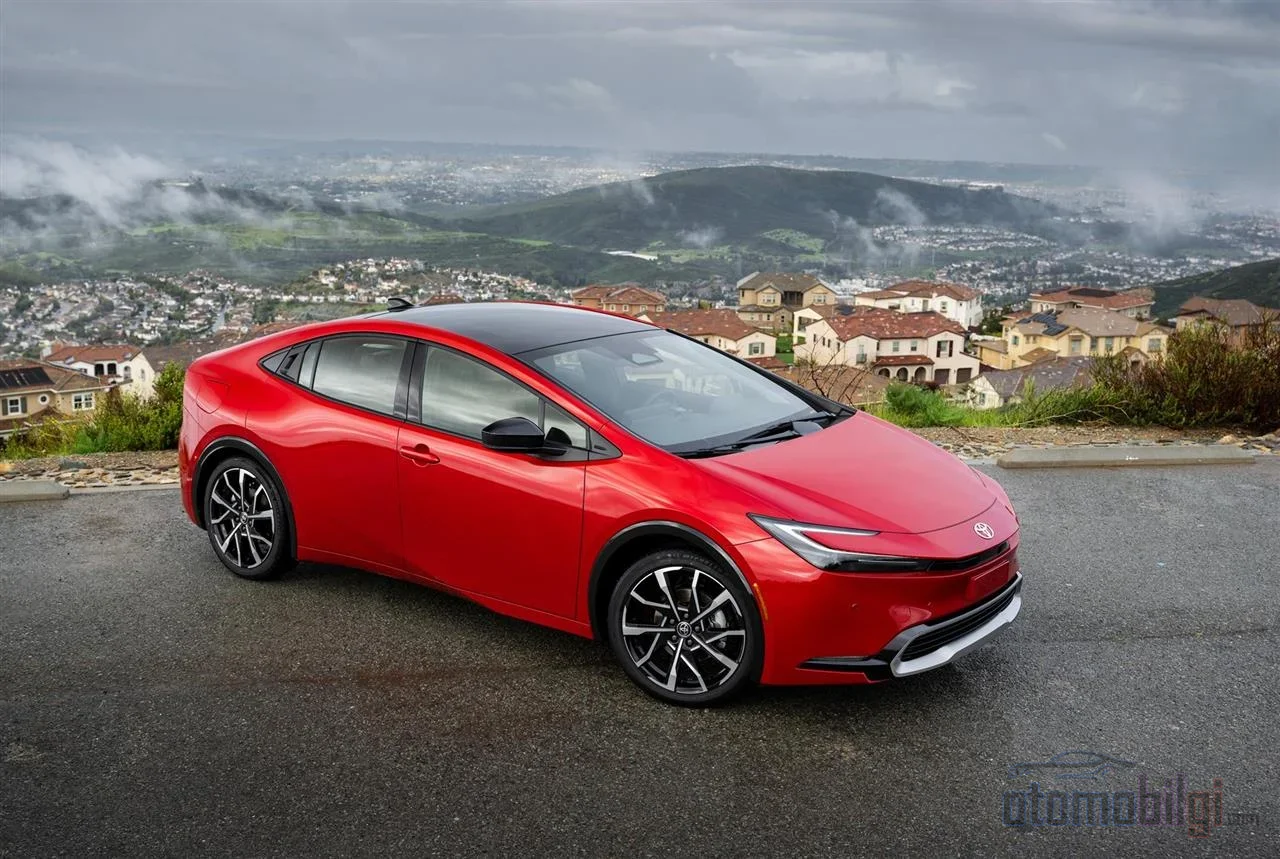
Toyota was the first major manufacturer to read in the early 1990s that environmental awareness and tightening emissions regulations would determine the industry's future. In the project line also known as G21 according to the company's official corporate history, fuel efficiency and exhaust emission cleaning technologies were developed; the result was in December 1997 the launch of the Prius . Toyota positioned this model as a concrete response to CO2 reduction and captured a large early lead in the Japanese market: by the time Honda introduced its first hybrid to the US market, Toyota had already sold more than 30,000 Prius units in Japan.
Honda's strategy, on the other hand, was based on a different engineering choice. As the first company to sell hybrids in the US, in 1999 Insight brought it to market and thereby took the title; the Prius's journey to the US would be completed a few years later. The numbers also spoke between the two cars: the Insight's base price was $19,800, while the Prius was $22,400 at that level. At the manufacturer level, the real key was the AT-PZEV credit defined in 2001: both the Prius and the Civic Hybrid became creditable vehicles toward California's mandate under this category. In other words, the field of competition was the field drawn by the regulator.
What Does Today's Hybrid Market Owe to That First Rule?
The long-term technological spillover of the mandate was the battery technology used in hybrids; today's hybrid market size is the tangible embodiment of this legacy. As of July 2026 Toyota, Honda, and Hyundai Motor Group control 86% of the US hybrid market; high fuel prices, an expanding product lineup, and consumer hesitancy toward fully electric vehicles are fueling demand. Toyota's Camry, RAV4, Land Cruiser, Sequoia and Sienna switching to hybrid-only in models like accelerated sales. Honda, meanwhile, announced in May 2025 that it would scale back its electric vehicle investments: it cut its 2030 EV sales share target from 30% to 20% and aims to sell approximately 2.3 million hybrids by then.
The story is also being completed on the regulatory front. Toyota in August 2022 ended its legal battle with California and recognized the state's authority to set stricter standards. California, in turn, from 2035 onward banned the sale of new gasoline-only cars; all new vehicles, including plug-in hybrids, must meet zero-emission standards. So the state that made the hybrid a bargaining chip some thirty-plus years ago is drawing today's finish line through legislation as well.
Assessment: Was the Mandate a Success or a Disappointment?
An honest assessment has two sides. A critical reading says this: CARB exaggerated the potential of advanced technology and underestimated the development of conventional technology; the program's environmental benefit came, unexpectedly, from conventional improvements, and a technology-neutral design would have been more sensible. The opposing reading emphasizes the historical value of the mandate: patent data shows that the program delivered the industry's first innovation push precisely during that pressure period, and the hybrid battery stands as the most tangible spillover of that pressure. Through an engineer's eyes, the picture is clear: the targeted vehicle was never produced, but the pressure created by the target nurtured the hybrid competence of the three manufacturers who today hold 86% of the market. The regulatory product neither worked exactly as intended, nor did it go to waste.
Sources
- Zero-emission Vehicle Regulation - CARB
- Learning from California's Zero-Emission Vehicle Program (PPIC)
- The origin of California's zero emission vehicle mandate
- The California Zero-Emission Vehicle Mandate: A Study
- History - Plug In America
- The history of Porsche begins electrically - Porsche Newsroom
- Lohner-Porsche Hybrid (1900) - Stuttcars
- Development of Prius and Hybrid Strategy - Toyota Global
- The Toyota Prius Transformed the Auto Industry - IEEE Spectrum
- Hybrid Electric Vehicles: A History of Technological Innovation - USC Illum
- Electric and Hybrid Vehicles - ETHW
- Toyota stops fighting California - Green Car Reports
- Honda to scale back on electric vehicles - Reuters
- Why three automakers dominate the hybrid market - CNBC
- Advanced Clean Cars II - CARB