The G21 Project: The Secret Development Story That Gave Birth to the 1997 Prius
Share This Page
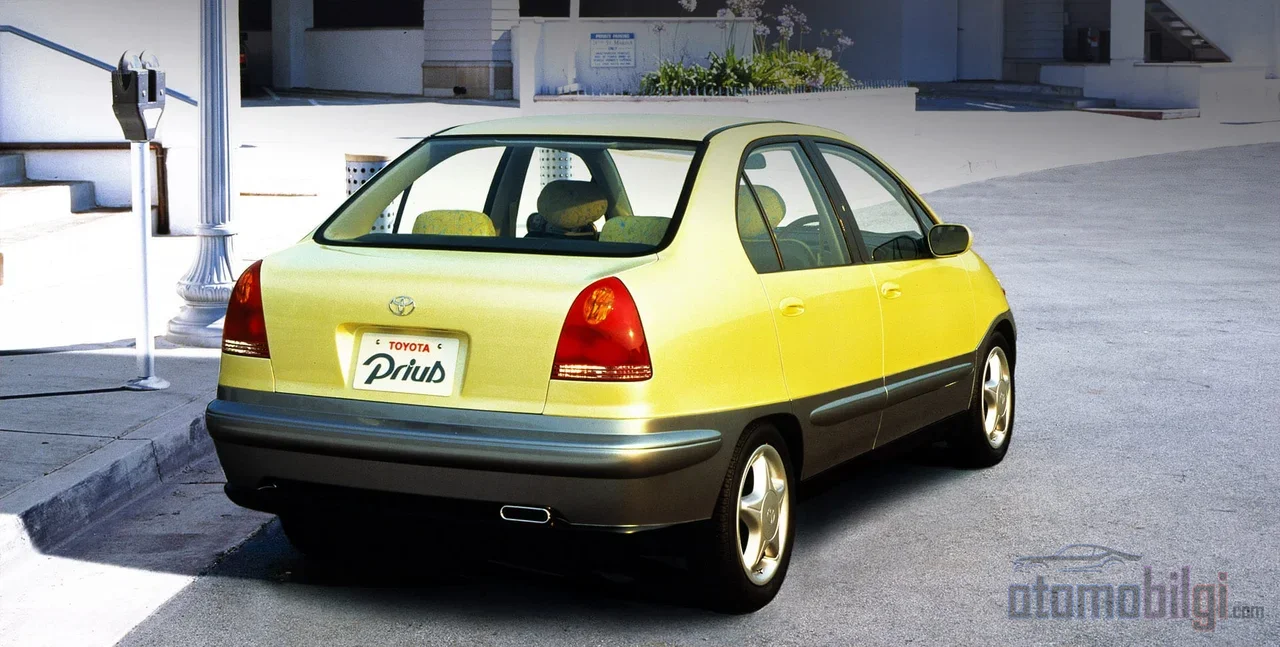
Behind the 1997 Prius is a development project that began in the summer of 1993 with a single question from Eiji Toyoda: What should the car of the 21st century look like? G21 , the codename of this project - an abbreviation of Globe, meaning the world, and 21st century - turned an unproven technology into the world's first mass-produced gasoline-electric hybrid in less than two years. Launched for sale in Japan on December 10, 1997, the NHW10 was not merely an experiment watched by the automotive industry; it became the starting point of the hybrid era.
Highlights
- The G21 project began in September 1993 with 10 engineers and designers.
- The first-generation Prius went on sale on December 10, 1997 only in Japan; a total of 37,425 units were produced.
- While the initial target was 20 km per liter, the target was doubled with the hybrid decision.
- Toyota lost money on every NHW10 sold; it only broke even with the NHW11.
- In 2024, the project was honored with an IEEE Milestone plaque.
How the G21 Project Was Born: The First Vision of 1993
The project's starting point was not a technical requirement, but a demand for a corporate vision. Honorary Chairman Eiji Toyoda wanted a new medium- and long-term automobile vision to prepare Toyota for the 21st century in the summer of 1993. The initial work, officially launched in September 1993 under the codename G21, was carried out by a small team consisting of only 10 engineers and designers ; President Shoichiro Toyoda also supported the plan.
The first report, prepared at the end of 1993, outlined a modest but consistent concept when viewed from today: compact exterior dimensions, spacious interior, long wheelbase, and fuel efficiency of 20 kilometers per liter . The project's keywords were "resources" and "environment"; discussions were conducted around the axes of environment, energy, and safety. On February 1, 1994, G21 was transformed into a full-time structure involving chassis, body, engine, drivetrain, and production engineers, and leadership passed to Takeshi Uchiyamada.
The hybrid idea was not there from day one
The critical point lies here: the team's first choice was not hybrid. Although the hybrid system was seen as an intriguing topic, it was not considered feasible because it was an unproven technology. Instead, the plan was built on a direct-injection engine and an efficient automatic transmission that could deliver 1.5 times the efficiency of a car in its class. In other words, G21 was initially designed as a project that pushed the limits of efficiency through conventional means.
This was not Toyota's first hybrid attempt either. According to the company's 75-year history, the first attempt dates back to 1968: a gas turbine engine study was conducted under the leadership of Kenya Nakamura, but the project was halted in the early 1980s due to the lack of suitable rechargeable batteries. By the 1990s, the missing piece of the equation - sufficient battery technology - was finally available; what was missing was the determination to use it.
How the Hybrid Decision Was Made: Double the Efficiency or Cancellation
The turning point came in November 1994. Vice President in charge of technology Akihiro Wada gave Uchiyamada a clear directive: make the car hybrid; if not, the project will be canceled. The goal was to double fuel efficiency - and according to the team's assessment, this was impossible with conventional methods. The only answer was hybrid technology. This is described as a typical "top-down" decision: management imposed a twofold goal on top of the team's 1.5x target.
Uchiyamada's initial assessment was also an honest engineering judgment: he did not believe a production hybrid could be developed before the beginning of the 21st century. Still, the decision was implemented; from the fall of 1994 onward, the atmosphere within the company changed, and it was decided that the production vehicle would be hybrid. The official approval of the production vehicle came at a meeting in June 1995.
Behind the decision there was also an organizational change: in August 1995, Hiroshi Okuda became president of Toyota, and this development is cited as a turning point for hybrid development. An unproven technology could not have been moved to mass production at this speed without top management support.
How the Toyota Hybrid System Works: Two Motors, One Planetary Gear
The system choice was the result of a six-month review. In the evaluation completed at the end of 1994, the two-motor type was selected due to its high efficiency potential. There was a vision behind the decision: power electronics - semiconductors and electronic circuits - would make a great leap in the near future, allowing the conventional transmission to be eliminated entirely.
The adopted system was later Toyota Hybrid System named (THS). The components of the architecture can be traced through a logical chain:
- A drive motor that drives the wheel and acts as a generator during deceleration
- A second motor that generates electricity, controls the transmission, and also serves as a starter motor
- A planetary-gear power splitter that combines the two electric motors with the gasoline engine
- An inverter operating between the battery and the motors
The input and output shafts were on the same plane, and the engine speed was controlled in a continuously variable manner. THS was completed and announced in March 1997; core technologies such as the motor and inverter were produced through in-house development. On the battery side, the work was carried out with Matsushita Battery Industrial, with whom they had previously collaborated on electric vehicle research; the NiMH battery pack was transferred to the joint venture Panasonic EV Energy, established in December 1996.
The concept and the road to production in Tokyo
An interesting detail: the concept vehicle displayed at the 1995 Tokyo Motor Show was different from the production hybrid. It was single-motor, direct-injection, with a CVT and a capacitor instead of a battery; its target was 30 kilometers per liter, and the system was named "Toyota Energy Management System". "Prius" - a name meaning "first, pioneering, superior" in Latin - began to be used from this stage onward. The production vehicle, however, went beyond this concept and evolved into a full hybrid architecture.
The schedule was impressive: roughly two years from the official start of development to series production. Behind the speed lay engineering methods: 3D virtual assembly technology and the use of the body welding line for low-volume production. Additionally, in 1996 the control systems and electric powertrain components departments were integrated under a "business reform" structure, and in January 1997 they merged with the electric vehicle development section to form the Electric & Hybrid Vehicle Engineering Division.
The First-Generation Prius in Numbers: NHW10 and NHW11
The first generation NHW10, went on sale in Japan on December 10, 1997, becoming the world's first mass-produced gasoline-electric hybrid car. Production ran at the Takaoka plant from December 1997 to February 2000 and was limited to a total of 37,425 units . A notable design note: the NHW10's design came from Californian designers, chosen over proposals from other Toyota studios. The car won the "Japan Car of the Year" award at launch, and in 1998 it won the RJC Car of the Year award.
The second stage was the step that opened the model to the world. Launched in 2000, the NHW11 - the second generation - was the first Prius sold in limited numbers in Asia, America, Europe, and Australia; its US price was 19,995 US dollars. It was produced at the Motomachi plant from May 2000 to June 2003, with 33,411 units completed. It became the second mass-produced hybrid on the US market after the Honda Insight.
| Feature | NHW10 | NHW11 |
|---|---|---|
| Launch | December 1997 | 2000 |
| Market | Japan only | Asia, America, Europe, Australia |
| Production plant | Takaoka | Motomachi |
| Production period | December 1997 - February 2000 | May 2000 - June 2003 |
| Units produced | 37,425 | 33,411 |
The first generation sold a total of approximately 123,000 units . The commercial picture reveals a clear truth: Toyota stated that it lost money on every NHW10 vehicle and only broke even with the NHW11. In other words, the value of the launch lay not in sales figures but in proving the technology.
What Is the Real Fuel Consumption and Is It Reliable Today?
The first-generation Prius's efficiency varies depending on which vehicle is being discussed and how it is measured. For the NHW11 on the US market, owners report 50-60 mpg (approximately 3.9-4.7 L/100 km) with proper driving, and around 35 mpg with more aggressive use; general average figures are cited as 46-50 mpg or a combined ~41 mpg. It is enough to remember that these figures are based on ownership data and mostly refer to the NHW11; the NHW10's target on its own cycle was already around 20 km per liter.
On the reliability front, the picture has matured over more than 25 years of use. Owners report trouble-free operation and solid battery experiences in the first generation; the reliability comparison across five generations is evaluated using first-generation Consumer Reports and NHTSA data. The maintenance issues to watch for are specific: for example, components that can become clogged with carbon buildup. In short, this is the story not of a faulty technology, but of a long-lasting drivetrain with proper maintenance.
Do the Prius's Roots Reach Back to 1900?
Yes - its family tree is surprisingly old. Ferdinand Porsche designed the first hybrid car as a prototype in 1900: the Lohner-Porsche Semper Vivus. The hybrid version 1901 was put on sale as the Lohner-Porsche Mixte . Historical accounts linking the modern Prius's origins to this vehicle from roughly a century earlier are no coincidence: the problem of managing series-parallel power flow has not changed since 1900; what changed was the maturing of the components that solve it - batteries and power electronics.
In between lie various independent attempts: in 1973, electrical engineer Victor Wouk built a hybrid prototype based on a 1972 Buick Skylark. The series-designed Owen Magnetic, in which the engine charged the batteries and fed the electric motor, was one of the early hybrids. The 1969 GM XP 512 and the 1980 six-wheeled Briggs & Stratton experiment also belong to the same long and unbroken tradition of experimentation. The second pioneer of the modern wave was the Honda Insight , launched at the end of 1999 as a two-seat liftback.
The Long-Term Impact of the Launch
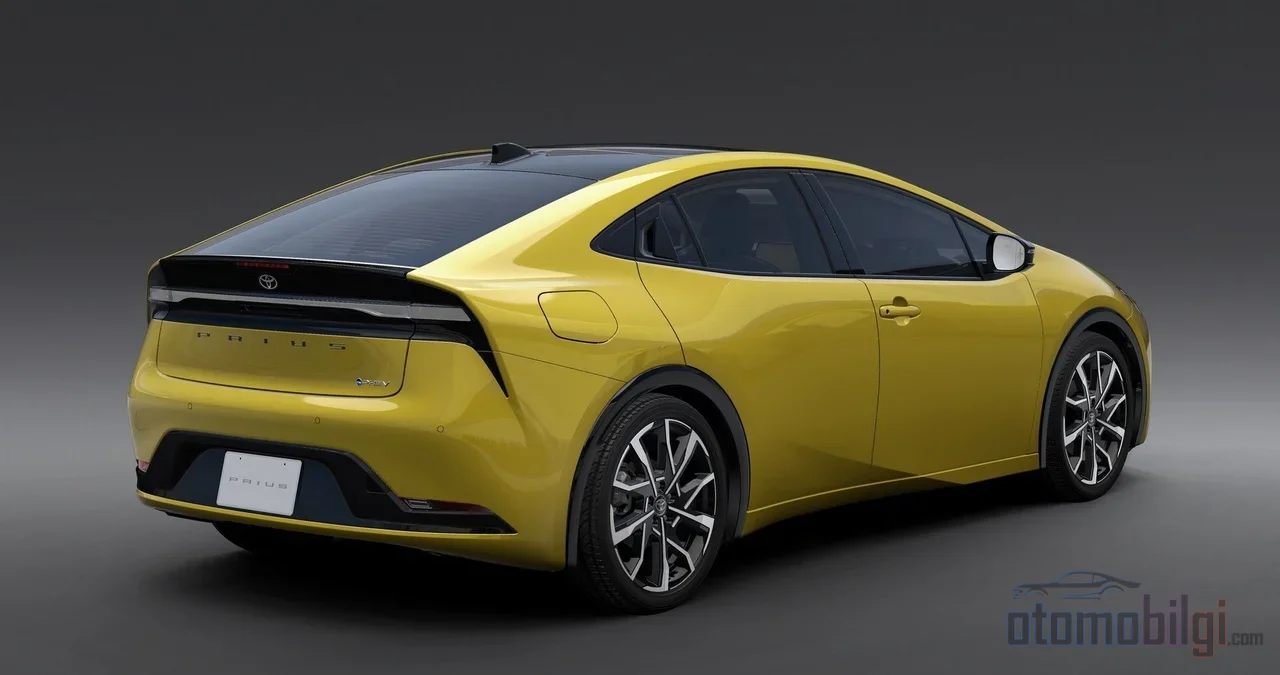
One of the measurable outcomes of the 1997 launch is in our hands today: the Prius family total reached 6.1 million units in January 2017, accounting for 61% of the 10 million hybrids Toyota has sold since 1997; the model is sold in more than 90 markets. More recent evidence is technological: in July 2023, a 2024 Prius LE set a Guinness record with 2.52 liters per 100 km on the 5,150 km journey from Los Angeles to New York using hypermiling techniques; in normal driving, the latest generation offers efficiency of up to 4.06 liters per 100 km.
The difficulty of the early development also went down in the records: Toyota engineers had noticed during test drives that the prototypes' fuel efficiency was worse than even a standard Corolla. The road from there to mass production and today's figures is precisely the work of engineering discipline. The project was honored with an IEEE Milestone at a ceremony in Toyota City on October 30, 2024; the plaque text emphasizes that the vehicle used an internal combustion engine and two electric motors, and recovered energy lost during driving. Uchiyamada also gave a short speech at the ceremony.
Conclusion: Two Years, One Decision, and the Transformation of an Industry
The engineering reading of the G21 story is this: the right technology is not always the most comfortable option. The team's first answer was safe - a direct injection engine and an efficient transmission. The "double the efficiency or it's canceled" condition imposed by top management pushed the team toward an unproven architecture; the forecasts on the power electronics and battery side made this risk bearable. Moving an unproven technology from official approval to mass production in roughly two years is a management and manufacturing achievement beyond the efficiency claim. That first vehicle launched in Japan in December 1997 started out as a loss-making product but went down in history as the reference point of the hybrid era.
Sources
- The Story Behind the Birth of the Prius, Part 1 | Toyota Motor Corporation Official Global Website
- Item 1. Development of Prius and Hybrid Strategy - Toyota 75 Years History
- The Story Behind the Birth of the Prius, Part 2 | Toyota
- The Toyota Prius Transformed the Auto Industry - IEEE Spectrum
- Milestones: Toyota Prius, the World's First Mass-Produced Hybrid Vehicle, 1997 - ETHW
- Toyota Prius - Wikipedia
- Gamechanger: how Ferdinand Porsche designed the first hybrid car - Porsche Newsroom
- Lohner-Porsche - Wikipedia
- What Is the History of Hybrid Cars? - HowStuffWorks
- Honda Insight - Wikipedia
- Every Toyota Prius Generation, Ranked By Reliability - Jalopnik
- Considering a First Gen Prius - PriusChat