Why Has the Power Split System Made the Toyota Hybrid Unrivaled?
Share This Page
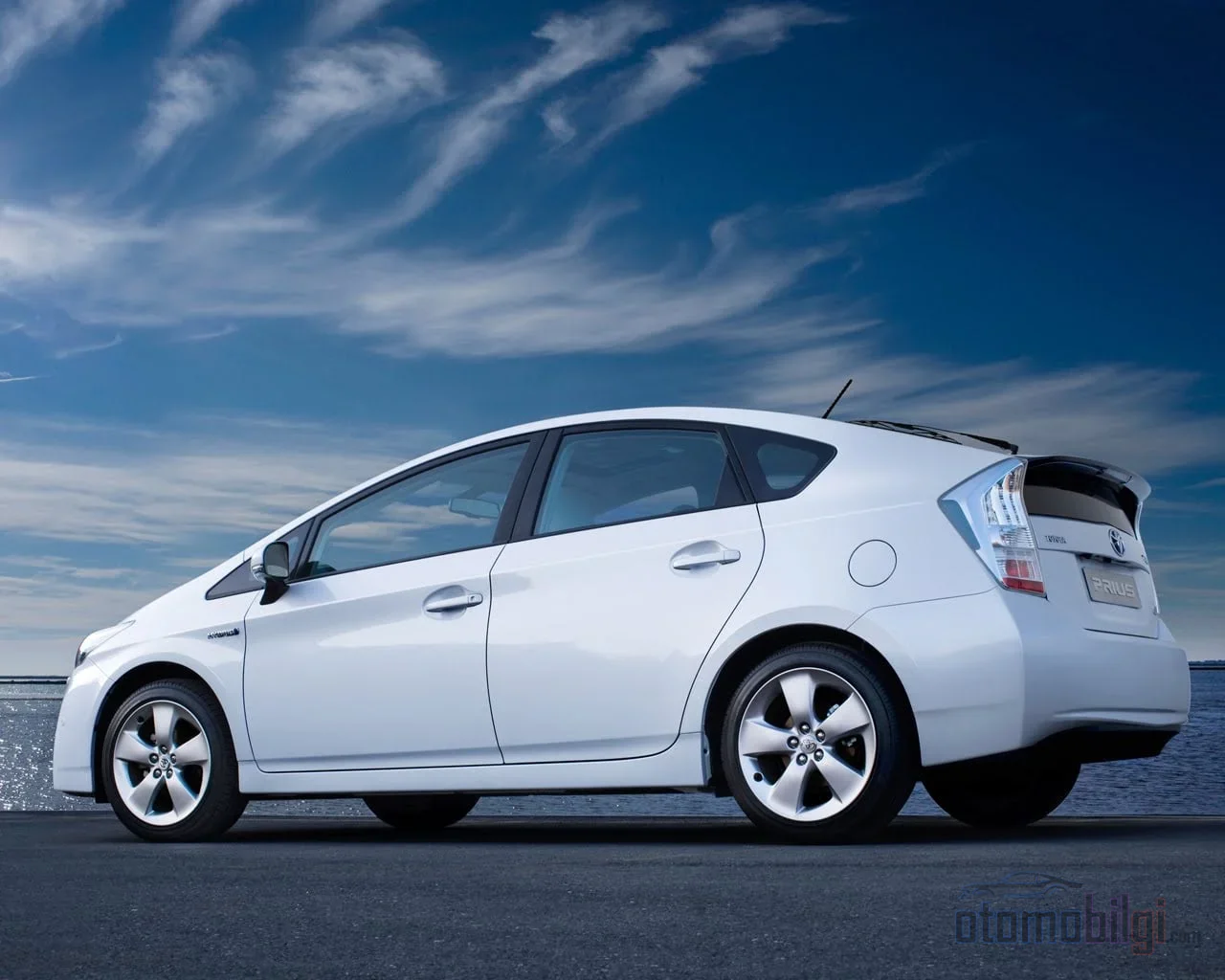
What makes Toyota's hybrid unrivaled is not the electric motor or the battery alone, but the power-split drivetrain that divides and combines power from two motors through a single planetary gear set. This architecture compensates for the weaknesses of series and parallel hybrids in a single mechanism, giving the vehicle the ability to move seamlessly using the gasoline engine, the electric motor, or a combination of both. In 1997, with the first mass-produced hybrid, Prius , this system took to the road and remains the solution the industry still considers the benchmark today.
Highlights
- G21 project 1993 in 20 km/liter began with the goal of fuel efficiency
- The first Prius December 1997 was launched as the world's first mass-produced hybrid
- Toyota's planetary gear eliminated the conventional transmission entirely and created an e-CVT effect
- Honda chose the Insight with its IMA system in 1999, going with a parallel approach
- In Toyota's global hybrid sales, the 5 million mark was surpassed in March 2013
Series, parallel, and power-split: what is the difference between the three architectures?
To understand hybrid drivetrains, three fundamental architectures must be distinguished. In a series hybrid, the wheels turn only on electricity; the internal combustion engine feeds the generator, and the electricity goes to the motor. The first example to enter history followed this scheme too: Ferdinand Porsche designed the Egger-Lohner C.2 in 1898, introduced the electric Lohner-Porsche with wheel hub motors on the front wheels in 1900, and in 1901 the Lohner-Porsche Mixte Hybrid combining a gasoline engine with hub drive became the first hybrid vehicle to enter series production. In 1902, Porsche even won the Exelberg Rally with this car. But the cost of the series architecture is clear: energy reaches the wheels electrically rather than mechanically, and losses occur at every conversion.
In a parallel hybrid, the internal combustion engine and the electric motor share a common output shaft; the engine can drive the wheels alone or together. This arrangement usually uses a smaller battery than the series type and charges through regenerative braking. Since the mechanical connection is preserved, efficiency losses are limited; however, the engine and wheel speeds are linked to each other, making it harder to keep the engine in its most efficient operating range.
Power-split architecture is midway between the two: a power-split device is added to the parallel path and multiple power paths are opened from the internal combustion engine to the wheels. The engine, generator, and drive motor can operate independently (decoupled); depending on conditions, the system behaves like a series or parallel hybrid, maintaining efficiency in mixed driving. The fundamental distinguishing feature is the electronically continuously variable transmission, or eCVT, which keeps the engine in its efficient operating range.
G21 project: from a 20-kilometer goal to the hybrid decision
Toyota's system was born not from an engineering move but from a vision study. In the summer of 1993, at the call of honorary chairman Eiji Toyoda, a vehicle design study for the 21st century began; in September 1993, the code name G21 (A fusion with the Globe of the 21st century), the project was founded. The team of 10 engineers and designers set a target of 20 km/liter fuel efficiency. In February 1994 the project was officially established, headed by Takeshi Uchiyamada, who would later become president of Toyota.
In November 1994 the picture changed. Akihiro Wada, the executive vice president in charge of technology, instructed that the project be made a hybrid, stating that it would be canceled if this could not be done. The target was to double the efficiency goal, and according to the team's assessment, the only way to achieve this was hybrid technology. A notable detail: even the members of the G21 team themselves considered hybridization at that time an unproven technology that would not be ready by the start of the 21st century. The instruction changed that decision.
The team examined the systems for about six months and chose the two-motor type due to its high fuel efficiency potential. The most radical consequence of this choice was this: it was assumed that the conventional transmission would be eliminated entirely. In June 1995 official approval came for the production vehicle; the engine, motor-generators and inverters would be developed in-house, while for the battery a partnership would be made with Matsushita Battery Industrial. In August 1995, Hiroshi Okuda becoming president of Toyota was a turning point for hybrid development.
Toyota Hybrid System: how does the planetary gear work?
In March 1997 Toyota announced it had completed the Toyota Hybrid System(THS), with an integrated electric motor and generator and power splitting. At the heart of the system was a power-splitting device with planetary gearing: this mechanism connected the two motor-generators to the internal combustion engine, splitting the engine's power between driving the wheels and generating electricity. Having the input and output shafts in the same plane provided compactness; the drive motor augmented the engine's power and, during deceleration, acted as a generator to charge the battery; the second motor generated electricity with ICE power, controlled the transmission, and also took on the role of the starter motor. An inverter was placed between the battery and the motors.
Today known as Hybrid Synergy Drive (HSD), the system is a refined version of the THS in the 1997-2003 Prius. The second-generation system appeared in the 2004 Prius, and the name change reflected the expectation that the technology would extend beyond the Toyota brand; the system was also applied to the Camry and Highlander in 2006. In HSD, the conventional transmission, alternator and starter motor are replaced by MG1, MG2, power electronics consisting of three DC-AC inverters and two DC-DC converters, computerized control, and a high-voltage battery.
The division of labor between the two motor-generators is clear:
- MG1: The motor that starts the ICE and the generator that charges the battery; by regulating electricity generation, it effectively controls the CVT function of the transaxle.
- MG2: The main drive motor and regenerative braking generator; it is generally the more powerful one.
The planetary gear set functions like a CVT, and Toyota officially designates the system for legislative purposes as e-CVT puts it into the class. HSD is a full hybrid: the vehicle can move on the electric motor alone - most rival hybrids cannot do this and are therefore counted as mild hybrids. The system also evolved within generations: in the 1st and 2nd generations MG2 was directly connected to the ring gear (1:1, no torque multiplication); in the 3rd generation it was connected via a 2.5:1 planetary gear set, making a smaller but more powerful MG2 possible. On the battery side, the 1st generation Prius used 228 cells and 38 modules, while the 2nd and 3rd generations moved to 28 Panasonic prismatic NiMH modules with a nominal voltage of 201.6 V; the electronics keep the charge only in the 40-80% range for battery longevity.
Why did Honda choose a different path? The choice of parallel IMA
While Toyota invested in two-motor power splitting, Honda adopted a solution that prioritized simplicity and cost balance. Honda's first production hybrid, Insight came to market in 1999 and was equipped with the parallel hybrid Integrated Motor Assist (IMA) system. In IMA, the electric motor shares a common output shaft with the gasoline engine; unlike in a series hybrid, the gasoline engine can drive the wheels on its own. It was a vehicle that followed the 1997 Prius and was classified as a mild hybrid with a parallel system.
The result was the first major architectural divergence in the hybrid market. Toyota had chosen a system that targeted the upper limit of efficiency, with many components and complex control; Honda preferred an arrangement offering reasonable efficiency with fewer parts. IMA was used for about six generations, and Honda's hybrid evolution over time reached today's e:HEV system. However, its inability to drive on full electric power placed IMA in a technically narrower capability category compared to HSD: like most hybrids other than HSD, IMA cannot set off on electricity alone.
After 1997: how did the power-split architecture shape the market?
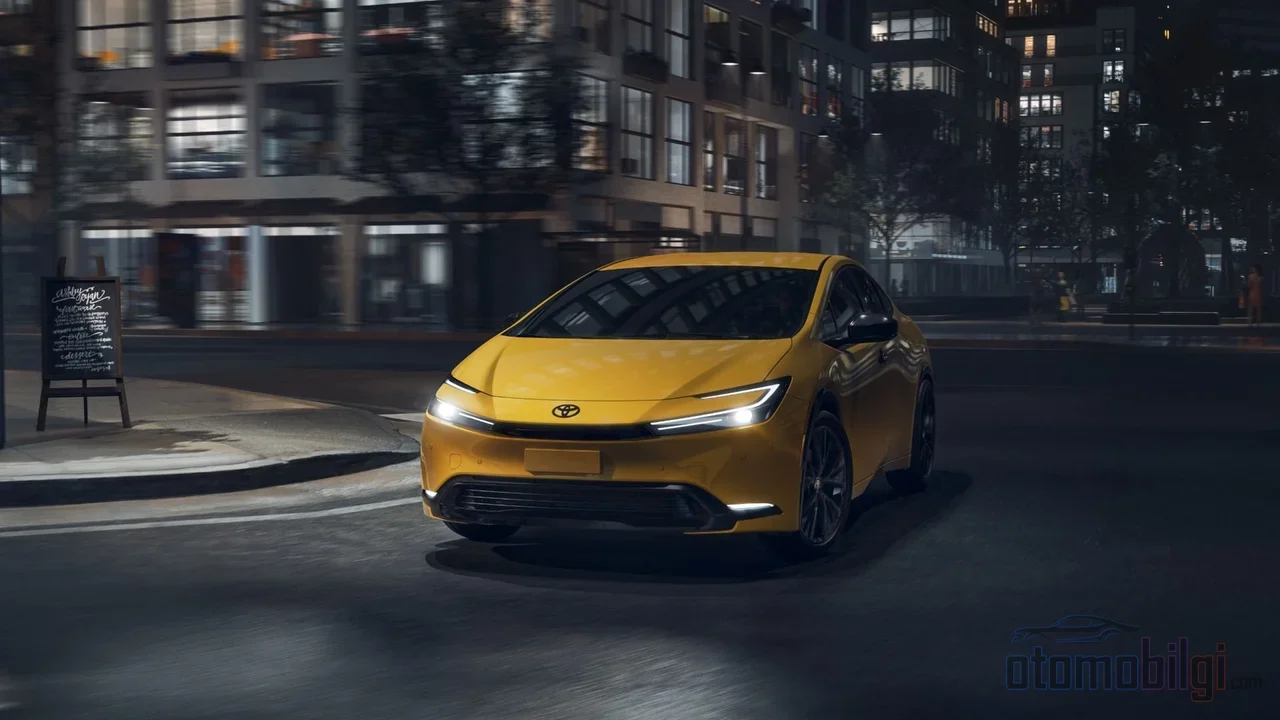
Launched in December 1997, the Prius also entered the IEEE Milestone list as the world's first mass-produced hybrid car. What followed is a story of scale: Toyota passed 1 million hybrid sales in May 2007, 2 million by the end of August 2009, and 5 million in March 2013; as of March 2013, the USA accounted for 38% of global hybrid sales. The Prius is still in production today, in its fifth generation.
The power-split architecture was not a solution Toyota kept to itself either. The HSD technology was licensed to Nissan for the Altima Hybrid; Aisin offered similar hybrid transmissions to other manufacturers. The same system was adapted to the Mirai's electric drive and the Prius Plug-in Hybrid; the Lexus versions carry the name Lexus Hybrid Drive . The power-split design became standard in other brands as well: in recent comparisons, the planetary gear mechanism again leads in GM, Toyota, Dongfeng and Great Wall systems, connecting the sun gear to the MG1 motor. Even in 2026 model year vehicles (for example the RAV4 XA60), NiMH and li-ion battery options continue.
| Feature | Toyota HSD (power-split) | Honda IMA (parallel) |
|---|---|---|
| First production vehicle | Prius, December 1997 | Insight, 1999 |
| Architecture | Series-parallel, planetary gear | Parallel, common output shaft |
| Transmission | No conventional transmission, e-CVT | Conventional arrangement dependent on the engine |
| Full electric driving | Yes (full hybrid) | No (mild hybrid) |
| Regenerative braking | Via MG2 | Via the common-shaft motor |
| Long-term legacy | Licensed to Nissan, adapted for Lexus and Mirai | Roughly six generations, then e:HEV |
Electric range and practical limits
Standard HSD offers an EV mode providing full electric driving below approximately 40 km/h if there is sufficient charge in the battery, for about 1.6 km For longer electric range, a separate architecture is required: Prius Plug-in Hybrid with an 80 kg li-ion battery of 4.4 kWh capacity, delivers according to EPA measurement 18 km of electric range. A frequently asked question about the battery also needs clarifying: HSD cannot operate without its computer, power electronics, battery and motor-generators; on the other hand, in principle it can move even without the ICE, and in practice in emergencies the vehicle can travel a short distance on gasoline alone.
Looking from today: why is power splitting still relevant?
As the transition to fully battery-electric vehicles slows, consumers are observed turning to hybrids, and there is a production detail that strengthens Toyota's hand in this context: it can produce hybrids on the same assembly lines as its gasoline and plug-in lines, adjusting output in real time according to demand. What is even more striking from an engineering standpoint is the age of the system. The two-motor arrangement chosen in 1994 after a six-month analysis still operates its core mechanism - the planetary gear, two motor-generators, and power electronics - on almost the same principle three decades later. It is possible to find detailed studies in patent archives on planetary gear design and multi-mode power-split arrangements; however, it is hard to say that the widespread narrative that Toyota locked down its power-split system with a single patent rests on a singular, direct patent record - the system's strength comes not so much from a single document as from an architectural decision embedded in the whole of its components. And it is precisely this decision that stands as one of the most decisive turning points in hybrid history: the right mechanism dragged the rest of the technology along behind it.
Sources
- The Story Behind the Birth of the Prius, Part 1
- Item 1. Development of Prius and Hybrid Strategy
- Hybrid Synergy Drive
- Hybrid vehicle drivetrain
- Milestones: Toyota Prius, the World's First Mass-Produced Hybrid Vehicle, 1997
- Series vs Parallel vs Series/Parallel Drivetrains
- Prius and Volt: Configuration Analysis of Power-Split Hybrid
- Inside Toyota's Hybrid Synergy Drive
- Honda Insight - Integrated Motor Assist
- Evolution of the e:HEV Powertrain
- The history of Porsche begins electrically
- Lohner-Porsche
- GM, Toyota, Dongfeng, Great Wall power-split comparison
- Toyota to outshine rivals as consumers opt for hybrids