Why Did Hybrid Cars Disappear for 80 Years?
Share This Page
Hybrid cars vanished for 80 years because the problem wasn't technical, it was economic: in the early 1900s, Ferdinand Porsche's Lohner-Porsche drive system was functional and mature, but battery weight, the absence of electrical grids, and above all cheap gasoline left the mixed drive stillborn commercially for decades. The idea only came back to life in 1997, when the oil crises, emissions regulations, and the maturing of NiMH batteries converged at the same point.
Highlights
- Ferdinand Porsche designed the world's first functional hybrid car in 1900, the Semper Vivus; its series-production version became the 1901 Mixte .
- The hybrid La Toujours Contente had four-wheel drive, produced 56 hp and weighed over 4 tons .
- More than 300 Lohner-Porsche vehicles were sold by 1906; the Mixte drive was used in 40 vehicles of the Vienna Fire Department . used.
- By 1935 electric vehicles had almost completely disappeared from the roads; the culprits were cheap Texas oil and a lack of infrastructure.
- The 1997 Toyota Prius became the first mass-produced hybrid; its combined fuel economy was 57.6 mpg, with CO2 emissions of 104 g/km.
The First Hybrid Wasn't the Toyota Prius: The Line to 1900
The story of hybrid drive, quite contrary to what most people think, begins not at the start of the 20th century but at the end of the 19th. Ferdinand Porsche, at 18 years old in 1893 joined the Béla Egger & Co. electrical company in Vienna without yet holding a formal engineering diploma; he was a part-time student at the Vienna University of Technology. But it was within this company that he developed the first electric in-wheel hub motor - and this motor would become the cornerstone of the entire story.
In 1898, at 23, he built his first vehicles at Jacob Lohner's factory: battery-powered electric prototypes with hub motors mounted on the two front wheels. Each motor produced 2.5-3.5 hp and could briefly rise to 7 hp. This setup, called the "System Lohner-Porsche," generated great press interest in Europe, and at the 1900 Paris Exposition the first Lohner-Porsche Electromobile was introduced: with 2 x 2.5 PS of power, it could reach 37 km/h .
The interesting part is that Lohner's rationale for choosing electric drive matches today's almost exactly: the city's air, "was being mercilessly polluted by the large number of gasoline engines in use." A hundred and twenty years ago, emissions concerns were already among the reasons for the hybrid's birth.
Semper Vivus and Mixte: How the Series Hybrid Principle Was Born
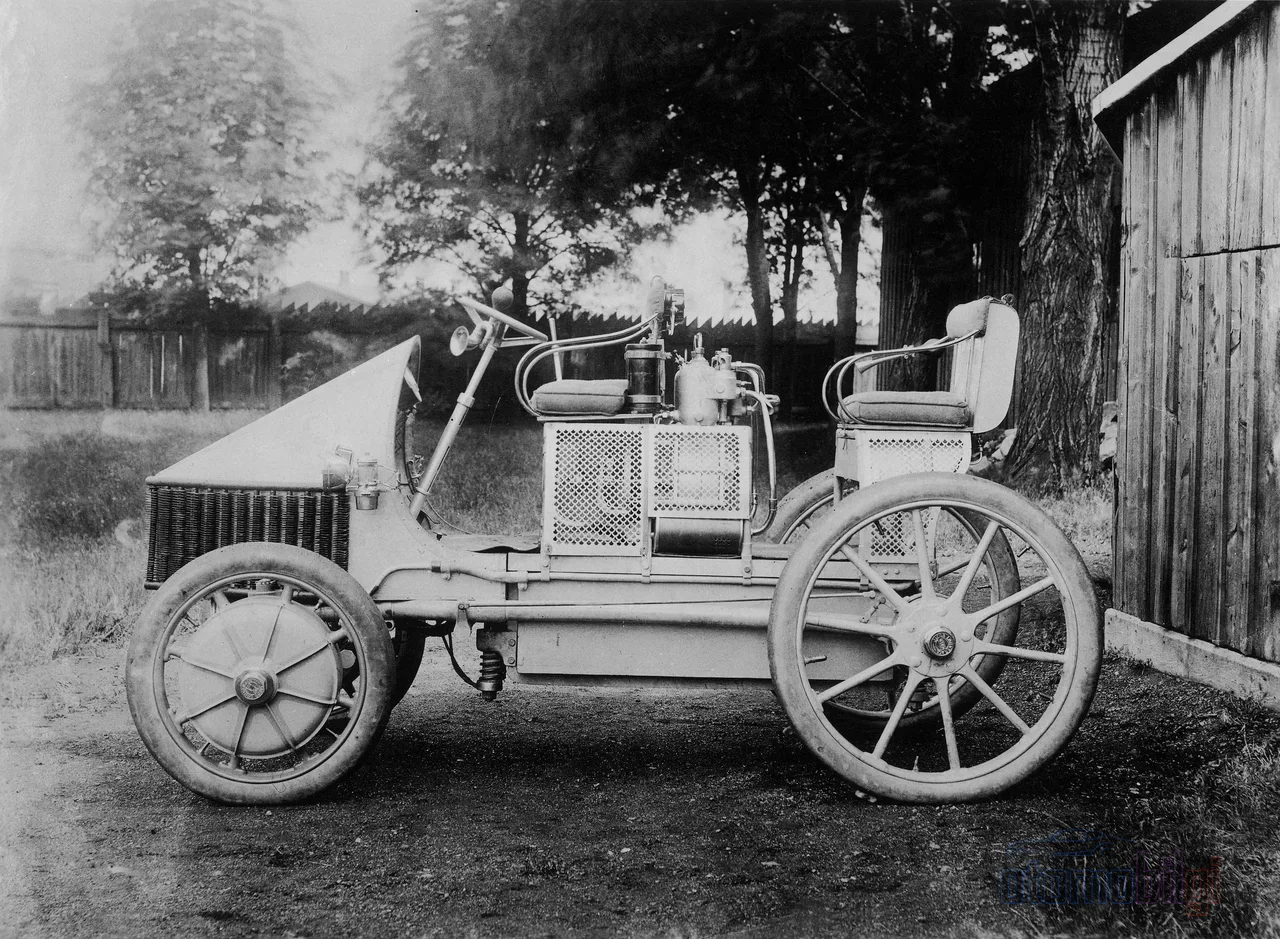
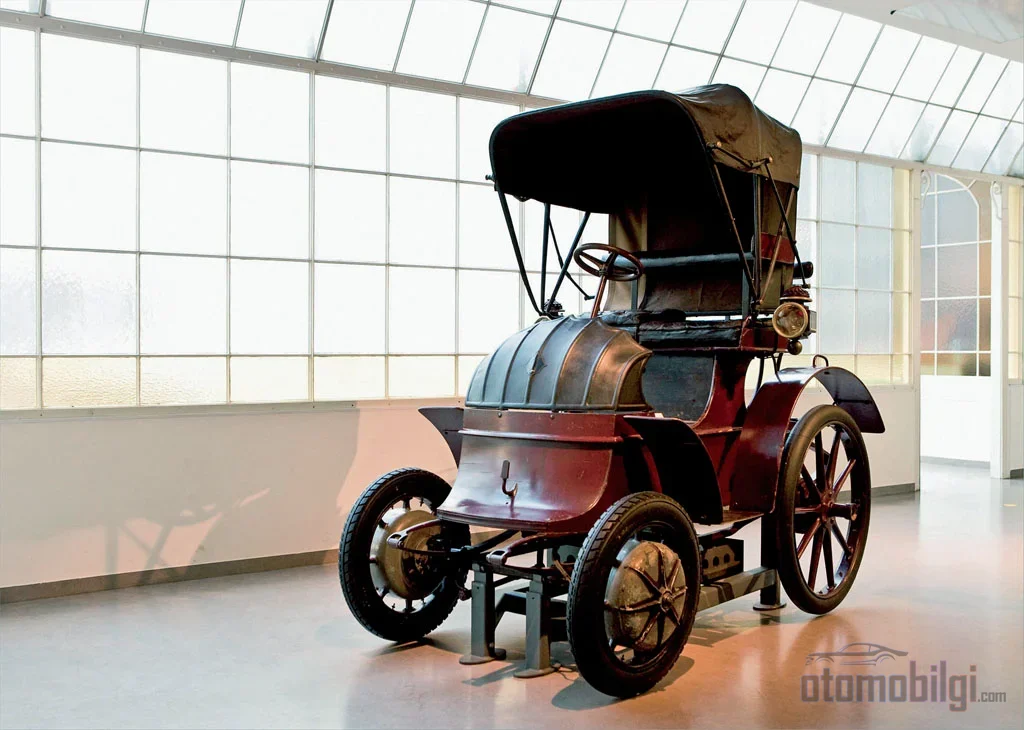
The biggest weakness of the battery-powered electric car was range, and to solve this Porsche built the structure we today call a "series hybrid." In 1900 he designed the Semper Vivus (Latin for "always alive"), the world's first functional hybrid car: instead of relying on the battery, an internal combustion engine ran a generator, and the electricity produced went directly to the motors in the wheel hubs. The gasoline engine was never mechanically connected to the wheels; its only job was to generate electricity.
The production-ready version in 1901, the Lohner-Porsche "Mixte" born under the name. With the Mixte, Porsche won the 1902 Exelberg Rally; in 1905 a battery-powered race car 2 x 30 PS reached a speed of over 130 km/h . This performance was not an empty engineering show: Porsche received the Pötting Prize in 1905 as Austria's most successful automotive engineer. The technical picture is clear - the system worked.
To demonstrate the power of the series hybrid idea, history later offered two more proofs. Boeing and NASA examined the Lohner-Porsche design for the Apollo program's Lunar Roving Vehicle; the series hybrid concept, meanwhile, forms the foundation of many modern rail locomotives today. So the principle was not wrong - only its timing was.
An Automobile Approaching Four Tons: The Price of Weight
What overshadowed the technical achievements of early hybrids was a very tangible cost that could be expressed in numbers: weight. The La Toujours Contente , built to order for the British customer E.W. Hart and powered by both gasoline and electricity, is the most extreme example of this cost. The numbers speak for themselves:
| Feature | Value |
|---|---|
| Drive type | Gasoline + electric, all-wheel drive |
| Battery | 80-volt lead-acid with 44 cells, 1.8 tons |
| Motors | Four hub motors, 1,280 pounds in total |
| Total weight | More than 4 tons |
| Power | 56 hp |
| Price | 15,000 Austrian crowns |
The 1.8-ton battery, carried by the energy density of lead-acid chemistry, ruined the hybrid's economy equation from the start. The Lohner-Porsche itself, despite its modest power, weighed almost two tons . Every extra kilogram meant more structural strength, more tires, more fuel - and all of it was reflected in the price tag.
Why Did Hybrids Vanish for 80 Years?
Hybrids built with Mixte technology were produced until the 1910s . So the idea did not die, nor was it suddenly banned. It was produced, sold, and then quietly lost the competition in the market. There are three measurable reasons for this, and none of them is about the technology.
Cheap gasoline broke the equation
The discovery of cheap crude oil in Texas pushed fuel costs down the rankings in the first decades of the 20th century. Gasoline vehicles became both cheaper and more practical for longer distances. Mixte hybrids, on the other hand, were both more expensive and less powerful than their gasoline counterparts - as a result, most of them sold poorly. For a company planning to invest, the numbers did not add up; in the words of the Smithsonian's historical assessment, some companies that went under at the beginning of the 20th century had simply bet on the "wrong horse" in fuel type. Steam, electric, and gasoline options were competing, and gasoline won this race thanks to its cheapness.
Electric infrastructure never existed
The future of electric drive, regardless of the battery, depended on grids. Yet at the beginning of the 1900s there was no such thing as charging infrastructure in homes or on the streets. This infrastructure deficit, combined with the short range of the batteries, blocked the way of electromobility for many years. An electric vehicle that could not be charged was, in practice, a garage experiment.
The economy of scale favored gasoline
Technology, adoption, and mass production advance together; costs fall there. In those years, electric vehicles made up roughly one third of the vehicles on the road - meaning their market share was by no means small. But as the momentum of the mass production economy shifted to the gasoline engine, gasoline vehicles quickly became cheaper and more mature. Electric propulsion was left out of this development cycle and by 1935 it had almost completely disappeared from the roads. Even everyday advantages such as the hassle of the hand crank and exhaust pollution could not change this economic reality.
The summary is this: the hybrid idea was technically mature but commercially stillborn. What killed it was not an engineering mistake, but a triple economic wall formed by cheap oil, missing infrastructure, and economies of scale.
Nearly 80 Years of Silence
The hybrid automobile, as stated in Toyota's own history, became part of the automotive world approximately 80 years later. In the meantime, some interesting intermediate attempts took place: in 1976 a small sports car with a gas turbine generator and electric motor showed that the hybrid idea was rehearsed once again; Audi also introduced the Duo concept. But these were isolated experiments that never became a product. The environment was not yet ready: oil was cheap, emission pressure was weak, and batteries were still crawling in the lead-acid age.
The breakthrough began in the mid-1980s. After the oil crises, hybrid work was rekindled, and this time the three variables in the equation began to change simultaneously: fuel security concerns, environmental regulations, and battery chemistry.
Why Exactly in 1997? Oil Crises, Emission Rules, and NiMH
The question should be: why did the hybrid idea come back to life not in 1900, but exactly in 1997? The answer lies in three independent developments intersecting at the same date.
The oil crises created strategic concern
Toyota's hybrid strategy took shape in the context of a response to the Second Oil Crisis. When the 80-year comfort of cheap oil broke down, fuel efficiency ceased to be a marketing bonus and became a matter of corporate survival. In December 1997 launched in Japan, the Prius, as the world's first mass-produced hybrid, both improved fuel efficiency and cleaned up exhaust emissions. The numerical result was clear: combined fuel economy of 57.6 mpg, CO2 emissions of 104 g/km. On the engineering side, the Atkinson cycle design raised thermal efficiency; the electric motor compensated for the gasoline engine's low power. From an IEEE perspective, the vehicle was also recorded as a milestone contributing to the reduction of CO2 emissions and the mitigation of oil depletion.
NiMH batteries matured
The fatal problem of 1900 was weight; by 1997 this problem had largely been solved. The first generation of the Honda Insight(1999-2006), as a three-door two-seater liftback, 144-volt nickel-metal hydride (NiMH) introduced with its battery pack and electronic Power Control Unit. In the same period as the Prius launch, the Insight also relied on the maturing of NiMH technology. Replacing the 1.8-ton legacy of lead-acid, a chemistry had arrived that could carry a car's energy needs at a reasonable weight. The same idea as the 1900s, now with an energy store it could actually carry.
Emissions regulation forced the market
Increasing emissions rules turned fuel efficiency from an option into an obligation for manufacturers. The hybrid was the only technological answer at the intersection of these three forces - and unlike 80 years earlier, this time the economic wall had been broken down.
Next Steps: The Lithium-Ion and Plug-in Hybrid Era
The foundation laid by the first hybrid wave accelerated. On the battery front in 1998 the Nissan Altra EV became the first commercial car to use a lithium-ion battery. Lithium-ion becoming suitable for vehicle use and increasing emissions legislation revived interest in electric drive systems in a lasting way. In 2010 the Chevy Volt was launched as the first commercially viable plug-in hybrid, and the battery side benefited from technologies developed by the Department of Energy. The same year, Porsche began its transition to electromobility with the Cayenne S Hybrid; while the 2015 Panamera S E-Hybrid became the world's first plug-in hybrid in its segment, offering 36 km of electric range.
The symmetry of this evolution is striking. The series hybrid principle that Ferdinand Porsche established in 1900 still works with the same logic today in plug-in variants and even in rail locomotives. The idea never grew old; it just didn't fit the economics once, and then it fit perfectly.
Technology Doesn't Win, the Equation Wins
The hybrid's 80-year silence is one of the cleanest control experiments in automotive history. The same idea, with similar engineering quality, was tried in two different eras: in 1900, a system that worked like a jewel was wiped from the market by cheap gasoline, an absent electric grid, and the pressure of economies of scale. In 1997, the same idea was transformed into a commercial success thanks to the strategic anxiety created by oil crises, tightening emissions rules, and the maturity of the NiMH battery. The only thing that changed was not the technology itself; what changed was the economic equation surrounding the idea. This lesson, rarely remembered in automotive engineering, must not be forgotten: a good solution not only solves the problem, it must also pay for solving it.
Sources
- Lohner–Porsche
- The history of Porsche begins electrically
- How the Prius Traces Its Lineage to a 1900 Car From ...
- Lohner Porsche Electric Car
- The First Porsche: An Electric Car from 1898? Meet ...
- Development of Prius and Hybrid Strategy - Toyota Global
- Milestones: Toyota Prius - ETHW
- History of the Toyota Prius - Toyota UK Magazine
- The Story Behind the Birth of the Prius, Part 2 - Toyota Global
- Honda Insight -- Introduction - Honda News
- Honda Insight
- The History of the Electric Car - energy.gov
- Making Sense of "Failed" Technology
- Fact check: Electric vehicles in early 1900s - USA Today
- EVs Were Outselling Gas Cars 100 Years Ago
- A Brief History Of Hybrid Cars
- What Is the History of Hybrid Cars?
- The Evolution of Battery Technology
- Ferdinand Porsche