The Quiet Rise of 48 Volts: How Did Mild Hybrid Seep Into Everything?
Share This Page
A mild hybrid is a hybrid system consisting of a small electric motor and battery that supports the internal combustion engine but cannot move the vehicle on its own; today it typically 48-volt runs on a lithium-ion battery, which is why it is known as the 48-volt system. Unlike a full hybrid, it does not offer electric-only driving; instead, it recovers braking energy to support the engine and reduce consumption. With the decline of diesel, it has become the most widespread technology for bringing European cars to their emissions targets.
Highlights
- The first series-production 48V mild hybrid application was seen in the 2016 model year Mercedes-Benz S-Class.
- The 48V architecture enables four times more kinetic energy recovery compared to 12V thanks to its higher voltage.
- Savings figures vary by topology: up to 15% in simple P0 solutions, and up to 25% in P4 systems with a rear axle.
- In Europe, the mild hybrid share rose from 8% in 2020 to 14% in 2021. rose.
- So far, more than 4.5 million vehicles have been equipped with 48V machines; annual production is expected to exceed 10 million.
What Exactly Is a Mild Hybrid, and How Does It Differ from a Full Hybrid?
A mild hybrid (MHEV) is simply a small electric motor and battery added to conventional powertrain components. The electric motor is usually configured as an integrated starter-generator (ISG): it replaces the conventional starter motor and is positioned between the engine and transmission or in the generator position. Its role is to support the internal combustion engine, keep systems powered without interruption during start-stop, and recover energy during braking. The electric motor never moves the vehicle on its own.
Full hybrids do not work that way. In Toyota-type systems, the two power sources can deliver torque together or separately; the battery serves as a temporary buffer for the combustion engine, and the vehicle can cover short distances entirely on electric power. The Toyota hybrid can drive in zero-emission mode for up to 62% of travel time. In a mild hybrid, fully electric driving is not possible at all or is very limited; this is precisely the fundamental technical and commercial distinction between the two.
Why Exactly 48 Volts?
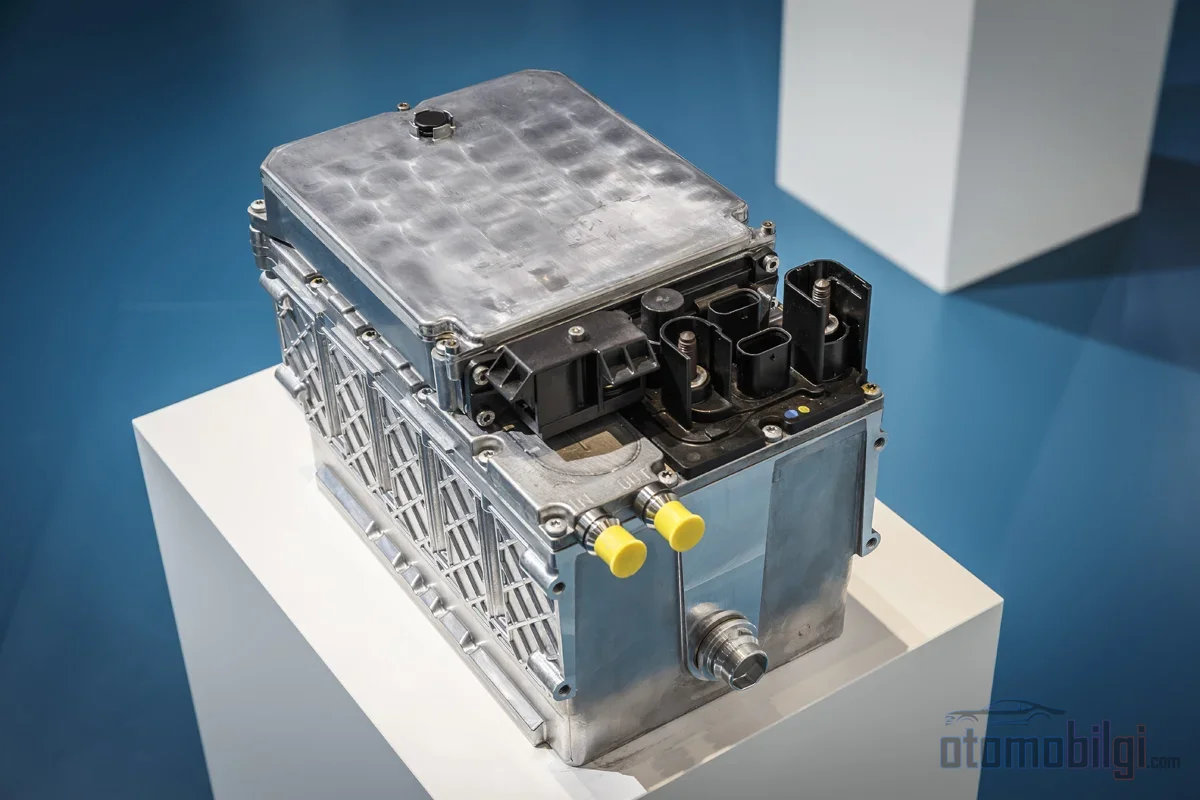
In a modern 48V mild hybrid, the vehicle has two separate electrical systems. The conventional 12-volt system continues to supply low-voltage consumers such as the radio, headlights, and power windows; a DC/DC converter connects the two systems. 48 volts offers four times the voltage compared to 12 volts, which means significantly more kinetic energy recovery. At the same time, since 48V remains below the threshold considered dangerous for humans, it does not carry the safety burdens of high-voltage systems (such as orange cables, special insulation, and the requirement for certified technicians).
Battery size is also part of the story. In a mild hybrid, capacity typically ranges from 0.5-1 kWh is around; full hybrids carry 1.3-2 kWh batteries, while plug-in hybrids carry 10-20 kWh batteries and offer 40-80 km of electric range. In other words, the mild hybrid is the lightest and cheapest member of the hybrid family - this lightness determines both the cost and the packaging flexibility within the vehicle.
Where Did the 48-Volt System Come From: A Brief Hybrid History
The mild hybrid idea is not exactly new; its roots go back as far as the hybrid car itself. Designed by Ferdinand Porsche, the Lohner-Porsche Elektromobil was unveiled at the 1900 Paris Exposition, and in 1901 the Lohner-Porsche Mixte Hybrid became the world's first gasoline-electric hybrid car. Those early systems used a series hybrid architecture: the gasoline engine did not drive the wheels, it only ran the generator.
The turning point of the modern era in was the launch in Japan of the Toyota Prius in 1997: not the first mass-produced hybrid electric vehicle, but certainly the most successful one. The wave of full hybrids that followed the Prius enabled the technology to mature and costs to fall. The mild hybrid, however, is usually the skipped final link in this story.
Early Mild Hybrid Attempts
GM, in the 2007 model year, offered a 36-volt alternator-starter hybrid system in the Chevrolet Malibu, Saturn Aura and Saturn Vue. These were not full hybrids; they could not be driven on electricity alone - an approach that perfectly matches today's definition of a mild hybrid. GM's BAS (belt alternator starter) system used a motor-generator producing 14.5 kW of power that started the engine via a belt, along with a 36V battery. According to EPA data, the Saturn Vue Greenline achieved 27% better combined fuel economy compared to the non-hybrid version.
Toyota also tried its hand in this area: between 2001-2003 it sold mild hybrid versions of the Crown in Japan, followed between 2002-2008 by mild hybrid versions of the Crown Sedan. In 2004, Volkswagen brought two mild hybrid concepts to the Challenge Bibendum event in Shanghai. So the idea had been tested repeatedly, both in the US and in Asia, before the 48-volt era began.
Mercedes-Benz's 2016 Turning Point and Its Rise to Standard in Europe
It was Mercedes-Benz that carried the 48-volt architecture to the pinnacle of the luxury segment. In the 2016 model year, the first plug-in hybrid S550e sedan was added to the S-Class; from that generation onward, a 48V mild hybrid system began to be used in S-Class models alongside the nine-speed automatic transmission. In the C-Class, the electric motor sits between the engine and the transmission, adding approximately 15 kW (20 hp) of extra power to the transmission. The system is still evolving today: the 2027 S-Class S500 offers 23 hp (17 kW) of extra power through a mild hybrid inline-6 engine and ISG, while the mild hybrid unit of the AMG versions can contribute up to 201 hp.
After Mercedes, what truly determined the spread of the system across Europe was not technical curiosity but regulatory pressure. With the decline of diesel, 48V mild hybrids began to be seen as a way to meet the European Union's tightening emission standards. In Europe, the target 117 g CO2/km until 2020, then 95 g CO2/km was set. A typical 48V motor of around 15 kW delivers CO2 savings of 13-22% - enough of a margin for a small car to get below the 95 g/km target.
The Wave of Brand Adoption
Industry reports published in September of 2017 showed that brands like VW, PSA and Volvo were switching to 48V mild hybrid in response to diesel's decline; Renault was among the early adopters with the new Scenic . Volvo committed in to electrifying all its models from 2019 onward, and in today's Volvos a small 48V battery supports the petrol engine but does not move the car. ICCT data shows the mild hybrid share in Europe at roughly 8% in 2020 and roughly 14% in 2021 - a share that nearly doubled within two years. The system also helps meet Euro7: by preheating the catalytic converter during cold starts, it reduces emission spikes.
The scale is clear today: in the EU, the 10 g CO2/km saved through mild hybridization avoids an emission fine of about €950- which effectively covers the system cost of the P0 solution. So far more than 4.5 million vehicles have been equipped with 48V machines, and annual production was expected to exceed 10 million by 2025.
System Architecture: Topologies from P0 to P4
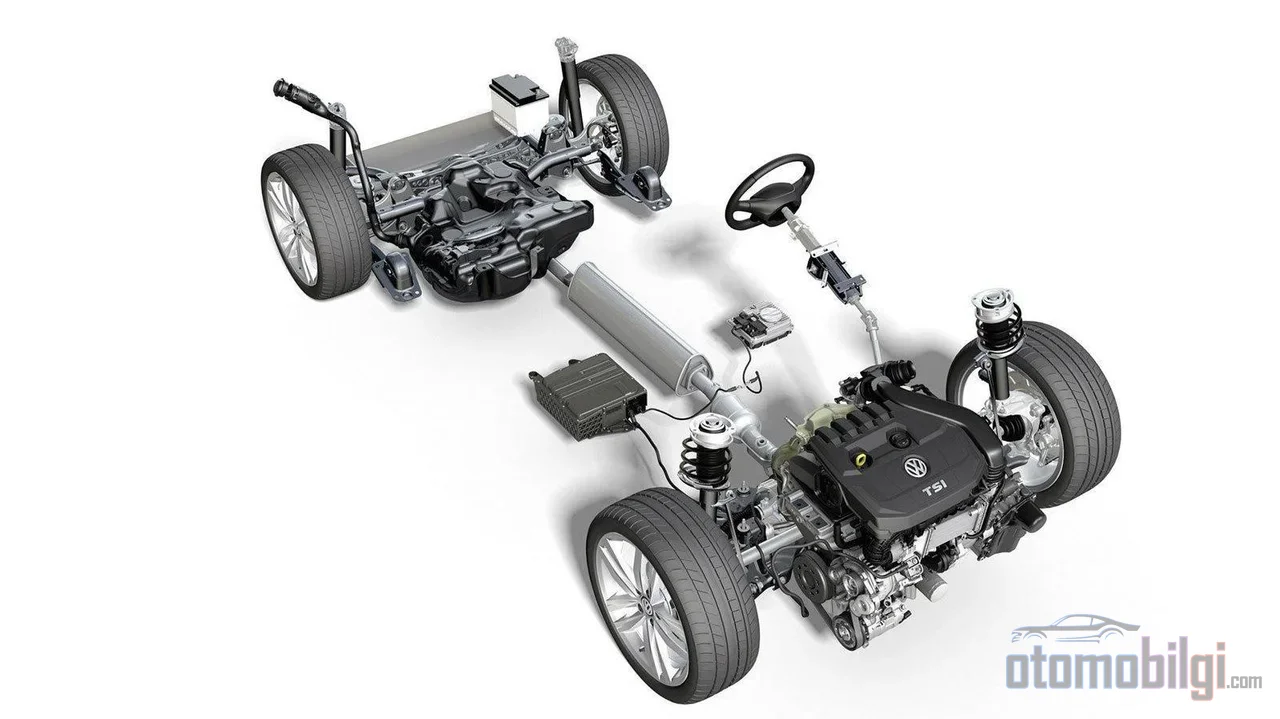
Mild hybrid systems are classified according to the position of the electric motor in the powertrain. The position determines both the cost and the ceiling of the savings that can be achieved.
| Topology | Position | Savings | Note |
|---|---|---|---|
| P0 | On the belt, in the alternator's place | Up to 15% | Lowest cost |
| P1 | Between engine and transmission | - | Rarely used, complex and costly |
| P2/P3 | On the transmission | Up to 22% | Slow electric driving technically possible |
| P4 | Rear axle | Up to 25% | Temporary 4x4 capability, highest system cost |
Comparison with Toyota-Type Full Hybrid: How Big Is the Difference?
Putting the two systems side by side explains best what mild hybrid actually is. A full hybrid is a structure that uses the battery as a temporary buffer for the engine and can drive short distances on electricity alone; a mild hybrid is merely a supporting power layer.
| Feature | Mild Hybrid (48V) | Full Hybrid (Toyota type) |
|---|---|---|
| Driving on electricity alone | No | Yes, over short distances |
| Battery capacity | ~0.5-1 kWh | 1.3-2 kWh |
| Operating logic | Assists the engine | Two power sources can work together |
| High-voltage safety requirement | Not required | Required |
| Entry cost | Lower | Higher |
On the commercial side, the mild hybrid's advantage is price: in most cases it is bought cheaper than a full hybrid. However, whether it pays for itself in fuel savings is not clear in every car; in comparisons with non-hybrid models the math does not always work out, and fuel price fluctuations directly affect the outcome.
Criticism: Real Hybrid or Greenwashing?
The rise of the mild hybrid is not without controversy. Some automotive journalists question classifying MHEVs as hybrid or electric vehicles, arguing that the emission reduction is minimal and the marketing may amount to greenwashing. The essence of the criticism is simple: using the hybrid label for a system that cannot move the car on its own may create a full-hybrid expectation in the buyer's mind. While fuel savings vary depending on the measurement method and cycle, it may remain in the range of 0.4-1.7 km/l, in other words 2-8% compared to comparable models; only advanced topologies (P2, P4) approach the upper band of the 15-25% claimed by component suppliers, and some of these figures come from the manufacturers' own measurements.
The opposing argument is also measurable. Over a lifespan of approximately 150,000 km , a 48V system saves more than 1,500 liters of fuel, approximately 4 tons of CO2 and at least €2,000 . In a broader context, it is estimated that if 48V were added to the 1 billion combustion vehicles to be produced by 2040, at least 2 billion tons of CO2 could be avoided. The right answer is probably somewhere in between: mild hybrid is not a revolution, but a reasonably priced step that does its job on the steep ladder of regulations.
The Place of Mild Hybrid in 2026
Technology has gone far beyond the entry level. The 2027 S-Class S500, with a mild hybrid inline-6, delivers 442 hp of power and 4.3 seconds from 0-60 mph performance. With the 911 Carrera GTS T-Hybrid, Porsche brought electrically assisted turbocharging to the performance world; diesel mild hybrids such as the Hyundai 1.6 diesel also exist, and the 2021 Range Rover Sport D350 is one example of that path. Market projections show that the European mild hybrid market stood at 102 billion dollars in 2026 and will continue growing toward 2031 - although figures vary among research organizations, the direction is the same: the mild hybrid continues on its way as the least told but most widespread chapter of hybrid history.
Sources
- All about 48V / Mild Hybrid technology
- Mild hybrid
- 48-Volt Mild-Hybrid System Explained
- Here's How a "Mild Hybrid" System Works
- BAS hybrid
- Mild-hybrid vehicles: A near term technology trend for CO2
- 48-volt mild hybrids heading toward ubiquity in Europe as diesel declines
- VW, PSA, Volvo, others adopt 48-volt mild hybrids
- Mercedes-Benz S-Class Model Year History
- 2016 Mercedes-Benz S-Class Reviews
- 2027 Mercedes-Benz S-Class Sedan
- First Drive: 2027 Mercedes-Benz S-Class
- Toyota Self-charging Hybrid Vs. Mild Hybrid
- Hybrid, plug-in hybrid and mild hybrid: What's the difference?
- Lohner–Porsche
- Toyota Prius Wasn't the First Hybrid
- How the Prius Traces Its Lineage to a 1900 Car
- Hybrid vs. Gas in 2026
- Not just a stopgap: 48V mild hybrid systems
- Is 48V Mild Hybrid EV the CO2 savior?