Before the Prius: The Forgotten Hybrid Prototypes of the Early 1900s
Share This Page
The hybrid idea was already alive before the Prius: in the early 1900s, Ferdinand Porsche's Lohner-Porsche Mixte and the 1916 Woods Dual Power were among the prototypes that represented the first serious engineering attempts to combine a gasoline engine with electric drive in a single body. These early hybrids worked technically; unfortunately, they did not work economically. Cheap gasoline, the pressure of Ford's mass production, and high costs shelved the hybrid idea for roughly eighty years.
Highlights
- 1901: Ferdinand Porsche creates the Lohner-Porsche Mixte; the first hybrid car known for its series hybrid architecture.
- 1916: Chicago-based Woods introduces the Dual Power model - fully electric up to 15 mph, with gasoline assist above that.
- The Woods Dual Power was priced at $2,650; roughly the cost of four Model Ts.
- Production lasted only between 1917-1918 ; today only 4 (possibly 5) examples remain.
- The Prius ended that 80-year silence in 1997.
Which was the first hybrid car?
The most widely accepted view is that the world's first hybrid electric car was the Lohner-Porsche Mixte created by Ferdinand Porsche; development dates back to 1899 and the vehicle matured in 1901. However, the debate is not entirely closed: Justus Entz, a chief engineer at a battery company in Philadelphia, built a vehicle in 1897 with an internal combustion engine supported by an electric motor. In 1905, American engineer H. Piper also filed a patent for a gasoline-electric hybrid; his proposal was for the electric motor to boost the gasoline engine during acceleration. In other words, the hybrid idea was not a solution invented by a single inventor at a single moment; it was an attempt by multiple engineers in the same decade to solve the same problem from different angles.
Lohner-Porsche Mixte: electricity in the wheel hub
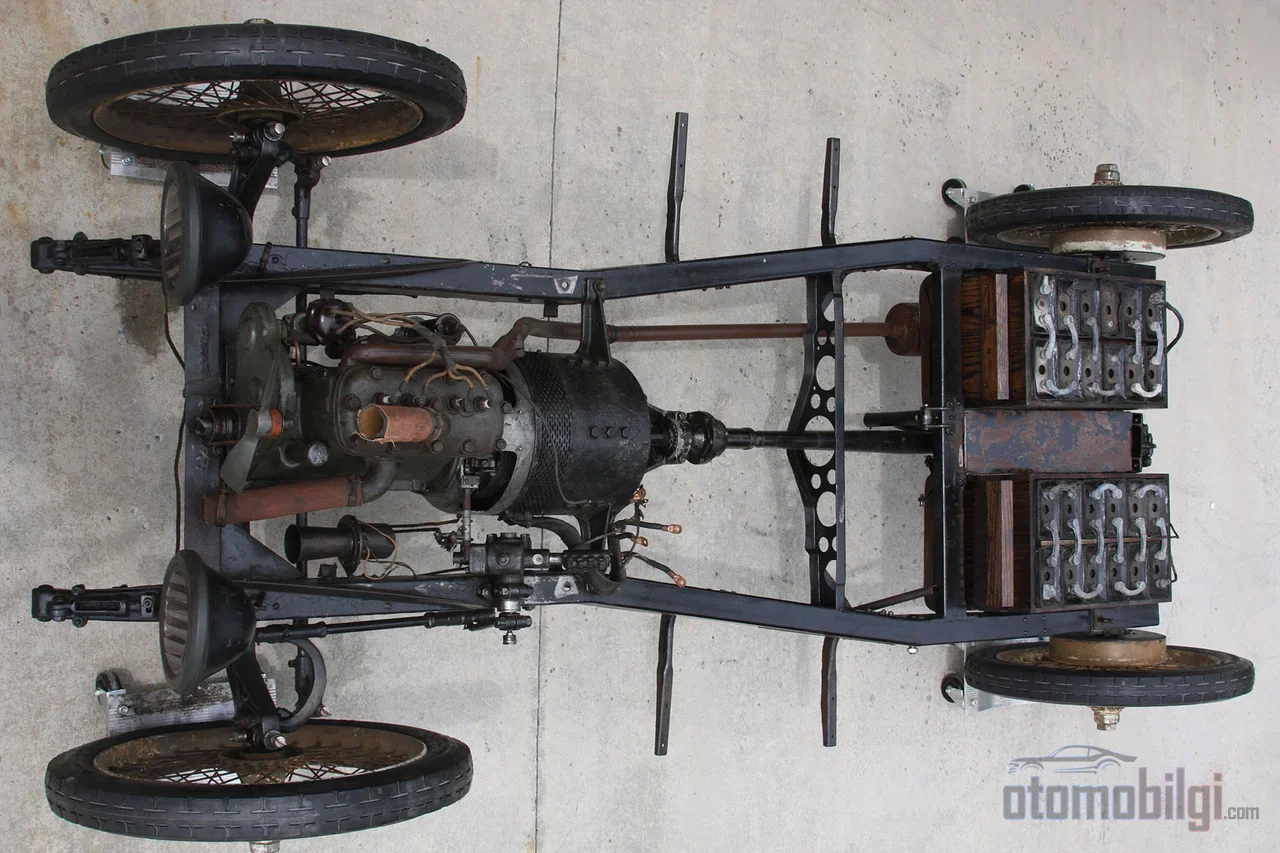
Porsche's approach was surprisingly radical by today's standards. The Mixte did not connect the internal combustion engine to the wheels mechanically at all; it was a series hybrid architecture. The gasoline engine only turned a generator, and the electricity produced fed the electric motors mounted in the wheel hubs. It is the very chain you see today in an extended-range electric vehicle or a series hybrid: engine → generator → electric motor → wheels.
It would be wrong to say the design remained merely an experiment. Before the end of 1901, Ludwig Lohner and Porsche had sold five Mixtes; production continued until 1915 with various changes, including a switch to Austrian Daimler. In 1902, Porsche won the Exelberg Rally with this hybrid vehicle, and in 1905 a battery-powered Lohner-Porsche racing car took to the track. The design's influence reached even further: NASA drew heavily on this architecture while developing the Lunar Rover.
Woods Dual Power: the hybrid idea's last major attempt in Chicago
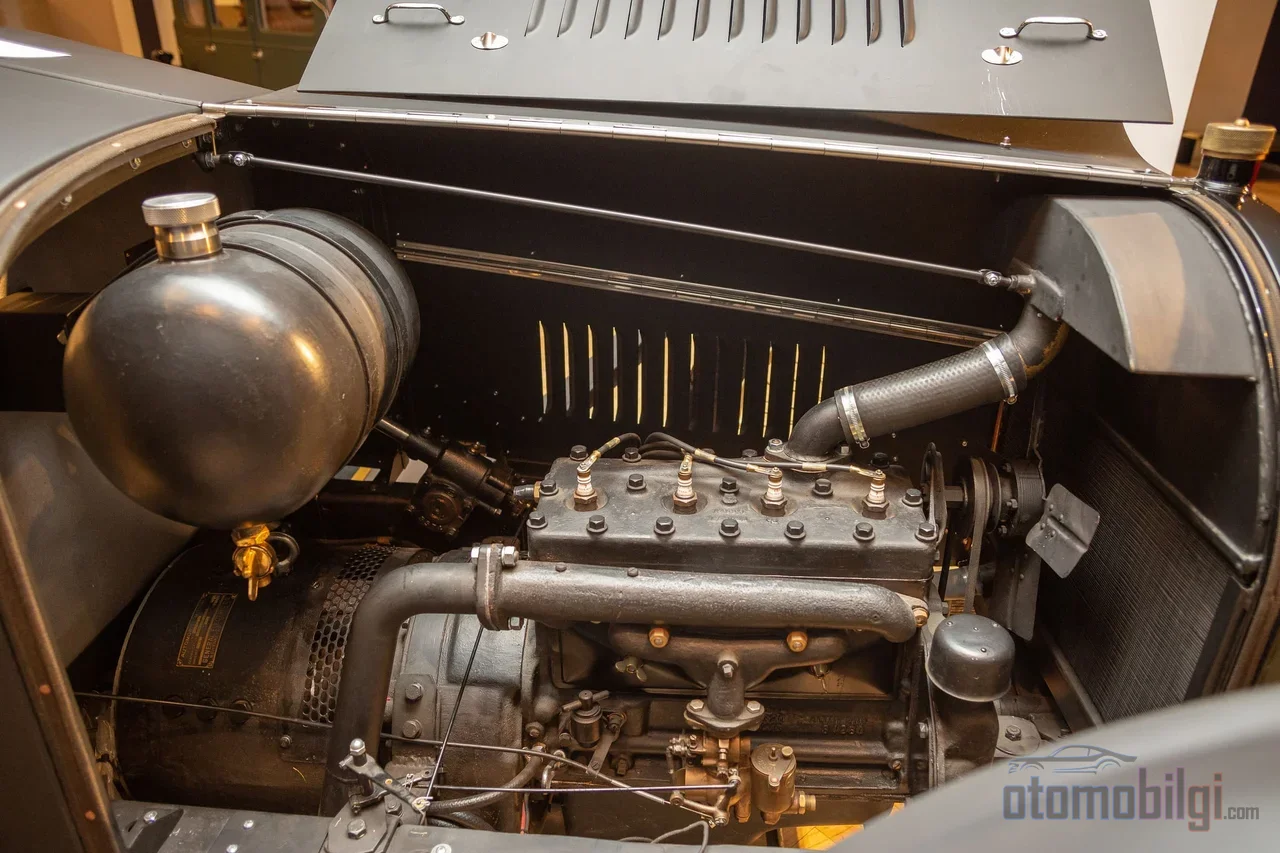
Founded in 1899 by Clifton Edgar Woods and producing electric vehicles since that same date, the Woods Motor Vehicle Company was struggling by the 1910s: electric vehicle sales were declining. The company's response was a model that combined two worlds. Introduced in 1916, the Dual Power moved on electricity alone up to 15 mph, and above that speed a Cutler-Hammer electromagnetic clutch engaged the gasoline engine. Maximum speed was 35 mph - a serious increase compared to the typical 20 mph of contemporary electrics.
Technical specifications
| Specification | Value |
|---|---|
| Gasoline engine | Continental L-head, 4 cylinders, 1125 cc (~12-14 hp) |
| Electric machine | General Electric dynamotor, 5-6 hp, 48 V, 60 A |
| Battery pack | Exide, 24 cells, 115 Ah |
| Gearbox | None - direct drive without transmission |
| Electric-only range | Up to 15 mph |
| Maximum speed | 35 mph |
| Price (1916) | $2,650 (~$66,000 equivalent) |
In this table, today's engineer's attention should be caught by two rows. First, the 115 Ah battery pack was half the size of the packs of contemporary fully electric vehicles - a deliberate design choice that kept costs low. Second, the vehicle's ability to charge its own batteries while in motion and regenerative braking, effective above 6 mph: in 1916, under the name "dynamic braking," the mechanism we consider the most fundamental feature of hybrid systems today was already working. It was known that overcharging and deep discharge led to gassing and sulphation problems, and usage recommendations were given in 10-30 mph bands - there was a battery management logic, albeit by rule of thumb.
The marketing language is also surprisingly familiar: "self-charging, non-stalling, two-power car with unlimited mileage." The advertisements were aimed primarily at women; the promise of a car without the hassle of hand-cranking was a tangible comfort issue for a specific user base at the time.
How old is the hybrid? Pioneers between 1897-1916
There were attempts outside the Entz, Porsche and Woods line as well. According to the University of Houston's "Engines of Our Ingenuity" series, in 1901 George Fischer exported gasoline-electric buses to England; in 1902 Knight Neftal entered a 100-mile endurance race with his hybrid vehicle; in 1915 a hybrid vehicle was on the market in Canada. In 1916, leading electric vehicle manufacturers like Cleveland's Baker and Chicago's Woods were offering hybrid propulsion. It has even been claimed that a 1912 model Rambler carried most of the features of a full hybrid. The automobile books of the era also reflected this normalization: the 1920 book The Gasoline Automobile listed the gasoline-electric vehicle as the automobile's fourth type - steam, electric, gasoline, and hybrid.
Why did they fail?
The honest answer to this question isn't technical, it's economic. In the mid-1910s, gasoline was cheap and exhaust emissions concerned no one. Steam vehicles had to heat water, electrics struggled with range and charging time; gasoline cars were noisy, dirty, and impractical despite hand-crank starting, yet practical. The scale difference is striking: Detroit Electric sold fewer than 5,000 vehicles in its peak year of 1914; Ford sold over 200,000 Model Ts that same year.
In Woods' specific case, the components of failure are clear: the $2,650 price, roughly four Model Ts or two Buicks; the promised smoothness and reliability not being fully delivered; a low top speed of 35 mph (the Model T did 40-45 mph) and the limited efficiency of the engine-electric pair. In 1918, with a 124-inch wheelbase and a 95 CID engine, the price rose to $2,950, but it couldn't save sales. Production was limited to 1917-1918; Woods went bankrupt and sold fewer than 14,000 vehicles in total throughout its history. A similar picture prevailed on the Lohner-Porsche side: hybrids built with Mixte technology survived into the 1910s, but sold poorly compared to gasoline cars due to high price and low power. Henry Ford's dominance of the industry kept the hybrid idea invisible for decades.
The "fourth flavor" metaphor
The best framework for understanding the story of early hybrids is to see the hybrid idea as a flavor: it was always there, staying in the shadows until cheap oil ran out. The technology wasn't lacking - regenerative braking, transmission-less series drive, and on-the-move charging were already present in production vehicles as of 1916. What was missing were the conditions that made this technology economically meaningful. As long as oil was cheap, the extra weight and extra cost of a vehicle carrying two propulsion systems could not be justified in any way. That's why the period from 1918 to 1997 should be read not as a "disappearance," but as a waiting period during which conditions had not yet matured.
The surviving examples and the line extending to today
Only 4 - or by one account 5 - examples of the Woods Dual Power survive to this day. The Dearborn example at the Henry Ford Museum is original and unrestored, showing 11,085 miles; one example was conserved at the Petersen / Natural History Museum of Los Angeles County; the copy at the Louwman Museum in the Netherlands is the only known running example. The fifth possible body is thought to have been mounted on a Stanley Steamer chassis - a remnant of an era peculiar to early automobiles, when parts circulated freely.
The modern end of the line should also be recalled: the Toyota Prius emerged in 1997 as the world's first mass-produced hybrid, and the Honda Insight became the first hybrid sold in the US in 1999. The roughly eighty years in between was a period during which the early prototypes' solutions - series drive, regenerative braking, on-the-move charging - were reinvented one by one. The engine-generator-wheel chain Porsche drew in 1901 still stands exactly as it is in the schematic record of the extended-range electric vehicles roaming the streets today.
Sources
- The History of the Electric Car - Energy.gov
- The history of Porsche begins electrically - Porsche Newsroom
- 1901 Lohner-Porsche Semper Vivus and Mixte - Hemmings
- It wasn't the first hybrid, but the 1917 Woods Dual Power… - Hagerty Media
- Hybrid Pioneer: The 1916 Woods Dual Power - Mac's Motor City Garage
- 1916 Woods Dual-Power Coupe: Hybrid Before Hybrids Were Cool - The Henry Ford
- Vehicle Conservation: Woods Dual Powered Coupe - B.R. Howard
- 1917 Woods Dual Power Type 44 Roadster - Bonhams
- The First Hybrid Automobile - Engines of Our Ingenuity, University of Houston
- Hybrid history - Center for Auto Safety
- A Brief History Of Hybrid Cars - CarsDirect
- In 1916, hybrid cars could've changed history. But Ford… - Popular Science
- A History of Hybrid Vehicles - MotorTrend
- Milestones: Toyota Prius - ETHW (IEEE)