How Did Hybrid Cars Come to Türkiye and When Did They Become Ordinary?
Share This Page
Hybrid cars entered Türkiye for the first time in the late 1990s and early 2000s, delayed compared to the fully American and Japanese markets, as upper-segment and high-priced models; the real reason for this delay was that the Special Consumption Tax (SCT) structure, which tiered taxes by engine displacement and price, made the new technology off-putting from the start. The adjustments made to SCT tax brackets in the 2010s turned the thresholds for electric motor power and engine displacement in favor of hybrids, and today we have reached a picture in which electric and hybrid vehicles make up half of Türkiye's automobile sales. In this article, I examine the three pillars of that transformation - tax policy, fuel prices, and consumer perception - with numbers.
Highlights
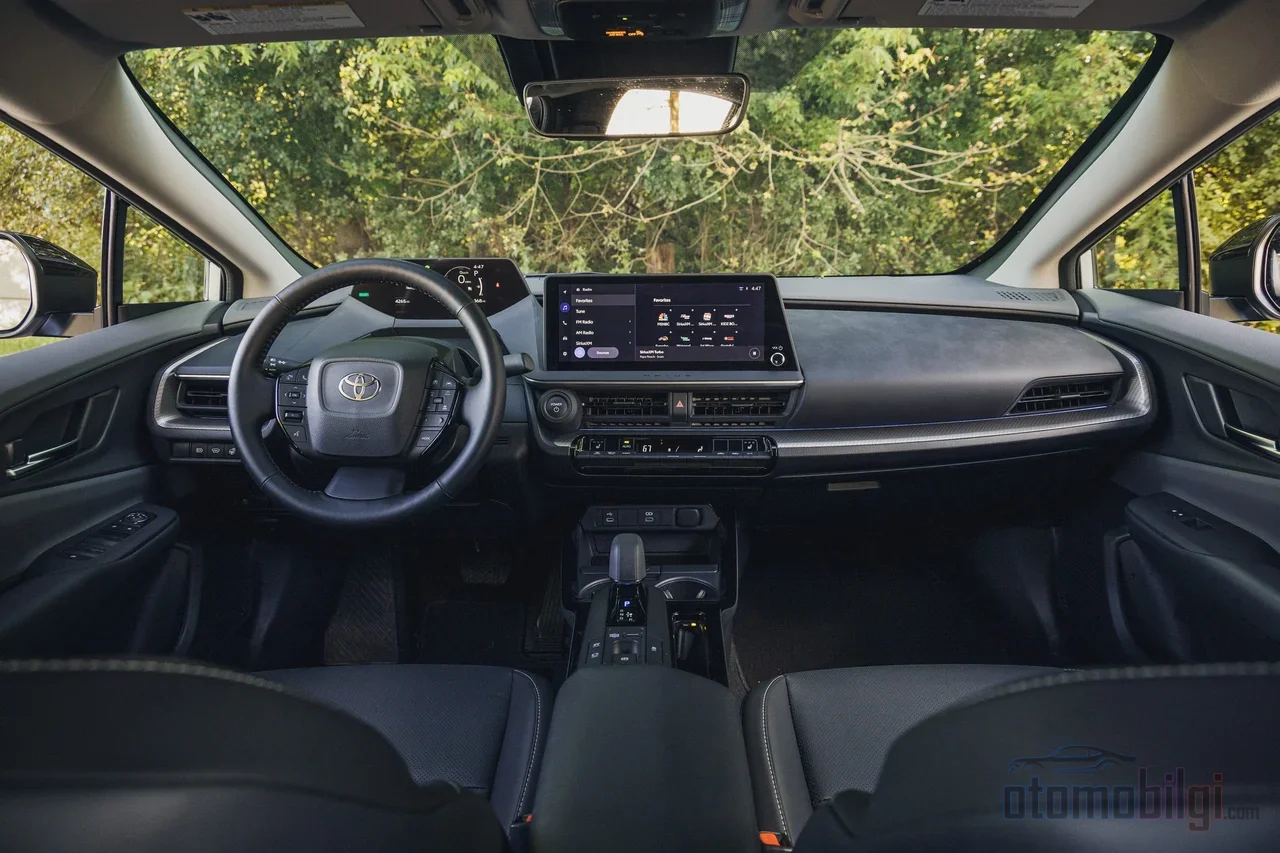
- The world's first functional hybrid 1900 dated Lohner-Porsche "Semper Vigus"; the series hybrid era was opened by the 1997 Toyota Prius .
- In Türkiye, for hybrids with under 1,800 cc and over 50 kW electric motors, an SCT advantage of up to 45% applies depending on price.
- In 2019, the market share of hybrid and electric vehicles in Türkiye was below 0.1%.
- In the first eight months of 2026, hybrids reached 204,956 sales and a 32.6% market share ; electric and hybrid together account for more than half of all sales.
- In 2025, electric vehicles made up 17% of new sales; Türkiye ranks fourth in Europe for electric sales.
Which were the first models to bring hybrid technology to Türkiye?
The roots of the hybrid car's story worldwide are surprisingly old. While Ferdinand Porsche was working on the Lohner-Porsche Electromobile introduced at the 1900 Paris Expo, he supported his motors, which sent electricity to the wheel hubs, with a combustion engine generator; this prototype, named "Semper Vigus," became the first functional hybrid in history, and in 1901 its production version came to market as the Lohner-Porsche Mixte . Roughly a century later, in 1997, the Toyota Prius opened the era of mass-produced hybrids; Honda presented North America's first mass-produced hybrid a few years later with the Insight .
The Turkish market could not catch this wave immediately. Even when the Prius entered the US market in 2000, hybrids did not even have an official tax category in Türkiye. The first hybrid models only reached our country in the second half of the 2000s and the early 2010s, mostly as imported and high-priced options. At that time, SCT could climb as high as 220% based on engine displacement; hybrid technology fell into the same tax cylinder as standard gasoline cars, which meant there was no mechanism whatsoever to offset the price difference. The result was predictable: the technology had long since matured, but buying it in Türkiye made almost no economic sense.
Why did SCT brackets suddenly make hybrids advantageous?
The turning point came with the price (tax base) based tiering of the SCT system. In Türkiye, the tax bracket is determined according to the vehicle's tax-free price; this structure provides a proportionally enormous advantage to models positioned just below the tax base threshold. The equation changed when special thresholds for hybrids came into effect: for hybrids with an electric motor power above 50 kW and engine displacement below 1,800 cc, depending on the price threshold, an SCT as low as 45% could be applied. For a gasoline car with the same cylinder capacity, this rate was many times higher.
From an engineering perspective, the system has an elegant side effect: hybrid systems are mostly built with small engines under 1,600 cc and electric motors exceeding 50 kW. In other words, complying with the technical threshold defined by tax legislation is something hybrids already do by nature. By technically defining what it means to be a hybrid, the legislation effectively placed these vehicles in the lower bracket and reversed the price difference along with fuel savings. Raising the tax base upper limits and the number of brackets for vehicles under 1,600 cc allowed this advantage to spread across wider price ranges; the thresholds were updated repeatedly in subsequent regulations. In July 2025, rates were lowered by 5-10 points on some vehicles while raised by 10 points on others - meaning the balance is constantly being re-established alongside inflation.
The subtle point here is this: the advantage stems not from the vehicle being a hybrid, but from being a hybrid automatically placing most models below the price thresholds. Tax policy effectively stamped its approval on hybrid technology and also determined which equipment levels manufacturers would bring to Türkiye - because moving the tax base up to a higher bracket can completely change the idea of sellability.
How did tax policy change the model mix?
The decisiveness of the thresholds is most clearly seen in the model mix. Small-displacement hybrid sedans and SUVs that could stay below the SCT threshold entered the ranks of Türkiye's best-selling models; large-displacement, high-tax-base models either withdrew or came with downsized engines to fit within a tax bracket. This is not a situation unique to hybrids - for example, luxury vehicles with large engines are taxed so heavily in Türkiye that manufacturers offer small-engine versions as almost the only option. However, the picture is even more specific for hybrids: manufacturers deliberately prioritize systems that pass the 50 kW electric motor threshold and gasoline engines targeting the 1,600-1,800 cc band in their lineups.
To summarize the chronology of this development:
- 1997: Toyota Prius was introduced in Japan as the world's first mass-produced hybrid.
- 1999: Honda Insight set out as North America's first mass-produced hybrid.
- 2010: Chevrolet Volt was launched as the first plug-in hybrid commercially available for sale.
- 2010s: In Türkiye, SCT tax base and displacement thresholds were redefined in favor of hybrids; market share rose rapidly.
- 2019: Hybrid and electric vehicles' market share in Türkiye was still below 0.1% - meaning the real growth happened in the last five years.
- 2018: Hybrid sales closed the first half with a 61.5% increase.
- 2025-2026: Hybrids reached a 32.6% market share; together with electrics, they exceeded half of all sales.
Why did hybrids become so ordinary so quickly?
Tax thresholds alone cannot explain this growth; there are three converging factors.
Continuation of the tax advantage
SCT brackets still give hybrids a structural price advantage. Data from the EU Alternative Fuels Observatory also confirms that hybrids and plug-in hybrids meeting certain powertrain criteria benefit from significant tax reductions depending on electric motor power and engine displacement. A hybrid falling below the taxable bracket can be sold considerably cheaper than an equivalent petrol car in terms of equipment - for the consumer, in most cases the decision makes itself in the price comparison.
Fuel prices and urban use
The scenario in which the hybrid system delivers efficiency is exactly the typical usage profile in Türkiye: stop-and-go traffic, low speeds, frequent braking. Energy recovered through regenerative braking noticeably reduces urban consumption compared to petrol equivalents, and high fuel prices per liter turn this difference into a measurable monthly amount. The trend of shifting from diesel to petrol-hybrid is also part of this picture; Türkiye's vehicle fleet consists of 17.4 million passenger cars at the beginning of 2026, and the renewal wave is largely heading toward hybrids.
Consumer perception and the bridge technology position
The hybrid's strongest marketing argument is that it does not require dependence on charging infrastructure. While range anxiety and home charging access are still decisive obstacles to switching to electric vehicles, a hybrid demands neither: you keep going to the gas station, just less often. Toyota and Honda's hybrid history of nearly thirty years has also largely eroded consumer hesitation about battery life. NiMH batteries were the industry standard until 2008, and today the transition to lithium-ion has further improved efficiency; the technology is no longer in the "new and risky" category, but in the "proven" one.
Previous technology waves: from NiMH to plug-in hybrids
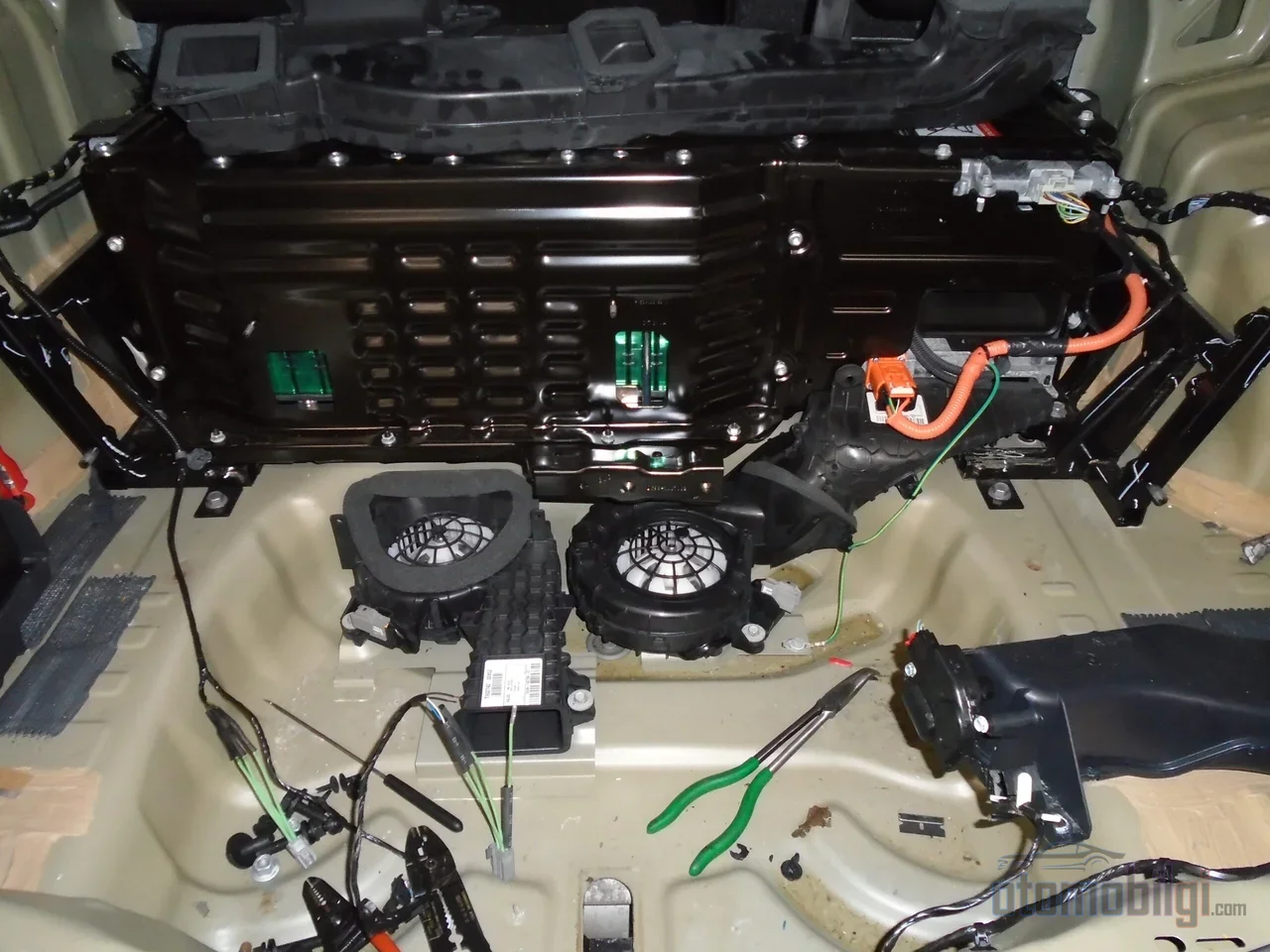
The normalization of hybrids in Türkiye is no coincidence; it is a point where the technology's maturation curve intersects with tax policy. The NiMH (nickel-metal hydride) battery chosen by the Prius in 1997, with its low cost per watt-hour, high cycle durability, and temperature tolerance, was the backbone of the hybrid industry for a full twenty years. Lithium-ion is more efficient but more expensive; Toyota today aims to commercialize its next-generation lithium-ion batteries in the second half of the 2020s.
Plug-in hybrids added a separate layer. Between 2003 and 2010, most plug-ins were conversions of mass-production hybrids; in 2010, the commercial plug-in era officially began with the Chevrolet Volt. The production version of the Porsche 918 Spyder, introduced in 2013, offered a 6.8 kWh battery and approximately 31 km of electric range - proof that electric range had become a sales argument even in the performance segment. In Türkiye, plug-in hybrids experienced their true mass expansion when PHEV models under 1,600 cc entered SCT-advantaged tax brackets.
The 2026 picture: Where is growth being constrained?
The numbers paint a clear picture: in the first eight months of 2026, electric and hybrid vehicles accounted for more than half of Türkiye's automobile sales; hybrids took a 32.6% share with 204,956 sales, though they declined by 0.8% on an annual basis. In the same period, the share of the electric side is rising - in 2025, battery-electric vehicles had made up 17% of new sales (2024: 10%) and Togg sales had increased by 30%. In other words, while the hybrid segment maintains its absolute size, the engine of growth is gradually being handed over to electric. Türkiye's rise to fourth place in Europe in electric car sales is the international reflection of this trend.
A technology that was unattainable around the 1990s is now commonplace in Türkiye in 2026. This normalization is not the work of a single decision: the alignment of engine displacement and tax-base thresholds with the natural technical profile of hybrid technology, two decades of battery maturation, and fuel prices demonstrating the value of regenerative braking anew every month. The hybrid was designed as a transitional technology in Türkiye; in practice, it appears set to remain the dominant technology for a few more years until the electric infrastructure is completed.
Sources
- Gamechanger: when was the first electric Porsche car made?
- The history of Porsche begins electrically
- Lohner–Porsche
- Milestones: Toyota Prius, the World's First Mass-Produced Hybrid Vehicle, 1997
- Development of Prius and Hybrid Strategy
- Celebrating 25 Years of the Toyota Prius
- Honda Insight
- Honda Marks 25 Years of Hybrid-Electric Sales
- The Road to Silicon Batteries
- The History of the Electric Car
- Vehicle registration tax as a policy instrument in Türkiye
- Türkiye revises special tax brackets for cars
- Türkiye revises special consumption tax for certain vehicles
- Incentives and Legislation - Türkiye
- Toyota Türkiye: a twenty year history
- Trends in electric cars - Global EV Outlook 2026
- Türkiye ranks fourth in Europe in electric car sales
- Electric, hybrid cars top half of Turkish auto sales in January-August 2026