The Heart of the Hybrid: The Centuries-Old Story of Regenerative Braking
Share This Page
Regenerative braking is an energy recovery mechanism that converts kinetic energy into electricity and stores it while slowing a moving vehicle. At the moment of braking, the electric motor acts like a generator; energy that would otherwise be lost as heat through friction is written to the battery. The history of this idea, the most distinctive component of a hybrid car, goes back much further than the 1997 Prius, to the 1900s and the railways.
Highlights
- Regenerative braking recovers about half of the energy lost during braking, which translates into a 10-25% efficiency gain.
- The 1901 Lohner-Porsche Mixte was the first hybrid example to brake by converting its gears into a generator and to produce 420 volts.
- The 1997 Toyota Prius brought regenerative braking to mass-production maturity with computer-controlled coordination.
- Since the load on the brake discs, calipers, and pads is reduced, the service life of the braking system is noticeably extended.
How Regenerative Braking Works: The Basic Principle
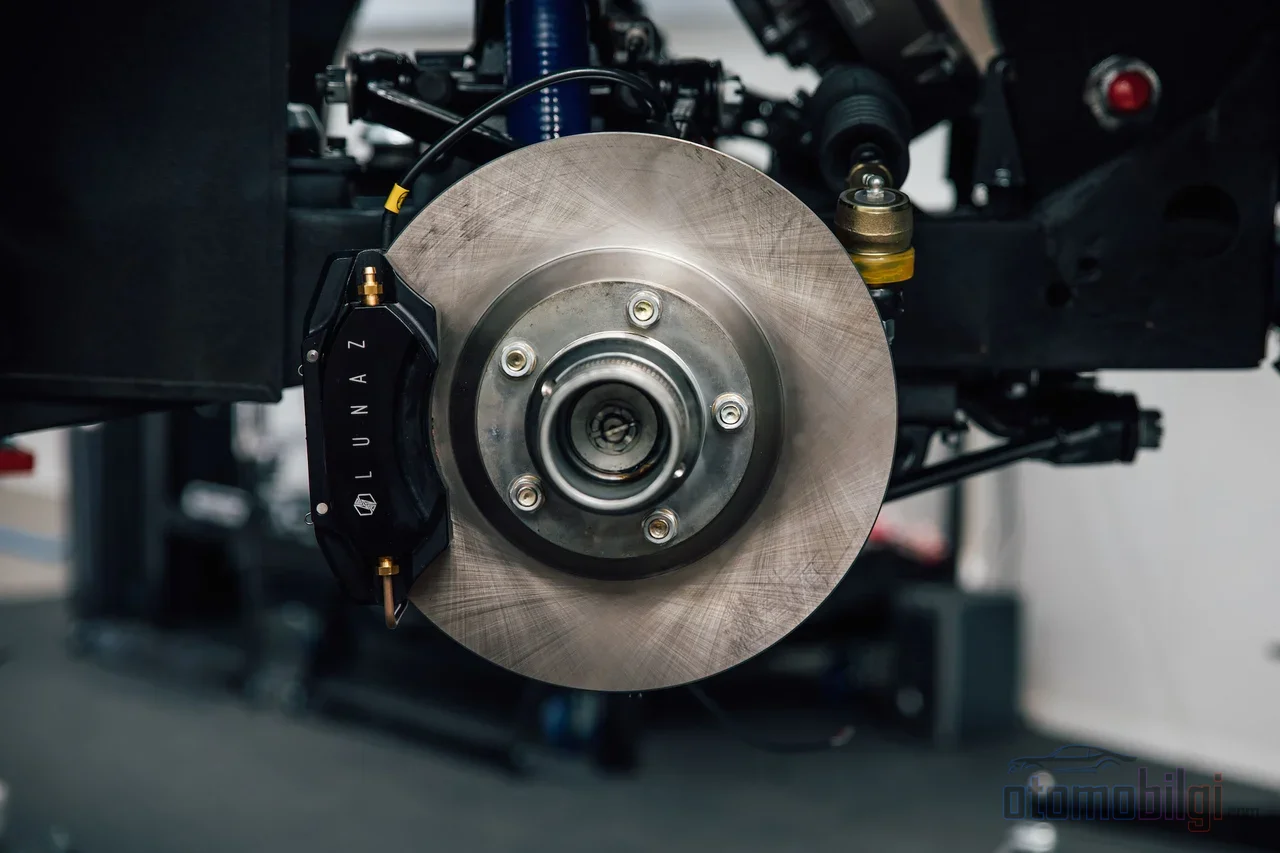
In a conventional braking maneuver, the vehicle's kinetic energy is converted into heat through friction and wasted into the atmosphere. Regenerative braking aims to rescue this energy: the drive motor is run in reverse, i.e. in generator mode. The torque coming from the wheels generates electric current in the motor, and this current is stored in one of three different ways: chemically in a battery, electrically in a capacitor, or mechanically in a flywheel. In hybrid cars, the first option is practically always chosen.
There is a subtle but important technical distinction here. If energy is recovered through the motors and then dissipated as heat in resistors, it is called rheostatic or dynamic braking; it is still common in trains, recovers no energy, and only saves brake pads. If the energy is written to storage, the process is regenerative. From an engineer's perspective, they involve the same physics but different electrical management.
The limits of the system should also be stated up front. Regenerative braking alone cannot safely stop the vehicle; as speed decreases, the generator effect diminishes, and at low speeds the friction brakes must engage. The measurable gain is clear: about half of the energy lost during braking is recovered, which in the overall energy balance means a 10-25% efficiency gain . In addition, since the load on the discs, calipers, and pads is reduced, the service life of the braking system is noticeably extended; the long pad replacement intervals enjoyed by hybrid owners are no accident.
The Birth of the Idea: From Electric Traffic to Tramways
The roots of regenerative braking were planted long before the automobile. Sprague Electric Railway & Motor Company, founded by Frank J. Sprague in 1886, introduced not only the constant-brush, spark-free motor but also regenerative braking. In the 1890s, Louis Antoine Krieger in Paris converted horse-drawn carriages into front-wheel-drive electric vehicles; the Krieger electric landaulet had a drive motor with bifilar windings on each front wheel, and this winding structure enabled regenerative braking.
Early applications also include the Orwell Electric Truck, seen in England during the First World War: the regenerative braking activated by the driver was a rare technical refinement in a load-carrying truck. On the railway side, John S. Raworth's traction patents between 1903 and 1908 brought automatic regenerative control to tram operators in England; in 1903 Devonport, and in 1906 Birmingham and the Crystal Palace-Croydon line, ran their motors as generators to brake the vehicles. After a serious accident in Rawtenstall, an embargo was placed on this form of traction in 1911; the system only returned twenty years later.
Early electric cars also tried this idea. The Baker Electric Runabout and the Owen Magnetic used regenerative braking, but the driver had to switch modes manually via a switch, and in practice it only worked on downhill sections. Using the same controller positions for both power and braking was a serious safety problem: in a 1948 train accident in Wädenswil, Switzerland, the driver accidentally applied throttle when intending to brake, and 21 people died. This tragedy shows in the most painful way why the system needed full automation.
Maturation on the Railway
In the early 1930s, the Transcaucasus Railway on the Baku-Tbilisi-Batumi line became one of the first examples to use regenerative braking on the railway; on the steep and dangerous Surami Pass, descent energy was fed back into the grid. In 1936, General Electric's experimental steam turbine locomotives genuinely recovered energy by passing steam water through their resistor grids. The rail field was where this technology proved its reliability before automotive did.
Lohner-Porsche: The Joint Birth of the Hybrid and Regenerative Braking
Ferdinand Porsche designed the first hybrid car and introduced its prototype in 1900. The Lohner-Porsche Elektromobil initially appeared at the 1900 Paris Exposition as a fully electric vehicle. The subsequent Semper Vivus had generators that charged the battery and regenerative braking; Porsche's design allowed the electric circuit from the generators to be reversed. In other words, the hybrid and regenerative braking were born at the same time and at the same table in history.
The 1901 Mixte embodied this idea. The vehicle had three interchangeable gears, and these could be converted into generators for braking purposes; during such braking, a voltage of 420 volts was generated, which was a dazzling electrical feat for the automobile of that day. The Mixte set records with a top speed of 56 km/h, and in 1902 Porsche won the Exelberg Rally with the hybrid Lohner-Porsche Mixte. At the end of 1901, Ludwig Lohner and Ferdinand Porsche achieved a respectable commercial result by selling five Mixte units.
The striking engineering fact here is this: the core idea Porsche established - converting the drive motor into a generator during braking and storing the energy - is precisely the principle used in hybrid vehicles today. The technology was ready and correct; it took roughly eighty years and a few critical thresholds to mature.
After a Gap of Nearly Two Centuries: The 1997 Prius and Practical Maturity
Although the 1916 Woods Dual Power could be described as a hybrid combining a gasoline engine with an electric motor, hybrid electric vehicles did not become widespread until 1997. The turning point came in the year Toyota Motor Corporation developed the Toyota Prius, the world's first mass-produced hybrid car. The Prius design directly incorporated regenerative braking into the powertrain layout to increase energy efficiency.
The Prius's real contribution lay in coordination. Taking into account the weakness of hydraulic braking on the energy side, a new coordination system was developed between hydraulic braking and regenerative braking. The system is under computer control: when the driver presses the brake pedal, the motor first switches to generator mode, and when regenerative braking falls short, the friction brakes engage instantly. The user does not feel this; the energy flows to the battery instead of turning into heat. In 1967, the AMC Amitron was the first example of full automation of the process, with the motor controller automatically starting battery charging when the brake pedal was pressed; the Prius carried this automation to mass-production reliability. The GM EV-1, meanwhile, was the first commercial car to manage regenerative and friction braking together, and two patents for brake-by-wire technology were obtained in 1997-1998.
The other pioneer of the same wave was the Honda Insight. Sold in the US in 1999 as the first car powered by both electricity and gasoline, the elegant two-seater Insight set efficiency records. While the Prius's regenerative brakes were more distinctly felt than Honda's, the Insight was strong in terms of ease of use and road holding; but the car that became an icon was the Prius, and regenerative braking became permanently established as the defining feature of the hybrid.
The Battery's Decisive Role: From NiMH to Lithium-ion
In the maturation of regenerative braking, battery technology was as decisive as the motor - even more so. A hundred years ago, although Porsche could generate 420 volts of braking voltage, there was no battery capable of storing the energy permanently and safely. The nickel-metal hydride (NiMH) chemistry, which has become standard in hybrid vehicles, has a higher energy density than lead-acid and lower than lithium-ion; but its advantages are more than sufficient for a battery that is subjected to constant and rapid partial charging cycles in regenerative braking.
| Feature | NiMH | Lithium-ion |
|---|---|---|
| Energy density | Medium | High |
| Cost per watt-hour | Cheaper | More expensive |
| Charge cycle endurance | Higher | Lower |
| Temperature tolerance | Better | More sensitive |
| Typical use | Classic hybrids | Plug-in and fully electric |
The summary of the table is this: NiMH is cheaper, withstands more charge cycles, tolerant of heat and considered safe, which makes it very well suited to the regenerative braking cycles of classic hybrids. Lithium-ion, on the other hand, has overtaken NiMH in gravimetric energy density, making it the dominant chemistry for plug-in and battery-electric vehicles that require long all-electric range. Which one is better depends on the use case; for a regenerative braking charge profile, NiMH is still a strong choice.
The Plug-in Era and the Current Picture
In the plug-in hybrid era, regenerative braking has moved to the center of the efficiency chain. In Toyota models such as the Prius Plug-in Hybrid and RAV4 Plug-in, the battery is charged entirely by the engine and regenerative braking while driving; there is no energy source other than plugging in. In the Ford Escape PHEV, regenerative braking is promoted as one of the key technologies that improve efficiency, with an emphasis on lower fuel consumption. In models such as the 2026 Kia Sportage HEV, Subaru Crosstrek Hybrid, Hyundai Santa Fe Hybrid and Nissan Rogue Plug-in Hybrid, regenerative braking is marketed as a standout efficiency feature, especially in stop-and-go traffic.
Regulators also followed the technology. Some models did not activate the brake lights during regenerative braking, and most regulations did not require it; China's 2025 GB 21670-2025 standard made it mandatory for the brake lights to come on when deceleration from regenerative braking exceeds 1.3 m/s². Meanwhile, the one-pedal driving debate continues: while high regeneration levels provide longer electric range, the risk of the driver mistaking the accelerator for the brake in stressful moments fuels concerns about sudden unintended acceleration. The system's energy math has been solved; the remaining issue is the human-machine interface.
Conclusion: The Current Report Card of a Century-Old Idea
The development line of regenerative braking is a rare example in automotive technology: the core idea was already correct in 1901; what was missing was battery chemistry, power electronics, and control automation. The line extending from Sprague to Krieger, from Raworth to the Prius, is explained at each threshold by a failure or the maturing of a component. Today, this mechanism, which carries the majority of hybrid sales, recovers roughly half of the energy lost in braking, extends brake life, and delivers a 10-25% efficiency gain. The most productive era of a 120-year-old idea is, for now, the era we are living in.
Sources
- Regenerative braking - Wikipedia
- Regenerative braking - Energy Education
- Regenerative Brake | Encyclopedia MDPI
- How the Prius Traces Its Lineage to a 1900 Car - The New York Times
- The history of Porsche begins electrically - Porsche Newsroom
- Gamechanger: Ferdinand Porsche's first hybrid car - Porsche
- Lohner-Porsche Mixte 1901 - fahrtraum.at
- 1901 Lohner-Porsche Semper Vivus and Mixte - Hemmings
- Prof. Ferdinand Porsche created the first functional hybrid car - porschepark.org
- Milestones: Toyota Prius - ETHW
- The Toyota Prius Transformed the Auto Industry - IEEE Spectrum
- Regeneration of Hybrid and Electric Vehicle Batteries - MDPI
- Lithium-Ion Battery - Clean Energy Institute, University of Washington
- NiMH vs. Li-ion Hybrid EV Batteries - A3 Global
- Hybrid electric vehicle - Wikipedia
- Hybrid Electric Vehicles: A History of Technological Innovation - illumin.usc.edu
- What Is Regenerative Braking and How Does It Work? - North Hollywood Toyota