How a Toyota Conquered the World: How Hybrids Spread in the 2000s?
Share This Page
The global spread of hybrid cars after 1997 is the name of a process that began when Toyota Prius started selling it only in Japan in December 1997: within three years, exports to North America and Europe, the technology duel with Honda's Insight , Europe's diesel hesitation, and gasoline prices steering demand. In short, in these twenty years the first hybrid transformed from a niche experiment into a global market reaching tens of millions of units.
Highlights
- The world's first mass-produced hybrid, Prius , went on sale in Japan in December 1997.
- The Honda Insight entered the US market in 2000, 7 months before the Prius. entered.
- Toyota's global hybrid sales exceeded 10 million in 2017 and 15 million in April 2020. exceeded.
- In Europe, self-charging hybrids outsold diesels for the first time in February 2022., it outsold diesels in sales for the first time.
- The first-generation Prius offered fuel economy of about 41 mpg with its 1.5-liter gasoline engine.
How Did Hybrid Cars Spread Around the World?
The short answer to this question lies in three stages: first a controlled launch in Japan, then gradual exports to North America and Europe from 2000 onward, and finally a wave of demand shaped by gasoline prices and marketing strategies. Toyota left nothing about this expansion to chance. The Toyota Hybrid System (THS), completed in March 1997, was built on an integrated electric motor, a generator, and a power split device dividing power between the gasoline engine and the electric portion. This architecture was the technical foundation that allowed the hybrid to move out of the laboratory and onto the production line.
The roots of this spread, however, go all the way back to the beginning of the 20th century. Ferdinand Porsche designed the Egger-Lohner C.2 Phaeton in 1898; producing 3-5 PS with an octagonal electric motor, this vehicle is considered the first electric Porsche. Hub-motor Lohner-Porsche versions he introduced in 1900 were quickly followed by hybrids: the 1901 Semper Vivus and Mixte were the first vehicles to apply the series hybrid logic in which the gasoline engine only ran the generator. So the idea used by the 1997 Prius was technically ninety-six years old. The difference in between was bringing this idea together with reliable batteries and mass-production discipline.
From a Niche Car to a Global Player: The Prius Export Decision
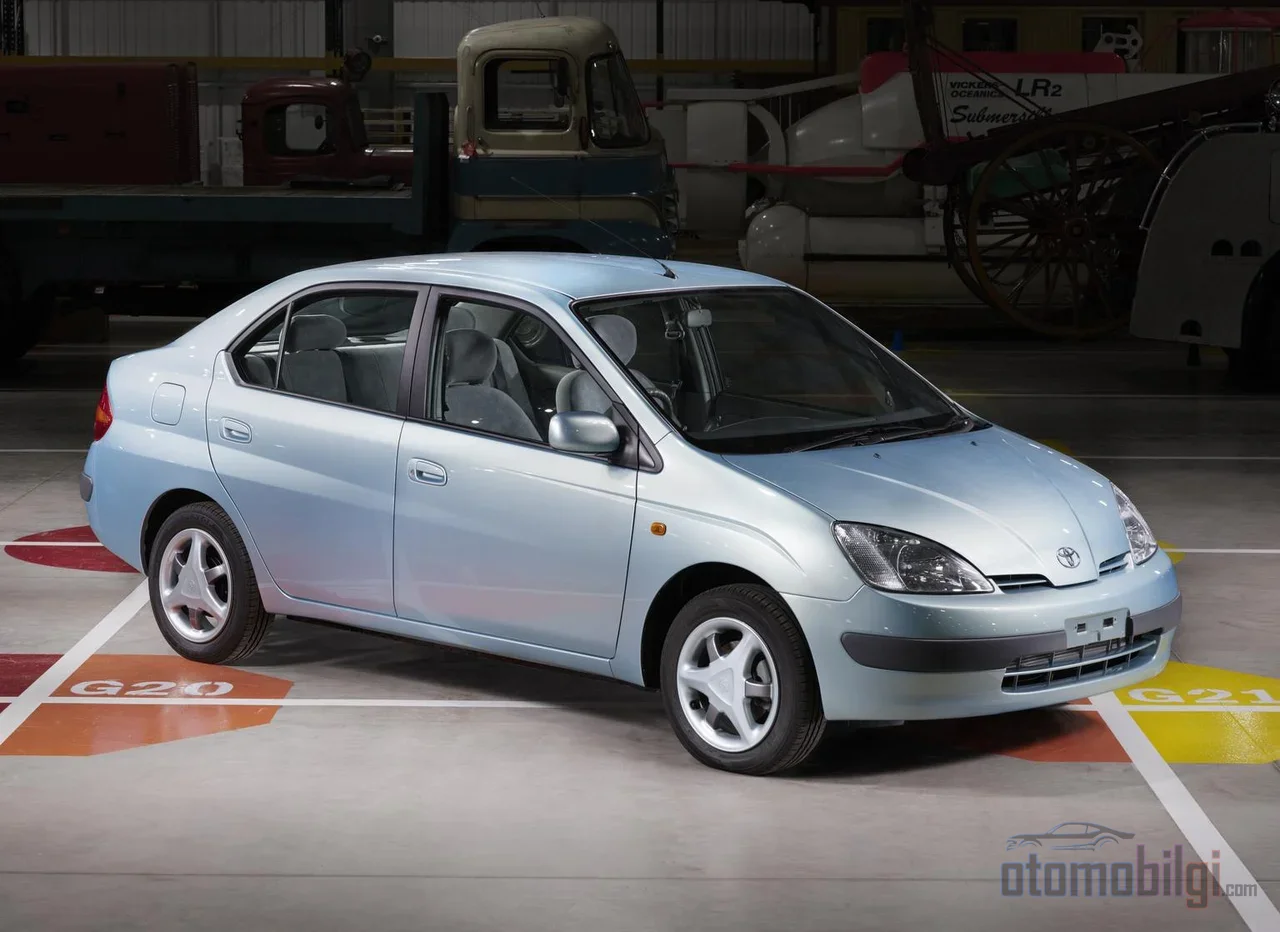
When the first-generation Prius went on sale in Japan in 1997, it was not a mainstream car; despite its compact dimensions, 1.5-liter gasoline engine, and electric motor, it was a product that attracted the interest of a narrow audience. Toyota's development team was aware of this: it was later openly told that the first generation made a splash but remained a niche, and that the expansion decision was made after long discussions. Yet by February 2017 the picture was completely different: the global cumulative sales of the Prius family had reached 6.1 million units , and this alone accounted for 61% of Toyota's 10 million hybrid sales at that date.
The plan for the phased rollout was built on a clear scenario from the start: Toyota brought the Prius to 2000 aimed to introduce with a partial redesign in Europe and North America starting from 2001-2003 model years. The company's broader global strategy also played a role in this move: In Toyota sold 1.77 million vehicles in Japan and 3.38 million abroad; North America alone accounted for more than half of overseas sales with 1.77 million vehicles. Bringing the hybrid to these markets was as much a marketing necessity as a technical decision.
Toyota had also accelerated production localization in the same period. The 1981 US voluntary export restrictions had pushed the company to move production closer to the customer, with the NUMMI joint venture (1984) and the Kentucky and Canada plants (1988) being products of this process. In Europe, however, the protectionist policies of France and Italy slowed growth, and the Yaris plant in France only began production on January 31, 2001. The hybrid's European journey was born into these more challenging market conditions.
Honda Insight: The First Hybrid to Enter the US Seven Months Before the Prius
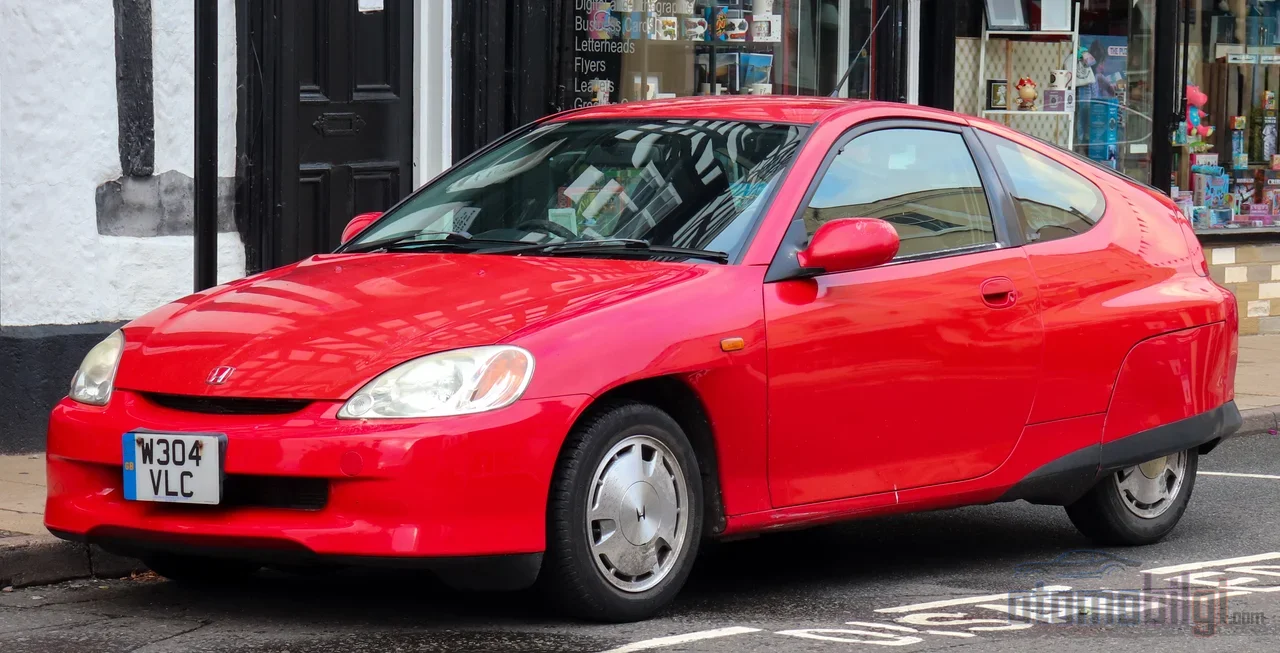
Toyota was not the first to sell a hybrid in the US market. The Honda Insight, as a 2000 model, entered US showrooms 7 months before the Prius, and its first generation could reach fuel economy values of up to 70 mpg. The two vehicles were not copies of each other: the Insight was smaller, sportier and less sophisticated in structure; the Prius had a more spacious interior and better efficiency in city driving, and its ability to operate in fully electric mode was absent from the Insight's architecture where the engine always ran. Base prices also differed: the Insight was listed at $19,800, the Prius at $22,400 .
| Feature | Honda Insight (1st generation) | Toyota Prius (1st generation) |
|---|---|---|
| US market entry | 2000, 7 months before the Prius | 2001-2003 model years |
| Character | Small, sporty, less sophisticated | Spacious interior, family-oriented |
| Fuel economy | Up to 70 mpg | Approximately 41 mpg |
| Electric mode | None, engine always runs | Full electric mode possible |
| Base price | $19,800 | $22,400 |
Comparison tests of the era clarified the difference: in one technical comparison, the Prius won three of six categories, the Insight took two, and one category ended in a tie. The comparison test, which put the Prius, Civic Hybrid and Insight on the same stage, is still republished today as a reference study of the period. In the long run, it was the Prius that expanded the market; although the Insight took on the pioneering role, its small body and performance criticisms kept it from reaching the mainstream.
Why Did Europe View Hybrids Coldly?
Europe's resistance to hybrids had a technical explanation: direct-injection diesel engines offered roughly 35% offered better fuel economy. The fuel efficiency debate had long since had its answer ready across the continent, and that answer was diesel. Because buyers found the efficiency offered by hybrids in highly efficient diesel vehicles for a long time, hybrids were generally rejected. The diesel-hybrid combination, however, came late: Peugeot and Mercedes-Benz only introduced their first diesel hybrids around 2010 and targeted roughly 60 mpg .
The balance has reversed in recent years. In February 2022, self-charging hybrids outsold diesels in Europe for the first time; in 2025, hybrids clearly gained in EU car sales, while diesel and fully electric segments declined. By December 2025, when the diesel era in Europe came to a close, the segment that came out ahead was plug-in hybrids. In short, Europe's hesitation lasted more than a decade, but ultimately the hybrid architecture won over the continent too.
How Much Do Gas Prices Affect Hybrid Sales?
The strongest invisible hand behind the spread was at the gas pump. A comprehensive study on the US economy showed that a 1-dollar increase in gasoline prices changed the market share of the most efficient quarter of new vehicles by +%20 and that of the least efficient quarter by -%24 . High gasoline prices increase demand for small and efficient vehicles, and hybrids were the most natural winner of this demand. The decline in US hybrid sales in 2015 was also the flip side of the same mechanism: low gasoline prices were cooling the buyer off the hybrid dealership.
Interestingly, this correlation does not extend to plug-in vehicles at the same rate: an analysis of 2010-2014 data found a near-zero relationship between gasoline prices and plug-in sales; buyers in the two markets are moving with different motivations. The current picture is clearly in favor of hybrids: high fuel prices are accelerating demand, hybrid sales in the US in a May rose 33% year-over-year, and in August the time hybrids spent at the dealership fell to 46 days - meaning an annual 10% contraction, showing that supply is lagging behind demand.
The Battery's Role: From NiMH to Lithium-ion
The battery's share in the scalability of the hybrid is as large as that of the engine. Nickel-metal hydride (NiMH) batteries emerged in the late 1980s as a significant advance over nickel-cadmium, and by 1999 they had become the preferred battery technology for electric and hybrid vehicle applications. Toyota used NiMH in its hybrids for nearly 30 years ; in August 2026 it was announced that the company switched from NiMH to lithium-ion in its hybrid battery cells. This is a technical threshold marking the end of an era - but it is not in vain that NiMH is expected to remain a cost-effective and safe alternative in hybrids: the market is growing from 3.6 billion dollars in 2026 to 4.9 billion dollars in 2033, at an annual 4.5% compound growth rate.
The Language of Numbers: How Big Was the Spread?
To summarize the scale of adoption in a single line: as of April 2020, more than 17 million hybrid electric vehicles had been sold worldwide since 1997, with Japan maintaining its lead as the largest hybrid market. Toyota's own ledger traces a similar curve: in February 2017, the company was selling more than 90 countries and regions, 34 different hybrid models, and global hybrid sales had exceeded 10 million; by April 2020 the same figure reached 15 million. Toyota calculates that these vehicles have achieved a reduction of more than 120 million tons of CO2 emissions since 1997. A technology that emerged from a niche Japanese experiment has, within a quarter century, become a lasting pillar of the global automotive market.
Conclusion: The Engineering Lesson of Gradual Adoption
The global spread of the hybrid is not the story of a single groundbreaking product; it is the convergence of the right architecture, a maturing battery, carefully sequenced market entries, and the demand wave created by fuel prices. The Insight's pioneering entry into the US earlier than the Prius, Europe's resistance of more than a decade stemming from its diesel preference, and the plug-in segment's different response to gasoline prices are among the measurable lessons of this story. A sedan quietly launched in Japan in 1997 has, as the sum of those lessons, grown today into a market exceeding seventeen million units.
Sources
- Item 1. Development of Prius and Hybrid Strategy
- The Story Behind the Birth of the Prius, Part 2
- Maverick at the Age of Mega-Fusion: Toyota's Global Strategies (K. Shimizu, GERPISA 2003)
- Worldwide Sales of Toyota Hybrids Surpass 10 Million Units
- Toyota passes 15 million hybrid electric vehicles global sales
- Toyota Prius
- Hybrid electric vehicle
- The history of Porsche begins electrically
- 1901 Lohner-Porsche Semper Vivus and Mixte
- U.S. Car Buyers Like Hybrids, Europeans Go For Diesels
- Critical evaluation of the European diesel car boom
- Fuel Sipping Diesel Hybrids to Debut in Europe
- Self-charging hybrids outsell diesel in Europe for first time
- The Differential Effect of Gasoline Prices on New and Used Vehicles (NBER)
- Do Gas Prices Correlate With Plug-in Vehicle Sales?
- Hybrid demand is outstripping supply
- Development of advanced nickel/metal hydride batteries (Gifford et al.)
- Toyota Is Retiring NiMH Hybrid Battery Cells for Li-ion
- One Man's View: Honda Insight vs. Toyota Prius
- Toyota Prius vs. Honda Insight Tech
- 2004 Honda Civic Hybrid vs. Toyota Prius vs. Honda Insight