From Lohner-Porsche to Prius, the Century-Long Journey of the Hybrid Car
Share This Page
The world's first hybrid car is the Lohner-Porsche, designed by Ferdinand Porsche in Vienna between 1900 and 1901: powered by the series hybrid principle, generating electricity from gasoline, this vehicle is the direct ancestor of today's hybrids. The first mass-produced hybrid, meanwhile, was the 1997 Toyota Prius; the distance between the Paris debut of the first hybrid and the launch of the first mass-produced hybrid is exactly 97 years - roughly a century.
Highlights
- 1900: Ferdinand Porsche designed the world's first functional hybrid, the Semper Vivus.
- 1901: The first production-ready hybrid, the Lohner-Porsche Mixte, went on sale; priced at 14,400-34,028 Austrian crowns.
- 1997: The Toyota Prius hit the roads in Japan as the world's first mass-produced hybrid car.
- 1999: The Honda Insight became the first mass-produced hybrid sold in the US.
- 2012: The Prius Plug-in Hybrid officially ushered in the era of the plug-in hybrid.
From an Electrician's Apprentice to the First Hybrid: Ferdinand Porsche's Lohner-Porsche
The story begins in 1893, when an 18-year-old young engineer joined the Béla Egger & Co. electrical company in Vienna. There, Ferdinand Porsche developed the first electric wheel hub motor based on Wellington Adams' concept - a radical solution for its time, placing the motor inside the wheel and eliminating any need for a transmission or drivetrain. Porsche tested this motor in racing in 1897, and a year later, at just 23 years old, he was hired by the Jacob Lohner factory.
The first products were fully electric: battery-powered vehicles with two front wheel hub motors. Each motor produced 2.5-3.5 hp, and could briefly reach up to 7 hp. In 1898, "System Lohner-Porsche" attracted great attention in the European press; that same year, the Egger-Lohner C.2 Phaeton designed by Porsche hit the roads with 3-5 PS of power and a top speed of 25 km/h. The Lohner-Porsche Electromobile, introduced at the 1900 Paris Expo, could reach speeds of 37 km/h with two 2.5 PS motors.
Semper Vivus and Mixte: The Birth of the Series Hybrid Principle
The real revolution came in 1900. Porsche designed the world's first functional hybrid: the Semper Vivus. The logic chain is still instructive today - since the biggest problem of the electric car was the battery's limited energy density, Porsche chose to stop carrying the battery and instead generate electricity within the vehicle itself. Two water-cooled 3.5 PS DeDion Bouton gasoline engines drove two generators; each generator produced 20 amps and 90 volts. In other words, the gasoline engine sent no power to the wheels at all - it only generated electricity. We call this architecture a series hybrid today, and most modern railway locomotives still operate on the same principle. The prototype, at 1,200 kg, was heavy even by the standards of its own era.
In 1901, this concept, in its production-ready form, became the Lohner-Porsche Mixte went on sale under that name. A 5.5-liter 25 hp four-cylinder engine taken from Austria's Daimler drove the generator. Five vehicles from the first series were sold; the first went to Emil Jellinek, a name car enthusiasts will recognize. The engineering side of the business was working; the economics side was not: the Mixte's price reached 14,400–34,028 crowns depending on equipment, selling at almost twice the price of similar conventional vehicles. Between 1900 and 1905, buyers could find only 11 hybrids in total; in the same period, about 65 fully electric Lohner-Porsches were sold.
Yet the project was alive: Porsche won the 1902 Exelberg Rally with the Mixte, received a patent for axle geometry the same year, won the Potting Prize in 1905, and became chief designer at Austro-Daimler in 1906. One more interesting detail: the Lohner-Porsche's wheel hub motor architecture also became an approach explored for the Apollo Lunar Rover. Between 2007 and 2011, the Porsche Museum worked for three years with Karosseriebau Drescher to produce a working replica of the Semper Vivus and displayed it at the 2011 New York Auto Show - proof that the first hybrid could run under its own power again.
| Model | Year | Power source | Notable figure |
|---|---|---|---|
| Semper Vivus | 1900 | 2 x 3.5 PS gasoline generator + battery | 1,200 kg; each generator 20 A / 90 V |
| Lohner-Porsche Mixte | 1901 | 5.5 L, 25 hp Daimler engine + generator | 14,400-34,028 crowns price |
| Electromobile | 1900 | 2 x 2.5 PS wheel motor + battery | 37 km/h top speed |
| La Toujours Contente | 1900 | Four-wheel drive, gasoline-electric | 1.8-ton battery, 56 hp, 4+ tons |
Early Prototypes and Roughly 80 Years of Silence
After Porsche, the idea did not die, but it did not spread either. In 1905, H. Piper's hybrid concept came up; in 1916, the Chicago-based Woods Motor Vehicle Company Dual Power introduced its model - combining electricity with a four-cylinder internal combustion engine, a brilliant but ultimately commercially doomed effort. The general picture can be read through Woods's effort: hybrids were produced into the 1910s, but sold poorly due to high prices and low power.
Then, for about 80 years, the hybrid remained no more than a footnote in engineering books. There are several measurable reasons for this: as roads improved in the US, range anxiety diminished; Texas oil drove gasoline prices to historically low levels; and the internal combustion engine's reliability increased. At the intersection of these three factors, electric vehicles had all but completely disappeared by 1935; hybrids, with their high costs and low speed that could not justify their short-range advantage, became part of this retreat. The right technical idea had to wait for the right economic conditions.
The 1997 Toyota Prius: How Did the Mass-Produced Hybrid Come About?
Toyota's hybrid journey actually began in 1968 with Project General Manager Kenya Nakamura - but it took thirty years to reach a pragmatic conclusion. In 1997, Toyota was ready for the launch of the Prius, the world's first mass-produced hybrid car. The launch month varies in company records between October and December; what is certain is that the vehicle hit the roads in Japan in 1997 and won the "Car of the Year" award in Japan in its launch year.
The Prius's impact can also be tracked numerically. When the first generation entered the US market in 2000, it offered 97 hp of combined power - the power of an ordinary family sedan, but the fuel consumption figure was a completely different story. As the first mass-produced vehicle combining gasoline and electric power in a single package, the 1997 Prius changed the direction of the automotive industry; the series hybrid logic that Porsche had established a century earlier was now working in millions of vehicles. Studies directly linking the Prius's lineage to that Vienna prototype from the early 1900s continue to be a subject of archive-driven historical writing even today.
Honda Insight: The First Hybrid in the US
In the first wave, there is a second pioneer alongside Toyota: Honda. Honda introduced North America's first mass-produced hybrid in 1999: Insight. The first generation (1999-2006), in the form of a three-door, two-seat liftback coupé, entered the American market in December 1999, before the Prius arrived in the US, and became the first gasoline-electric hybrid sold in the US. The vehicle's development time was about three years. The short-term results of Honda's hybrid adventure are also striking: the brand celebrated the 25th year of hybrid-electric sales, and hybrid models today account for more than 25 percent of its sales.
The Maturation of Battery Technology: From NiMH to Lithium-ion
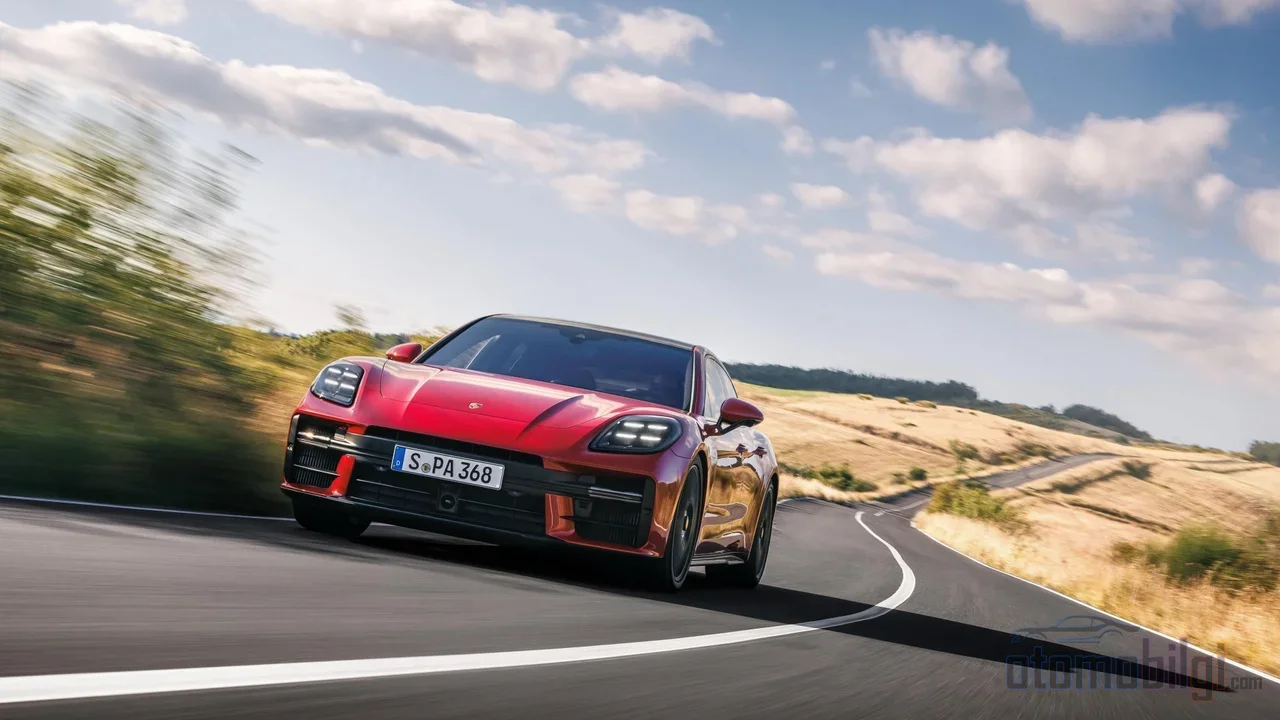
In the hybrid's century-long journey, the most critical hardware component is the battery. The first Prius used nickel-metal-hydride (NiMH) batteries, the first batteries to power a mass-produced hybrid on the roads. NiMH's engineering profile suited its task: its energy density was significantly higher than lead-acid, though lower than lithium-ion. It was sufficient for a classic hybrid, because the battery served as a small buffer in a constant charge-discharge cycle - the vehicle was not plugged in to charge.
When plug-in hybrids and fully electric vehicles arrived, the equation changed: longer electric range meant higher energy density. Over the past decade, NiMH has largely been replaced by more powerful, compact, and durable lithium-ion batteries; today most plug-in hybrids and fully electric vehicles use lithium-ion. Toyota is also known to have switched from NiMH to lithium-ion in its popular hybrids. The summary table is simple: NiMH in classic hybrids, lithium-ion in everything that plugs in.
The Plug-in Hybrid Era: The Rise of Chargeable Hybrids
The hybrid's new stage was to also charge the battery from a home outlet. Prius Plug-in Hybrid The first generation was produced between 2012 and 2016; the first generation was generally found to be inadequate - while the electric range was about 15 miles, the Chevrolet Volt was offering 35 miles in the same period. The second generation arrived in 2016, and the third generation was introduced as the 2023 model Prius Prime .
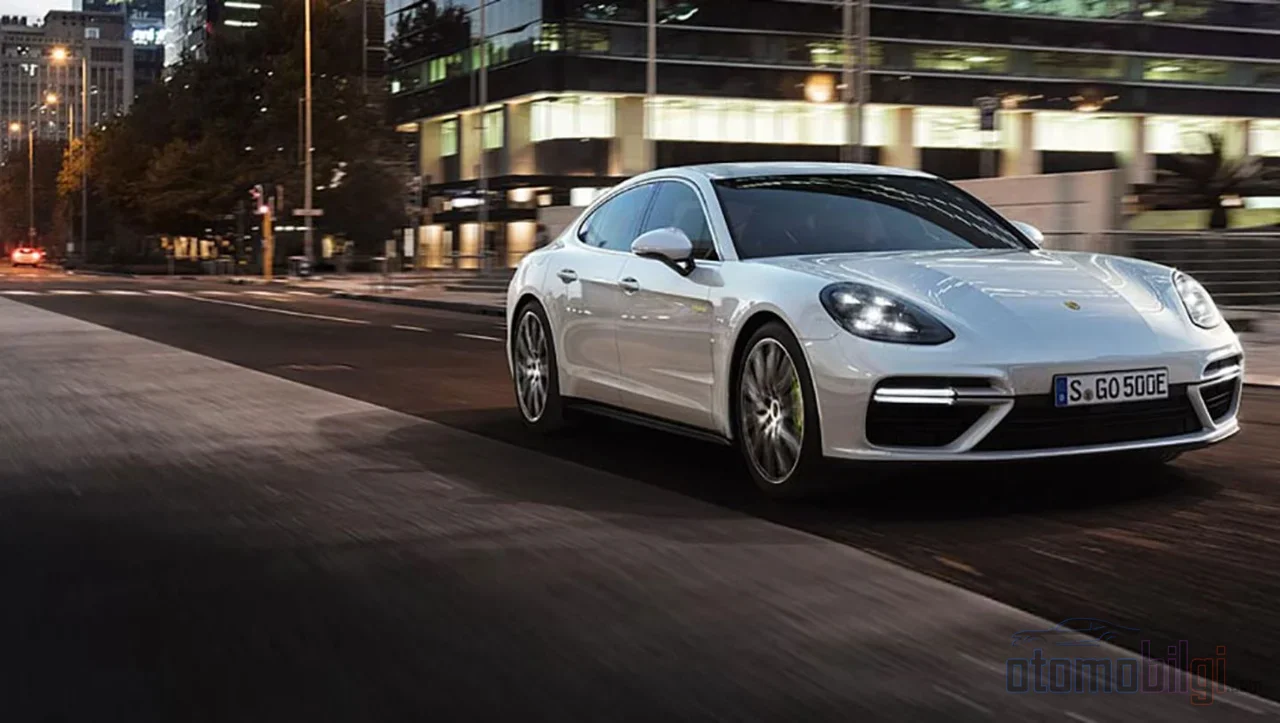
The German side shows the same directional progress: Porsche switched to hybrid in 2010 with the Cayenne S Hybrid; the 2011 Panamera S Hybrid offered 380 PS with NEDC consumption of 6.8 l/100 km. The 2015 Panamera S E-Hybrid was introduced as the first plug-in hybrid in its segment; the 2013 918 Spyder , on the other hand, drew the line for plug-in hybrid performance with a 6.8 kWh lithium-ion battery and 31 km of electric range, and set a record with a Nordschleife lap of 6:57. An idea that began in 1900 with two generators now hosts a powertrain that breaks lap records.
A Century's Lesson: Why Did Good Engineering Have to Wait 80 Years?
The instructive side of the line extending from the Lohner-Porsche to the Prius is not technical, but economic. Porsche's 1900 solution was consistent from an engineering standpoint - so consistent that the series hybrid principle is everywhere today, from locomotives to super sports cars. What was missing was the market's readiness: battery costs, gasoline prices, roads, and cities' emission expectations did not align until 1997. The Prius was born at the very moment these four parameters came into the right position at the same time; the Honda Insight followed right behind it with a different technical approach.
Looking back today, the picture is clear: the hybrid is not a single invention, but roughly a century of accumulation. The 1900 Semper Vivus concept, the boldness of the 1916 Woods Dual Power, the Prius's 1997 mass-production decision, and the plug-in architectures that became widespread from 2012 onward are all links in the same chain of logic. The next link in the chain is already taking shape with the lithium-ion transition in battery chemistry.
Sources
- Lohner–Porsche
- The history of Porsche begins electrically
- Prof. Ferdinand Porsche created the first functional hybrid car
- The History of the Electric Car
- Woods Motor Vehicle
- It wasn't the first hybrid, but the 1917 Woods Dual Power…
- Milestones: Toyota Prius, the World's First Mass-Produced Hybrid Vehicle, 1997
- Development of Prius and Hybrid Strategy
- Driving Innovation: Celebrating 25 Years of the Toyota Prius
- The evolution of the Prius
- The Toyota Prius Transformed the Auto Industry
- Honda Insight
- Honda Marks 25 Years Of Hybrid-Electric Sales
- Batteries for Electric Vehicles
- Toyota Prius Plug-in Hybrid