Was the World's First Mass-Produced Hybrid a Porsche?
Share This Page
Yes: the world's first mass-produced hybrid car was the Lohner-Porsche Mixte designed by Ferdinand Porsche. Semper Vivus, a working prototype in 1900, became production-ready within a year and was sold to customers from 1901 onward. So the history of the hybrid car begins in the early years of the 20th century not as a prototype experiment, but as a product that was genuinely sold.
Highlights
- At the age of 24, Ferdinand Porsche developed the wheel-hub-motor Lohner-Porsche in just 10 weeks; it was presented in Paris on 14 April 1900.
- The Semper Vivus is regarded as the world's first functional hybrid car; it weighed approximately 1.7 tons.
- The Mixte, which entered production in 1901, is the first hybrid car ever sold; sales of the first version remained at around 12 units.
- Across the system, more than 300 Lohner-Porsche vehicles were produced and sold by 1906.
- High cost and lower performance compared to petrol cars shelved the hybrid idea for decades.
Electric Beginning: How Was the Wheel Hub Motor Born?
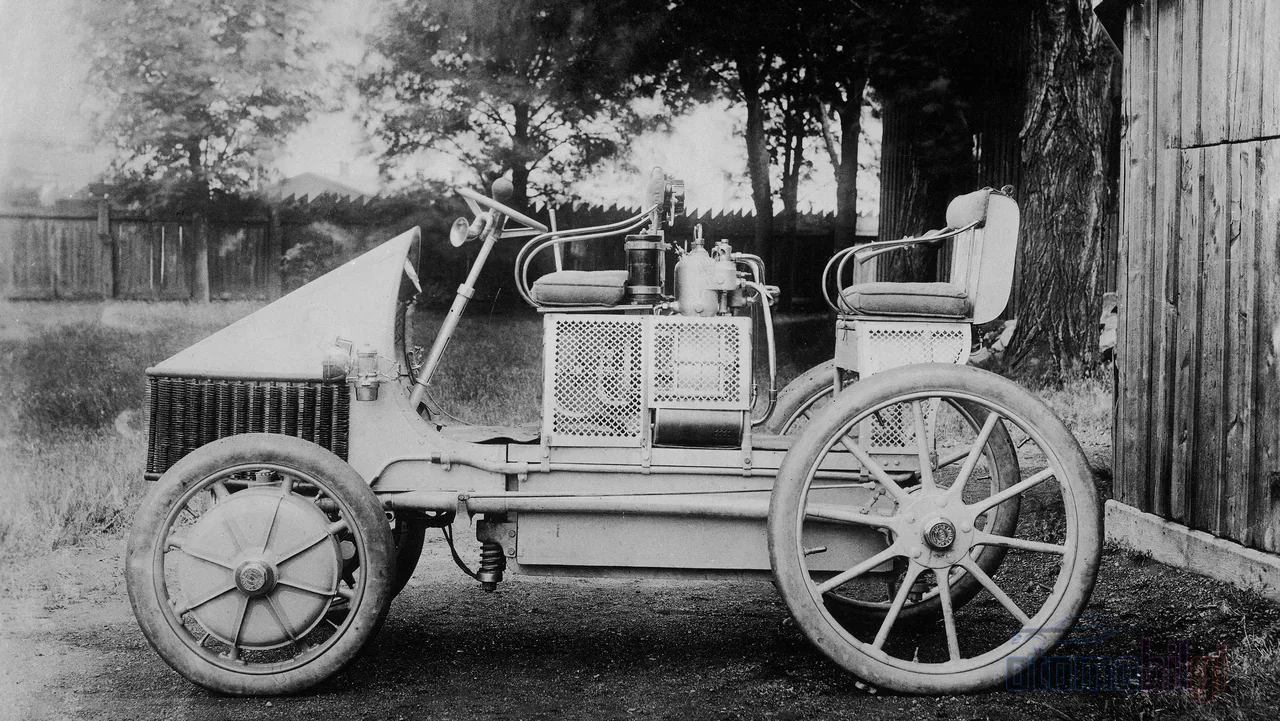
In 1899, Ferdinand Porsche joined the k.u.k. Hof-Wagen-Fabrik Jacob Lohner company in Vienna, where he developed the electrocar named "System Lohner-Porsche". The basic idea was surprisingly radical: eliminate the intermediate transmission entirely - the gearbox, the shafts, the chain - and place the electric motors directly in the front wheel hubs. The 24-year-old engineer completed this car in only ten weeks.
The vehicle made its premiere in the Electricity Hall of the Paris Exposition on 14 April 1900. It carried two electric motors with 2.5 PS each; its top speed was 32 km/h, and its range with lead batteries was approximately 50 km. Even brakes applied to all four wheels were a milestone for that era.
Porsche and Ludwig Lohner did not stop there. They designed a modular electric drive system covering three motor sizes for passenger cars, buses and heavy trucks, with performance of up to 12 PS per wheel. That same year, Porsche completed the electric racing car La Toujours Contente, which had a 14 PS motor in each of its four wheels - the world's first four-wheel-drive vehicle.
Semper Vivus: How Did the Battery Problem Give Rise to a Solution?
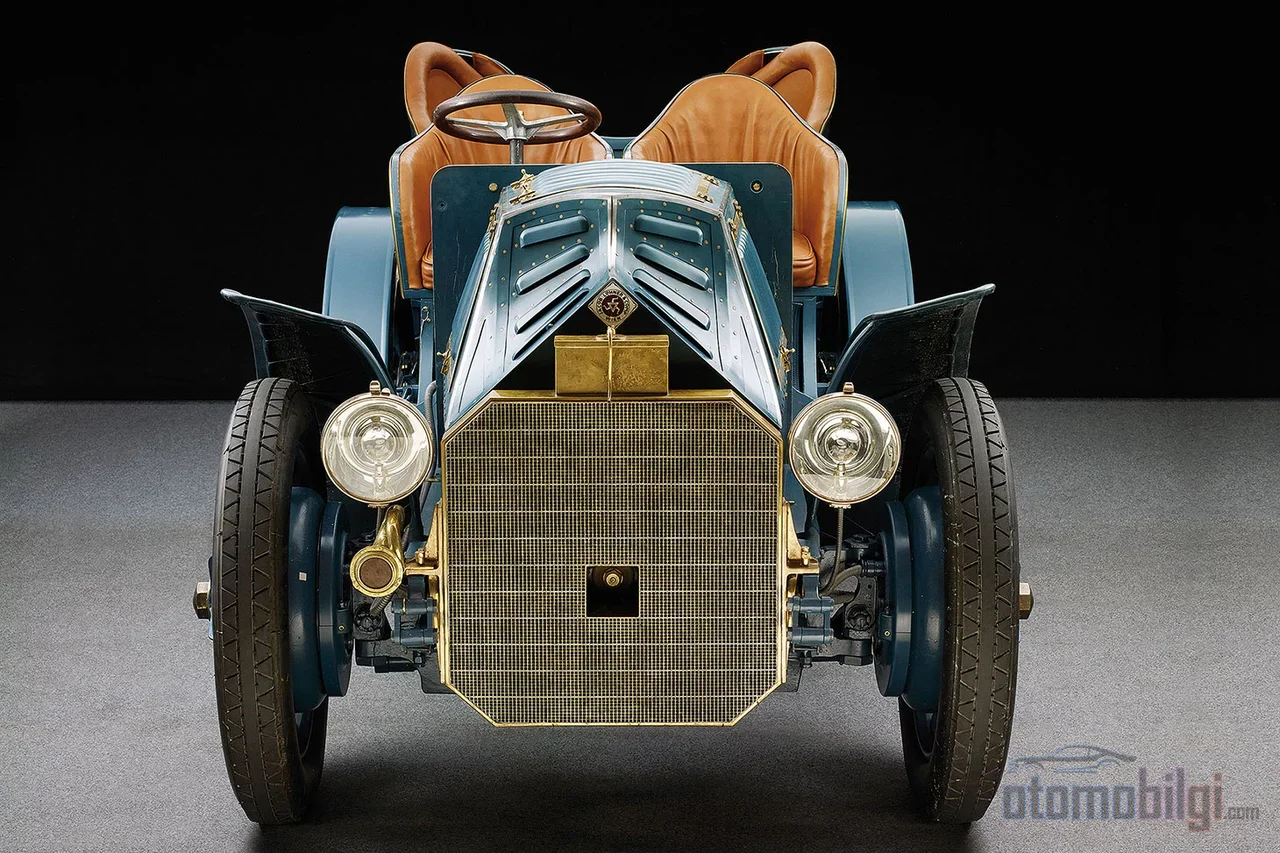
However elegant the electric vehicle was, the battery of that era was just as problematic. The cells frequently failed, and the charging infrastructure was almost non-existent. Porsche's answer was direct and logical from an engineering standpoint: remove the battery as the sole energy source, and replace it with a generator powered by a petrol engine. The result became the world's first functional hybrid car, crowned with the name Semper Vivus, meaning "always alive".
Architecturally, it was a series hybrid: the petrol engine never directly drove the wheels; it only ran the generator, and the generator supplied electricity to the wheel hub motors. The vehicle could continue on silent battery power until the cells were depleted, after which the gasoline engine would kick in. The core of today's series hybrid concept was already up and running by 1900.
The price of this was weight: The Semper Vivus weighed approximately 1.7 tons. The stacking of battery, motor, and generator meant the low range problem was replaced by a weight and cost problem.
The Mixte Series: How Did the First Hybrid Go on Sale?
In 1901, an optimized series version of the Semper Vivus called the Mixte entered production. The four-cylinder engine at the front was combined with a generator to function as a mobile electricity supplier. The Mixte went down in history as the first production-ready hybrid car, and in 1902 Porsche won the Exelberg Rally with a Mixte hybrid vehicle - proof that the technology worked in the field too.
The technical specifications varied by version, because the Mixte was not a single model but a family built on a modular system. Some racing versions could drive four electric motors, one per wheel, with the gasoline engine; engine output ranged from 10-80 hp. Some recorded configurations include:
| Item | Value |
|---|---|
| Electric motor (some early versions) | 90 volts, 20 amps, 2.5 hp |
| Mixte Voiturette motor output | 2.5-3.5 hp; 7 hp short-term |
| Voiturette battery | 44 cells, 80-volt lead |
| Battery of the 1900 vehicle | 80 volts, 300 Ah, 410 kg |
| Gasoline engine of some racing vehicles | 25 hp (18 kW), 5.5-liter Daimler |
| Semper Vivus weight | Approximately 1.7 tons |
Who bought these vehicles? The customer profile was strikingly selective. Emil Jellinek, an Austro-Hungarian businessman and diplomat, financed seven of the first long-range Mixte vehicles. The Austrian emperor along with the royal families of Norway, Romania, and Sweden ordered Lohner vehicles. The Vienna fire station received 40 vehicles based on the system; among the rest were taxis and private buyers. Across the system, more than 300 Lohner-Porsche vehicles were produced by 1906.
Why Did the Hybrids Fail Commercially?
The series' commercial record tells a very different story. One account of first Mixte version sales shows only 12 sales; it should be emphasized that this figure is limited to the first version and should not be confused with the system-wide total exceeding 300. The gap between the two figures summarizes how narrow a market segment the hybrid configuration appealed to.
The reasons were measurably clear:
- Price: The hybrid vehicle sold for nearly twice the price of comparable gasoline vehicles.
- Power: It produced less power than its gasoline counterparts, and therefore suffered a performance deficit.
- Weight: Lead batteries meant a serious mass load; the 1900 vehicle's battery alone weighed 410 kg.
- Infrastructure: Charging stations for battery-powered electrics of that era were found only in major cities.
This situation affected not only the Lohner-Porsche but all early electric vehicles. Due to high cost, low top speed, and short range, they could not compete with internal combustion engine vehicles; by 1915, electric vehicles had fallen to 5% of the market share. The failure of Thomas Edison's attempt to develop an alternative to heavy, bulky lead-acid batteries also delayed the development of early electric vehicles. Hybrids remained in production until the 1910s, but sales figures never recovered.
The technical side also played a part: The wheel hub motor was quickly abandoned as a practical passenger car drivetrain; concepts better suited to mass production were available. The double energy conversion required by the series hybrid - from mechanical energy to electricity, and from there back to mechanics - could not be carried by the technology of the day in terms of the efficiency and cost balance.
A Lost Success: What Did the Early Hybrid Era Prove?
The story of the Mixte shows what it means to implement an engineering-correct solution before market conditions have matured. The series hybrid architecture worked; it won rallies, carried royal families, and served in the fire brigade fleet. But against double the price and a lacking energy infrastructure, it could not find enough buyers. For this reason, the early hybrid era is often described as a lost success: the technology existed, but there was no commercial return.
The idea, however, did not die entirely. In 2011, Porsche had a replica built of the original 1900 Semper Vivus; even 111 years later, the functionality of the design was beyond dispute. The wheel hub motor idea did not stay in the archive either: in the early 1970s, the lunar rovers of the Apollo 15, 16, and 17 missions used electric wheel hub motors - a legacy attributed to Porsche's pioneering work in 1900.
Porsche himself remained in the shadow of this early hybrid era for many years; the engineer who gave the company its name succeeded in turning the hybrid idea into a sellable product, but the economy of that era could not carry this product. The mass commercial success of the series hybrid concept came much later, when battery technology and production economics matured - but production records confirm that the first step was taken in 1901 in Vienna.
Sources
- Icon: Ahead of His Time
- Ahead of his time: Electric wheel-hub motor from 1900
- Porsche hybrid history: from the Semper Vivus to the 911
- Lohner-Porsche Mixte 1901
- The first Porsche was electric - the 1900 Lohner Porsche
- 1901 Lohner-Porsche Semper Vivus and Mixte
- Lohner-Porsche
- How the Prius Traces Its Lineage to a 1900 Car
- 1900 Lohner-Porsche Mixte Voiturette
- History of Electric and Hybrid Vehicles
- History of the electric vehicle
- Porsche Recreates The Original Hybrid Car, 111 Years Later
- The lost history of the electric car