Volvo ECC: The Hybrid Prototype Powered by a Gas Turbine
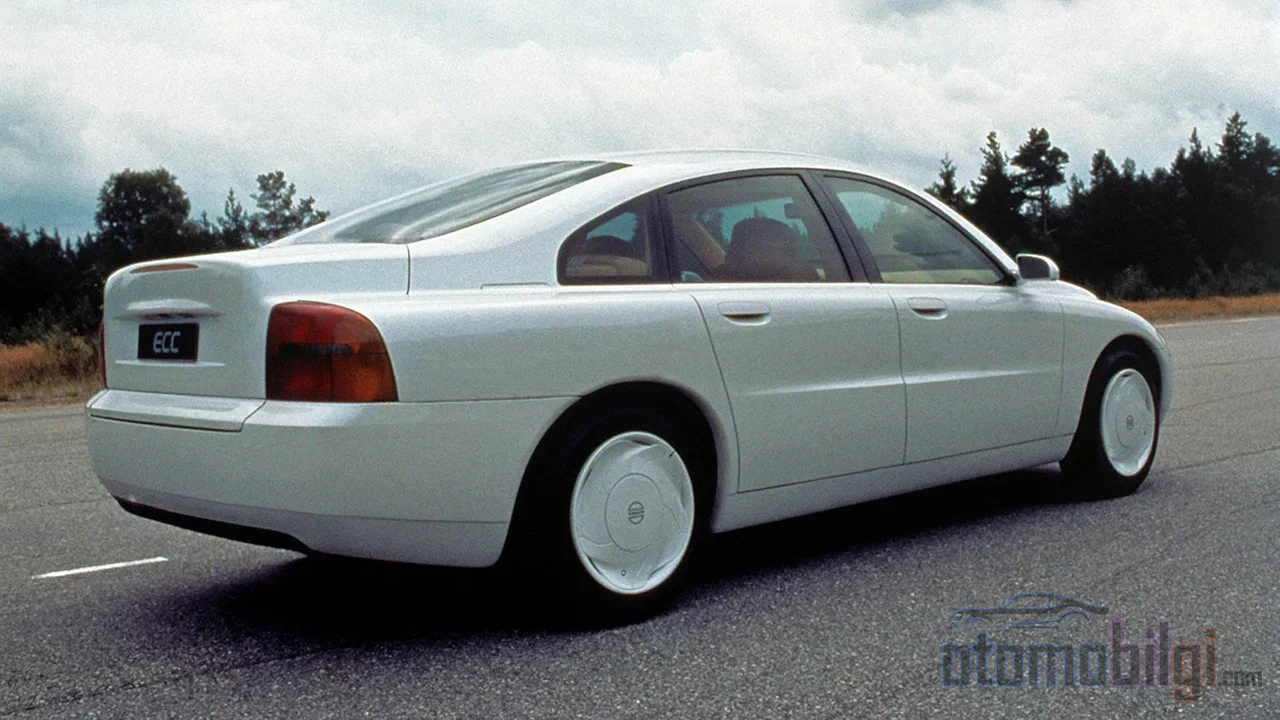
At the 1992 Paris Motor Show, Volvo's stand featured a concept car that drew long lines of people in front of it. Its body was made of aluminum, its interior trim of cork, and at its heart, instead of a piston engine, a gas turbine was running. The Volvo ECC, or Environmental Concept Car, was an experiment in the mainstream history of the hybrid car that never became a production model, yet took a technically more radical path than today's hybrids. What happened, and why did this architecture never reach mass production? The answer to this question reveals more about hybrid technology than most people know.
Series Hybrid Architecture: The Turbine Generates Electricity, the Motor Drives
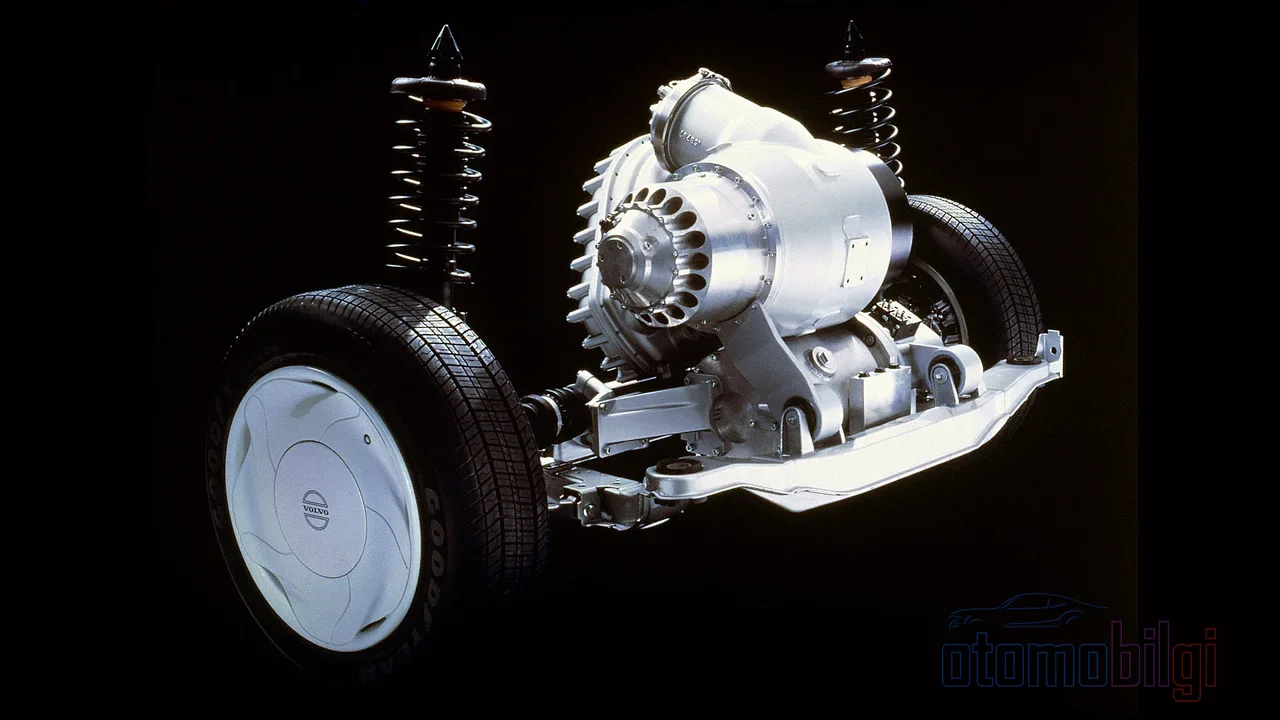
The ECC's architecture was structurally different from most hybrids sold today. In the common hybrid layout, the gasoline piston engine can both drive the wheels and turn the generator to charge the battery. In Volvo's 1992 prototype, however, the only power path to the wheels was electric: the gas turbine worked like a turbo-generator, spinning at a constant load to drive the generator, and the generator fed the battery. An electric motor handled the drive, and this motor was connected to the front-wheel-drive Volvo P80 platform.
In today's terminology, this layout is a series hybrid architecture. The turbine's operation at constant load is the critical detail: turbines are efficient at constant speeds and inefficient under sudden load changes. Volvo used this characteristic to its advantage, forcing the turbine to generate electricity only at its most efficient operating point. Braking energy was also recovered regeneratively, meaning that while slowing down, the motor acted as a generator and sent energy back to the battery.
The driver's control mechanism was surprisingly straightforward. Switches on the dashboard allowed toggling between turbine-electric mode and hybrid mode. At low loads and in sensitive environments, the vehicle could switch to fully electric driving mode, operating with zero exhaust emissions on short city trips. Over short distances, it met the ZEV, or Zero Emission Vehicle, standard; on long journeys, the turbine kicked in to multiply the range.
Volvo did not develop this system alone. The high-speed generation system called HSG emerged from the joint work of Volvo Flygmotor, ABB and Vattenfall. An automaker, an electrical industry giant and an energy company coming together on the same prototype is concrete proof of how seriously the project was taken.
Highlights
- The Volvo ECC is a gas turbine-electric series hybrid prototype unveiled at the 1992 Paris Motor Show.
- Maximum power of 95 bhp (71 kW); the electric motor could deliver up to approximately 70 kW of power.
- A range of 145 km on battery alone; approximately 668 km in total with the turbine.
- A Cd value of 0.23, a top speed of 175 km/h, and a curb weight of approximately 1,580 kg.
- It never reached the mass production stage; its most visible legacy was the Volvo design language that began with the S80.
The ECC in Numbers: What Do the Technical Data Say?
The true value of a concept car lies in showing how much promise the numbers on paper carry. The ECC's figures are worth looking at from this perspective: they paint an ambitious yet internally consistent engineering picture.
| Feature | Value |
|---|---|
| Maximum power | 95 bhp (71 kW); 76 hp (56 kW) in continuous use |
| Electric motor power | Approximately 70 kW |
| Battery | Nickel-cadmium, approximately 120 V |
| Electric range | 145 km (90 km in some measurements) |
| Total range (with turbine) | Approximately 668 km, with a 35-liter diesel tank |
| Fuel consumption | 0.52 l/10 km at constant speed; 0.60 l/10 km in mixed driving |
| Top speed | 175 km/h |
| 0-60 mph | 23 s in EV mode; 12.5 s with the turbine |
| Cd value | 0.23 |
The fact that the electric range figure is known in two different values stems from differences in measurement conditions: with more aggressive definitions, an electric range of 90 miles (145 km) is cited, while conservative cycles indicate around 55 miles. Such differences are common in concept cars; the measurement cycle, load state, and battery condition directly change the result. The 0.52-0.60 l/10 km consumption band, on the other hand, was a serious efficiency promise compared to the premium gasoline sedans of the day.
On the emissions side, the turbine had a natural advantage: because the fuel was vaporized and mixed with air before ignition, NOx emissions were low. The goal was emissions meeting the ULEV standard and a range of more than 400 miles with the turbine-generator; both goals appeared consistent with the prototype's figures.
Why a Gas Turbine? The Fundamental Problem of Turbines in Automobiles
The gas turbine was not tried in an automobile for the first time with the ECC; it is an idea whose attempts go back much further and which never quite caught on. The root of the problem is a thermodynamic fact: turbines are efficient at very large scales and under constant load. In aircraft and power plants, these conditions are naturally met; in a car, however, the driver constantly changes the throttle and the engine operates under continuously varying load. Under variable load, the turbine's fuel efficiency drops, exhaust temperature remains high, and dynamic response is slow. Exotic materials and tight tolerances also drive costs up.
The ECC's architecture was a targeted answer aimed precisely at this weak point. By completely decoupling the turbine from the wheels and turning it into a unit that only drives the generator, Volvo imprisoned the turbine at the constant-load point where it does its single job - and is efficient at doing it. Since the connection between the driver's throttle demand and the turbine's speed was severed, the turbine's sluggish dynamic behavior no longer affected the driving feel. Academic literature has also examined the technical feasibility of the gas-turbine series hybrid vehicle along the same lines, discussing how efficiency could be achieved by operating the turbine under controlled load.
This is an elegant engineering solution, but it raises a question: couldn't a piston engine have done the same job more cheaply? Although the piston engine has worse constant-load efficiency, it was far more predictable in terms of production cost, manufacturing infrastructure, and service networks. The answer to this question lies hidden in the decisions that determined the ECC's fate.
The California Regulation: A Prototype Left on the Edge of the ZEV Definition
Part of the reason for the ECC's existence lies in a regulatory text. Through its Zero-Emission Vehicle (ZEV) law, California required manufacturers to sell zero-emission vehicles, and Volvo conceived the ECC as an alternative to the logic of this category. Volvo's thesis was clear: the range problem in a four-person family vehicle could not be solved at that time with a fully electric solution given the batteries of the day; a hybrid, on the other hand, could offer the best of both worlds by combining zero-emission urban driving with extended range on long journeys. Volvo officials also argued that the zero-emission vehicle was a somewhat artificial definition, since emissions were still generated at power plants producing electricity, and that Volvo's environmental approach fit into a more holistic framework.
However, the ECC did not match the letter of the ZEV definition: it was not fully zero-emission. Volvo requested a legislative revision to allow hybrids in the ZEV category as well. The critics' objection was practical: it was difficult to monitor whether a hybrid was truly running on electricity in urban zero-emission zones or moving with turbine assistance, and this could create a regulatory nightmare. The request found no response, and the ECC's effort to align with the regulation came to nothing.
Moreover, the ECC was never designed for production or sale; its primary function was as a design study. The combination of regulatory incompatibility and its concept status closed the road to production for the prototype from the very start. The engineering was successful, but there was no business rationale or market conditions to turn that success into a product.
The ECC's Place Within the European Experiments of the 1990s
The root of the hybrid idea is far deeper than most people think. Ferdinand Porsche designed the first hybrid automobile in history, and the prototype was introduced in 1900 under the Lohner-Werke banner. The Lohner-Porsche Mixte Hybrid was born with an architecture that made electricity the sole means of propulsion, with the combustion engine driving only a generator - in other words, the series hybrid path the ECC would follow was in fact a century-old idea. Then came a long silence: in terms of energy density, cost, and lifespan, batteries failed to hold up on the road for years.
The ECC, in the midst of this silence, was one of the most ambitious examples of Europe's hybrid experiments of the 1990s. In Europe, the hybrid wave never became mainstream; the efficiency journey progressed through the diesel engine. The mainstream breakthrough came from the Japanese automobile industry: the Toyota Prius went on sale in Japan in 1997, the Honda Insight entered the Japanese market in November 1999 and became the first hybrid offered for sale in North America; the Prius reached America in 2000. Both Japanese pioneers were parallel hybrid architectures with piston engines - technically more conservative than the ECC's turbine-powered series hybrid, but far more viable solutions in terms of production cost and servicing.
Within this context, the meaning of the ECC becomes clear: the prototype, which combined a turbine with a series hybrid, represents a technical side path left unexplored in mainstream hybrid history. The American side also had turbine experiments in the same period; the Chrysler Turbine Car never entered mass production because its handmade production costs remained at levels many times the price of a standard V8. The turbine in a car was an idea that was tried with different architectures and hit the same wall: technically possible, economically difficult.
What the ECC Actually Left Behind: Design Legacy and Corporate Environmental Strategy
The ECC's debut was radical on its own. The vehicle was Volvo's third study for its green future car and was built almost entirely from recyclable materials. The body was made of aluminum and designed to be fully recyclable; lightness also contributed directly to fuel economy and performance. The use of sliced and laminated mushroom upholstery in the interior shows just how far the idea of sustainability was pushed in material selection. Volvo's environmental report published in 1995 addressed climate change as a real threat; the ECC became the most visible expression of this corporate environmental strategy on the product side.
But the true lasting legacy was hidden not in the engine bay but on the drawing board. The ECC's design language shaped Volvo models starting first with the S80. The most distinctive signature was the tiered shoulder line inspired by the 200 Series, and this line remained an integral part of Volvo's brand language for years. So the prototype never came to completion as a production model, but it succeeded as a design manifesto: it left behind not a common technology bundle, but a lasting aesthetic and corporate identity.
Conclusion: Why Did the Volvo ECC Never Reach Mass Production?
The Volvo ECC was a series hybrid concept vehicle introduced in 1992 that used the gas turbine solely as a constant-load unit generating electricity; propulsion was done entirely by an electric motor, it offered a fully electric mode in the city, and it promised a range of approximately 668 km with the turbine. There were two main reasons it failed to reach mass production: California's ZEV definition did not cover the ECC because it was not truly zero-emission, and Volvo's request to include hybrids in the legislation found no response on the grounds of regulatory difficulty; moreover, the vehicle had already been developed as a design study, not for production. Today's hybrids have established the dominance of piston parallel architectures, but the ECC still tells a coherent lesson in neutralizing the turbine's weakness through architecture.
Sources
- Volvo ECC
- Overview Volvo ECC | Volvo Cars Media US
- Radical Technology: Volvo's Turbine-Hybrid ECC
- Volvo ECC Concept (1992) - behind the scenes
- The story of the Volvo ECC concept car
- Volvo's turbine-electric hybrid was a '90s wonder box
- How Ferdinand Porsche designed the first hybrid car
- Honda Insight
- Gas turbine-based hybrid vehicle concept
- Safe before Green: The Greening of Volvo Cars