Esoro H301, the Forgotten Swiss Plug-in Hybrid Prototype
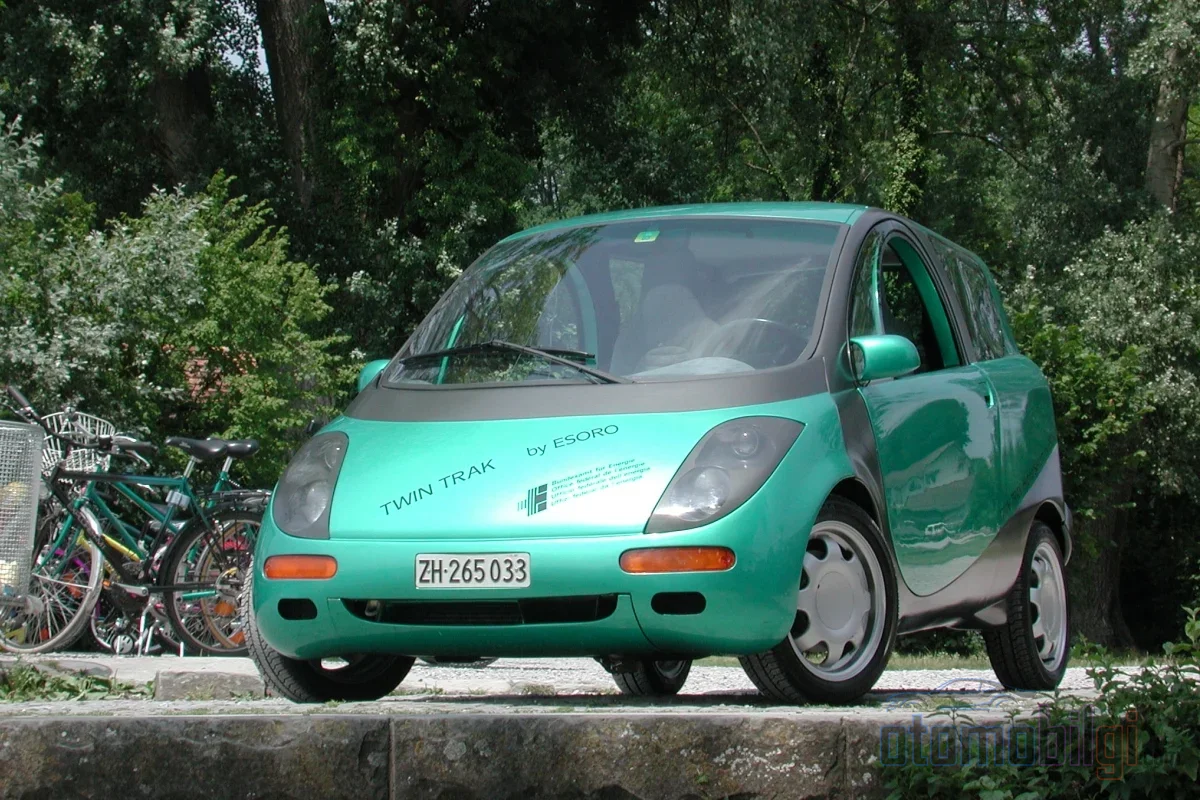
Think of 1994. A time when the words "hybrid car" brought only one thing to mind: nothing. Three years remained until the Toyota Prius reached the roads, plug-in hybrid was not yet a consumer term, and battery technology was crawling somewhere between lead-acid and nickel-metal-hydride. Right in this environment, a small Swiss engineering company near Zurich put on the road a vehicle that fully implemented today's plug-in hybrid formula - a sedan that plugs in, runs on electricity, and leans on a small gasoline engine when needed. Its name was the Esoro H301. Its weight was 710 kilograms. And there are examples still on the road today.
What is the Esoro H301, and why so early?
Esoro AG is a vehicle development and prototyping company based in Zurich. Its portfolio spans a broad engineering spectrum ranging from mobility to marine, from battery technology to lightweight construction solutions. The company's core business is taking concept vehicles from the idea stage to display-ready condition; in other words, turning radical ideas into working metal without the pressure of series production. This job description explains why a car like the H301 came from precisely this company: the risk is carried not by a shareholder but by a prototype master.
The H301 is a two-door, four-seat plug-in hybrid sedan. Or rather, to describe it in today's terminology: an experimental vehicle with a parallel hybrid architecture that can be plugged in and cover daily use in electric mode. The name Esoro used for this system was Twin Trak - an arrangement that manages the power transmission through two parallel paths instead of a single line. The vehicle itself is positioned as a hybrid limousine version of the E301, an electric city car Esoro had developed a few years earlier; the E301 was a prototype introduced at the 1993 Geneva Motor Show, designed to feature three different operating modes - full electric, hybrid, and a small internal combustion engine.
Highlights
- The Esoro H301 is a plug-in hybrid prototype developed in Switzerland in 1994; it dates back three years before the Prius.
- Its total weight is only 710 kg - less than half of a modern compact hatchback.
- A 360 cc internal combustion engine and a 34 kW AC induction motor work in a parallel arrangement.
- The 9 kWh nickel-cadmium battery fully charges in four hours from a 220 V outlet.
- Four prototypes were produced, and some of them are still on the road.
Its technical structure: a small engine, large-scale engineering
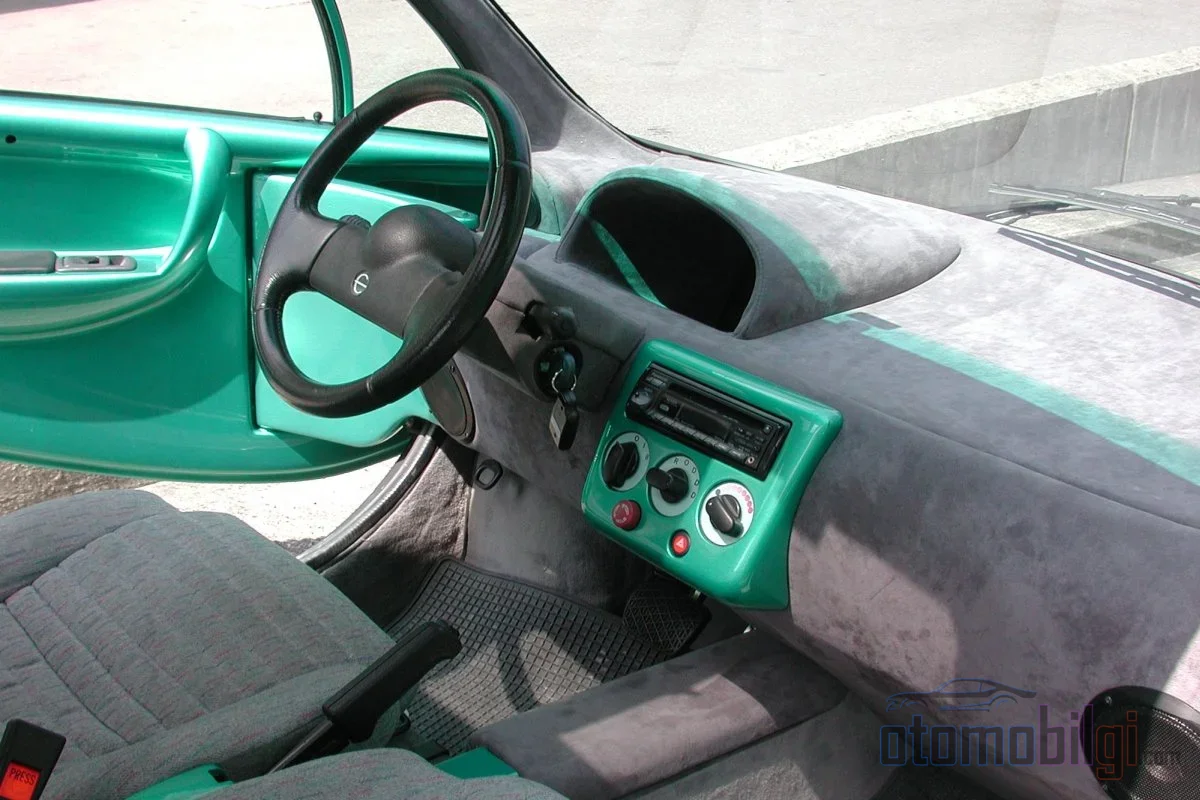
The H301's power transmission layout is a mirror image of the logic we see in most of today's plug-in hybrids. A 360 cc internal combustion engine and an air-cooled AC induction motor delivering 34 kW of power feed the same transmission in a parallel arrangement. To unpack the concept of the parallel arrangement here: both power sources can send mechanical power to the wheels; the electric motor can handle driving on its own, the internal combustion engine can kick in to extend the range, and the two can work together to combine their total power. This is the basic scheme of a broad family, ranging from the approach Honda used in its early hybrids to modern plug-in systems.
On the energy storage side, there is a nickel-cadmium battery with a capacity of 9 kWh. For 1994, that is a considerable figure: most electric prototypes of the era could store a third less than this. Nickel-cadmium chemistry offered higher energy density and a longer cycle life compared to lead-acid; although it has since been abandoned due to environmental concerns, at the time it was one of the most rational options available.
The charging side was designed with surprisingly current logic: a full charge from a standard 220 V wall outlet in four hours. In other words, the H301 does not require any special charging infrastructure; a vehicle left in the garage overnight starts the morning with a full battery. The information that, while cruising at a steady 120 km/h, the battery's state of charge could rise from 30 percent to 80 percent in about two hours shows that the car was designed not merely as an urban plaything, but as a system capable of energy management at highway speeds.
What is truly remarkable, however, is the mass: 710 kg. For comparison, today's mid-range plug-in hybrid sedan carries more than twice this value due to the weight of its battery and equipment. Esoro's expertise in lightweight construction is clearly visible here - the company lists lightweight construction technologies in its portfolio as a distinct area of competence, and the H301 is one of the most tangible four-wheeled proofs of this competence.
| Feature | Esoro H301 |
|---|---|
| Year of production | 1994 (1996 in Esoro's portfolio record) |
| Body type | Two-door, four-seater sedan |
| Weight | 710 kg |
| Internal combustion engine | 360 cc |
| Electric motor | 34 kW, air-cooled AC induction |
| Hybrid layout | Parallel (Twin Trak system) |
| Battery | 9 kWh nickel-cadmium |
| Charging | Full charge in four hours from a 220 V outlet |
| Units produced | 4 prototypes |
A debate over a year: 1994 or 1996?
There is a small but meaningful ambiguity in the dating of the H301. Independent encyclopedic records list the vehicle as 1994, while Esoro's own portfolio page dates the H 301 entry to 1996. This difference is not a contradiction, but possibly the natural trace of a development story: for a prototype's first working version and the finalized version entered into the official portfolio to be separated by a few years is a common situation in engineering firms. Indeed, the portfolio record describes the H301 as the hybrid limousine version of the E301 family and offers detailed data on the Twin Trak system: a 40 kW system output, a weight of 97 kg in the transfer unit, 0-50 km/h acceleration in electric mode, and a value of over 100 km in electric range. It is possible to give priority to 1996, the official source's own date; but the widely accepted date is 1994, as it places the vehicle's existence before the Prius, and both dates position the H301 ahead of the modern hybrid wave.
Four prototypes were built, and some of these examples are known to still be on the road today. That a plug-in hybrid was first registered more than thirty years ago - the very fact this sentence carries - is itself a striking indicator: the H301 is not a concept mock-up, but an engineering product that was used and has survived.
What came before the H301? The journey of the hybrid idea stretching back ninety years
To place the H301 correctly in history, one must remember how old an idea the hybrid car actually is. Ferdinand Porsche designed the Egger-Lohner C.2 Phaeton in 1898; the octagonal electric motor produced 3-5 HP of power. The Lohner-Porsche Semper Vivus, which emerged around 1900, is regarded as the first functional hybrid car in history; Porsche also positions the Mixte model, sold in 1901, as the first hybrid. In other words, the marriage of the gasoline engine and electricity is an idea as old as the automobile itself.
Early traces of the plug-in concept, meanwhile, reach surprisingly far back. The GM XP-883 concept introduced in 1969 carried six 12-volt lead-acid batteries and could be charged from a 110 V outlet. In 1971, Dr. Andy Frank, who is considered the pioneer of the modern plug-in hybrid today, began his hybrid work. In 1989, Audi produced the first Audi Duo, based on the 100 Avant Quattro; this series of about ten vehicles also used nickel-cadmium batteries. So by the time the H301 arrived in 1994, the idea of a plug-in hybrid already rested on thirty years of conceptual history - but no one had yet implemented it in such a complete and such a lightweight package.
A pioneer left in the shadow of the Prius
Toyota launched the Prius, the world's first mass-produced hybrid vehicle, in Japan in 1997; the development process had been stamped by the efficiency target set by Akihiro Wada in 1994, and the car was named Car of the Year in Japan. Two years later, Honda introduced the IMA system based on parallel hybrid architecture with the Insight; the Insight entered the North American market before the Prius as the first hybrid sold there. In 1998, the second Audi Duo, based on the A4, appeared in Frankfurt; around 60 units were built, but the double price tag ended series production. In 2003, Renault sold the Elect'road, based on the Kangoo and fitted with nickel-cadmium batteries, in Europe. The commercial turning point came with the Chevrolet Volt in 2010 - the first commercial plug-in hybrid brought to market.
Against this timeline, the H301's position becomes clear: not the forerunner of mass-production legends, but a proof that came before them. The Prius's battery, storing far more hybrid chemistry, the Honda Insight's body playing with its drag coefficient, the Volt's charging logic - all of these are the individual principles Esoro combined in a single vehicle in 1994, carried separately to industrial scale. Four prototypes from a small Swiss company had shown the world ten years ago that these principles worked.
How accurate was the vision of the H301 today?
The growth of the plug-in hybrid market over the last decade demonstrates, in measurable terms, how accurate the H301's formula was. While global plug-in hybrid sales were just over 300 units in 2010, they reached 7.2 million in 2025. This scale is the problem the H301 solved on its own - covering daily distances on electricity and long journeys on gasoline - turned into a global industry. The picture is striking in Switzerland itself: As of October 2026, there are 144,302 plug-in hybrid vehicles on the road; more than 2 percent of the total fleet of 7,135,000 vehicles. In other words, the country where the H301 tried out the plug-in hybrid idea became, thirty years later, one of the heaviest users of this technology.
So why was the H301 forgotten? There is no direct answer, but a chain of logic can be constructed. Four prototypes were not a mass-production product; Esoro was not a vehicle manufacturer but an engineering firm, and instead of marketing its vehicle, it moved on to the next project. In the mid-nineties, there was neither consumer demand nor a marketing language to explain the concept of hybrid. The Prius going down in history as a name buried dozens of prototypes that came before it in silence - and the H301 is one of the most striking examples of that silence.
The real answer is this: The Esoro H301 had combined all the engineering decisions that define what a plug-in hybrid is - parallel drivetrain, 220 V outlet charging, a realistic electric range, and a ruthless discipline against mass - into a working vehicle a full ten years before the modern era began. Being first and being forgotten may be two halves of the same story; the H301 was defeated not by history itself, but by the records of history. Yet a prototype still driving on the roads is the best proof that it was not defeated.
Sources
- History of plug-in hybrids
- Esoro H 301, 1996
- Concept Vehicles - Esoro
- Esoro – innovation & engineering
- The history of Porsche begins electrically - Porsche Newsroom
- Lohner–Porsche
- Toyota Launches the Revolutionary PRIUS Hybrid
- Honda Marks 25 Years Of Hybrid-Electric Sales
- Timeline: History of the Electric Car - energy.gov
- Plug-in hybrid vehicles (PHEV) in Switzerland