Was the GM XP-883 the Forgotten Ancestor of the Chevrolet Volt?
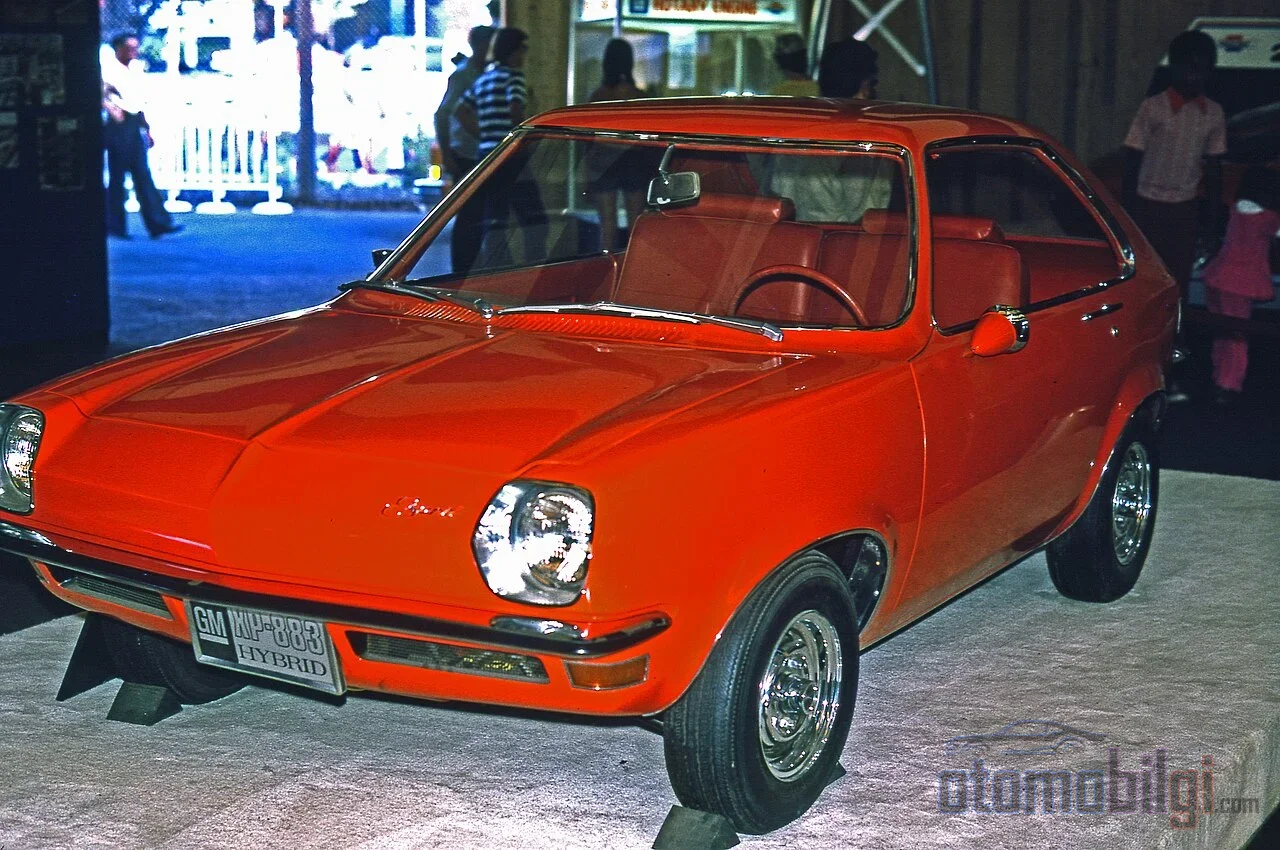
In the summer of 1969, a car that fits today's plug-in hybrid definition exactly was standing in Detroit: batteries charged overnight from a wall outlet at home, a drivetrain that ran on electricity alone over short distances, and a small gasoline engine that kicked in on top of that. General Motors gave this vehicle the name XP-883. Twenty-eight years before the Toyota Prius and forty-one years before the Chevrolet Volt. So if an idea emerged this early, why did it find its market so late?
The answer to that question relates to the entire history of the hybrid car. The idea itself dates back to 1898, to Ferdinand Porsche's experiments with hub motors; but it took a century for the technology to mature and turn into mass production. The XP-883 is a milestone standing right in the middle of this long timeline, one that most car enthusiasts have never heard of.
Progress of Power: GM's 1969 Alternative Propulsion Feast
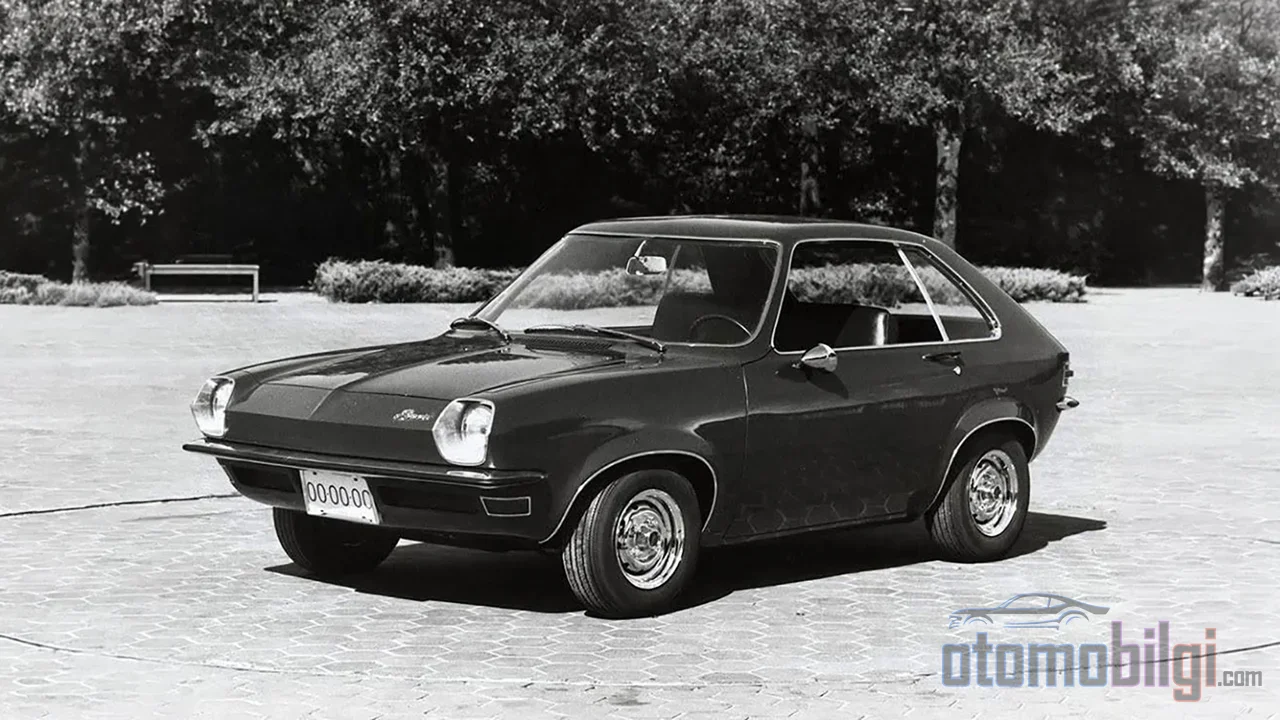
The XP-883 did not appear on its own. In May 1969, GM held a presentation for the media called "Progress of Power" at the Warren Technical Center in Michigan, where it introduced vehicles carrying 26 different alternative propulsion solutions, ranging from steam engines to gas turbines, and from battery-electric systems to hybrids. The company had tried the fuel-cell-powered Electrovan in 1966, and the electric Electrovair II, also in 1966; the Stirling engine was also among the options on the agenda. In other words, GM in 1969 was an organization that took the idea of alternative propulsion very seriously - the exact opposite of the "one-dimensional oil company" image we often hear about today.
The same series also included the XP-883's siblings: three separate GM 512 urban car concepts. Of these, the 512E was fully electric: with an 84-volt lead-acid battery pack, it offered a range of 58 miles at 25 mph, and charged from a 115-volt outlet in about seven hours. Another 512 variant managed with only 3 gallons of gasoline per trip for a range of 150 miles on a full tank and battery. The XP-883, meanwhile, was the hybrid member of this family.
Highlights
- The XP-883 was an experimental plug-in hybrid concept introduced in July 1969.
- The drivetrain consisted of a 574 cc two-cylinder boxer engine and a DC series-wound electric motor.
- Six 12-volt lead-acid batteries could be charged from a standard 115-volt outlet.
- The electric motor alone could drive the vehicle at up to 16 km/h (10 mph).
- In hybrid mode, the top speed was at the level of 97 km/h (60 mph).
The Technical Structure of the GM XP-883: Engine, Battery and Charging System
The XP-883 is, on paper, a small-scale copy of today's plug-in hybrid architecture. At its heart is a water-cooled boxer (opposed-cylinder) two-cylinder gasoline engine with a displacement of 574 cc. The small displacement is no coincidence: an engine small enough to be exempt from the emission regulations of the era was chosen. Sources cite this displacement with minor variations between 570 and 574 cc; this is an ordinary difference depending on the measurement method.
Alongside the gasoline engine, a DC series-wound type electric motor does its job. The motor is co-axially mounted with the front half-shafts; it drives the front wheels through a 5:1 planetary gear and differential. The connection between the motor and the gear unit is provided by a worm gear - a compact packaging solution.
On the energy storage side, there are six 12-volt lead-acid batteries; 72 volts in total. The batteries are placed between the rear wheels, close to the ground and mounted low. The most critical detail, however, was charging: while the batteries were charged by the motor's flywheel alternator, the vehicle could also be charged from a standard 115-volt household outlet. This single feature alone is enough to make the XP-883, in today's terminology, a plug-in hybrid electric vehicle (PHEV).
Body and Chassis: Fiberglass Cabin, 2+2 Layout
The body is made of fiberglass; the design resembles the model that would later be produced as the Chevrolet Chevette. The vehicle features a 2+2 coupe layout: two adults in front, two children in rear jump seats - the children entered and exited through the trunk lid. Independent rear suspension and a total weight of approximately 2,100 pounds (950 kg) scale the vehicle for urban use. GM's current literature describes the displayed example as a "mock-up," that is, a model; however, published performance data points to the existence of a vehicle that had undergone at least one driving test.
How Did the XP-883 Work? Operating Modes and Performance
The XP-883's drive logic closely resembles today's parallel hybrid layout. The electric motor alone can propel the vehicle up to 16 km/h (10 mph); once this speed is reached, the electronic controller brings the gasoline engine into play. During acceleration, both power sources operate together; at steady cruising speed, only the gasoline engine takes over the job. Electricity in the low-speed range of urban traffic, gasoline on the open road - exactly the same scenario a hybrid driver experiences every day.
The performance table honestly shows that the vehicle made no bold claims. Top speed in hybrid mode is in the 97 km/h (60 mph) range; reaching this speed takes 28 seconds. The 0-40 mph (0-64 km/h) acceleration is shown as between 12 and 14 seconds; this small difference among archival records can be attributed to measurement conditions. In other words, the XP-883 was not a speed monster - but that was never its purpose. The goal was to solve short-distance daily urban transportation with electricity, and long distances with gasoline.
| Feature | Value |
|---|---|
| Year of introduction | 1969 |
| Gasoline engine | 574 cc, two-cylinder boxer, water-cooled |
| Electric motor | DC series-wound, co-axially mounted on the front axle |
| Battery | 6 x 12-volt lead-acid (72 volts in total) |
| Charging | Standard 115-volt outlet |
| Top electric speed | 16 km/h (10 mph) |
| Top hybrid speed | 97 km/h (60 mph) |
| Weight | Approximately 2,100 pounds (950 kg) |
The True Roots of the Hybrid Idea: From Lohner-Porsche to Woods
To understand the XP-883, one must remember just how old the hybrid idea is. Ferdinand Porsche began developing a series hybrid with hub motors (electric motors integrated into the wheels) in 1898; His 1900 design, the Semper Vivus - its name meaning "always alive" - is considered the world's first functional hybrid car. The Lohner-Porsche Mixte is credited as the first hybrid electric vehicle and the first commercial hub-motor automobile; In the Porsche chronology, prototype development dates to 1898, and the Mixte sold to 1901.
He was not alone in the early era. The Woods Dual Power was an example that brought the hybrid idea to American roads in 1916; The Owen Magnetic was an early series-design hybrid in which the engine charged the battery and drove the electric motor. So in 1969, GM faced no unknowns whatsoever - the idea was 70 years old, while its implementation was wrestling with the limits of battery technology. The energy density of lead-acid batteries was the bottleneck for everything.
The Long Silence Between 1969 and 1997
The 1970 Clean Air Act and the 1973 oil embargo revived interest in hybrids; Four engineers at TRW invented an electromechanical hybrid system, and an electric and hybrid technology program was launched in the US in 1976. In 1982, a computer-controlled prototype considered the "first modern hybrid" was built at GE Research Laboratories. In 1989, Audi presented an experimental hybrid. The mass production threshold was not crossed until 1997: The Toyota Prius was introduced as the world's first mass-produced hybrid, and two years later the Honda Insight (first generation, 1999-2006) became the first modern gasoline hybrid sold in the US. GM's agenda at the time featured not a hybrid, but an all-electric proposition.
The Thread of Ideas from the XP-883 to the EV1 and Chevrolet Volt
Despite the off-the-shelf components GM used in the XP-883, it presented consumers with its first electric automobile some 25 years later: The EV1, offered for lease in 1996, was the first mass-produced electric car from a major manufacturer; the Chevrolet S-10 EV, which went on sale in the same period, was also part of this wave. Progress on the hybrid side was slower: full hybrid systems first appeared in city buses, the first mild hybrid passenger model was the Saturn Vue Green Line for the 2006 model year, and the Two-Mode passenger version arrived with the 2008 model year.
The turning point was the 2007 Volt concept: an electric motor, a plug-in system running on a 16 kWh lithium-ion battery, and a small 1.0-liter engine serving as backup. The first generation Chevrolet Volt, introduced at the end of 2010, went down in history as the first plug-in hybrid offered for commercial sale in the US; GM called this architecture an EREV, that is, an extended-range electric vehicle. The fact that the idea behind the Volt traces back to the 1969 XP-883 is a point emphasized repeatedly in the automotive press - indeed, hybrid enthusiasts have winkingly nicknamed this car "the Prius before the Prius."
An Equation Solved Thirty Years Ago
The parallel between Volt's EREV architecture and the XP-883's operating logic is too clear to ignore: in both, electricity is the primary mode of daily use, while the internal combustion engine is a backup that eliminates range anxiety. The real difference lies not in the architecture of the drivetrain, but in the maturity of the technology. The XP-883's 72-volt lead-acid pack remains symbolic next to the Volt's 16 kWh lithium-ion battery; but the problem definition - short-distance electric, long-distance gasoline - has not changed in thirty years. GM had solved the same equation twice; by the time it solved it a second time, it finally had batteries that could handle the job.
The result is one of the classic patterns of the automotive industry: the right idea, at the wrong time. In 1969, lead-acid batteries were not up to carrying the load of a plug-in hybrid; in 2010, lithium-ion chemistry began to carry it, and the same idea hit the roads as a commercial product. That is why the XP-883 is not forgotten, but a prematurely born ancestor - the highest, most overlooked branch of the Volt's family tree.
Was the GM XP-883 the Ancestor of the Volt? Conclusion
The XP-883 met all the requirements of today's PHEV definition: charging from an outlet, standalone electric driving at low speeds, and a backup gasoline engine for range. In return, its performance was limited to urban use, and its batteries relied on a chemistry too primitive to make mass production economical. More than thirty years passed before GM applied the idea again in the Volt; what changed during that time was not the idea, but the battery. In this sense, the XP-883 deserves to be remembered as a pioneer that defined what a hybrid would be decades earlier, at a time when the technology had not yet caught up.
Sources
- General Motors XP-883
- GM's Pioneer Hybrid: the 1969 XP-883
- Retro Rides: The 1969 all-electric GM XP 512E concept
- GM Thought Up The Chevrolet Volt 50 Years Ago
- The History of the Electric Car
- The history of Porsche begins electrically
- Lohner–Porsche
- Hybrid history
- Electric Cars Engineering & History
- How the Prius Traces Its Lineage to a 1900 Car
The technical data on this page has been compiled from archival sources; values with minor measurement differences in the sources are given as the range stated in the text.