The EV1 Plug-in Hybrid Project Cancelled in 1997

In mid-1997, a small team of engineers within General Motors' newly established subsidiary Delphi Corporation was working on a bold plan for the company's most iconic vehicle, the EV1: converting this fully electric car into a hybrid that could be charged from an outlet. The project predates the Chevrolet Volt by a full decade, and the team had publications documenting the concept in international SAE papers. Yet today, when we mention the term plug-in hybrid, the name that comes to mind is not Jeff Ronning, who led that team, but UC Davis professor Andy Frank. So where, when, and why was this term actually coined?
Where Did the Term Plug-in Hybrid Come From?
The concept itself is much older than the term. The Lohner-Porsche hybrids developed by Ferdinand Porsche around 1899-1900 had a series hybrid arrangement in which the gasoline engine only drove a generator, and some of the early examples could be charged from an external source before being driven. So the idea of an outlet-charged hybrid goes back to the automobile's first decade.
The story of the term in the modern sense begins in the 1970s. In 1971, Dr. Andy Frank embarked on a research career known for hybrid and plug-in hybrid work; starting in the 1990s, he began producing PHEV prototypes with student teams at UC Davis, and this work was crowned by a center of excellence established at the university in 2001 with the support of the Department of Energy. Frank is widely regarded in the industry as the pioneer of the modern plug-in hybrid, and the term is credited to him.
However, among the first documented uses there is also an advanced parallel line developed within industry, independent of Frank's academic work: the series of Jeff Ronning, an EV1 propulsion system engineer working at Delco. The intersection of these two lines and Toyota's stance lie at the center of the debate surrounding the term's ownership.
Highlights
- Jeff Ronning's internal publication on the plug-in hybrid concept is dated 1995; the SAE 971629 and 1999-01-2946 papers are among the documented early uses of the concept.
- In 1997, a decade before the Chevrolet Volt, a project to convert an EV1 into a PHEV was launched at Delphi but was canceled by company management.
- The term is credited to Andy Frank; Ronning's team deliberately avoided using this term because of Toyota's position opposing plugging in.
- The names the team gave to the architecture were Unlimited EV, Battery Dominant Hybrid, and Energy Hybrid.
Ronning's Path: From the EV1 to a Small Turbo-Alternator
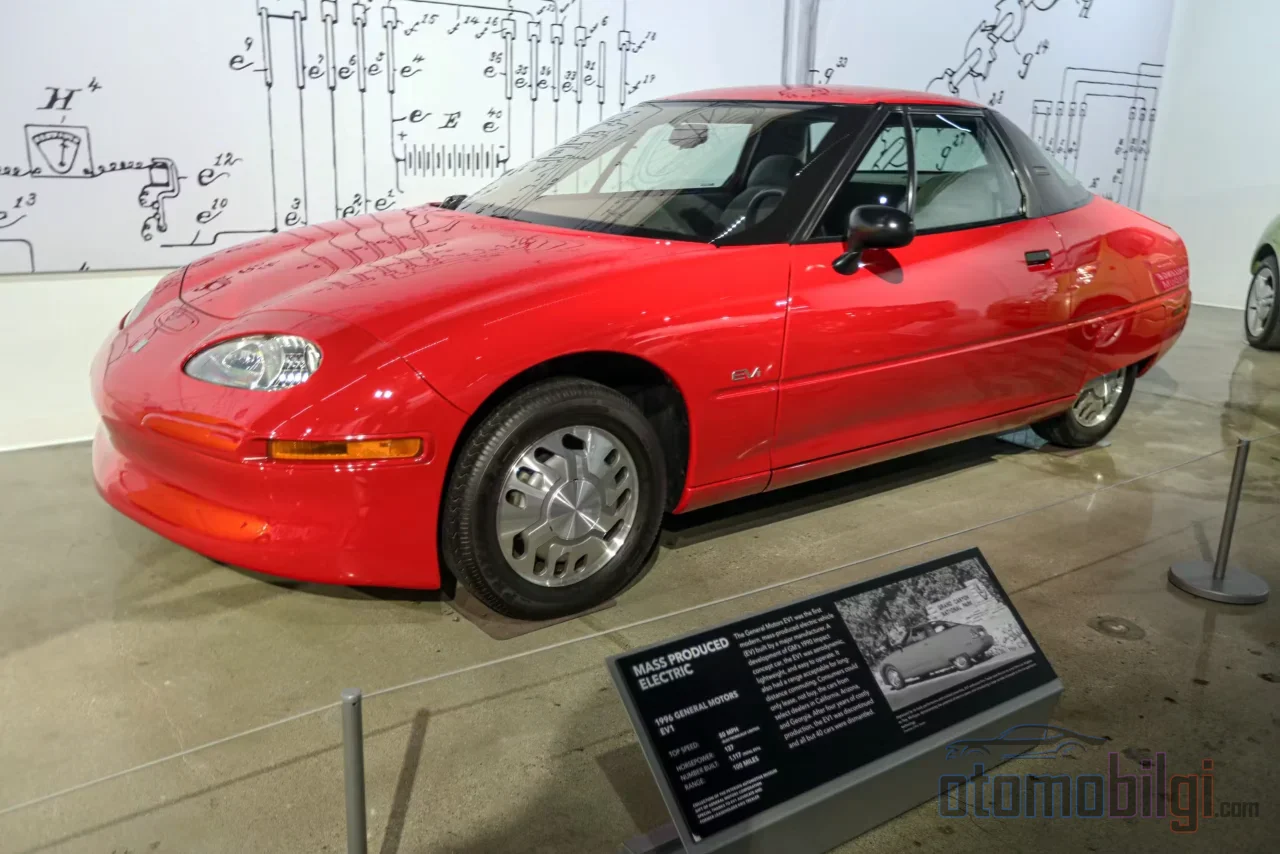
Ronning's starting point was direct field experience. Under the EV1 program, some prototypes were used with range-extender trailers that functioned as mobile generator sets, providing power on long journeys; these were developed by Alan Cocconi. Moving the small turbo-alternator in these trailers into the vehicle body was a natural next step from an engineering standpoint: a fixed torque source, when combined with grid charging, both solved the range problem and made it possible to cover most daily use with electricity.
Ronning put these ideas forward in an internal publication dated 1995. The concept was later carried to the outside world through two international SAE papers: SAE 971629 and signed by J.J. Ronning, which received 23 citations, Global Hybrid Electric Vehicle Markets and Missions (SAE 1999-01-2946). Both papers advanced the same thesis: supported by the U.S. Department of Transportation's travel data, most of drivers' mileage consists of short, local trips; drawing most of the energy from the grid in this usage profile provides a major advantage.
This data-driven approach shows that by the mid-1990s the term took shape as a measurable usage thesis rather than a mere marketing word.
The 1997 EV1 Plug-in Hybrid Conversion Project and Its Cancellation
In 1997 the idea was taken seriously at Delphi Corporation: an EV1 was to be converted into a plug-in hybrid. This meant turning a fully electric vehicle into a battery-dominant hybrid supported by a small turbo-alternator. Ronning's team gave the architecture three separate names: Unlimited EV, Battery Dominant Hybrid and Energy Hybrid.
This variety of names was no coincidence. There was one name the team deliberately avoided: plug-in. The reason was a political contradiction. Setting aside the fact that the term was coined by Andy Frank, Toyota was positioning its hybrid approach as a system that required no plugging in, openly stating that it considered plugging in unnecessary. For a player on the GM/Delphi side, adopting a term that carried the very plug concept Toyota rejected in its name would have sent the wrong strategic signal. Therefore the team developed its own terms describing the same architecture. Toyota's stance also reveals just how polarizing the term was: the industry's largest hybrid maker considered the concept's fundamental action unnecessary.
The project did not last long. The company's technology directors canceled the initiative, and no detailed record of the reasons has survived to this day. The technical dimensions of the conversion project, its power and battery figures, also remain undocumented; only the architectural approach and conceptual framework are clear. 1997 was, in this respect, a bitter year: it was the year the EV1 was showcased and the Toyota Prius emerged, and the plug-in hybrid idea died on the table ten years before its time had truly come.
Who Coined the Term: Andy Frank or Jeff Ronning?
Here is the answer to the page's central question, and it is not a one-line answer. The documents place two separate facts side by side: the term itself is widely attributed to Andy Frank by common acceptance, and Frank, with work stretching back to 1971, is the name that comes to mind when modern plug-in hybrids are mentioned. On the other hand, Ronning's 1995 internal publication along with the SAE papers numbered 971629 and 1999-01-2946 are among the earliest documented uses of the concept. So ownership of the term and the first written traces of the concept in the engineering literature point to different actors.
Interestingly, the reason Ronning's team avoided using the term attributed to Frank was not opposition to the concept, but quite the opposite: their stance against Toyota's plug-in idea. Even within the concept's own home turf, naming took shape through competitive positions: Frank derived the term and kept it alive in academia, Ronning's team produced the same architecture under different names, and Toyota rejected the plug entirely.
A Decade Later, the Chevrolet Volt: A Delayed Realization
The idea canceled in 1997 returned with the Chevrolet Volt, introduced in Detroit on January 7, 2007. GM presented the Volt as a PHEV-40; this designation means the vehicle has 40 miles (approximately 64 km) of fully electric range. There is also a striking parallel in the architecture: The Volt was defined as a battery-dominant series hybrid arrangement. The Battery Dominant concept named by Ronning's team a decade earlier coming to life under a different name in the manufacturer's own product shows that the project idea was not wrong, but early.
The interim period was not idle either. Frank had the opportunity in 2001 to hybridize and make plug-in an EV1-based vehicle with GM funding; by the end of 2004, UC Davis student teams had produced seven prototypes, among them a two-seat sports car based on the GM EV1. Moreover, most plug-in hybrid developments between 2003 and 2010 came from conversions of production hybrids; in particular, making 2004-and-later Prius models chargeable from an outlet was the main artery of the movement. This further reinforces that Ronning's EV1 conversion was a pioneering experiment ahead of its time.
A Short Answer: Is the EV1 Conversion the Origin of the Term?
The balanced answer supported by the data is this: the name remembered as the father of the term is Andy Frank, and this attribution rests on a solid foundation of systematic work sustained since 1971. However, Ronning's 1995 internal publication and two SAE papers are among the earliest documented uses of the plug-in concept, and the term's deliberate non-use in Ronning's team shows just how important naming competition was in the mid-1990s. As for Toyota's position objecting to plugging in, it is the answer to the question of why this objection is documented only indirectly.
Looking Back from Today
While plug-in hybrid sales were below 300 in 2010, they reached 222,000 in 2015 and 7.2 million in 2025; the best-selling PHEV model of the first half of 2025 was the BYD Song Plus, with 188,500 units sold. The BYD F3DM, the first mass-produced plug-in hybrid passenger car, had set off in China in December 2008 with fleet sales.
The EV1 itself ended in 2003, despite customer objections, and the debate surrounding the program never ended. But the Delphi/Delco work between 1995 and 1999 represents the period when the plug-in hybrid idea was put on the table, defended with DOT data, and documented in international papers. The question of who coined the term may never be reducible to a single name; but the EV1 conversion project shows it was the concept's first serious rehearsal within the industry.