An Engineer's Persistence: How Did Andrew Frank Perfect the Plug-in Hybrid?
Share This Page
The modern concept of the plug-in hybrid goes by a single name: Andrew Alfonso Frank. Frank, an emeritus professor of mechanical and aeronautical engineering at UC Davis, worked on hybrid vehicles that could be charged from the grid starting in 1971, gave this class of vehicle its current name, and built an engineering school that carried hundreds of his students into the automotive industry. His story runs on a completely separate track, not alongside the two names considered the fathers of the hybrid vehicle.
Highlights
- Frank built his first hybrid electric vehicle in 1971 at Wisconsin–Madison; his goal was 100 miles per gallon and 0-60 acceleration.
- Team FATE vehicles set world records in 1991 of 3313 mpg on gasoline and 2200 mpg on methanol.
- Frank holds more than 35 patents; 12 of them belong to UC Davis.
- On December 21, 2010, he was among the first owners of the Chevrolet Volt, the first mass-produced plug-in hybrids.
- At UC Davis, a plug-in electric vehicle research collection is being established around his archives.
Who invented the plug-in hybrid: Frank's pioneering claim and its limits
The answer to that question depends on how the vehicle is defined. Hybrid electric propulsion itself is much older; as early as 1915, Woods Motor Vehicle's hybrid model was put on sale. Frank attributes the failure of that early example to take hold to a practical reason: it was expensive at the time, and there were no components to bring its cost down. In the modern sense, however, when we speak of a concept charged from a household outlet, switching automatically to the internal combustion engine when the battery runs out, and suitable for daily use, the sources clearly position Frank as the pioneer; he is called the father of the modern plug-in hybrid, and he is also the person who coined the term Plug-in Hybrid Electric Vehicle, or PHEV.
The technical definition of this pioneering work is also clear: a plug-in hybrid is a vehicle that runs its electric motor with its rechargeable battery and automatically switches to the gasoline engine when the battery energy is depleted. This is exactly where the difference lies compared to the first modern hybrids launched at the end of 1999. The Honda Insight and Toyota Prius charged their batteries only with braking energy; there was no plug-in charging cable. In Frank's approach, grid connection was the starting point of the design, not a feature added later.
One ambiguity needs to be noted from the start: the history of the first plug-in hybrid appears differently in the sources. One narrative places the beginning of development in Wisconsin in 1971, the other in 1972 at UC Davis. This dating difference stems from a gradual development process rather than a single vehicle, and it does not call Frank's pioneering role into question; it is merely a shift regarding how the year in which the first example vehicle became operational is defined.
The engineer's formation: from aviation to the automobile
Frank's background is not a classic automotive career. He received his bachelor's degree in mechanical engineering at UC Berkeley in 1955 and his master's degree in 1958; he then moved into electrical engineering at USC, completing his master's degree in 1965 and his doctorate in 1968. This dual expertise - mechanical and electrical - formed the foundation of his approach to hybrid propulsion.
From 1955 to 1968 he worked at North American Aviation and subsequently at North American-Rockwell. His list of assignments is impressive: the X-15 hypersonic research aircraft, helicopter stabilization systems, the Apollo Project and the Minuteman intercontinental ballistic missile program. In 1969 he moved into academia; he served as a faculty member at the University of Wisconsin from 1969 to 1985, and at UC Davis from 1985 to 2006. In other words, he built his first hybrid vehicle after leaving an aerospace company, as an engineer with dual specializations.
From 1971 onward: the first vehicles and the missing components problem
In 1971, Frank built his first hybrid electric vehicle from scratch at Wisconsin-Madison with his students. This vehicle was the only hybrid to enter the 1972 URBAN CAR Competition. UC Davis's own account states that Frank probably developed the first plug-in hybrid automobile in 1972; the goal he set was extraordinary by the standards of that era: 100 miles per gallon and 0-60 mph acceleration in 6 seconds. Combining efficiency and performance in one package remains, even today, the defining sentence of hybrid engineering.
So why couldn't the plug-in hybrid move into mass production in the 1970s? Frank's own assessment frames the problem at the component level: the right battery, transmission and motor technologies were not available at the time. To reach production automobile targets, these components had to be designed from scratch, for the purpose at hand. This is a diagnosis that stays faithful to an engineering perspective, explaining the concept's prematurity not as a lack of genius but as a supply chain problem.
Even so, the 1970s and 1980s did not go to waste. In 1979 he developed a flywheel-based hybrid with his students: a Ford Pinto conversion with a continuously variable transmission, i.e. a CVT. This project carried the first concrete signs of the architecture Frank favored.
The Team FATE and Davis years: measurable results
At UC Davis, the team led by Frank, known as Team FATE, built proof-of-concept vehicles one after another over the years. By 2004, a total of seven proof-of-concept vehicles had been produced. Each of these vehicles tested one aspect of the plug-in hybrid concept:
- Side F/X: a world record in 1991 with 3313 mpg on a single gallon of gasoline; in Frank's words, enough distance to travel from San Francisco to New York on one gallon.
- Shamu: a world record the same year with 2200 mpg on M85 methanol fuel.
- A PHEV dated 1991: an electric range of 40 miles with lead-acid batteries.
- The end of the 1990s: an electric range of 60 miles with nickel-metal hydride batteries - a threshold his students considered a huge achievement.
- 1992-1993: a plug-in hybrid demonstration achieving 72 mpg, close to the PNGV program's 80 miles per gallon target.
- 1996: a PHEV conversion based on the Ford Taurus; On the trip from Detroit to Washington DC, it reached a value of 68 mpg.
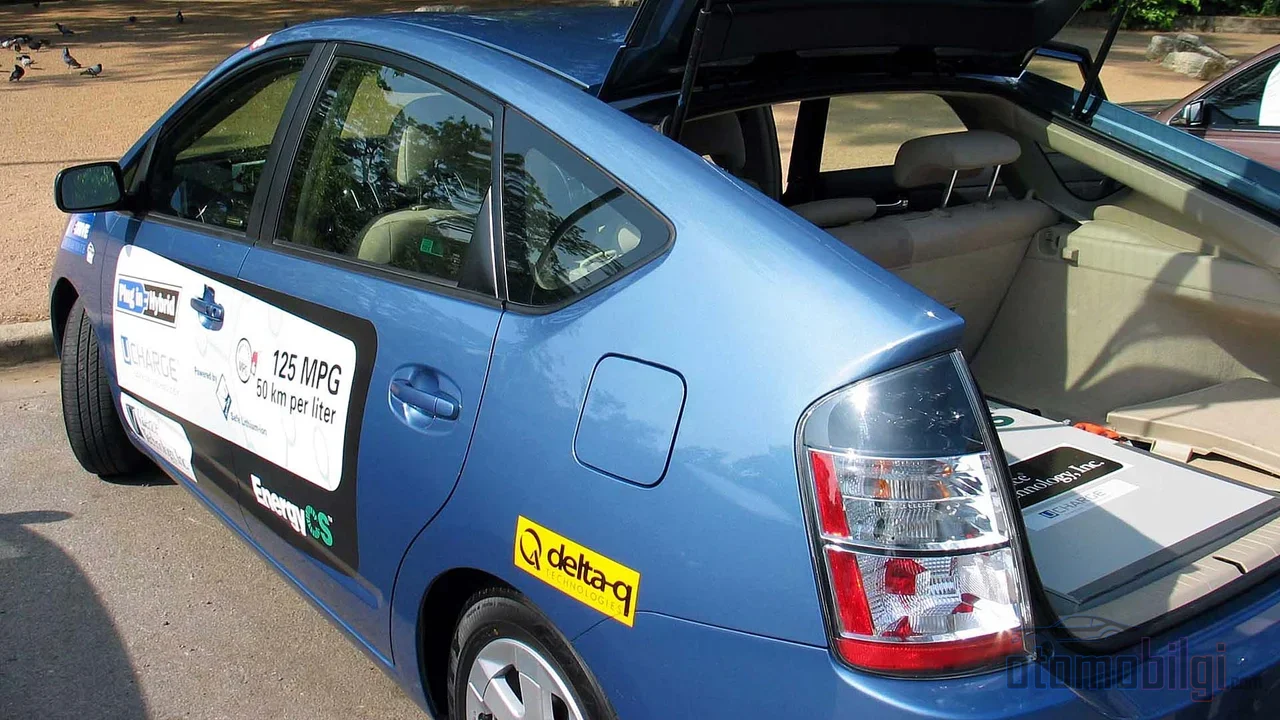
In the late 1990s, GM contracted Frank to convert an EV1 electric car into a plug-in hybrid; archival records show that in 2001 this EV1 prototype received significant funding for hybridization. The project was a concrete step in which Frank's concept was tested on a major manufacturer's hardware - unfortunately, it is known not to have turned into the production plans of that era, but the full cancellation story is not documented in detail in the archival material.
| Vehicle | Year | Base | Highlight |
|---|---|---|---|
| Flywheel hybrid | 1979 | Ford Pinto | Flywheel-based drive with CVT |
| Side F/X | 1991 | - | Gasoline record of 3313 mpg |
| Shamu | 1991 | - | M85 methanol record of 2200 mpg |
| Ford Taurus PHEV | 1996 | Ford Taurus | 68 mpg on the Detroit-Washington trip |
| Sequoia | 2000 | Chevrolet Suburban | Parallel hybrid architecture |
| Yosemite | 2002 | Ford Explorer | Plug-in conversion |
| Trinity | 2005 | Chevy Equinox (2006) | 4-wheel drive, 40-mile electric range |
Frank's architecture: why did he advocate the parallel hybrid?
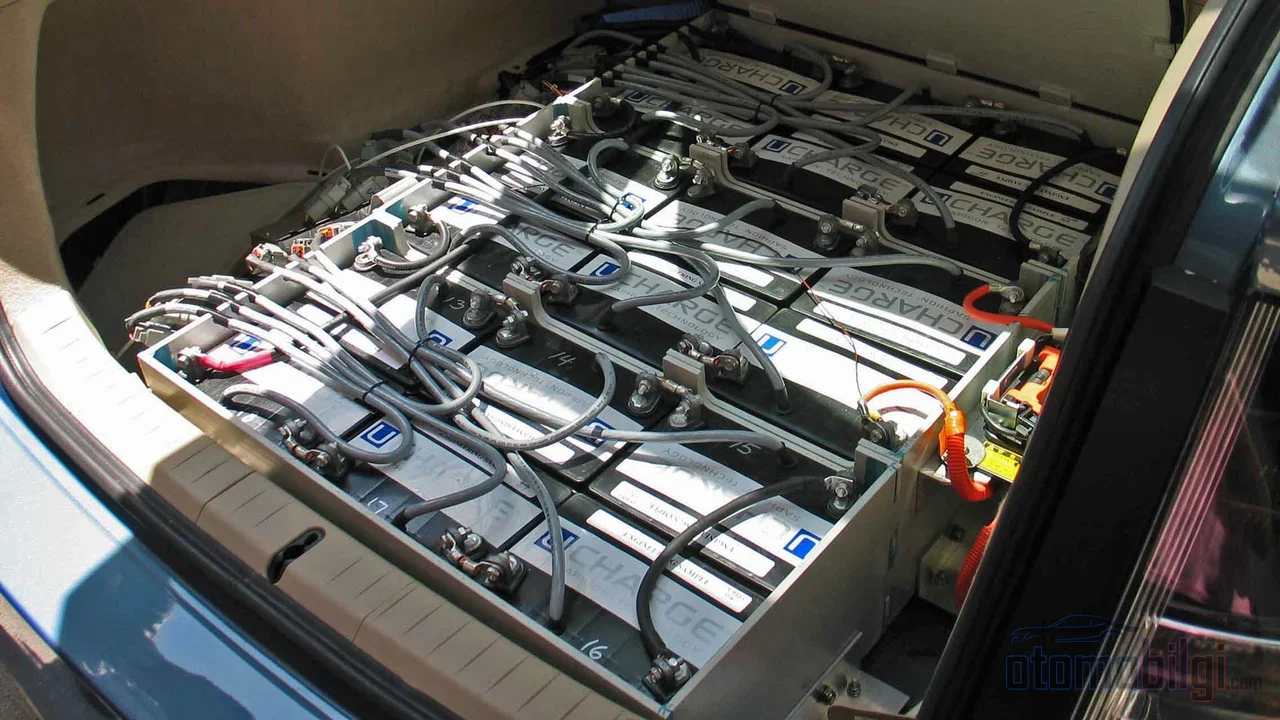
Frank's preferred configuration consists of four components: an electric motor, an internal combustion engine, a mechanical CVT, and a high-capacity battery. This is the arrangement known today as the parallel hybrid. While in series hybrids the engine only turns a generator, in the parallel architecture both power sources can contribute directly to the wheels; Frank defended this structure with measurable advantages in mechanical efficiency and component size.
His vision extended beyond the vehicle. A vehicle charged from the grid could feed energy back to the grid while parked; the vehicle-to-grid concept and the vehicle-to-house scenario that powers a home are aspects emphasized in Frank's projects from an early stage. His own definition of his goal is also striking: the ultimate aim was not a pure electric vehicle, but a vehicle meeting roughly one-tenth of consumption with liquid fuel and the rest with solar-generated electricity. This is clearly a different engineering choice from today's battery-electric-centric narrative.
Impact: patents, students, and work that triggered a research center
Frank's output is not limited to prototypes alone. He holds more than 35 patents; 12 of them belong to UC Davis, and the number of PHEV patents approaches 50. One concrete example is the 1998 patent on charge-depletion control for hybrid vehicles - the core control strategy of the plug-in hybrid.
His students are perhaps the most visible part of this legacy. Hundreds of them entered the automotive industry; some worked on the design of the Chevrolet Volt, one of the first mass-produced plug-in hybrids. Frank himself became one of the Volt's first owners on December 21, 2010 - seeing the concept he had championed for years become a commercial product in his own garage was a rare closure for an engineer.
Team FATE's seven proof-of-concept vehicles influenced California's emissions legislation to amend its zero-emission vehicle targets so as to include plug-in hybrids. In 2006, Frank founded Efficient Drivetrains Inc., a company to which the UC Davis patent was licensed. In the same year, 2007, the Plug-in Hybrid Electric Vehicle Research Center was established within UC Davis's transportation research program and launched its first consumer studies; in 2010 it was renamed the PH&EV Research Center.
One more well-deserved note: when the market saw its first modern hybrids at the end of 1999 - even though they were charged by braking energy - for Frank this development was a moment of vindication. The concept was right; only its timing and components were waiting for it.
An engineer who still draws even in old age: legacy and archive
Frank turned 90 on September 24, 2023; although he lives in a care home, he continues to write technical papers and support plug-in hybrid advocacy coalitions. This stubbornness is the exact meaning of the word in the article title: neither project cancellations nor age has stopped him.
His legacy is now becoming institutionalized. At the UC Davis Shields Library, a plug-in electric vehicle research collection is being established with archives donated by Frank and Felix Kramer, one of the leading figures of plug-in hybrid advocacy. The collection, spanning 1978-2012 and totaling nine linear feet, was planned to open to researchers by the end of 2024; an exhibition in the library lobby is also on the agenda.
Meanwhile, the place of long-range plug-in hybrids in today's debate also confirms Frank's vision: these vehicles offer an emissions advantage similar to battery-electric vehicles while consuming roughly four times fewer critical minerals and placing less load on the grid. A fifty-year engineering claim still being on the agenda with measurable arguments is the best summary of Frank's pioneering work.