How Did China Take Over the Plug-in Hybrid Revolution?
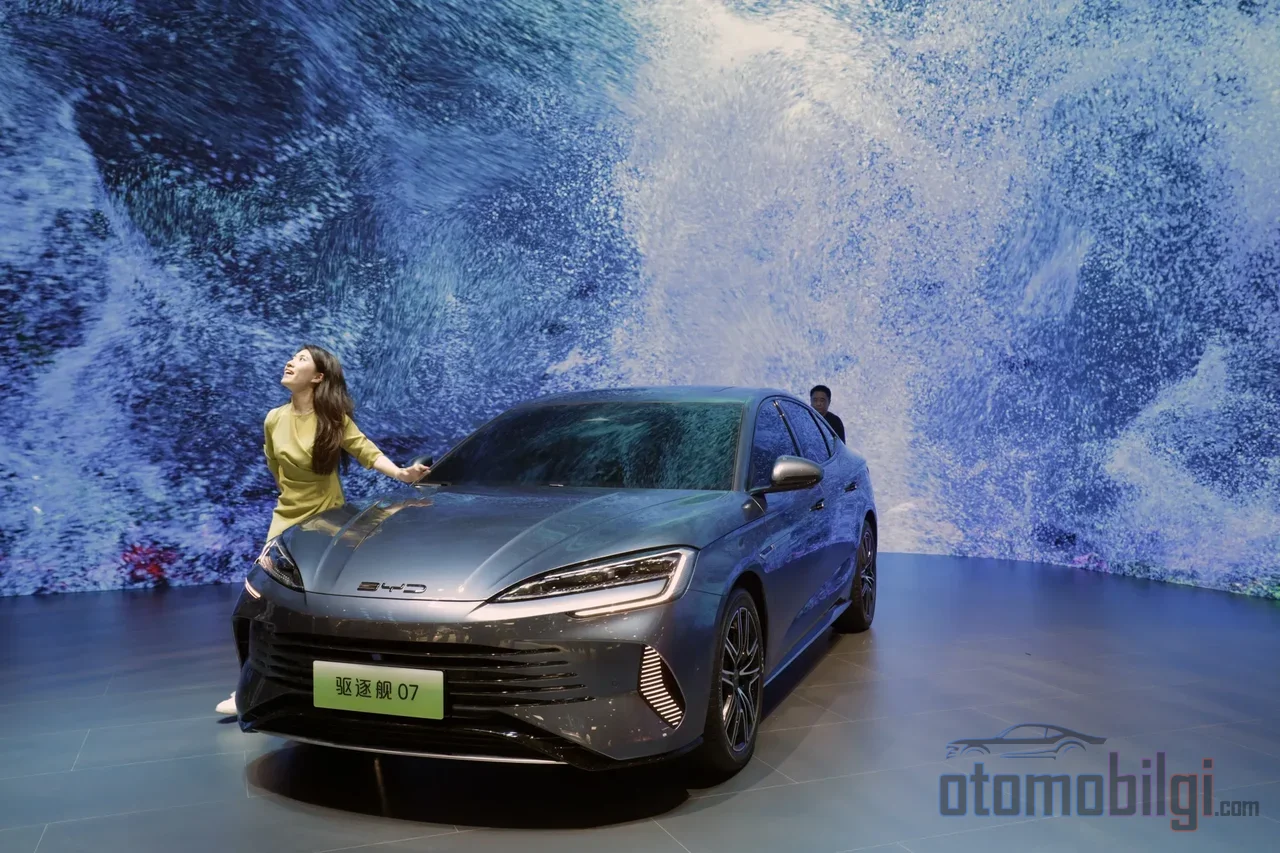
When a passenger car that could be plugged into a wall outlet went on sale in China in December 2008, the entire plug-in hybrid market was small enough to fit on a countertop. Fifteen years later, this technology has become one of the main pillars of a giant industrial branch spanning millions of vehicles. The difference between where the growth curve started and where it arrived represents one of the steepest scale leaps in automotive history: In 2010, annual global plug-in hybrid sales were measured in a few hundred units; by 2015, they had reached approximately 222,000. Today, the segment is mentioned alongside one of the names at the top of global sales charts: BYD. This page follows that curve stop by stop, number by number, and explains why the market has largely become a China story today.
How the Plug-in Hybrid Market Grew: From 300 Units to Hundreds of Thousands of Units
The term plug-in hybrid (PHEV) describes vehicles that can be charged externally, whose battery can be filled by plugging into an outlet, but which can also turn to their internal combustion engine over long distances. The year 2010 was the effective zero point of this category: By the end of the year, the entire global plug-in fleet was approximately 12,500 units, and only about 350 of those were in the plug-in hybrid class. In other words, that year the segment existed worldwide with a three-digit unit count.
What followed was a striking burst of momentum. In 2011, sales reached approximately 9,000 units, in 2012 they surpassed 60,000, and in 2015 they reached approximately 222,000 units. Moving from a three-digit figure to a six-digit one on paper in five years is the clearest indicator that the technology had moved beyond being a niche experiment and settled into mainstream manufacturer lineups.
| Year | Global PHEV sales |
|---|---|
| 2010 | Over 300 units |
| 2011 | Approximately 9,000 units |
| 2012 | Over 60,000 units |
| 2015 | Approximately 222,000 units |
The same growth applies to the plug-in market as a whole. Electric vehicle sales (including fully electric and plug-in hybrids) surpassed 20 million in 2025; this means an increase of roughly 20% compared to the previous year and one quarter of global car sales. By the end of 2024, the cumulative number of plug-in vehicles had risen above 75 million. The figure of 7.2 million mentioned in the title is frequently cited as 2025 global PHEV sales; however, since the official statistics available show total plug-in sales (including fully electric) at over 20 million, independent data is still limited to definitively verify the 7.2 million slice allocated to PHEVs. The analysis on this page continues by clearly marking this uncertainty.
Stops Along the Curve: F3DM, Volt, and the Plug-in Prius
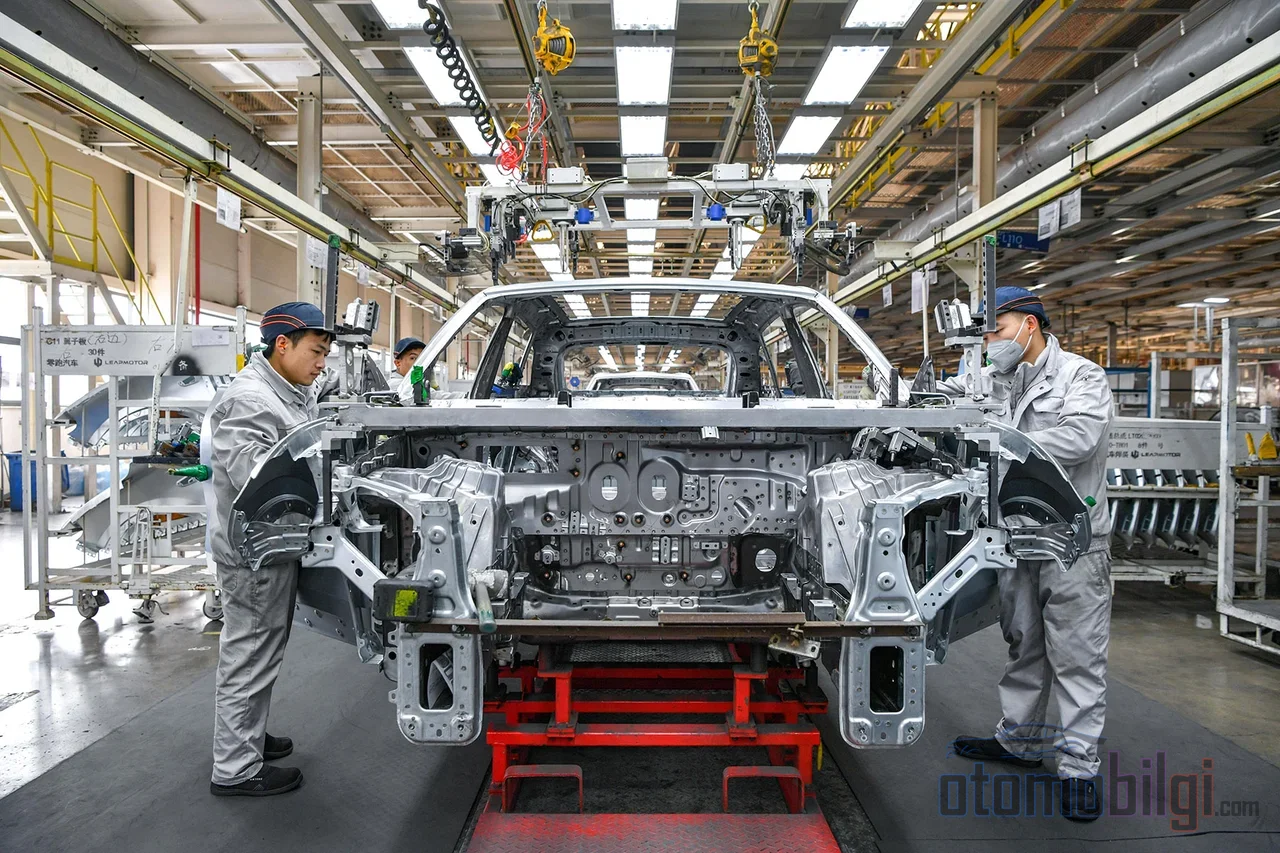
The growth curve did not emerge on its own; there are a few models that redefined the segment at each of its stops. The first stop is the BYD F3DM. Released for fleet sales in China in December 2008 and offered for regular sale on December 15, 2008 with a price tag of 149,800 yuan (approximately 21,900 dollars), the F3DM is considered the world's first mass-produced plug-in hybrid passenger car. It could be charged from a wall outlet and offered an electric range of approximately 60 km. Its predecessor, the F6DM concept, was unveiled in Detroit in January 2008, and the F3DM itself was introduced at the 2008 Geneva Motor Show. The tragicomic part is that being a pioneer didn't translate into sales: The F3DM went out of production in October 2013, with total cumulative sales of just 3,284 units. The segment's first mover, at the starting point of the curve, barely carried any weight.
Highlights
- While global PHEV sales were below 300 units in 2010, they reached approximately 222,000 units in 2015.
- The world's first mass-produced PHEV, the BYD F3DM, went on sale in December 2008 but sold only 3,284 units in total.
- BYD sold 4,602,436 new energy vehicles in 2025; of these, 2,288,709 were plug-in hybrids.
- The best-selling PHEV of 2025 was the BYD Song Plus, continuing its leadership streak from previous years.
- BYD alone sells roughly 18-20% of the global plug-in market.
The second stop is the entry of major global manufacturers onto the stage. Deliveries of the Chevrolet Volt and Nissan Leaf began in December 2010; these were the first mass-produced plug-in vehicles from giant automotive groups and the models that gave the curve its first real momentum. The F3DM had gone on sale a full two years before the Volt; the difference was that Chevrolet's scale and distribution power made the curve visible in a short time.
The third stop came from the founding brand of the hybrid. Global sales of the Toyota Prius PHV began in January 2012. The Prius Plug-in was about 7,500 dollars cheaper than the Volt on price; the trade-off was a shorter electric range compared to the Volt's electric range of around 35 miles (approximately 56 km). Together, these three stops established the segment's identity: the charging cable, fuel savings in daily use, and the gasoline engine as long-distance assurance.
BYD's Market Dominance in Numbers
When we move the curve to 2025, the picture becomes clear. BYD sold a total of 4,602,436 new energy vehicles in 2025, which meant a 7.73% increase over the previous year. The breakdown within that tells the segment's character well: 2,256,714 fully electric units (a 27.86% increase), 2,288,709 plug-in hybrid units (a 7.91% decrease), and approximately 57,013 commercial vehicles. In other words, BYD alone produced around 2.29 million PHEVs in 2025; that is more than half of the company's sales pie.
In the global context, the weight of this figure is striking. BYD alone sells approximately 18-20% of the global plug-in market in 2025; in manufacturer market share distribution, it leads by a wide margin with 19% (Tesla at 9%, the VW Group and Geely-Volvo at 5%, SAIC at 4%). One in every five plug-in vehicles on the road is a BYD. The company entered this path with all its might by completely ending internal combustion engine vehicle production in 2022; cumulative new energy vehicle production has surpassed 15 million, and as of early 2026, cumulative sales have reached 15.8 million units.
One point needs to be clear: statements about BYD's position in the global automotive group rankings reflect separate criteria; one rating company says it made the top five, while another reports it overtook Ford to become the sixth largest group. Both statements draw the same year's picture with different scopes; it is not a contradiction, but a difference in criteria. What is certain is this: 2025 was the year BYD firmly established itself among the traditional giants. The company's 2025 exports also exceeded 1 million for the first time (1.05 million units, an increase of roughly 140% over the previous year).
The PHEV Model Leaders of 2025: Song Plus and Its Chinese Rivals
The top of the segment now speaks in terms of model families, not units. The best-selling PHEV of 2025 was the BYD Song Plus, continuing its leadership streak from previous years; sold under the name Seal U in some markets, the model is BYD's best-selling SUV in China and its global cumulative production (excluding internal combustion) has surpassed 1 million. The Song family (PHEV and BEV together) sold 788,003 units in 2025; this means the family is still a giant but shrank with a year-on-year decline of 20.91%. The brand's footprint in Western markets also rests on this model: BYD registered 51,422 vehicles in the United Kingdom in 2025, and the Seal U DM-i was the brand's best-selling model for most of the year.
Just below the summit, Chinese rivals are also defining the segment's technical direction. The Li Auto L6 is a five-seat premium family SUV introduced in April 2024; it is Li Auto's best-selling model and, with a starting price of around $34,500, it offers a pure electric range exceeding 200 km by Chinese standards. With its hybrid powertrain, its total range reaches up to 1,390 km according to the CLTC cycle; its 0-100 km/h acceleration is 5.4 seconds, and its top speed is 180 km/h. The Geely Galaxy Starship 7 EM-i, on the other hand, takes a range-focused approach: with a total range announced at up to 1,420 km and a price band of $13,500-18,000, it pushes the segment's price-range frontier; the 2026 model year update arriving in November 2025 started at $13,470 with range and engine improvements.
| Model | Total range (announced) | 0-100 km/h | Starting price |
|---|---|---|---|
| Li Auto L6 | Up to 1,390 km (CLTC) | 5.4 s | Around $34,500 |
| Geely Galaxy Starship 7 EM-i | Up to 1,420 km | Not announced by the manufacturer | $13,470 (2026 MY) |
An honest data note is needed here: there is a widespread claim that seven of the top 10 PHEV models are BYD; however, while the statistics verifiable for this page clearly support the Song Plus's leadership and the top rankings of Li Auto and Geely, they do not definitively show the exact composition of the top 10. The table does not change the bigger picture: the upper block of the leadership list consists mostly of Chinese models, and the segment's center of gravity has shifted to China financially as well.
Where the Chinese Market Stands in This Story
China sold more than 13 million electric vehicles in 2025; that is more than two-thirds of the world's electric vehicle market. In September of the same year, new energy vehicles reached 67% of new car sales in China. The picture is similar on the vehicle fleet side as well: As of December 2023, with a plug-in passenger car fleet of 20.4 million, China is the largest in the world and accounts for nearly half of the global fleet. BYD's progress in Europe and Spain (135,307 registrations in Europe in the first five months of 2026 and a streak of outselling Tesla every month) is the outward-spilling face of this weight.
Where the Curve Bends in 2026
The leap in scale is not an endless ramp. BYD's first-half 2026 sales were 1,808,511 new energy vehicles; a decline of 15.7% year over year. While sales in the domestic Chinese market shrank by 39.6% (1,016,255 units), exports rose by 70.7% to 792,256 units; a monthly export record of 175,349 units was set in June 2026. The company's 2026 target is 5.0-5.5 million new energy vehicles; reaching that goal requires monthly sales of over 500,000 units in the second half of the year. On the financial side, BYD's 2025 revenue was 803.97 billion yuan (about 113 billion dollars, up 3.46%) while net profit fell 18.97%; the main engine of revenue growth was strong plug-in hybrid sales.
Let us answer the question the way this page promises: the plug-in hybrid market is one of the fastest-scaling segments in automotive history, growing from a few hundred units in 2010 to 222,000 in 2015 and into the millions as of 2025; BYD alone sells roughly one fifth of this market, and its best-selling model (Song Plus) is a BYD product. The curve is now not only heading upward but also spreading geographically: the new vector of growth is exports, and Chinese manufacturers are writing the segment's rules with the equation of range and price. The journey that began with the quiet fate of 3,284 F3DM units ended fifteen years later with one in every five plug-in vehicles on the world's roads coming from a single brand; this chapter of engineering history is still being written.