Renault Kangoo Elect'Road: Right Engineering, Wrong Time
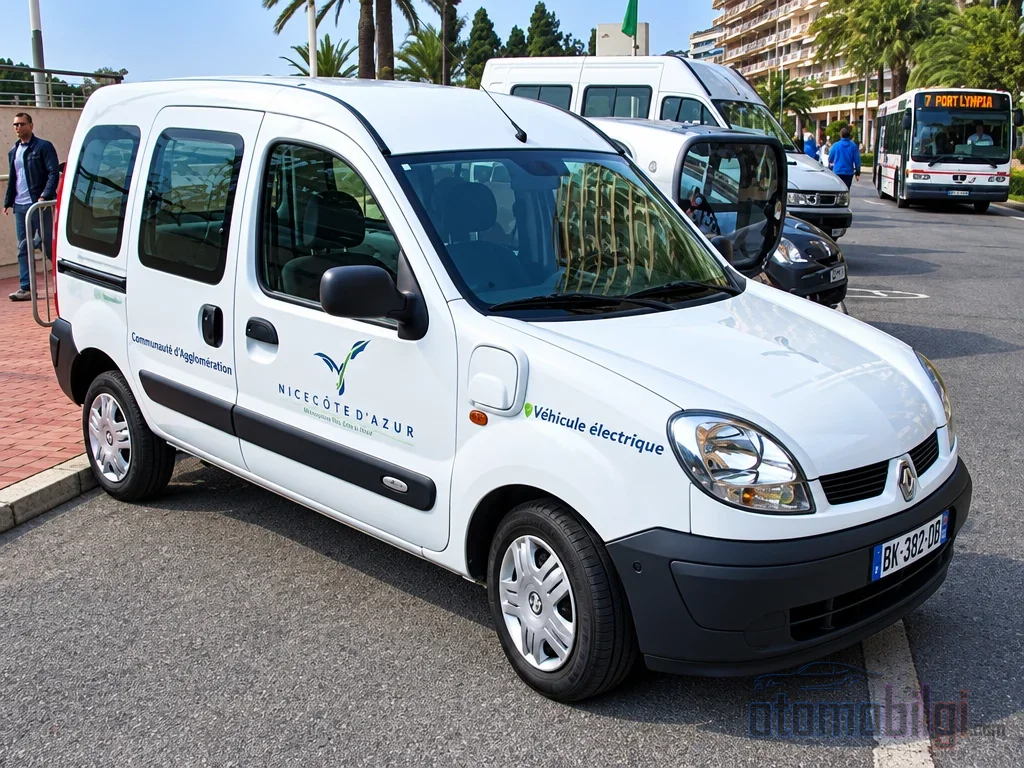
When hybrid cars come to mind, the Toyota Prius is the first to spring to mind; those reaching a bit further back mention the Lohner-Porsche Mixte. Between the two sits the Kangoo Elect'Road, launched for sale by Renault in 2003 and quietly withdrawn after about 500 units. This van, the first plug-in series hybrid commercial vehicle to enter series production in Europe, stands as a textbook example of how the right engineering calculations may have failed to time the market.
The story of the Elect'Road revolves around a 25,000 euro price tag, a 312-kilogram nickel-cadmium battery, and a small 16 kW gasoline generator. When we examine the figures one by one, a surprisingly coherent engineering solution emerges. So why could it sell only 500 units?
From the Lohner-Porsche to the Prius: The Long Journey of the Hybrid Concept
The idea of series hybrid architecture has existed since the early 1900s. The Mixte, developed by Ferdinand Porsche for Lohner-Werke, was a setup in which the gasoline engine only ran the generator, with electricity carrying the power to the wheels; when this vehicle won the Exelberg Rally in 1902, it proved that the concept was not merely a laboratory curiosity. Moreover, the early Lohner-Porsche hybrids could be charged from an external source before being driven; meaning the plug-in idea had entered the automobile almost immediately after the invention of the plug.
Then came a long silence. In 1997, the Toyota Prius started a new era in automotive as the world's first series-production hybrid car; the Honda Insight became the first hybrid offered for sale in North America in 1999. But this first wave did not reach for the charging plug: the Prius and Insight were self-charging hybrids that replenished their battery only through their own gasoline engine and regenerative braking. The market needed to mature for the era of the plug-in hybrid, in today's sense, where the user charges the vehicle from a socket. And that is exactly where the Kangoo Elect'Road emerged, in the middle of this gap, as a series-production commercial vehicle.
Highlights
- Offered for sale in 2003, the Elect'Road was the first plug-in series hybrid commercial vehicle to enter series production in Europe
- The Saft nickel-cadmium battery pack delivering 132 V and 13.2 kWh weighed 312 kg
- The 505 cc Lombardini gasoline engine fed the generator with 16 kW of power
- Total range was 150-200 km, and the price was at the level of approximately 25,000 euros
- It was withdrawn from production after sales of about 500 units
Inside the Series Hybrid Architecture: How Did the Kangoo Elect'Road Work?
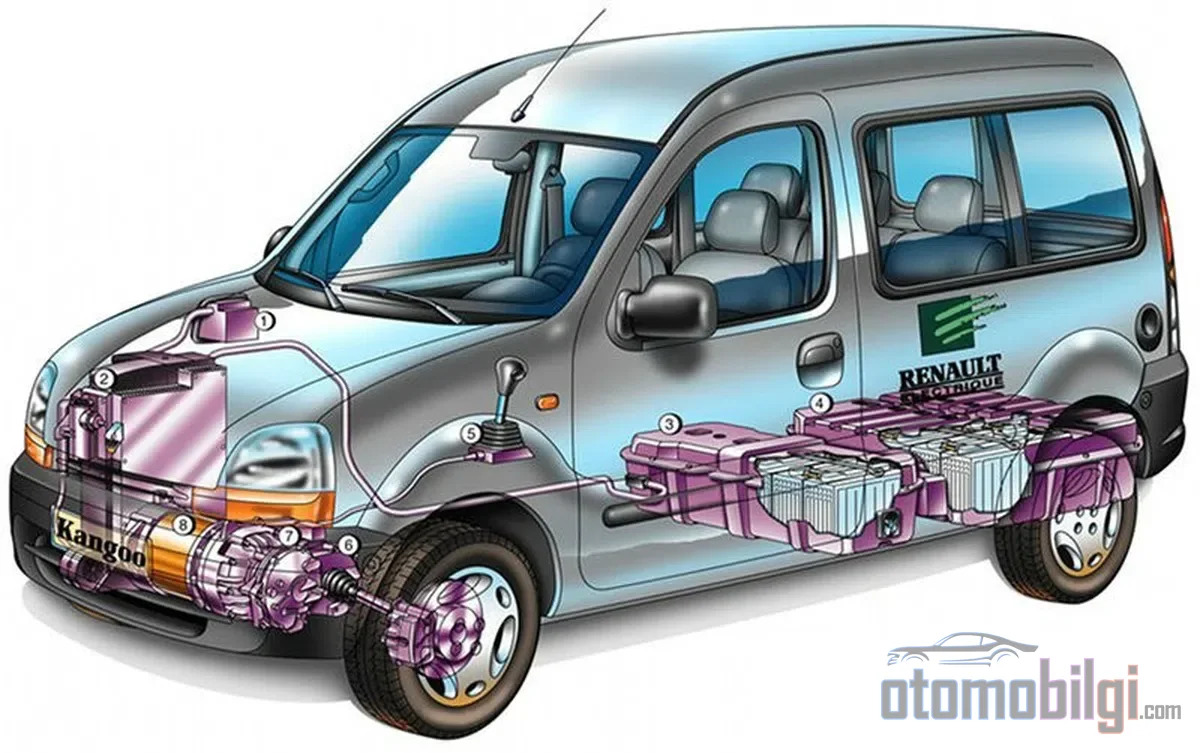
The Elect'Road was a plug-in series hybrid version of Renault's popular Kangoo model and was sold alongside the fully electric Kangoo called Electri'cité. The critical architectural decision was this: the gasoline engine was never connected to the wheels. The liquid-cooled Lombardini LGW523 MPI gasoline engine with a displacement of 505 cc served only as a generator, carrying the power to the wheels entirely electrically through dual alternators. Each alternator could deliver up to 5.5 kW at 132 volts at 5000 rpm; the engine's operating speed and therefore the generator output varied according to demand.
The vehicle operated on a logic called blended mode: engine and battery power could engage simultaneously. The range extender function was activated manually with a button on the dashboard; in other words, the driver could decide for themselves when the generator should kick in. In practice, this flexibility meant having two different vehicles in one: fully electric in the city, and a generator-assisted van on longer trips.
Battery Pack: A 312-Kilogram Nickel-Cadmium Mass
The Saft-produced nickel-cadmium battery was located under the chassis in two separate cases: one case held 8 and the other 14 monoblocks, and each case was cooled by a fan. The pack delivered 132 volts with a minimum capacity of 100 A·h and 13.2 kWh of energy; its weight was 312 kilograms. The battery came with a 5-year or 1500 charge cycle warranty, and the replacement cost, if needed, was 7,000 euros. That figure meant nearly one-third of the vehicle's price of around 25,000 euros; it alone shows how fragile the battery economics were under 2003 conditions.
On the charging side, the built-in 3.5 kW charger could bring the empty pack to 95 percent in about 4 hours from 220 volts; a 2 kW charging mode was also available for 10-amp circuits. While the vehicle was plugged in, the cabin could be preheated in winter; cabin heat came from an auxiliary coolant circuit heated by the battery pack and the range extender engine.
Range and Consumption Figures
| Operating Mode | Range |
|---|---|
| Fully electric mode | 60-100 km |
| Range extender active (blended) | 150-200 km |
The consumption figures are interesting: when the range extender engine ran continuously, consumption rose to around 7 lt/100 km, but user experiences reported an extraordinary value of 3 lt/100 km for that era when the generator was kept active only about 10 percent of the time. This shows that the Elect'Road's efficiency could change dramatically depending on the usage pattern.
Driving experience details also reflect the architecture: when the foot was lifted off the brake, the van crept forward automatically, a warning light came on when the state of charge dropped to 10 percent, and maximum power was raised from 22 kW to 29 kW in Boost mode to improve acceleration. There was a separate snow mode for low-grip surfaces. Top speed was at the 115 km/h level. The synchronous electric motor did not require brush replacement; this was a significant advantage that lowered maintenance costs compared to the brushed solution found, for example, in the Citroën Berlingo Electrique.
Why Did It Sell Only 500 Units?
Rarely is there such a precise number in electric vehicle history: after being sold in France, Norway and to some extent the United Kingdom, the Elect'Road was discontinued with approximately 500 units in total. Three factors came together behind this figure.
The first is price. Around 25,000 euros was far beyond the budget of an average commercial vehicle buyer in 2003. The second issue was battery economics: With 312 kilograms carried for 13.2 kWh of energy and a 7,000-euro replacement cost, the nickel-cadmium chemistry lagged far behind today's lithium-ion technologies in the cost-to-energy density balance. The third issue was infrastructure and market maturity: In Europe in 2003, the charging network for commercial fleets was practically nonexistent, and the plug-in hybrid concept was not even yet defined in the eyes of buyers. The hybrid wave initiated by the Prius was limited to self-charging systems; for the idea of the plug-in hybrid to reach the masses, lithium-ion batteries and the charging network had to mature, which meant nearly another decade had to pass.
In this sense, the Elect'Road was one of the vehicles that paid the price of being early. The engineering solution was consistent within its own parameters: A 60-100 km electric range covered urban delivery use, while the 11-liter fuel tank and generator carried the range to 150-200 km on longer trips. But consistent engineering alone is not enough in an immature market.
Short Lifespan and the 2007 Redesign
The production life of the Elect'Road was short; with the redesign of the Kangoo family in 2007, this plug-in experiment was completely withdrawn from the scene. Renault continued to use the Kangoo platform as a testing ground for future electric vehicles and, starting from 2011, carried this accumulated experience to commercial success with the fully electric Kangoo family. Even in later years, the range extender idea was not abandoned: The Kangoo Z.E. announced in 2019 Hydrogen was designed to carry its WLTP range from 233 km to 370 km with a 10 kW hydrogen fuel cell range extender. So the architecture itself did not die; only the energy carrier and market conditions changed.
The Lessons It Left for Today's Plug-in Hybrid Market
For reading the Elect'Road today, the clear answer is this: The Renault Kangoo Elect'Road was the first series-production series-hybrid commercial vehicle in Europe that could be charged by plug; its sales of roughly 500 units showed that the market and battery technology, not the vehicle, were not yet ready.
The fundamental parameters of the modern plug-in hybrid market are scaled versions of everything the Elect'Road attempted: plug-in charging, fully electric use over short daily distances, and a second energy source on long journeys. While the Chevrolet Volt was the first automobile to come closest to carrying this formula to commercial success in 2010, the burden the Elect'Road carried alone in 2003 is now shared by thousands of models. Operating in blended mode with its 16 kW generator and leaving range management to the driver, this van proved that the plug-in hybrid idea was conceptually validated but not commercially viable with pre-lithium-ion battery costs.
This chapter of hybrid history, squeezed between the Lohner-Porsche and the Prius, is one of the clearest archival witnesses that timing in the automotive world is as decisive as technology. Are 500 units too few? Perhaps. But as proof of a concept whose market was correctly read and implemented decades ahead of time, the Elect'Road deserves to be remembered not because it remained a minority, but because it came so early.