LAZ 360EM: The Soviets' Only Surviving Hybrid Bus
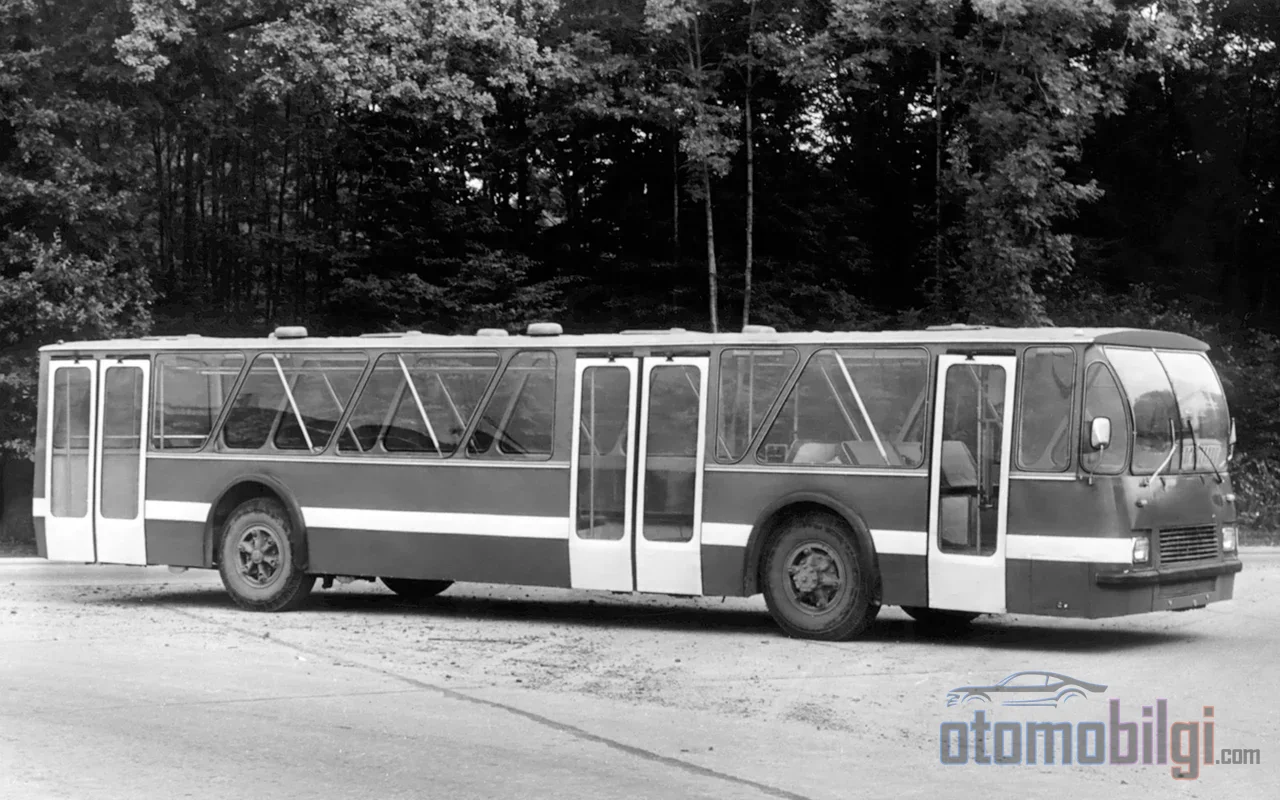
In 1970, a bus factory in the city of Lviv, then within the borders of the Soviet Union, combined two ideas that would only enter the agenda of the global automotive industry decades later in a single prototype: a low-floor body and hybrid drive. Only a single example of this concept bus, called the LAZ 360EM, was produced, and series production never materialized. When hybrid cars are mentioned today, the 1997 Toyota Prius or Ferdinand Porsche's Lohner-Porsche experiments of the early 1900s come to mind; this Soviet bus in between, however, remains a little-known engineering move left outside the Western-focused narrative.
What Is the LAZ 360EM and Why Is It Important?
The LAZ 360EM is a concept city bus with a hybrid drive system, developed at the Lviv Bus Factory (LAZ). According to records found in hybrid vehicle listings, the vehicle is described as the first and last low-floor Soviet city bus with a hybrid transmission. The passenger cabin floor was only 360 mm above the road surface; that figure means just a little more than one foot. With this measurement, the bus was an early example of the low-floor bus concept that has become standard in urban public transport today.
There is some uncertainty among records regarding the dating of the vehicle: while some archival records trace the vehicle's roots back to the NAMI institute's LAZ 360 project in 1963, the more widely accepted date is 1970. In either case, the result is the same: the Soviet Union brought the idea of a low-floor hybrid city bus into the field using its own engineering resources, independently of the West.
Key Highlights
- Floor height of only 360 mm: considered the world's first low-floor bus
- Approximately 11 meters in length, additional axles and extra doors, nominal capacity of 109 passengers
- Drivetrain: Electric power transmission with a ZIL-375 engine, a layout similar to railway applications
- Only a single example was produced; series production never began
Pioneering the Low-Floor Concept
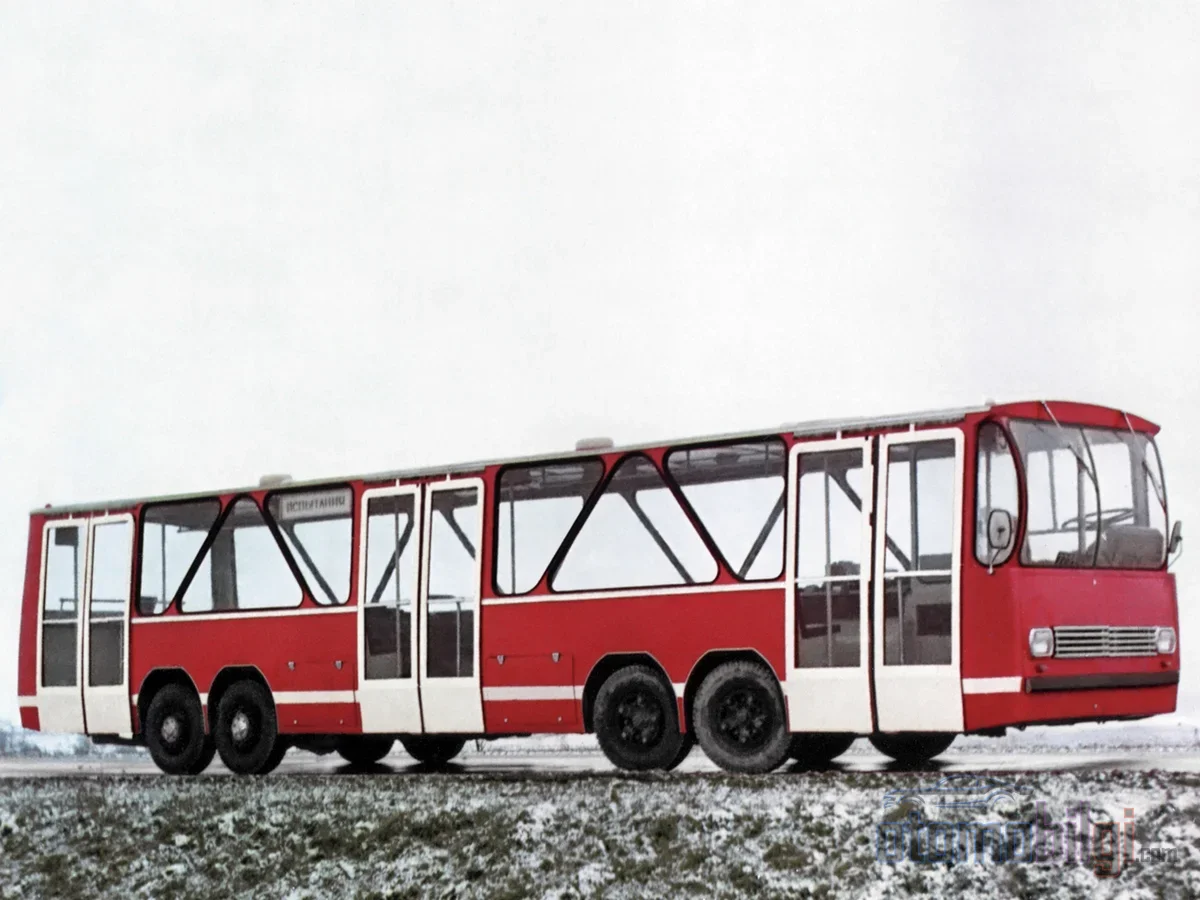
The GSKB design team, with the support of LAZ specialists, developed a city bus with an almost completely flat floor. The 360 mm floor height sped up boarding and alighting, reducing time spent at stops, and made the difference between cars and public transport especially visible for elderly passengers. The concept put forward, decades in advance, one of the fundamental design criteria of modern city buses.
During the development of the prototype, the vehicle reached a length of approximately 11 meters; two more axles were added to the body, and passenger flow was supported with additional doors. The nominal capacity was set at 109 passengers, and in crowded use this number rose even higher. These figures show that the vehicle was not a display model but an engineering proposal designed for real urban traffic.
How Did the Hybrid Drive System Work?
The LAZ 360EM's drive architecture followed a different logic from today's hybrid cars. The vehicle used electric power transmission, meaning a power delivery similar to railway vehicles: an internal combustion engine drove a generator, and the electricity produced was transferred to the traction motors. This arrangement, in today's terminology, is a bus-scale application of the series hybrid approach, and it provides advantages such as instant torque control at the wheels and energy recovery during braking.
At the core of the power unit was a ZIL-375 engine. The hybrid drive system was also tried in the same factory's 1972 experimental LAZ-699 prototype, and 75 kilowatts of power was obtained from this setup; this shows that the Lviv engineers' work on hybrids was not limited to a single vehicle.
Regarding the 360EM, detailed technical values such as engine power, torque and acceleration are not found in any reliable record; these values were not disclosed by the manufacturer. Even so, the available data clearly reveals what the vehicle was intended to do: to alleviate the gasoline engine's fuel consumption problem with electric transmission and to increase stop efficiency with a low-floor body.
The Context of the Lviv Bus Factory
The LAZ factory was founded in 1945 in Lviv, which was then part of the Soviet Union. The factory's main product, the LAZ-695 city and suburban bus, was produced between 1965 and 2002, and with more than 250,000 units it became one of the workhorse models of the Soviet bus industry; this volume carried LAZ to the position of Europe's largest bus manufacturer in the 1980s. The first LAZ-695 prototype was built in 1956 under the name Lviv, and it was the first time in the Soviet Union that a longitudinal rear engine and rear-wheel drive arrangement was used.
The factory's experimental spirit extends back to 1963: in the same year, LAZ and NAMI developed a fully automatic hydromechanical transmission for city buses. The LAZ-695Zh produced with this transmission was limited to only 40 units, but the system was later transferred to the LiAZ-677, of which approximately 200,000 units were produced. This picture explains the environment in which the 360EM was born: a factory with both high technical capacity and experimental boldness, but whose production decisions depended on central planning.
Why Did the Prototype Not Move to Series Production?
The technical part of the problem had been solved; the obstacle was on the production side. Under the Soviet industrial conditions of the time, implementing this idea on an industrial scale was not a realistic task, and the planning authorities did not finance it. As a result, LAZ's main product remained the LAZ-695, developed in the late 1950s, until the end of the 1990s.
There are other examples showing that this was not the misfortune of a single prototype, but a systematic pattern. The ET-800 and ET-600 developed in Estonia were the Soviet Union's first hybrid minibuses; combining the ZAZ-966 engine with a tram electric motor, approximately 40 units of this vehicle were produced between 1967 and 1970, test drivers gave positive feedback, but the planners refused to finance industrial-scale production. The SWS hybrid trolleybus prototype in Finland was similarly shelved for economic reasons. Amid the oil crisis environment of the 1970s, Soviet engineers reached the same technical problems as their counterparts in other countries with electric and hybrid vehicles; no experimental vehicle was approved for mass production.
The Place of the LAZ 360EM in the Century-Long Hybrid Journey
Hybrid drive itself is far older than the 1970s. Ferdinand Porsche showcased electric drive with the Lohner-Porsche, introduced at the 1900 Paris Exposition, and then developed the System Lohner-Porsche Mixte layout in which a gasoline engine powered the generator; in 1902 a rally was won with this vehicle, and by 1906 more than 300 vehicles had been sold. This early breakthrough came almost a century before the first Prius.
On the Soviet side, the history is astonishingly early too: Toyota's first hybrid work dates back to 1968, with the project being halted in the early 1980s; the LAZ 360EM, in exactly that window, around 1970, was on the road as a tangible prototype. When Toyota launched the first mass-produced hybrid with the Prius in 1997, the idea of a low-floor hybrid bus in Lviv had long since been tried and forgotten. Hybrid buses are an ordinary part of city fleets today; the accumulated technical ideas behind that development were exemplified in the West by the Prius generation, and in the East by rare prototypes like the LAZ 360EM and ET-800.
The Legacy of a Sole Example
The LAZ 360EM is the low-floor hybrid city bus of which the Soviets produced only a single example. The engineering proposal is clear: a 360 mm floor height, ZIL-375-based electric powertrain, a capacity of 109 passengers, and accelerated passenger flow with the extra doors. All of these features are solutions now considered ordinary in today's modern city buses; the difference is that LAZ proposed them around 1970, in an environment where central planning could not spare capital. What determines the vehicle's value is not that it could be produced, but how early it was conceived.
Sources
- List of hybrid vehicles - Wikipedia
- 15 bus projects Russia can be proud of - RBTH
- LAZ-360 - Avtoclassika US
- LAZ-695 - Wikipedia
- LAZ-699 - Wikipedia
- Buses LAZ Lviv Bus Factory Ukraine - Myn Transport Blog
- Volt War: How U.S. And Soviet Engineers Sparked A Revival Of Electric Cars - RFE/RL
- Artist Breathes New Life Into Ukrainian Flagship LAZ Bus - autoevolution
- Lohner-Porsche - Wikipedia
- Development of Prius and Hybrid Strategy - Toyota Global