Fiat 131 Ibrida and Forgotten Early Hybrid Experiments
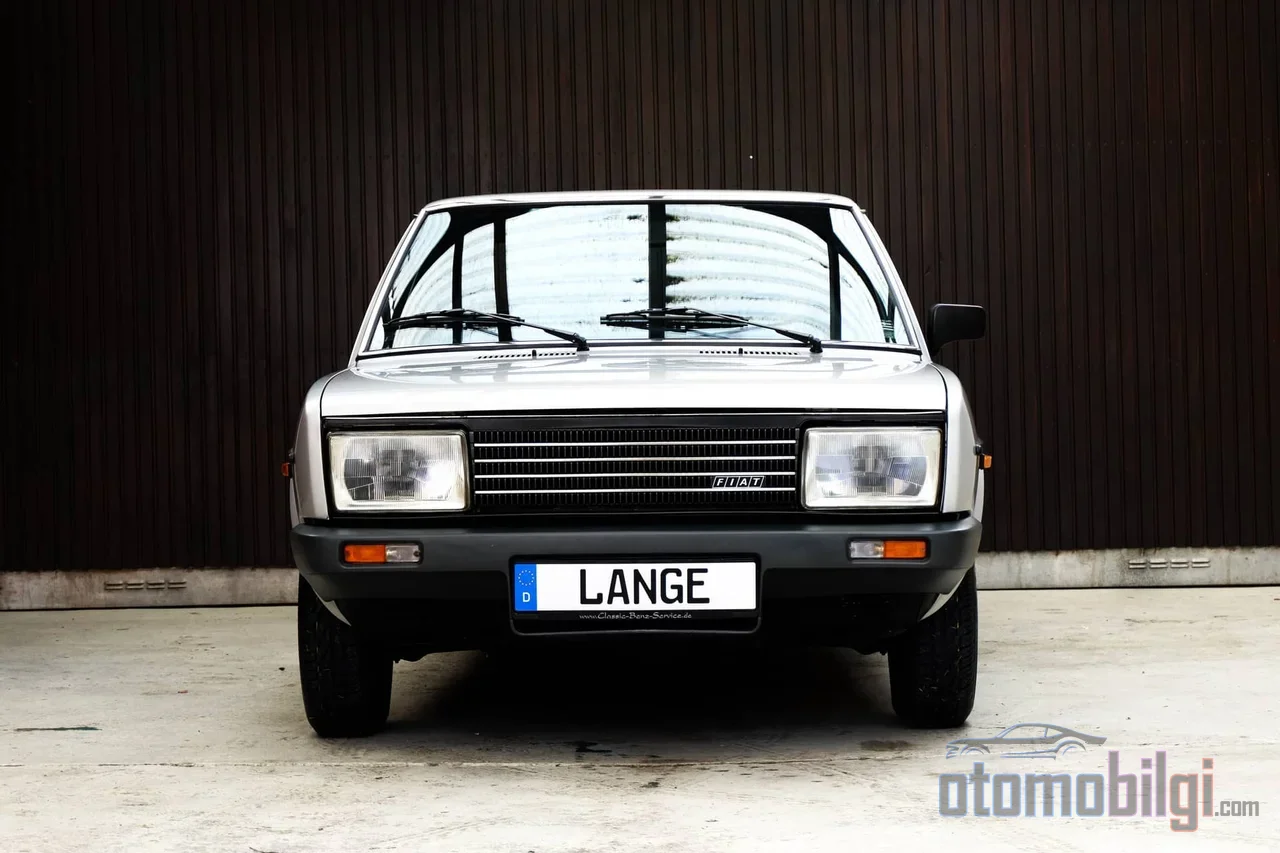
In 1979 in Detroit, a Fiat 131 with a trunk full of heavy batteries took the stage. The body was familiar: an ordinary family sedan mass-produced in Turin, with millions sold. But the setup under its hood seemed to have arrived several decades early in automotive history: a gasoline engine and an electric motor were shaking hands in the same drivetrain. Its name was the Fiat 131 Ibrida, and even today most car enthusiasts have never heard of it.
Isn't that gap surprising? When hybrid cars come up, the Toyota Prius from 1997 and, a few years later, the Honda Insight come to mind. Yet when you look back, there lies an intermediate step buried in between: a technically working prototype taken to the threshold of mass production - and then quietly shelved. In this article, we look at that prototype's technical structure, the motivation behind its development, and why it never made it to the road.
The Late 1970s: The Climate That Fueled Hybrid Research
It was no coincidence that Fiat developed a hybrid prototype in 1979. The 1973 oil crisis had shaken global consumer confidence and permanently changed what car buyers expected in terms of fuel efficiency. Especially in the American market, this period coincided with an era that stretched roughly from the early 1970s to the early-to-mid 1980s and went down in automotive history as a period of stagnation: engine power was restricted, performance was melting away, and fuel consumption took center stage in every sales pitch.
This pressure pushed not only established manufacturers but also unexpected names to experiment. Briggs & Stratton, known for lawn mower engines, developed a six-wheeled hybrid electric prototype in the late 1970s. In 1981, Exxon engineers delivered a hybrid gasoline-electric Toyota Cressida equipped with their own technology in Japan. At the same time, high fuel prices encouraged the short-lived production of unusually designed pure electric cars like the CitiCar. In short, the environment in which the Fiat 131 Ibrida was born was a laboratory atmosphere where the hybrid idea was taken seriously but had not yet gained commercial certainty for anyone.
Fiat 131: The Car the Prototype Was Built On
To understand the prototype, you need to know its carrier body. The Fiat 131 was a mid-size family car introduced at the 1974 Turin Motor Show and positioned as the successor to the Fiat 124. It used a front-engine, rear-wheel-drive layout and was initially sold with OHV inline four-cylinder engines displacing 1,297 cc and 1,585 cc. Body options included a 2- and 4-door sedan and a 5-door station wagon, and total production reached 1,513,800 units.
An interesting detail: Because the 131's launch coincided with the peak of the 1973 oil crisis, strikes, and hyperinflation, its initial sales were low; however, the car later recovered significantly. It entered the US market in 1975 and was sold there with a 1.8-liter DOHC engine, and even with a GM-sourced 3-speed automatic transmission. An experimental derivative of the version later sold in the USA as the Fiat Brava formed the very basis of the 131 Ibrida prototype. In other words, if Fiat was going to experiment, it chose its best-selling, most mature platform - a sensible engineering decision. Moreover, there was more than just an ordinary sedan beneath the 131: The 131 Abarth, 400 units of which were produced for homologation purposes, had become a rally legend that won the WRC manufacturers' championship in 1977, 1978 and 1980. This body offered the project a solid foundation with both series production experience and a motorsport record.
Highlights
- The Fiat 131 Ibrida was an experimental hybrid prototype introduced in 1979 in Detroit.
- Power source: A 903 cc petrol engine detuned to 33 hp + a 24 kW DC electric motor.
- This was done via a regenerative braking system; the batteries were in the trunk, adding 175 kg of extra weight.
- The project never got past the prototype stage; no official and detailed reason for cancellation appears in the records.
How the Fiat 131 Ibrida Worked: Technical Structure
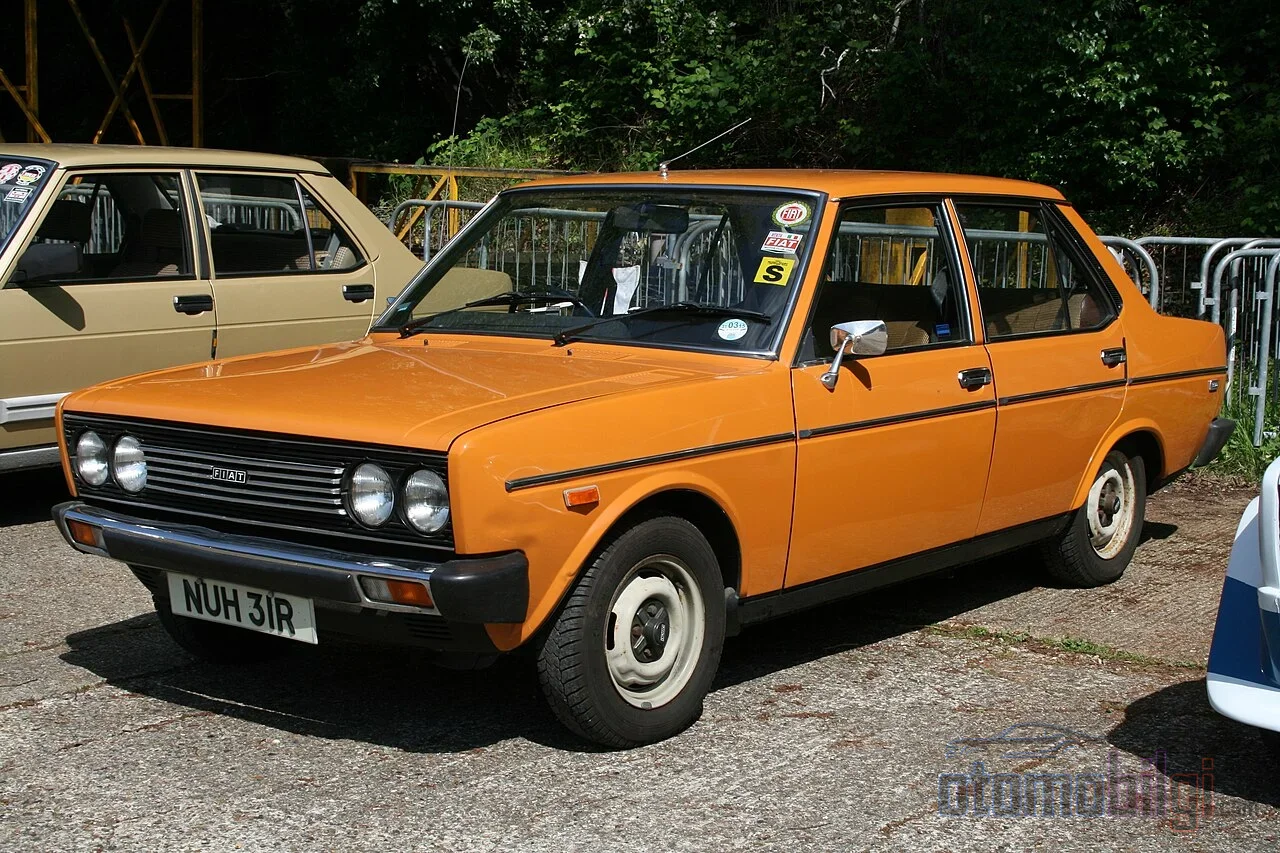
The prototype's approach is a primitive but workable early example of today's full hybrid logic. Fiat disabled the 131's normal engine and used the 903 cc petrol engine taken from the smallest of its built-in production range, the Fiat 127 - moreover, with deliberately detuned settings so that it delivered 33 hp (24 kW) instead of full power. Added alongside it was a DC electric motor of the same output, i.e. 24 kW. Deliberately downsizing and choking a petrol engine may seem odd at first glance; but the chain of logic is simple: since the two sources would work together, neither needed to deliver full power on its own, and the low tuning also pulled consumption down.
| Item | Value |
|---|---|
| Year and place of introduction | 1979, Detroit |
| Petrol engine | 903 cc Fiat 127-derived engine, 33 hp (24 kW) |
| 24 kW DC | Energy recovery |
| Energy recovery | Regeneration through the braking system |
| 250 ampere, located in the trunk | 250-ampere, located in the trunk |
| 175 kg (386 lb) | 175 kg (386 lb) |
| Never got past the prototype stage | It never got past the prototype stage |
The most modern aspect of the architecture was energy recovery: during braking, energy was recovered through the electric motor acting as a generator. The fact that this principle, which we today call regenerative braking, was integrated into the brake line of a 1979 prototype shows that Fiat engineers thought about the problem at the system level, not just at the "add a battery" level. But the price was set by physics: 250-ampere batteries were placed in the trunk, and the vehicle gained a total of 175 kg in weight. Sacrificing this much of a family sedan's trunk capacity and dynamic balance was the concrete cost of going hybrid with 1979's battery technology.
Why Didn't It Go Into Mass Production?
This is where the most honest part of the story lies: the prototype was exhibited in Detroit, refined in internal evaluations, and then the project was terminated. Period records describe the project as an attempt that never got past the prototype stage and was not deemed successful. Yet today no official cancellation reason published by Fiat or any detailed archival document can be found. We have no concrete decision document behind the question "Why did it not turn into series production"; it is more honest to accept this gap as a gap rather than guessing the answer.
Still, the context allows us to draw a reasonable framework based on the technical picture: the 175-kilogram penalty, the loss of trunk space, and the burden of two separate power sources on production, service and cost formed a heavy equation for series production in an oil crisis economy. Seeing that other companies with similar attempts in the same period also halted their hybrid investments after a while suggests this was not the failure of a single firm, but the technological and economic limit of the era. For example, Toyota's own hybrid development work dates back to 1968; that project was also terminated in the early 1980s. Twenty years before the Prius, the idea was not lacking; mature batteries and power electronics were.
A Knot on the Long Thread: Since Lohner-Porsche
To put the 131 Ibrida in its rightful place, we need to remember how old hybrid history actually is. Ferdinand Porsche was 20 years old when he designed the world's first hybrid car, and the 20th century had only just begun: after the experimental vehicle called Semper Vivus, the production-ready Lohner-Porsche Mixte emerged in 1901. Built in Vienna, these vehicles are among history's first hybrid electric cars; the "Mixte" half cars used a series hybrid layout, delivering drive via wheel hub motors. So the hybrid idea was already on the scene a full 78 years before Fiat's attempt, in an era when even the logic of series production was still taking shape.
Throughout the 20th century, this thread was stretched again from time to time. In the 1960s and 1970s, Victor Wouk, the most prominent name in hybrid electric vehicle work, built a current and functional HEV prototype; today he is called "the godfather of the hybrid". Several more electric prototypes emerged in the same period. But none turned into series production, and the hybrid idea returned to the archive shelves again until the 1990s. The Fiat 131 Ibrida is precisely one of the knots on this thread: neither the first attempt nor a failed absurdity; one of the most serious applications in 1979 of an idea waiting to mature.
Other Memories of the Same Decade and Gaps in Memory
The late 1970s and early 1980s produced a wave of experimentation not limited to a single example. Briggs & Stratton's six-wheeled 1980 prototype and Exxon's 1981 Toyota Cressida prove that hybrid research in those years was conducted not only in Europe but across two continents at once. Honda's official history is not empty in this period either: before launching its first production hybrid, the Insight, with a parallel hybrid system called IMA (Integrated Motor Assist) in 1999, the company had worked on a hybrid prototype derived from the Civic using off-the-shelf motor and battery components. So it is more accurate to read the 1997 Prius and the 1999 Insight not as miracle births, but as moments when the technology finally caught up with seventy years of accumulated experimentation.
The memory of this era, however, is faulty. Some vehicles circulate as stories passed down by word of mouth: for example, the Daihatsu Charmant, introduced in 1974 and based on the Toyota Corolla platform, is well documented; but there is no solid record of a hybrid prototype belonging to this car. The story of the hand-built hybrid vehicle known as the "Honda Gaselle" similarly lives on only in isolated and unverified accounts. This gap between archival history and popular lore also shows the opposite of what makes the 131 Ibrida valuable: it was, at least, a project that was publicly presented, whose technical data was recorded, and which was exhibited. Many of its contemporaries never even reached that level of documentation.
Pioneer, or Failure? The Place of the Fiat 131 Ibrida
The evaluation can be made from two angles, and both are correct. Viewed narrowly, the project was a failure: it never got past the prototype stage, its very name (Ibrido, Italian for hybrid) remained in internal trials, and the 131's public legacy was written with rally championships. Viewed broadly, however, the picture changes: bringing a de-tuned 903 cc gasoline engine together with a 24 kW electric motor in the same body, recovering energy from the braking line, and making it all work with 1979's components, was an exact mirror of the solution space of the series hybrids two decades later.
That is why the 131 Ibrida is not a forgotten footnote of hybrid history, but a buried intermediate step within it. The questions asked - which was the world's first hybrid car, were hybrids born with the Prius - do not deserve simple answers. The first hybrid was the Lohner-Porsche designed by Ferdinand Porsche in 1901; the first mass-produced hybrid was the 1997 Prius; and the seventy-six years in between are filled with projects that asked the right question before the technology was ready, such as the Fiat 131 Ibrida, Victor Wouk's prototypes, Briggs & Stratton's six-wheeled experiment, and Exxon's Cressida. For precisely this reason, Fiat's 1979 car deserves to be remembered: not as a failed prototype, but as a genuine early proof of the hybrid idea - neglected and never fully explored, yet real.
Sources
- Fiat 131
- Fiat 131 story at www.131mirafiori.com
- 10 Hybrids That Helped Pave the Road to Popularity
- Gamechanger: when was the first electric Porsche car made?
- Lohner–Porsche
- Milestones: Toyota Prius, the World's First Mass-Produced Hybrid Vehicle, 1997
- Development of Prius and Hybrid Strategy
- Press Kit: 25 Years of Honda Hybrids
- This American hybrid concept faced spiking gas prices with six wheels
- For Exxon, Hybrid Car Technology Was Another Road Not Taken