How Did the CalCars PRIUS+ Conversion Start the PHEV Trend?
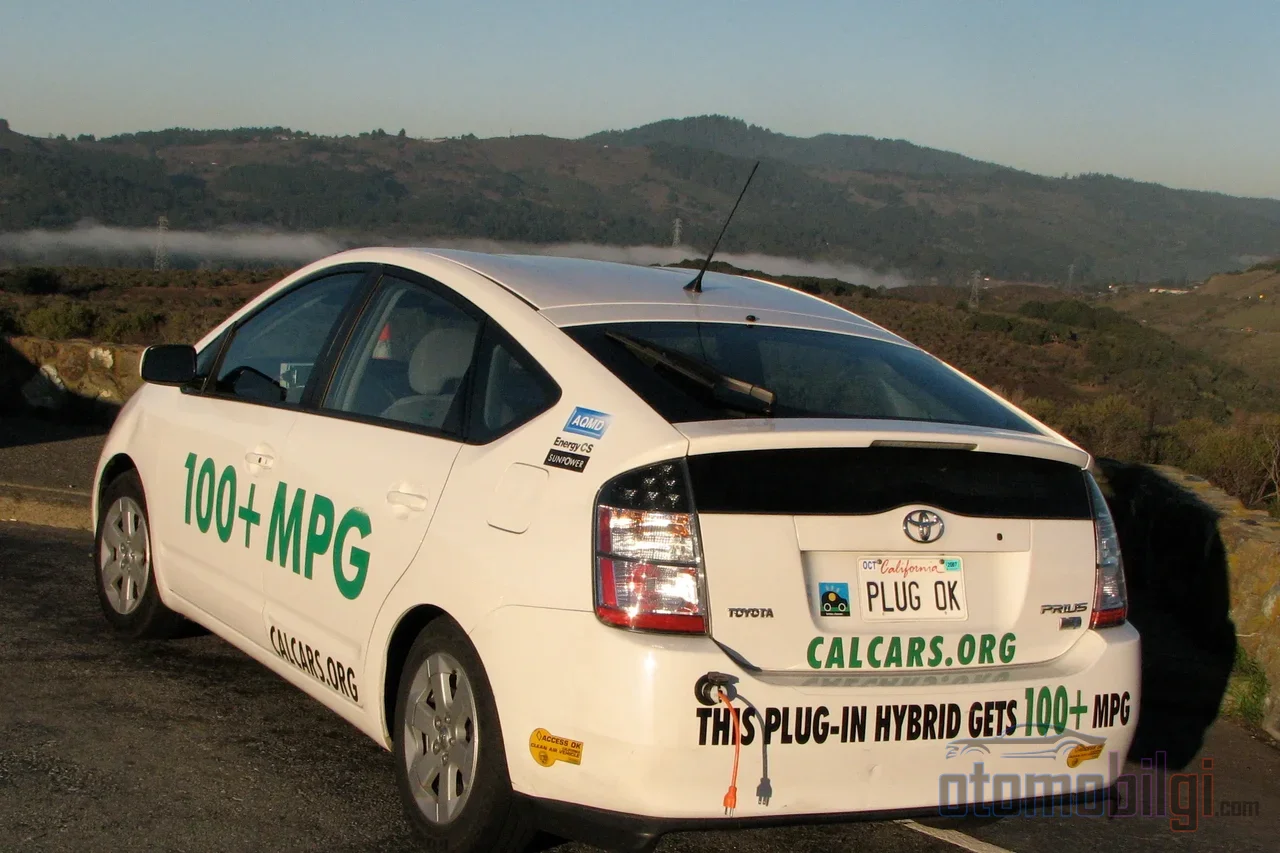
In September 2004, in the garage of a modest house in the town of Corte Madera, north of the San Francisco Bay Area, roughly 130 kilograms of lead-acid batteries were being loaded into the trunk and back seat of an ordinary Toyota Prius. Led by mechanical engineer Ron Gremban, who used the car in his daily life, the team working with two or three volunteers who came to the garage every day was trying to complete the world's first publicly demonstrated plug-in hybrid conversion. The result was a prototype called PRIUS+ that launched an industrial revolution from a garage, at a time when no factory-built plug-in hybrid vehicle existed.
Owning a Prius in 2004 was already considered a technology-embracing choice; but making the car plug-in capable was not even on the manufacturers' agenda. So why had a group of volunteer engineers done it themselves, and how had this hand-built conversion triggered a market that would last for decades?
What Kind of Organization Was CalCars and Why Did It Choose the Prius?
The California Cars Initiative, or CalCars for short, was a non-profit organization founded by Felix Kramer in Palo Alto on July 29, 2002. Interestingly, the organization's initial focus was not plug-in hybrids; it was hydrogen fuel cell vehicles. However, the direction was quickly changed: while hydrogen infrastructure remained a long-term promise, enlarging the battery of existing hybrid vehicles and making them plug-in capable stood out as a much earlier and more concrete solution.
The vehicle chosen as the target was the 2004 model, second-generation Toyota Prius. The reason was entirely technical: the Prius had a parallel hybrid architecture with sufficient capacity in the powertrain for electric driving, and it could travel on electric power alone up to certain speeds even on the highway. In short, it was the closest ready-made platform to becoming a plug-in. In April 2004, CalCars officially announced its plan to convert a Prius into a plug-in hybrid under the name PRIUS+; Ron Gremban learned of the plan when he read the announcement and joined the project.
Highlights
- PRIUS+ was the first publicly demonstrated plug-in hybrid conversion, completed in September 2004
- Volunteers added about 130 kg of lead-acid batteries to a 2004 Toyota Prius
- The conversion provided nearly 10 miles (about 16 km) of all-electric range
- The project aimed at an open-source standard that would form the basis of subsequent plug-in hybrid kits
- The vehicle was destroyed in a fire in 2013; but it had already set the movement in motion
Two Weeks in a Garage: How Was the PRIUS+ Built?
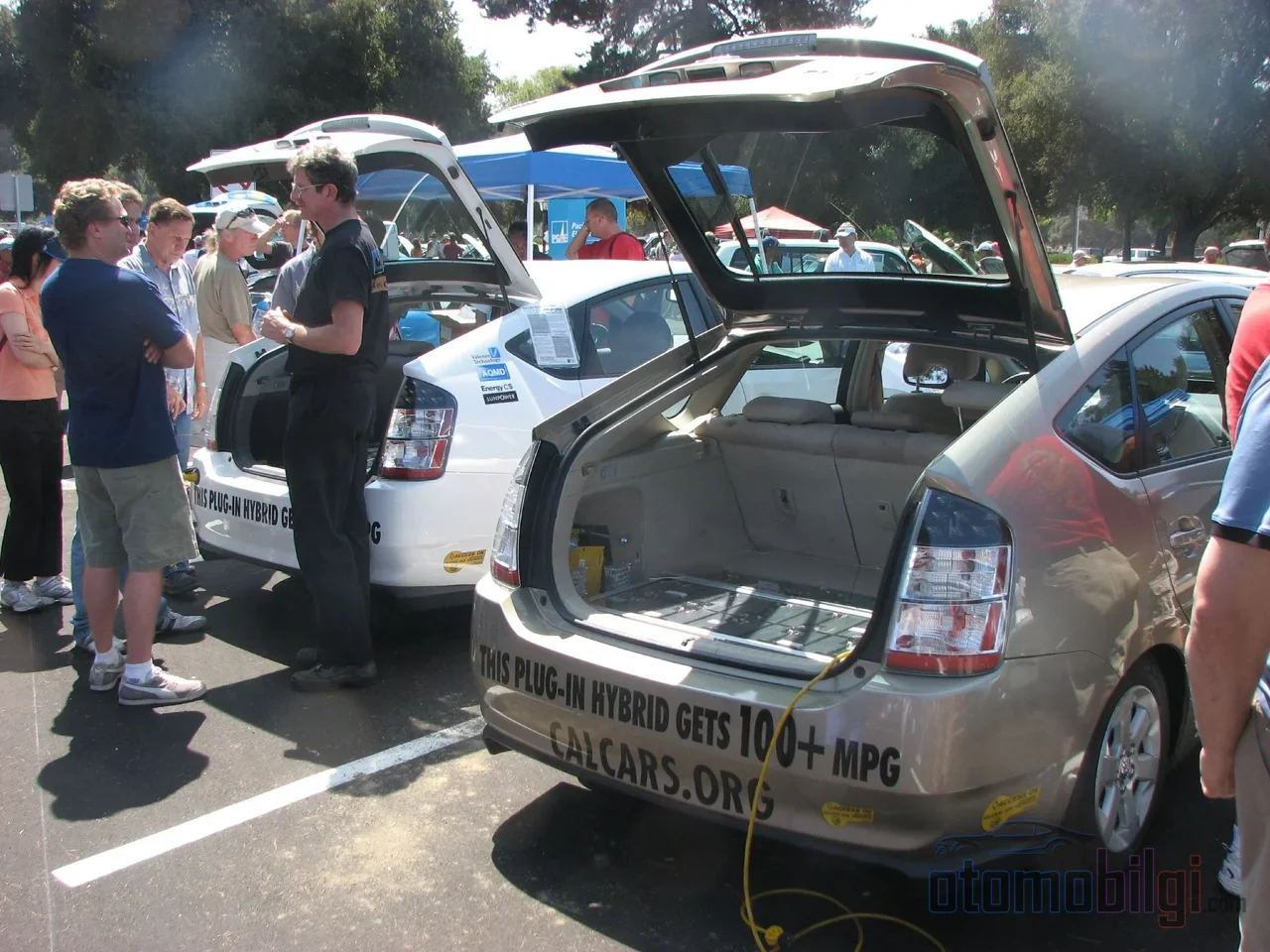
The conversion began in September 2004 following Felix Kramer's call to Bay Area volunteers, and the team reassembled in the garage every day for two weeks. The core of the team consisted of Ron Gremban, Felix Kramer, Marc Geller, Kevin Lyons and Andrew Lawton; a wider group of volunteers, including names such as Tom Driscoll, Richard Jesch, Les Montavon, Dan Putman, Len Tramiel and Doug Widney, provided support. The name PRIUS+ comes from there: Prius plus extra batteries and a charging plug.
The most striking aspect of the project was the absence of prepared technical documentation. The plans and specifications were developed step by step largely via email and the web, together with a scattered volunteer community. Volunteers built a battery box from aluminum strips, cut plywood, installed cooling fans; fuse blocks, terminals and homemade circuit boards were assembled, and an analog gauge for monitoring current was placed next to the dashboard. Copper pipes were flattened with a hammer to absorb vibration and turned into flexible busbars, and the battery pack was wrapped in toroid aluminum foil for electromagnetic protection.
The Real Challenge: Convincing the Vehicle's Management System
Far more critical than the physical assembly was the software issue. The Prius's power management computer was configured to engage the gasoline engine whenever the battery state of charge appeared low. Only team members who understood electronics and coding could figure out the meaning of the extra battery: the system was made to perform an intervention that made it assume the battery was full, allowing the vehicle to stay in electric mode longer. The logic here was simple but effective: steering the decisions of the existing hybrid system as if there were a large battery.
The Technical Reality of the Conversion: What Did It Deliver?
PRIUS+ was certainly not a refined product, nor was it expected to be; since the goal was to prove the concept, lead-acid - the cheapest battery chemistry - was deliberately chosen. The added package weighed about 130 kilograms; different sources give this value as between 118 and 135 kilograms, with a capacity of about 3.1 kWh and a cost of 750 dollars. This package gave the vehicle a full electric range of just over 10 miles; with compact, low energy density lead-acid chemistry, more was physically impossible.
After charging completed from an electrical outlet, the goal in city use was to push target consumption above 100 mpg, that is, to drop below roughly 2.4 liters per 100 kilometers. The first lead-acid version did not fully reach this target; but the concept worked. In later years, improved conversions equipped with a lithium-ion pack reached 2.31 L/100 km, that is 102 mpg, in the test cycle with a fully charged 9 kWh pack. In daily use, the same vehicle could drop to roughly half the consumption of the factory Prius; in assessments made through Gremban's daily vehicle, fuel consumption fell at a rate of nearly twice the usual values.
Base Vehicle: The Technical Identity of the 2004 Toyota Prius
To evaluate the conversion, the base vehicle's specifications must be clarified. The 2004 second-generation Prius became the first hybrid vehicle to make Car and Driver's 10 Best list that year, and according to Toyota's official data it was defined by these basic values:
| Feature | Value (2004 Toyota Prius) |
|---|---|
| Gasoline engine power | 76 HP |
| Electric motor power | 67 HP (between 1200-1540 rpm) |
| Electric motor torque | 295 lb-ft (approximately 400 Nm) @ 0-1200 rpm |
| NiMH battery pack weight | 99 pounds (approximately 45 kg) |
| NiMH battery capacity | 6.5 Ah |
| Battery pack power | 20.9 kW (approximately 28 HP) |
| PRIUS+ add-on package | Lead-acid, approximately 3.1 kWh, ~750 dollars |
| PRIUS+ electric range | Nearly 10 miles (approximately 16 km) |
This table clearly shows the engineering logic of the conversion: in place of the factory's 45-pound, 6.5 Ah NiMH pack, an additional 130-kilogram capacity was installed, thereby extending the electric driving time several times over. Braking energy recovery was likewise done into a much larger pack. As for the vehicle's combined system power, there is no single definitive value across sources; Toyota reports the power as 76 plus 67 HP on a motor basis, while some automotive publications give the system total in different ways.
How Did a Garage Prototype Influence the World?
In 2005, PRIUS+ was taken to Washington DC and exhibited at the US Congress, and the conversion plans were shared on the web as an open-source standard; this standard later formed the basis of most plug-in hybrid conversion kits developed afterward. In May 2006, Felix Kramer became the world's first non-technical consumer plug-in hybrid owner through a conversion by an independent company, and flew his car to Capitol Hill for the first public plug-in hybrid demonstration. This was proof that the movement had now outgrown the garages.
The press impact was also significant. Stories appearing in the pages of publications such as The New York Times Magazine, The Economist, IEEE Spectrum, and the Denver Post lifted PRIUS+ out of the narrow circle of technical enthusiasts and carried it into a national energy debate. In addition to working closely with journalists, CalCars let policymakers and opinion leaders try the car themselves; photos of leaders taken with plug-in Priuses were published on the organization's web page. In the background of the debate was a growing skepticism toward the hydrogen scenario: while automakers had invested hundreds of millions of dollars in fuel cells, it was argued that the plug-in approach was both more accessible and a nearer-term prospect. Toyota, too, had effectively moved away from the hydrogen scenario around 2004 and focused on hybrids.
The Hymotion and Commercial Conversion Kit Era
Following the open-source plan, hand-made conversions multiplied rapidly and the market commercialized. In February 2006, A123 Hymotion introduced commercial conversion kits for the Prius and Ford Escape Hybrid with 5 kWh lithium-ion packs and a claimed 30-mile electric range; this kit was the first commercial aftermarket product to comply with the collision standards of the US national highway safety authority. Numerous manufacturers such as EDrive Systems, EnergyCS, Amberjac, Enginer, and Plug-In Supply also entered the market. Independent tests did not always confirm the exaggerated claims: an independent consumer test found that the Hymotion-equipped Prius raised its 42 mpg average to 67 mpg in the first 35 miles, but did not reach the promised 100 mpg.
Short Answer: Did This Conversion Really Start the PHEV Era?
Yes, it did; because the PRIUS+ proved, with a tangible vehicle everyone could watch, that the plug-in hybrid idea worked. In 2004, while no manufacturer was making product promises on this front, within a few years came conversion kits first, then manufacturer moves: GM entered the plug-in agenda with the announcement of the Chevrolet Volt, and CalCars welcomed it gladly. By November 2009, at a point where series-production plug-in hybrids and fully electric vehicles were on their way, the organization was considered to have completed its mission. This accumulated experience, also fed by university-originated work such as the nine plug-in hybrid concept vehicles built by Andrew Frank and his team at UC Davis, measurably accelerated manufacturers' PHEV agendas.
The fate of the PRIUS+ itself, however, was modest: its plug-in system was refreshed in 2010, and in 2013 a fire destroyed the vehicle. But by that point the car's historical mission had long since been fulfilled.
The Legacy and Limits of a Conversion
The engineering lesson of the PRIUS+ story is clear: maturing an idea does not necessarily require waiting for a manufacturer's approval. The 130-kilogram mass penalty brought by the lead-acid battery, the $750 budget, and the roughly 10-mile range were acceptable trade-offs for a prototype; what mattered was demonstrating that the concepts of electric range and charging from an outlet worked in the real world, in real traffic.
Its limits must also be noted: hobby conversions bore the brunt of assessments that there was no easy way to practically turn a regular Prius into a plug-in hybrid, and CalCars' 2008 attempt to build an industry for converting existing vehicles failed; the aftermarket market remained smaller than expected. The main impact was felt at the top levels rather than in the garage: the first visible step toward plug-in hybrids becoming a mainstream segment of the automotive market today was taken in a garage in Corte Madera, and when that step met Andrew Frank's pioneering work in university laboratories and was carried onto manufacturers' agendas, the plug-in hybrid era had effectively begun.
Sources
- CalCars
- Book sample: Plug-in Hybrids - Sherry Boschert
- PriusPlus History-Battery
- Plugging into the future - The Economist
- Pimp My Prius - The New York Times
- Take This Car And PLUG IT - IEEE Spectrum
- Fire Destroys a Pioneering Plug-In Prius Conversion - NYT Wheels
- A123 Hymotion
- Evaluation of 2004 Toyota Prius Hybrid - OSTI
- Driving Innovation: Celebrating 25 Years of the Toyota Prius