Why Was the Owen Magnetic Called a Car with a Thousand Speeds?
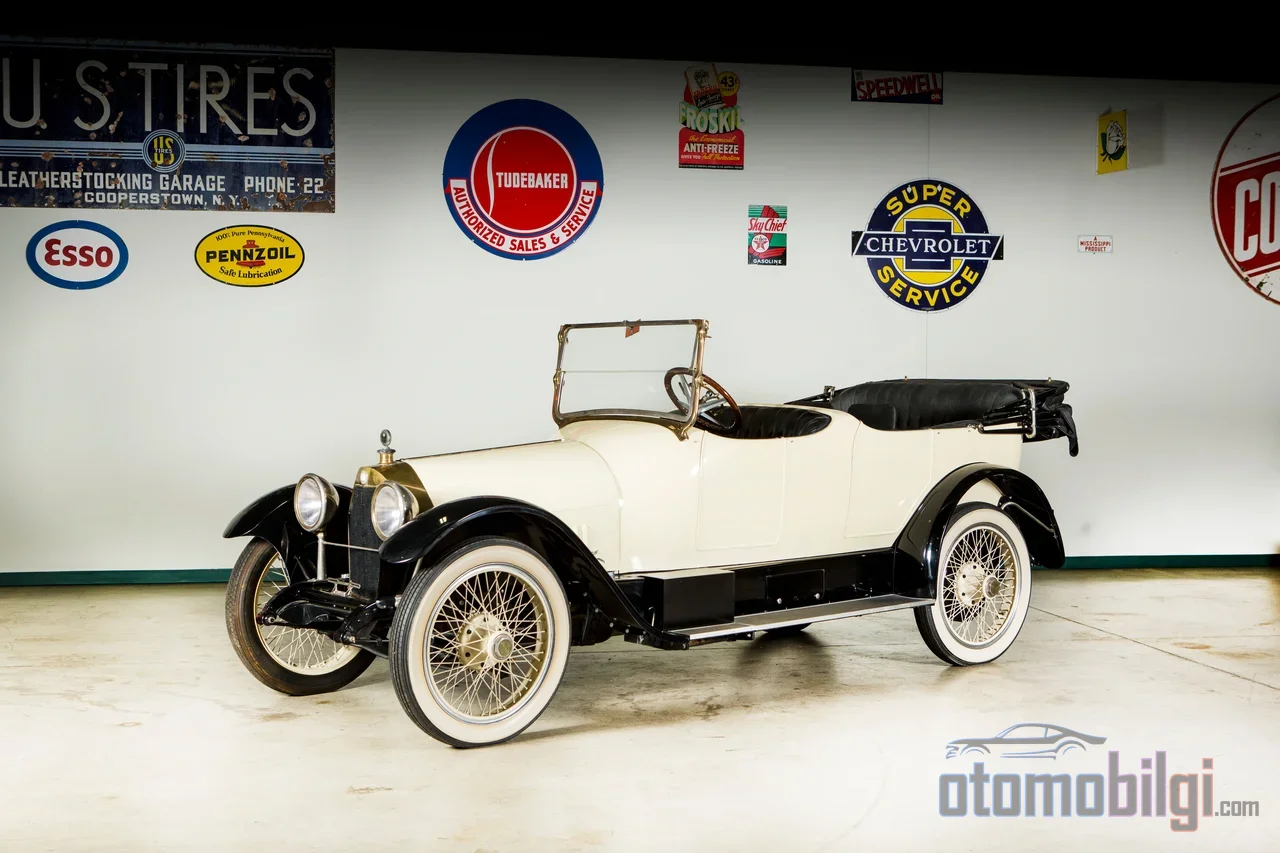
The names you'd probably think of as the ancestors of today's hybrid cars go back to 1997 and the Toyota Prius. Yet a full century earlier, in the winter of 1915 when the New York Auto Show was held, a luxury car was introduced with no mechanical connection at all between the engine and the wheels. The advertisements called it the Thousand Speed Car; it sat in the garage of tenor Enrico Caruso. Its name was the Owen Magnetic, and the question we will tell on this page is exactly this: Why does this car, known as the Thousand Speed Car, emerge today as the most overlooked commercial success in hybrid history?
What Is the Owen Magnetic: The Birth of the Thousand Speed Car
The Owen Magnetic was a luxury car brand produced in America between 1915 and 1922 that used electrical magnetic transmission. Behind it stood Raymond M. Owen and Ralph R. Owen, brothers; the pair had been working since 1912 to turn a concept called the Entz transmission into a roadworthy automobile. The founding team's names were: Raymond Owen, Ralph Owen, Walter Baker, and J. L. Crown. Production was sponsored by the New York-based R.M. Owen & Company.
The first model was displayed at the 1915 New York Auto Show, and immediately afterward the brand's permanent slogan was born: The Car of a Thousand Speeds, in other words, the Thousand Speed Car. There was no gearbox, no clutch; power delivery was seamless. By the standards of the era, this was the real talk of the showroom - and it was something different from anything the competitors could offer.
Highlights
- Production years: 1915-1922, a total of 974 vehicles
- Engine: a 374 cubic inch (6.1 liter) six-cylinder gasoline unit
- Price range: $3,000-$6,500; the Ford Model T was under $400 in those days
- Series hybrid architecture: the engine drives a generator, the wheels turn via an electric motor
- Famous owners: Enrico Caruso and John McCormack
How Did the Electrical Magnetic Transmission Work?
The heart of the system was the electromagnetic transmission designed by Justus B. Entz and protected by US Patent 1,207,732. Entz was an experienced electrician with 75 patents in automotive engineering; he had served as chief electrician at Edison Machine Works between 1887 and 1890. The patent rights belonged to Walter C. Baker, an electric vehicle manufacturer from Cleveland - and this name will reappear later in the story.
The working principle matches today's series hybrids exactly. There was no physical connection between the engine and the transmission shaft. Behind the engine's crankshaft, in place of a flywheel, a generator and a horseshoe-shaped magnet rotated. At the front end of the transmission shaft stood an electric motor with an armature, situated in the air gap of the rotating magnet. Power passed through this open air gap via lines of magnetic force. In short, a 6.1-liter six-cylinder gasoline engine drove the generator, and the electric motor drove the wheels - the same architecture is used exactly in every series hybrid today.
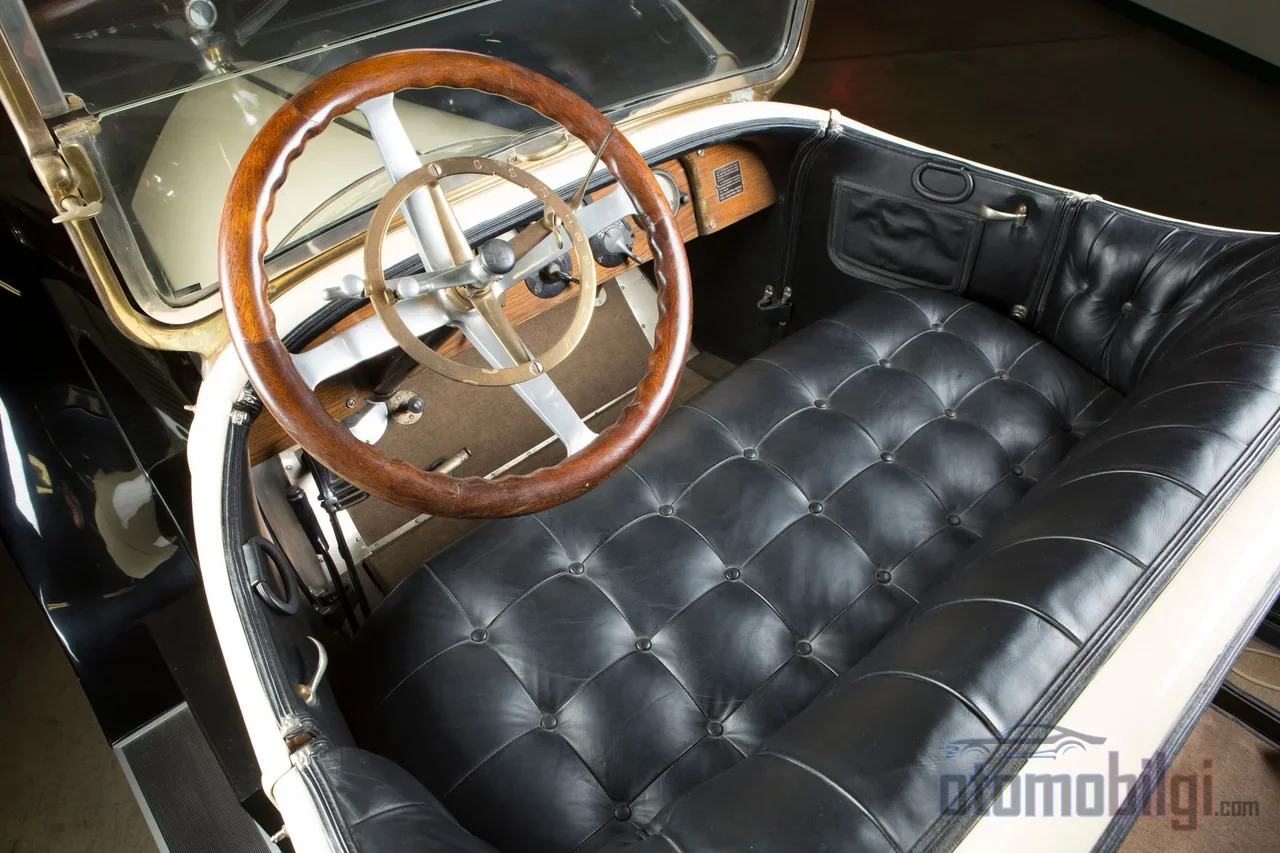
On the driver's side, the experience was entirely different. Speed was controlled by a small lever in the middle of the steering wheel; the electric side acted as a five-speed automatic transmission. The system charged the battery, provided automatic electric starting, and offered an early form of regenerative braking: when slowing down, the electric motor switched into the role of a generator. Writers of the era described the driving experience as floating, gliding through the air; and the advertisements could not help comparing the car to an orchestral work.
Who Bought It: The Aristocrat of Automobiles
The price list immediately revealed who the target audience was. For the 1916 model year, the base price started at $3,000, while the Holbrook-bodied sport tourer reached $6,000; with custom coachwork, the upper limit climbed to $6,500. In those same years, an average car cost about $1,000, and a Ford Model T was under $400. The Owen Magnetic was positioned at the exact opposite end of the mass-market automobile, and it marketed itself as the Aristocrat of Automobiles.
The customer list confirmed this positioning. The famous opera singers Enrico Caruso and John McCormack were owners of the brand; Caruso had purchased a custom-built touring model. The car's fame came as much from its clientele as from its technical specifications. Another typical profile was businessmen who could dictate on the move in heavy city traffic - a car free from wrestling with clutch and gears offered the perfect environment for working with a secretary in the back seat.
Comparison with the Woods Dual Power: Why Did One Survive and the Other Not?
The Owen Magnetic was not the only early hybrid. In 1916, the Woods Motor Vehicle Company in Chicago introduced the Dual Power model: a 14 hp gasoline engine, a 6 hp electric motor, and a 48-volt lead-acid battery at the rear. Contrary to a widespread but incorrect source claim, Woods did not use the Entz transmission; it preferred a clutch-based drivetrain between the gasoline engine and the electric motor, based on Roland Fend's US Patent 1,303,870.
Why their paths diverged becomes clear when looking at production timelines. The Woods Dual Power remained a short-lived experiment; the Owen Magnetic, on the other hand, was produced over eight years, in three separate facilities, with 974 vehicles built. The difference had three components:
- The Owen Magnetic was positioned in the low-volume but high-priced luxury segment; it had room to pass the cost of its complex system on to the price.
- While the Entz transmission was a design that was continuously improved and whose patent rights were corporately owned, Woods's solution rested on a narrower engineering foundation.
- Although production scale was small, the brand had built a reputation that allowed it to find new investors until 1920, despite the economic turmoil of the interwar years.
| Feature | Owen Magnetic | Woods Dual Power |
|---|---|---|
| Introduction year | 1915 | 1916 |
| Architecture | Series hybrid, magnetic transmission | Clutch-type hybrid drivetrain |
| Gasoline engine | 374 cubic inches (6.1 liters) six-cylinder | 14 hp |
| Electric motor | Within the driveshaft, armature-equipped | 6 hp |
| Production volume | 974 units | Very limited, short-lived |
Origins: From Entz's Burning Prototype to the USS New Mexico
The technology was far older than the brand. Entz built his first prototype in 1897; during a test drive, an electric spark from the uninsulated transmission ignited the gasoline vapor and the prototype burned. Entz did not give up; he refined the system and obtained his patent. Decades later, the same electromagnetic principle propelled a warship on a completely enlarged scale: the US Navy had scaled up Entz's concept for the USS New Mexico, which entered service in 1918. A principle used by an automobile brand was also working in one of the most modern battleships of the era.
These roots show that Owen Magnetic was not really an oddity. The world's first gasoline-electric hybrid had already appeared in 1901, with Ferdinand Porsche's Lohner-Porsche Mixte; it too had a series hybrid architecture - meaning a structure where the gasoline engine only drove the generator - identical to Owen Magnetic's. Owen Magnetic's difference was that it turned this architecture into a consistent luxury product for the first time and sold it for years.
Production Years and the Chronology of the Collapse
The brand's corporate life was as full of ups and downs as a hybrid drivetrain. Production began in 1915 in New York with 250 vehicles. In December 1915, the company moved to Cleveland, and R.M. Owen Company merged Walter Baker's Baker Motor Vehicle with Rauch and Lang: Baker Electric would produce the vehicle, Rauch and Lang would build the body. The Cleveland era lasted until 1919, when Baker focused on war materiel production.
Between 1919 and 1920, J. L. Crown took over the Entz rights and restructured the company with Raymond Owen as the Owen Magnetic Motor Car Corporation; production restarted at the former Matheson factory in Wilkes-Barre, with an annual target of 750 vehicles. Then came 1920, the brand's most interesting and most fatal year: Crown secured an order for 500 vehicles from Le Grice Elers Ltd in London, and the cars were to be sold in Great Britain under the Crown Magnetic name. The version was displayed at the 1920 London Motor Show; but removing the emergency low gear from the system was a serious engineering mistake - the drivetrain could catch fire on long, steep hills. In August of the same year, Owen Magnetic entered bankruptcy protection; only about 20 vehicles reached Britain before production there ceased. The factory closed for the last time in March 1922. (In corporate records, the brand's final year is sometimes listed as 1921; production activity, however, continued into early 1922.)
Why It Disappeared: The Technology, or the Timing?
The cause of the collapse was not that the system worked poorly. The cause was the economic equation of the series. The industry was turning toward mass production, standardization, and mechanical simplicity in the late 1910s; the Entz transmission, on the other hand, required expert electrical knowledge for servicing and was costly to manufacture. Compared with gasoline drivetrains, the car was heavier and more expensive; in the eyes of its era, the magnetic transmission was seen as both very expensive and unusual. Moreover, the ultra-premium hybrid market was structurally small: 974 cars was the natural ceiling for a luxury brand over eight years. The failure was not the product of flawed technology, but of timing and economics.
What Remains Today: 1916 Hybrids That Still Run
The number of the 974 cars that have survived to this day is small but impressive. Jay Leno's 1916 Owen Magnetic was purchased from Norway in the 1960s; when a battery was fitted, the car ran without any intervention needed - the fact that a hybrid that had waited roughly half a century fired up on first contact is the most striking proof of the system's engineering robustness. Three examples are held at the Tampa Bay Automobile Museum, making it the world's most significant Owen Magnetic collection. Examples are also on display at the Louwman Museum and The Henry Ford.
Conclusion: Why Is the Car of a Thousand Speeds Important?
The reason the Owen Magnetic was called the Car of a Thousand Speeds was not the number of gears, but the continuity of power delivery: power carried by a magnetic field, without a clutch and without stepped gears. With 974 cars, the brand is a commercially modest story; but from an engineering standpoint, this is the point - the series hybrid architecture offering battery charging, automatic electric starting, and regenerative braking, separating the engine from the wheels magnetically, was working on the road in 1915, and the same principle lives on in every hybrid sold today. The Owen Magnetic was not a failed automobile, but the right idea in the wrong decade.