Is Charging a Plug-in Hybrid at Home Expensive?

Most people who buy a plug-in hybrid set off with the same assumption: the electric part seems almost free, and gasoline is just a backup. Then the first electric bill arrives, the price of a wall unit is added on top of the charging socket, and the math does not work out the same way for everyone. When a PHEV is not regularly charged at home, it wastes energy carrying the weight of its battery and can consume more than a conventional hybrid; when charged regularly, however, it lets you establish the cheapest fueling habit possible. On this page, we clarify step by step the home charging options, the electricity cost of a full charge, the difference with public charging, and in which driving profile this math actually pays off.
How to Charge a PHEV at Home: Regular Outlet or Wall Charger?
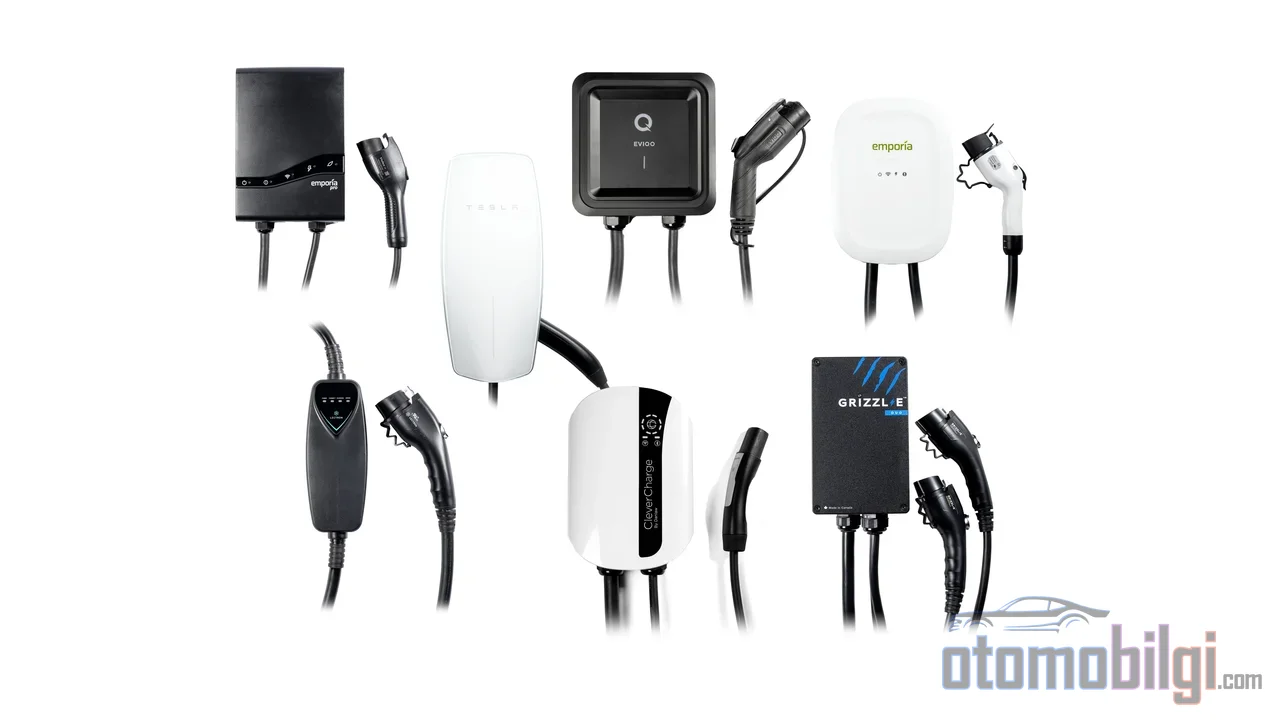
Plug-in hybrids work only with AC (alternating current) charging and offer two basic options. The first is a standard household outlet, using the cable that comes with the vehicle; the second is a wall-mounted Level 2 charging unit, commonly known as a wallbox. Let's clarify the units here: kW indicates the charging power, i.e. how fast energy flows into the battery; kWh, on the other hand, indicates the battery's capacity, i.e. the amount of energy stored. The cost calculation is also simple: battery capacity (kWh) multiplied by the unit price of electricity.
A standard outlet is often a sufficient starting point for a PHEV. PHEV batteries are small; far too small to compare with the average 72 kWh packs in fully electric vehicles. For example, a 14.4 kWh battery, when completely empty, can fully charge in about 11 hours at a 120-volt outlet. This speed ensures the vehicle is full by morning when you park it overnight; scenarios that can take 24 hours only arise with very large packs.
What Does a Wall Charging Unit Add?
A Level 2 unit adds 25-30 miles of range per hour; a PHEV battery charges in a few hours. The cost side is the most expensive part of the matter: the unit itself costs 300-700 dollars, and electrician installation ranges from 200-1,300 dollars. Recently, installation averages have risen; a typical turnkey Level 2 installation can come to about 2,400 dollars, and in homes with older panels a 200-amp panel upgrade can add another 1,000-2,500 dollars. In addition, the federal tax credit supporting the purchase of chargers in the US ended on June 30, 2026; those installing a new system today cannot factor in this support.
Key Takeaways
- PHEV batteries are small; a full charge at home typically stays in the range of 1-3 dollars.
- Home charging costs about 5-7 cents per kilometer; a gasoline vehicle is about 13 cents.
- Public charging is about 3 times more expensive than home charging.
- A PHEV that is never charged almost always consumes more than a comparable conventional hybrid.
- The federal charger credit ended on June 30, 2026; rebates from local electric companies, however, are continuing.
How Much Does a Full Charge Cost in Electricity?
To understand the charging cost of a PHEV, you need to start from the figures of fully electric vehicles and scale them down to the smaller battery. A 60 kWh pack costs between 7 and 11 dollars at home with the average residential rate (about 0.18 dollars/kWh); for 72 kWh this figure is about 13 dollars. The PHEV's 10-15 kWh battery is only a slice of this picture: a full charge at the average rate usually stays in the 1-3 dollar range. In other words, in PHEV ownership the charging expense is small enough not to create a noticeable increase in your bill.
Rate differences, however, are decisive. Electricity prices can vary 3-4 fold by region; while a full charge costs around 8 dollars in one state, in the region with the most expensive electricity capitals the same operation can reach 32 dollars. So what happens if we compare this with gasoline? While home charging costs the average driver 5-7 cents per kilometer, a gasoline vehicle burns about 13 cents over the same distance. Although the figure looks small per kilometer, when multiplied by the annual distance it makes a serious difference.
| Charging Method | Range Added per Hour | Full Charge Time | Cost Character |
|---|---|---|---|
| Standard home outlet (120 V) | 3-5 miles | Typically 11 hours or more | Lowest; requires no installation |
| Level 2 wall unit | 25-30 miles | A few hours on a PHEV | 1,700-2,400 dollar installation investment |
| Public Level 2 | Same as Level 2 | A few hours | 0.25-0.40 dollars/kWh; 2-3 times the home rate |
| DC fast charging | Fastest | Shortest | Average 0.53 dollars/kWh; about 3 times the home rate |
Why Is Public Charging Usually a Bad Deal for a PHEV?
As of mid-2026, the US has more than 82,000 charging stations and more than 253,000 charging ports; a favorable picture in terms of public infrastructure. However, on the pricing side, the story tells a different side, especially for a PHEV. Public Level 2 charging costs 0.25-0.40 dollars per kilowatt-hour, while DC fast charging averages 0.53 dollars. Compared to the home rate, public charging is 2-3 times more expensive; in annual cost terms, a driver who uses only public charging pays about three times as much as one who charges at home.
The PHEV's small battery shortens charging time in this picture but does not change the cost ratio. A concrete example from a forum discussion is illustrative: while a driver paying 14 cents per kilowatt-hour spends about 4-5 cents per kilometer in electric mode, a similar vehicle can approach the cost of gasoline at close to 40 cents per kilometer on public charging. Also, in terms of daily habits, the practical value of public charging is limited; because the PHEV's electric range is short, visiting a station once or twice a week, when combined with both the time cost and the price difference, becomes a combination that breaks the math. Public charging should be a plan B for a PHEV; not the main charging strategy.
How Does Charging Habit Change the Total Fuel Expense?
The economic value of a plug-in hybrid lies not in a single feature but in a habit: plugging in every day. If a PHEV is charged every day, the portion of the daily distance that falls below the electric range is completed almost entirely without burning gasoline, and the vehicle's hybrid system only kicks in on long journeys and at high speeds. In this usage pattern, electricity is an energy source that is between one-third and one-half cheaper than gasoline per kilometer.
The exact opposite scenario is the source of the most common criticism directed at the category. A PHEV that is never charged outperforms a non-hybrid conventional car, but when racing against a comparable standard hybrid, it almost always loses: because the large battery and electric motor it carries weigh the vehicle down without providing any gasoline savings. In other words, a PHEV owner who never charges pays the weight penalty of hybrid technology without getting its benefit. Time-based plans with off-peak night rates improve this balance even further; off-peak rates can be 30-50% cheaper, and lowering the electricity price to 3 cents per kilowatt-hour means roughly $130 in annual savings for a driver covering 12,000 miles a year.
Who Does Home Charging Actually Make Money For?
The answer to this question lies in comparing two numbers: the daily commute distance and the PHEV's electric range. For a driver with access to home charging whose daily distance falls below the electric range, a PHEV will most likely outperform a conventional hybrid in five-year ownership costs. It sets off every morning with a full battery, and gasoline only comes into play on weekends and long trips; most of the fuel bill turns into cheap home electricity.
Is a Wall Charger Installation Worth It?
Because of the PHEV's small battery, a Level 2 installation pays for itself more slowly than it does for fully electric vehicles. Recovering a $1,700-2,400 investment through the few dollars a PHEV earns per charge takes time; for short daily distances, even a standard outlet delivers the same energy by morning. Wall charging here is a product of convenience and speed: the option of a top-up charge on return, not having to plan around midnight, and the ease of alternating charging between two vehicles. The investment only quickly pays for itself in households that run many charge cycles around the clock or feed two electric vehicles. Since some utility companies continue to offer installation rebates of $250-1,000, checking local incentives before installation shortens the payback period.
How Does the Math Change Without Home Charging?
For apartment dwellers and those without access to home charging, the picture toughens. Since public charging can be 3-6 times more expensive than at home, the PHEV's biggest advantage - cheap daily electricity - effectively disappears. The honest summary for this profile is: when a PHEV cannot combine the purchase price of a hybrid with the consumption of a conventional hybrid, the buyer needs to compare it against a conventional hybrid; for someone who cannot plug in every day, the PHEV premium usually goes unrewarded.
Conclusion: Regular Home Charging Is What Makes a PHEV a PHEV
Let's sum up. A home-charged PHEV covers city driving with energy up to a third the cost of gasoline per kilometer, and for drivers whose daily distance fits within the electric range, it overtakes a conventional hybrid over five years of use. Even a standard outlet is often sufficient for this job; a wall charging unit is a contribution of speed and comfort, and intensive use is required for the investment to pay for itself quickly. Public charging, on the other hand, cannot be the main strategy, as its price rises to three times that of home charging. The fact that a PHEV that is never charged consumes more than a standard hybrid captures the economic essence of the category in a single sentence: the savings of a plug-in hybrid accumulate not in the battery, but in the plug that is connected every night. Before making the purchase decision, answer these three questions: Do I have the ability to plug in at home? Is my daily distance below the electric range? Even if I had to depend on public charging, could I afford this premium? If two of your answers are yes, the home-charging math works in your favor.
Sources
- EV Charging Costs by State (2026)
- EV Charging Costs in 2026: What Qmerit's Installation Data Reveals
- Charging a Plug-In Hybrid
- Plug-in Electric Vehicle Charging: The Basics
- Charging Electric Vehicles at Home
- What Happens If You Never Charge Your Plug-In Hybrid?
- Hybrid vs. Plug-in Hybrid Cars: What's Right for You?
- Is a Plug-In Hybrid the Right Car for You?
- Does EV Charging Really Cost Less Than Gas?
- How Much Does It Cost to Charge an Electric Car?
- Do I Need a Special Charger for a Plug-In Hybrid?
- Hybrid vs. Plug-In Hybrid vs. Electric
- Charging at Home vs Public Cost Comparison
- How Much Can an EV Save You?
- PHEV Charging at Home
- EV Charging Cost Calculator