Do Hybrid Cars Really Use Only 4 Liters? Manufacturer Figures vs. Real-World Consumption
Share This Page
Short answer: hybrids whose factory rating shows 4 liters usually fail to achieve that figure on real roads; in plug-in hybrids, real average consumption has been measured to reach 3-5 times the catalog value. The reason is not that the vehicle is bad, but the structural gap between the laboratory conditions that produce the catalog value and real traffic. In this article, we examine where that gap comes from, how much various conditions increase consumption, and which type of hybrid actually works for which kind of driver, using measurable data.
Key Takeaways
- In PHEVs, real consumption averages 3-5 times the type approval value; the type approval value averages 1.6-1.7 L/100 km
- Individual users on the road consume 4.0-4.4 L/100 km, company vehicles 7.6-8.4 L/100 km Cold weather can reduce hybrid fuel economy by
- up to 23% A fully loaded roof box increases highway consumption by
- 10-20% The average real-world vs factory gap in gasoline and diesel vehicles is ~20%
- How is the factory consumption value measured? The consumption figure you see in the catalog is not the value the owner will achieve; it is a comparison metric. In Europe, all new vehicles go through a standardized laboratory test called WLTP. Since every vehicle is tested on the same cycle, it becomes possible to compare efficiency across models; that is where the benefit ends. The test environment cannot reflect traffic, terrain, ambient temperature, climate control and electronics use, or driver behavior. In other words, the WLTP value is a perfect ruler for comparing models, but a weak ruler for predicting real-world road consumption.
This weakness is not felt to the same degree in every vehicle. In real-world usage data for 2022 model year vehicles, the average gap was measured as
21.1% (about 1.3 L/100 km)
for gasoline and 17.1% (about 1.0 L/100 km) for diesel. In conventional internal combustion vehicles, the catalog value usually carries around 20% optimism; an uncomfortable but manageable margin. Source of the gap: what assumption hybrid values are based on With hybrids, especially plug-in hybrids (PHEV), the situation changes. A PHEV's type approval value is based on the assumption that the vehicle will travel a significant portion of the test cycle on electricity; the official calculation treats
70-85% of driving
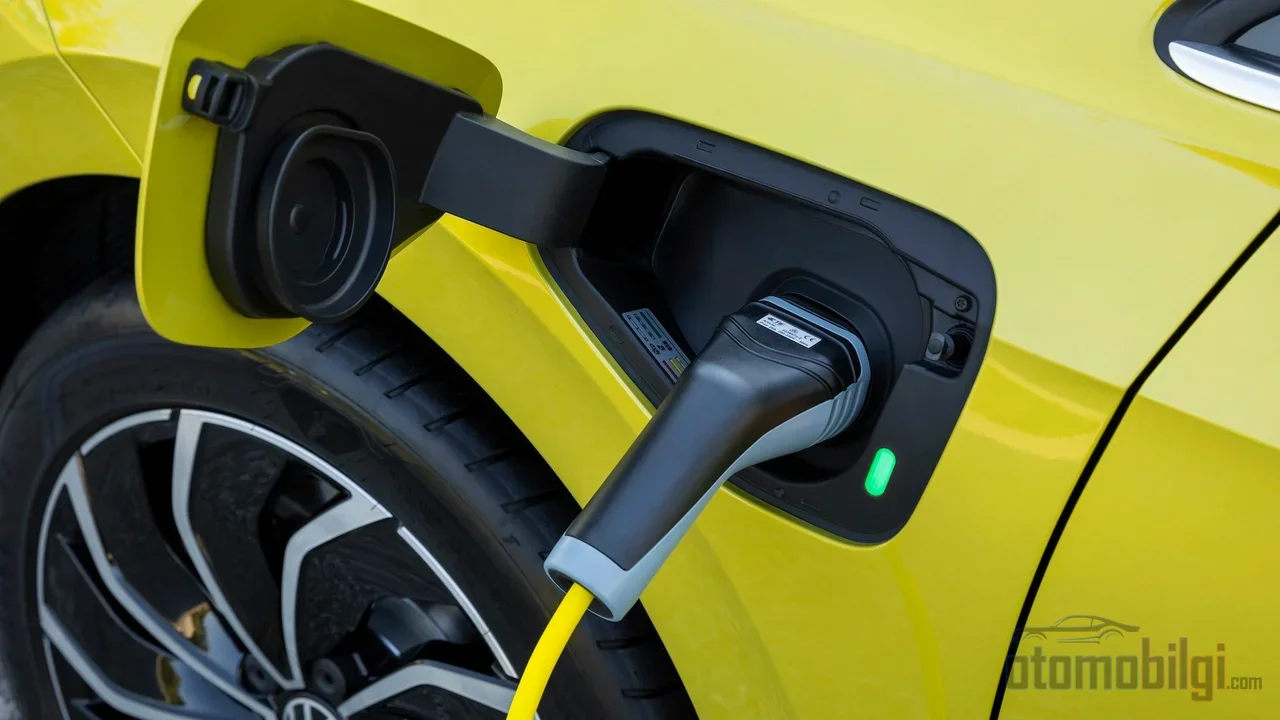
as electric. This assumption only holds if the vehicle is charged regularly. An uncharged PHEV turns into an ordinary gasoline car carrying a crowded and heavy battery, and the foundation on which the official calculation rests collapses. There is also a mathematical dimension to the trap here. Manufacturers' stated PHEV values are compressed into a narrow range like 1.13-1.55 L/100 km. With such a low baseline, every extra liter grows the percentage difference multiplicatively; a PHEV consuming 4 L/100 km is burning more than triple its catalog figure, but in absolute terms it still corresponds to a reasonable gasoline vehicle. Does a hybrid really burn 4 liters in real-world use?
There is also a mathematical dimension to the trap here. The PHEV values declared by manufacturers are confined within a narrow range such as 1.13-1.55 L/100 km. With the baseline this low, every extra liter multiplies the percentage difference exponentially; a PHEV consuming 4 L/100 km burns more than three times its catalog figure, but in absolute terms it still corresponds to a reasonable gasoline vehicle.
Does a hybrid really burn 4 liters in real-world use?
The answer to the question splits into three different scenarios depending on the hybrid type and how it is used. The table below summarizes how the values diverge even within the same category.
| Hybrid type | Factory value | Real-world use |
|---|---|---|
| Plug-in hybrid (private) | ~1.6-1.7 L/100 km | 4.0-4.4 L/100 km |
| Plug-in hybrid (company car) | ~1.6-1.7 L/100 km | 7.6-8.4 L/100 km |
| Plug-in hybrid (empty battery mode) | - | average 2.98 L/100 km (in the widest measurement, roughly double) |
| Full hybrid (example: Honda Jazz) | 62 mpg | 50 mpg |
| Full hybrid (example: Corolla) | 64 mpg | 58 mpg |
| Gasoline (comparison) | - | ~21% higher than the catalog value |
The story behind the numbers is clear: for PHEVs, the real-world average is on average 3-5 times the type-approval value. In real-world usage records based on 320,000 vehicles, the actual CO2 emissions of PHEVs measured 3.5 times the type-approval value, that is 99 g/km ; in the following year this gap rose to 102 g/km in absolute terms, and from 249% to 314% in relative terms. Larger batteries pushed the official value even lower but failed to increase the share of electric driving on the road.
The critical distinction is here: while private users do 45-49% of real driving electrically, in company cars this rate stays at 11-15% . The same catalog value describes two completely different realities in these two usage scenarios. For the company car user, the promise of 4 liters can actually reach up to 8 liters.
Full hybrids (HEVs) paint a more balanced picture. User data shows models like the Jazz deviating 10-12 mpg from the catalog; some independent tests show hybrids burning up to 33% more than the advertised value, while some consumer tests found extreme cases rising to 4 times the manufacturer's value. However, the absolute picture is different: real-world road measurements confirm that full hybrids still deliver 23-49% savings compared to their internal combustion counterparts. So hybrids do save, just not as much as claimed.
Conditions that increase consumption: cold, speed, load and traffic
Why does cold weather ruin consumption in winter?
Cold is the condition hybrids like least. Measurements show that at temperatures around -7°C (20°F), hybrid fuel economy loses 23%, while in hot weather (95°F) it loses 12%. The mechanism has three layers: battery chemistry loses efficiency in the cold, the internal combustion engine reluctantly engages frequently for cabin heating, and the winter fuel formula itself carries less energy. In pure gasoline vehicles, the drop due to heating is less noticeable since the engine is already running to warm up; it is precisely at this point that the hybrid's efficiency advantage melts away.
High speed and aerodynamics
Physics doesn't discriminate here: whether gasoline, diesel, hybrid, or electric, energy consumption rises exponentially as speed increases. The region where hybrids shine is low-speed and braking regimes; highway cruising speed falls exactly outside that region. That's why in many hybrid models city consumption turns out better than highway; a hybrid model achieving 50 mpg in the city and 47 mpg on the highway is a typical example.
Extra load makes the situation even worse. A fully loaded roof box can instantly increase highway consumption by 10-20% . In PHEVs, the added weight of the battery and drivetrain has already raised the energy demand per kilometer; add air conditioning, tire condition and pressure, aggressive driving, and terrain, and drifting away from the factory values becomes inevitable. It has been measured that driving cycle changes can alter efficiency by a factor of 1.5 to 1.7 in conventional vehicles; engine load is the dominant variable in this equation.
City or long distance: the hybrid's operating zone
Since full hybrids rely on the electric motor at low speeds and during braking, they are at their most efficient in stop-and-go traffic; regenerative braking writes the energy lost while slowing down back into the battery. On long journeys, there is less braking for this mechanism to work with, and speed stays high; the hybrid still operates reasonably but its advantage narrows. In a PHEV the equation gains another dimension: if charged regularly, daily traffic passes almost entirely on electricity, while on long journeys it behaves like an efficient full hybrid. For a PHEV that is not charged regularly, however, the long journey can yield results worse than even a diesel because of the battery weight being carried.
Why are the figures being corrected?
The magnitude of the gap prompted regulators to act. In the EU, since 2021, an onboard fuel consumption monitor called OBFCM has been mandatory in all new liquid-fuel vehicles; these systems report real values annually, making the gap measurable. On the PHEV side, the utility factor, i.e. the assumed share of electric driving used in CO2 calculations, is being changed in two stages starting from 2025 (second adjustment in 2027). These changes, which introduce a charging frequency correction into the electric driving calculation, are expected to reduce the gap; criticism, however, focuses on the fact that current assumptions do not reflect real usage and that a PHEV never delivers the promised efficiency without being charged.
The practical meaning of these corrections for the reader is this: in the near future, catalog PHEV values will probably be more realistic than today's, but also higher. Knowing that the stated figure of 1.6 L/100 km is not a promise but a mathematical result under certain assumptions puts the purchasing decision on solid ground.
In this picture, for whom does a hybrid make sense?
The measurements say this: most hybrid SUVs come in above 35 mpg, hybrid sedans above 45 mpg, representing roughly a 40% improvement offers. A user with short daily distances and access to charging gets full benefit from a PHEV; owners who charge regularly report using no gasoline at all during the day, and with systems that perform well even on an empty battery they report over 50 mpg and over 500 miles of range on long trips. In contrast, a PHEV whose battery is never charged can fall below a conventional hybrid or diesel because of its extra weight; while some systems seriously worsen fuel consumption on an empty battery, well-tuned systems remain reasonable even with a depleted battery.
Maintenance also affects the decision. Hybrid maintenance covers oil changes, brakes, the cooling system, the battery system, and transmission fluid; roughly 10,000-15,000 miles for oil and tire-brake intervals, and 20,000 miles for the air filter is a typical recommendation. Since engine braking comes into play, brake pads generally wear less, and many owners find maintenance costs lower than with internal combustion. So even though the catalog figure is exaggerated, the real savings a hybrid offers, when used appropriately for the conditions, is still tangible and measurable.
The closing sentence can be summarized with an engineering mindset as follows: a 4-liter factory value is not a lie, it is a truth that belongs to the laboratory; whether it holds up on the real road is determined by cold weather, speed, load, and your charging habits.
Sources
- Real-world usage of plug-in hybrid vehicles in Europe: A 2022 update - ICCT
- Publication of real-world CO2 emissions and fuel consumption of cars and vans collected in 2022 - European Commission
- Real-world fuel consumption and energy consumption of passenger cars and light commercial vehicles in the Netherlands 2024
- Why the actual fuel consumption of plug-in hybrids is often higher - admin.ch
- PHEVs Promised Efficiency, Drivers Are Burning Three Times More Fuel - Carscoops
- Cold weather cuts hybrid fuel economy 23% - Automotive News
- Fuel Consumption Sensitivity of Conventional and Hybrid Vehicles - DOE AFDC
- Fuel consumption and emissions performance under real driving - Huang 2019, ScienceDirect
- Worldwide Harmonised Light Vehicles Test Procedure - Wikipedia
- MPG efficiency figures further from 'real world' than ever - PistonHeads